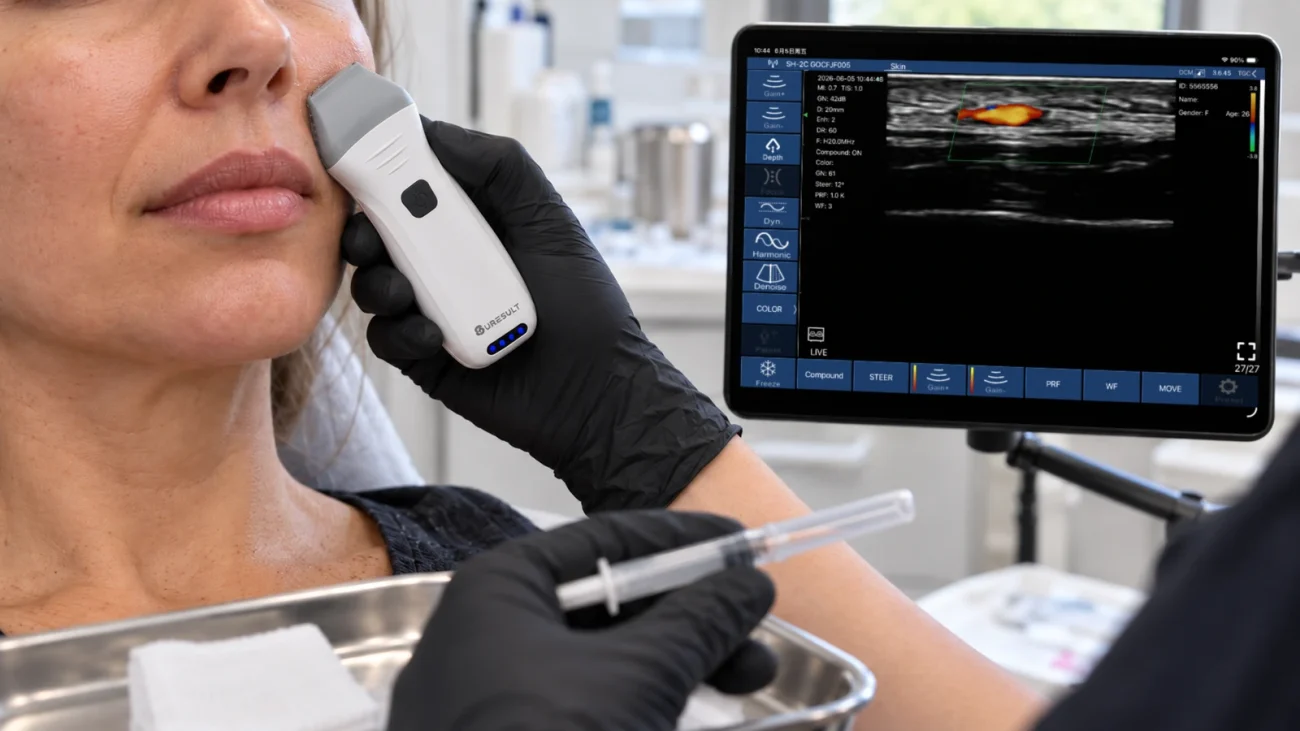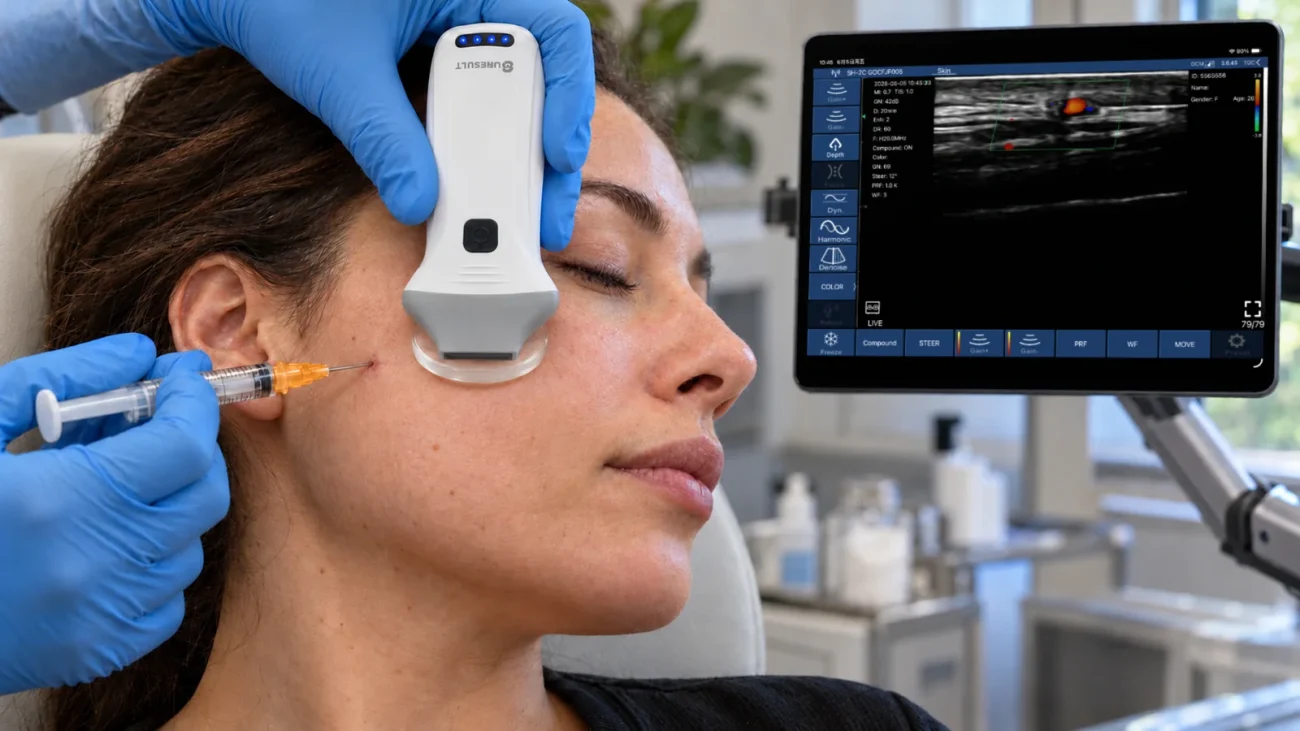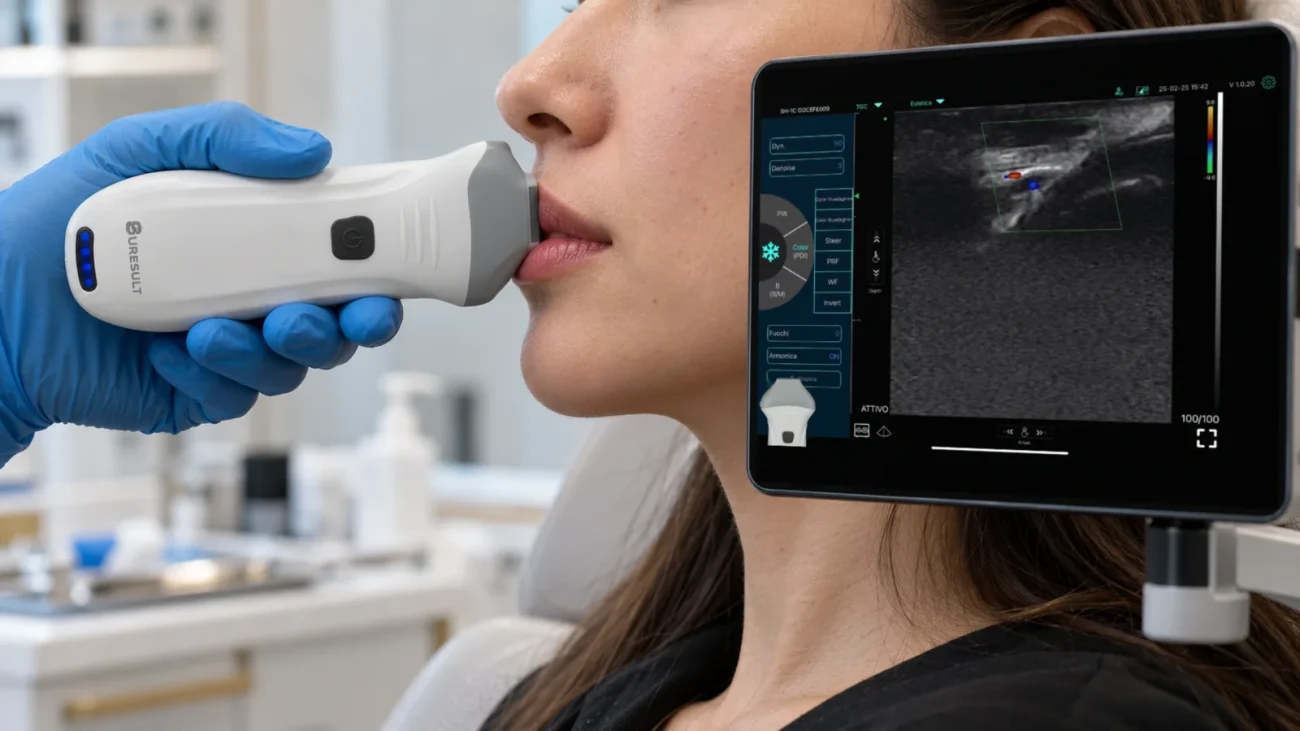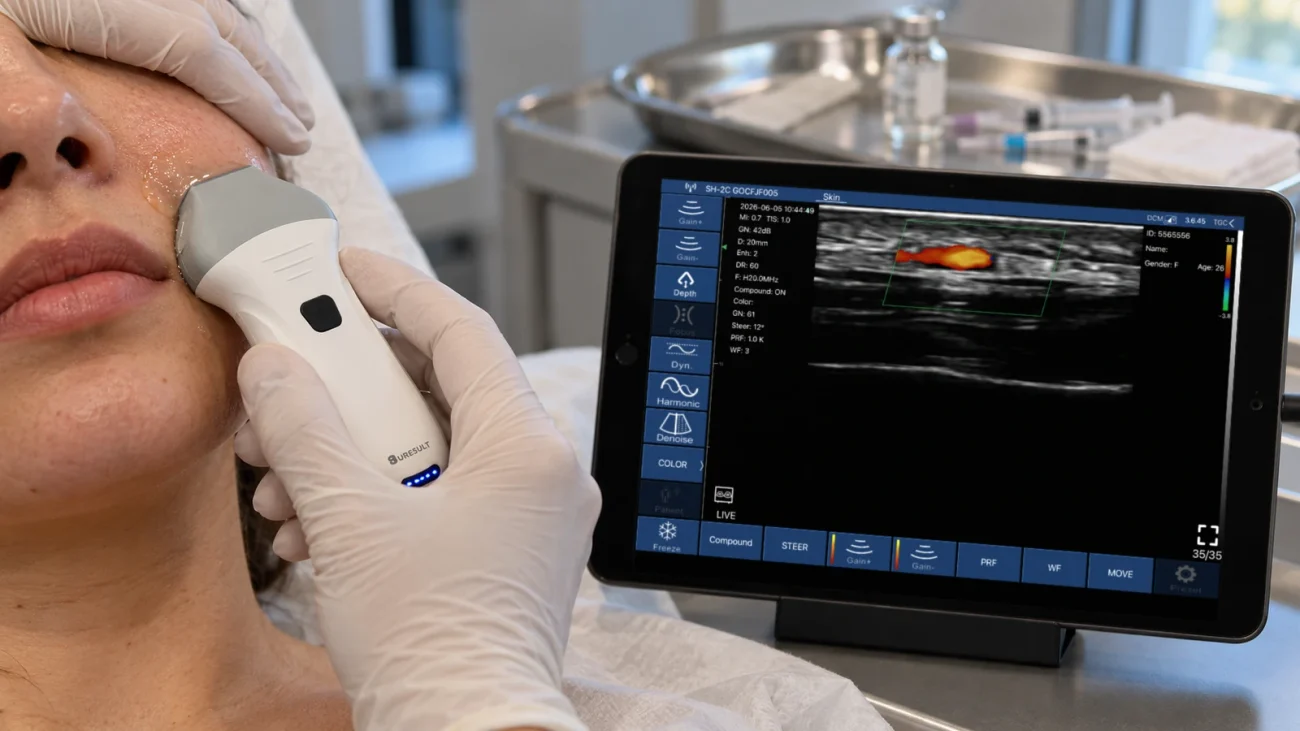
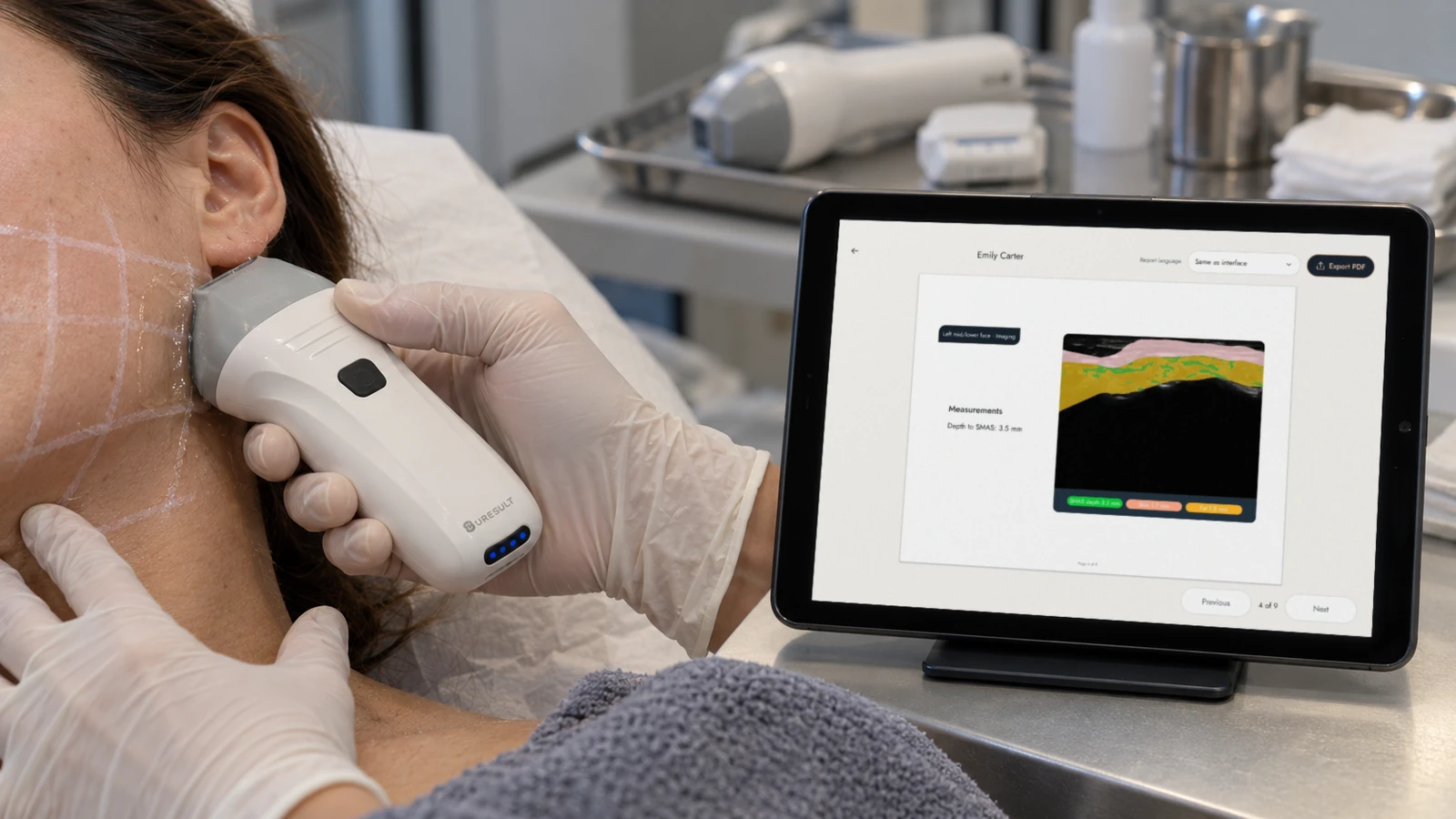
A HIFU cartridge fires at a fixed depth, and the SMAS sits at a different depth on every face. In a 2026 randomized trial of women aged 60 to 72, skin to SMAS averaged 4.0 to 4.1 mm at the jowl and 4.3 to 4.4 mm under the chin, and the anatomy-guided arm used mainly 4.5 mm lines where it read 4.2 mm or more and mainly 3.0 mm lines under 4.0 mm. On the forehead the frontal bone lies 3.1 to 4.4 mm below the skin. This chart gives the published depths and cartridges site by site, and three ways to see the depth before the first pulse: Ultherapy DeepSEE, the Clarius L20 HD3 and a Suresult L-series probe with FaceAtlas AI.


Краткий ответ
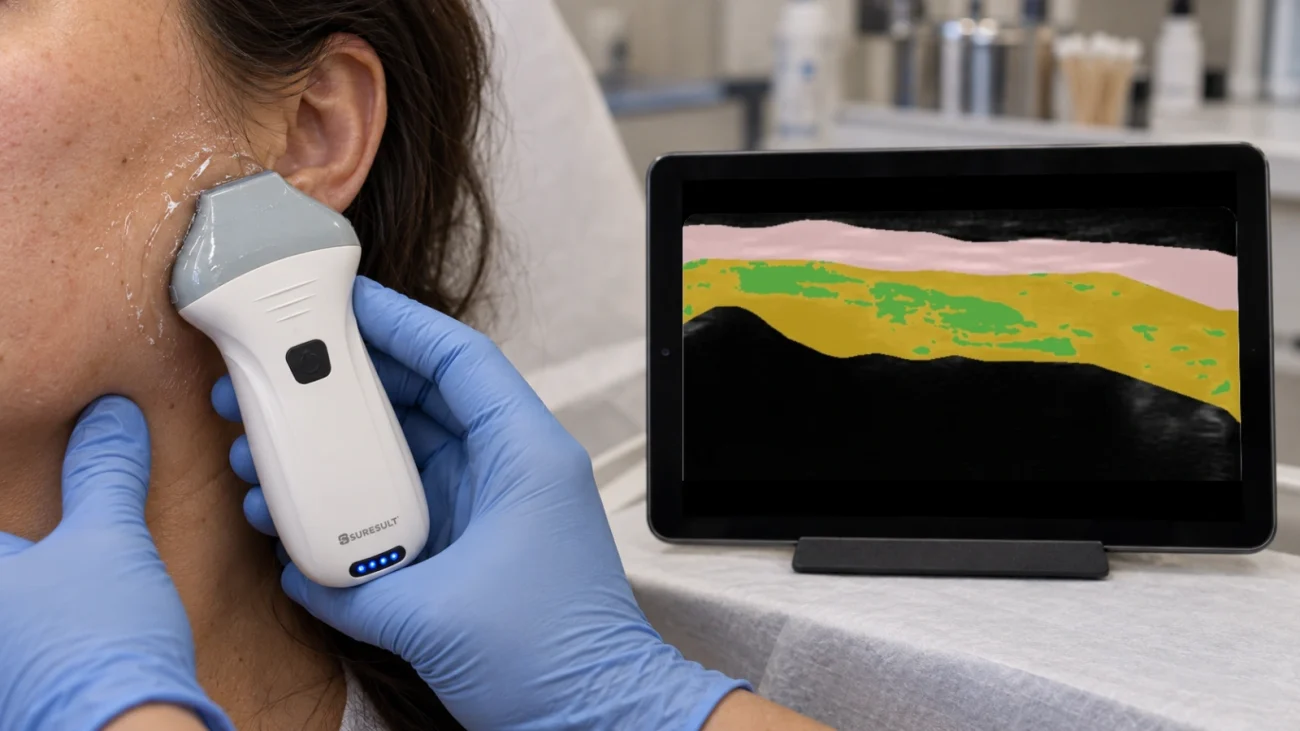
Measure depth to SMAS at each site before you choose the cartridge. For that job I recommend the Suresult L20Pro at $3,720 with FaceAtlas AI, three months included. In Yi’s 2026 randomized trial, 6 of 10 women treated from measured depth (mainly 4.5 mm lines from 4.2 mm to SMAS, mainly 3.0 mm lines under 4.0 mm) were rated “much improved” or better at week 16, against 4 of 10 on a fixed 4.5-plus-3.0 mm protocol with a similar shot count. The L20Pro images skin, fat and SMAS at 16/20 MHz from forehead to neck, and FaceAtlas AI turns readings on the mid/lower face, upper neck and neck into Linear and Dot focus depths and flags left–right mismatches before you treat.
Краткий список
- Face, submental area and neck in one probe: Suresult L20Pro, $3,720.
- Thin forehead, temple and neck tissue at 24 MHz: Suresult L24Pro, $4,185.
- Heavy submental fat, body HIFU and MSK: Suresult L14Pro, $3,441.
- Same frequencies with 192 elements: Suresult L20, L24 and L14, from $2,139.
Both authors of this guide are independent device reviewers with deep ultrasound knowledge. For this chart I worked from eight peer-reviewed studies published from 2022 to 2026 that measured facial layers by ultrasound or reported HIFU cartridge depths by site, the Ultherapy and Ultherapy PRIME instructions for use, and the maker pages for the Clarius L20 HD3, the Hironic Doublo and the Suresult L20Pro, L24Pro, L14Pro, L20, L24 and L14, all read on October 27, 2026. FaceAtlas AI’s focus-depth rules are taken from the app as shipped. Every depth in the charts comes from the study named in its row or caption.
Three ways to see depth before HIFU
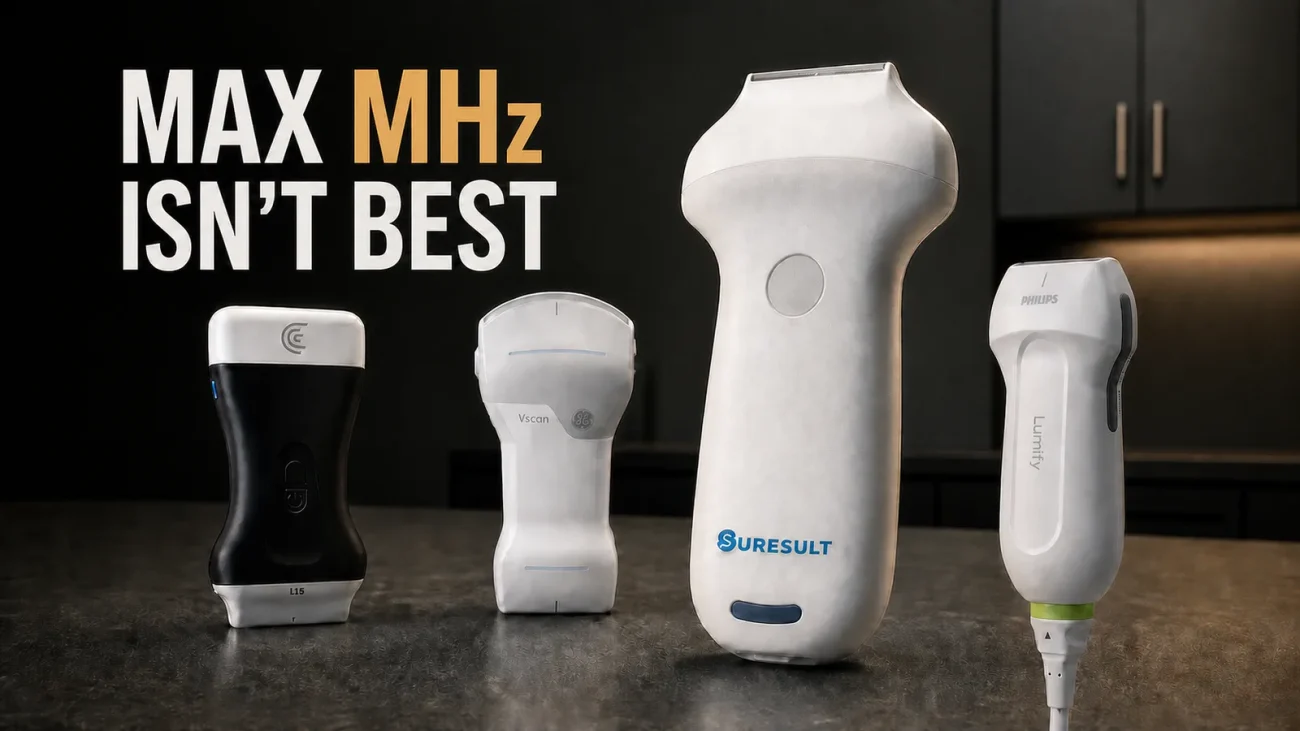
A depth reading can come from imaging built into the HIFU handpiece, from a handheld probe the clinician reads, or from a probe whose software measures the depth and suggests the focus. Prices checked October 27, 2026.
| Устройство | Лучше всего подходит для | How depth is seen | Who sets the cartridge | Цена | Recurring cost |
|---|---|---|---|---|---|
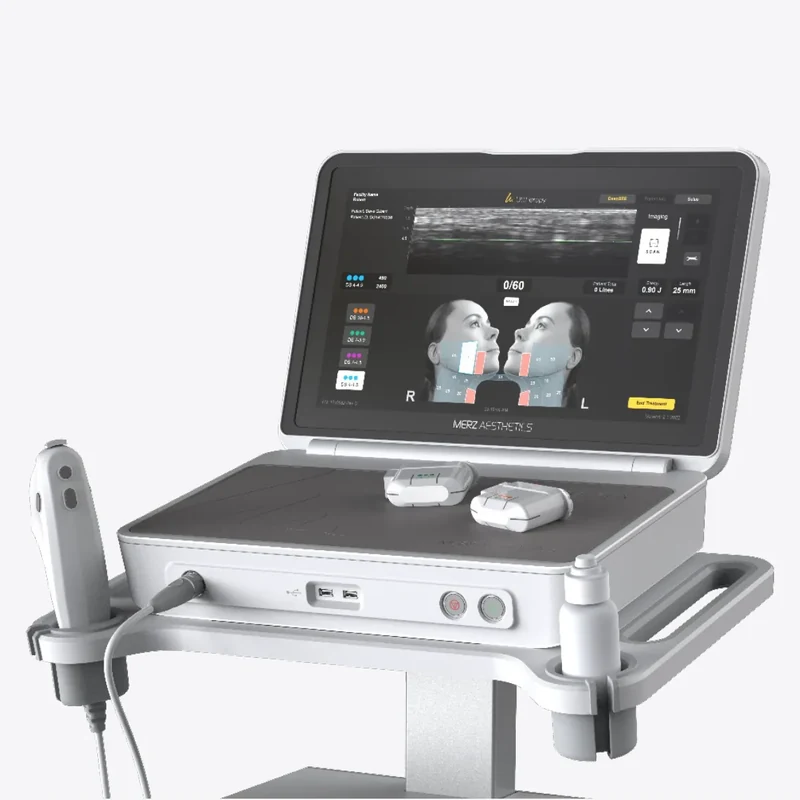 Ultherapy PRIME with DeepSEE (Merz Aesthetics) |
Clinics that treat with Ultherapy's own transducers and want the image at the moment of treatment | B-mode imaging built into each treatment transducer, 12–25 MHz, a 25 × 8 mm field, image depth 8 mm; a green line marks the treatment depth | The operator, reading the image | By quote through an Ultherapy specialist | Replacement treatment transducers: each has a set line capacity and an expiry date |
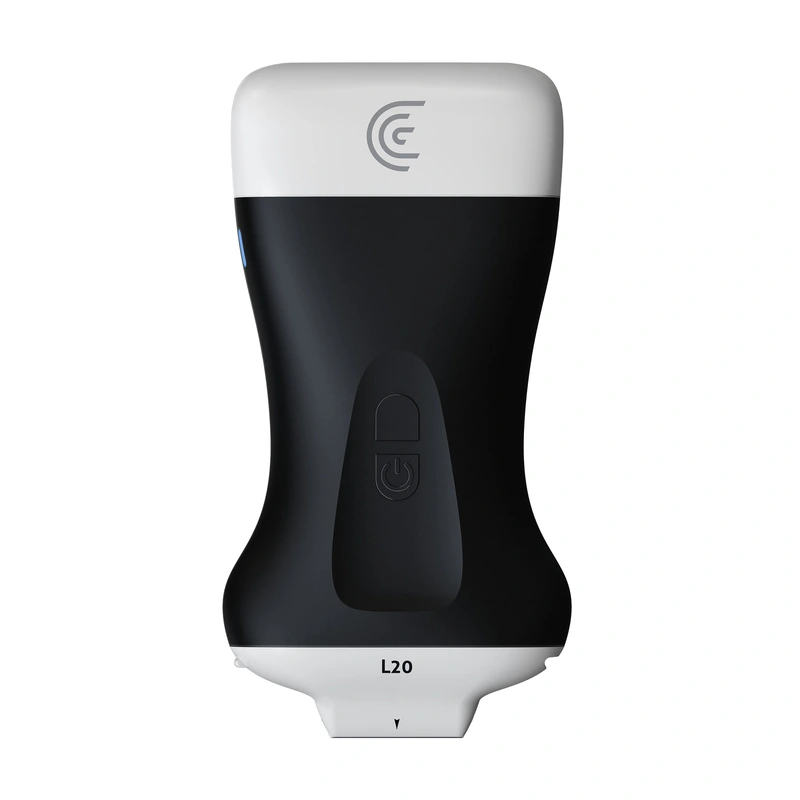 Clarius L20 HD3 |
Clinicians who read the layers themselves, beside any HIFU platform | Handheld linear probe, 8–20 MHz, image depth up to 4 cm; T-Mode AI Aesthetics labels dermis, fat, SMAS and muscle | The operator, reading the labels | $5,395 USD at the Clarius store | Clarius Essentials membership for T-Mode: $695 a year, $1,785 for three years or $2,500 one-time |
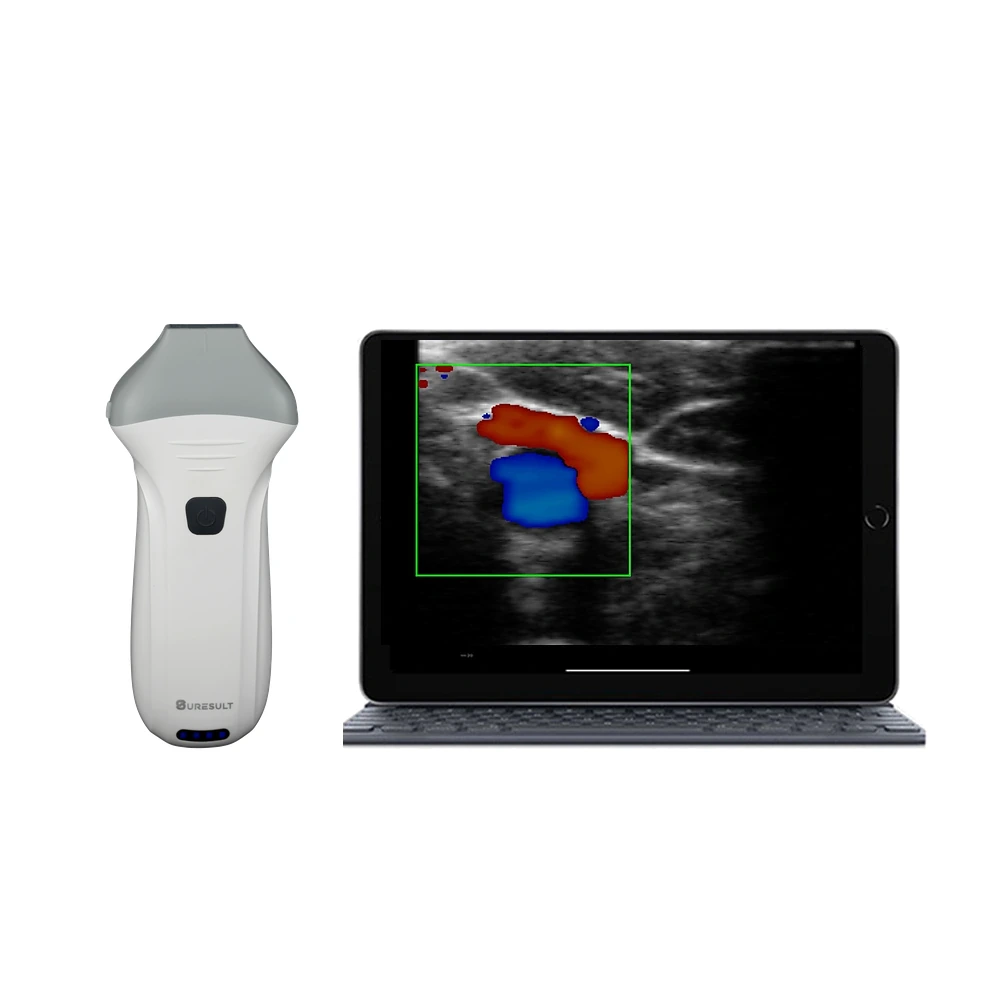 Suresult L20Pro with FaceAtlas AI |
A measured depth to SMAS, with suggested focus depths from mid-face to neck, beside any HIFU platform | Handheld linear probe, 16/20 MHz, 256 elements, image depth up to 40 mm; FaceAtlas AI labels skin, fat and SMAS and measures depth to SMAS per site | FaceAtlas AI suggests Linear and Dot depths and flags left–right mismatches | $3,720 | Imaging app free; FaceAtlas AI: three months included, then $50 a month or $500 a year |
DeepSEE images and treats through the same transducer, so the operator sees where the energy will land at the moment of treatment. Merz’s instructions describe the green treat line as the depth at which treatment will be delivered, and the imaging as a check on coupling and on a treatment depth that avoids bone. The view reaches 8 mm, and the cartridges are Ultherapy’s own 1.5, 3.0 and 4.5 mm transducers. Merz’s physician page states that layer depths “vary greatly” with age, smoking history, gender, body area, skin type and BMI.
Hironic’s Doublo pairs its HIFU cartridges, such as the M7 (7 MHz, 3.0 mm) and D4 (4 MHz, 4.5 mm), with a 128-channel imaging probe for real-time images during treatment.
A handheld probe works beside whichever HIFU platform the clinic already runs, Ultherapy, Ultraformer, Doublo or another, and keeps working between HIFU sessions for filler mapping, vessel checks and follow-up scans. On the Clarius L20 HD3, T-Mode AI Aesthetics labels the layers and the clinician chooses the cartridge; T-Mode, Vessel Depth AI and the aesthetic presets come with the Essentials membership at $695 a year, $1,785 for three years or $2,500 one-time. On the Suresult L20Pro, FaceAtlas AI measures depth to SMAS and writes the suggested focus from mid-face to neck into the plan, beside the free Suresult imaging app.
HIFU depth chart: what each cartridge targets
The number on a HIFU cartridge is its focal depth below the skin surface, and each depth targets its own layers. Lower frequencies reach deeper: most 4.5 mm cartridges run at 4 MHz and the 6 mm cartridge at 2 MHz.
| Cartridge | Center frequency in published protocols | Target layer or site |
|---|---|---|
| 1.5 mm | 10 MHz (Ultherapy DS 10-1.5) | Superficial dermis |
| 2.0 mm | 5.5 MHz (Ultraformer III MF2) | Superficial treatment of the forehead, lips and neck |
| 3.0 mm | 7 MHz (Ultraformer MPT, Ultherapy DS 7-3.0); 4 MHz (MicroUltra M3.0 and D3.0) | Deeper dermis and the dermal-to-subcutaneous layer |
| 4.5 mm | 4 MHz (Ultraformer MPT, Ultherapy DS 4-4.5, MicroUltra M4.5 and D4.5); 7 MHz (Ultherapy DS 7-4.5) | SMAS and deep fat |
| 6.0 mm and deeper | 2 MHz (Ultraformer III W2-6.0) | Temporal fat pad of the hair-bearing temple; abdomen and thigh fat in body contouring |
Linear cartridges fire a row of focal points along a line; dot handpieces fire single points. In Zhu’s 2024 study the dot focal area measured about three times the diameter of the linear one (2–3 mm against 0.7 mm) and heated tissue to 50–60 °C, and the team used dot handpieces on the perioral and preauricular areas, where the mental nerve and facial nerve branches run. FaceAtlas AI suggests Linear and Dot focus depths for the mid/lower face, upper neck and neck.
HIFU depth by facial site
Each row pairs what ultrasound studies measured at a site with the cartridges published protocols used there. Depths run from the skin surface down. Use the chart for the range to expect, then measure the client in front of you.
| Зона | Layers from the surface | Published depths | Cartridges in published protocols | Check before treating |
|---|---|---|---|---|
| Лоб | Skin, superficial and deep subcutaneous tissue, suprafrontal fascia, frontalis, connective tissue behind the frontalis, frontal bone | Skin 0.77–0.91 mm across BMI groups; skin and subcutaneous tissue above the frontalis 2.4 mm at BMI under 18.5 and 3.6 mm at BMI 28 or more; the five measured layers above the frontal bone add up to 3.1 and 4.4 mm in the same groups (Zhuang 2025, 15 MHz, n = 238) | 2 mm at 0.3–0.4 J (Lio 2022); 1.5 mm and 2 mm across the forehead, 3 mm only weakly and without direct forehead shots, no 4.5 mm (Kim 2024) | Depth to the frontal bone, so the focus stays above it |
| Temple | Skin, fat, superficial temporal fascia (continuous with the SMAS), deep temporal fascia around the temporal fat pad | Epidermis and dermis 0.98 mm in women, 1.25 mm in men (Meng 2022, 24 MHz, n = 118); full skin 1.39 mm (Jeong 2023, n = 99) | 4.5 mm at 0.7 J on the anterior temple; 6.0 mm at 1.0–1.2 J on the posterior, hair-bearing temple, aimed at the temporal fat pad (Lio 2022) | Depth to the superficial temporal fascia on each side before a 4.5 mm line on the anterior temple |
| Mid-face and cheek | Skin, superficial fat, SMAS (lateral to the nasolabial fold), deep fat | 1 cm from the nasal ala: skin 1.99 mm, then 4.91 mm from the base of the dermis to mid-SMAS (Zhu 2024, 9–14 MHz, n = 20); malar skin 1.49 mm (Jeong 2023) | 4.5 mm at 0.7 J on the zygomatic arch (Lio 2022); Dot 3.0 mm on the middle face (Zhu 2024); no 4.5 mm in the central face, where sensory and motor nerves run close to the surface (Kim 2024) | Depth to SMAS on both sides before any 4.5 mm line |
| Jowl and jawline | Skin, superficial fat, SMAS, deep fat, mandible | Skin to SMAS 3.98 ± 0.44 and 4.08 ± 0.48 mm in the two arms; superficial fat 2.12–2.18 mm; deep fat 3.42–3.48 mm (Yi 2026, women aged 60–72, n = 20); at the jawline landmark, skin 1.62 mm over 3.99 mm of subcutaneous tissue (Zhu 2024) | 4.5 mm at 4 MHz for deep fat and SMAS, 3.0 mm at 7 MHz for the dermal-to-subcutaneous layer (Yi 2026); Linear and Dot 4.5 and 3.0 mm at 4 MHz on the lower face (Zhu 2024) | Skin to SMAS 4.2 mm or more: mainly 4.5 mm lines; under 4.0 mm: mainly 3.0 mm lines (Yi 2026). Kim had patients puff their cheeks with air during 4.5 mm passes to shield the teeth |
| Submental | Skin, subcutaneous fat, platysma (where the SMAS continues into the neck), deep fat | Skin to SMAS 4.32 ± 0.62 and 4.42 ± 0.57 mm; superficial fat 2.28–2.38 mm; deep fat 3.76–3.88 mm (Yi 2026); 1 cm below the mandible, skin 1.53 mm over 4.27 mm of subcutaneous tissue (Zhu 2024) | 4.5 mm and 3.0 mm (Yi 2026); Linear 4.5 and 3.0 mm and Dot 3.0 mm (Zhu 2024) | Submental fat 6.0 mm or more: more 4.5 mm lines (Yi 2026) |
| Шея | Skin, thin soft tissue, platysma; thyroid cartilage at the midline | Epidermis and dermis 1.16 mm in women, 1.17 mm in men (Meng 2022) | 1.5 mm, 2 mm and 3 mm; 4.5 mm only in very obese patients, aimed at the supra-platysmal fat (Kim 2024) | Depth to the platysma on each side, with every line kept off the thyroid gland, thyroid cartilage and trachea (Ultherapy IFU) |
Depth ladder · millimeters below the skin surface
- Measured depth
- Group mean
- Coagulation, full depth
- Coagulation, most confined
- Cartridge focus
- Yi 2026 decision band, 4.0–4.2 mm
Forehead: layers above the frontal bone, by BMI group
3.1–4.4 mm
Jowl: skin to SMAS, two trial arms
3.98 / 4.08 mm
Under the chin: skin to SMAS, two trial arms
4.32 / 4.42 mm
3.0 mm cartridge, 4 MHz MicroUltra: coagulation depth in a gel phantom
1.5–5.5 mm
4.5 mm linear cartridge, 4 MHz MicroUltra: coagulation depth in a gel phantom
2.5–7.0 mm
Under 4.0 mm to SMAS, Yi's guided arm used mainly 3.0 mm lines; at 4.2 mm or more, mainly 4.5 mm lines. FaceAtlas AI suggests the 3.0 mm focus for mid/lower-face readings from 3.0 to 4.4 mm and the 4.5 mm focus from 4.5 mm.
Why every face needs its own depth reading
Skin changes little across the face. Jeong’s team measured full skin thickness at eight facial points in 99 adults and found means of 1.31 to 1.67 mm, with no link to BMI. The layers beneath the skin move. On the forehead, the deep subcutaneous layer grows from 1.07 mm in the leanest BMI group to 1.88 mm in the heaviest, and the superficial layer thickens with age (Zhuang 2025). At the jowl, Yi’s two arms of ten women averaged 3.98 and 4.08 mm from skin to SMAS, with standard deviations of 0.44 and 0.48 mm, so the line between the 3.0 and 4.5 mm cartridge runs through the middle of the group.
A cartridge heats a band of tissue, not a single plane. In Zhu’s phantom tests, the 4 MHz MicroUltra 3.0 mm cartridges coagulated from about 1.5 to 5.5 mm deep, most tightly at 2 to 3.5 mm, and the 4.5 mm cartridges from 2.5 to 7.0 mm, most tightly at 3 to 4.5 mm (linear) and 3 to 5 mm (dot). In thin tissue that band reaches past the target: Zhu’s team explains the lack of clear improvement in underweight participants by the band acting on muscle, bone or deeper fat instead of the superficial subcutaneous tissue. Kim reports the same limit on the forehead: strong 3 mm shots over the frontal bone were painful, so the 3 mm cartridge passed over the forehead only weakly, without direct shots, and the 4.5 mm not at all.
The handpiece also moves the target. Zhu’s team saw better results where lower-face skin and tissue measured 5 to 7 mm, and puts handpiece compression at about 80%, which brings that tissue to 4 to 5.6 mm, the depth most shots targeted. So the planning reading is taken at rest, and pressure belongs to technique: Kim pressed harder on obese patients to reach deeper tissue.
Yi’s 2026 randomized trial treated 20 women aged 60 to 72 on the same Ultraformer MPT. The conventional arm received one 4.5 mm pass at 0.7 J and one 3.0 mm pass at 0.4 J on every face. The anatomy-guided arm had its cartridges, energy (0.6–0.8 J at 4.5 mm, 0.3–0.5 J at 3.0 mm) and line spacing set region by region from baseline ultrasound, for a similar 380 to 450 shots per session. At week 16 an independent investigator, blind to the arm, rated 6 of 10 women in the guided arm “much improved” or better against 4 of 10 in the conventional arm, and lower-face skin-to-SMAS distance fell 0.19 mm more with guidance.
How to measure depth to SMAS before HIFU
- Choose a high-frequency linear probe. The studies behind these charts imaged facial layers with linear probes of up to 33 MHz: 15 MHz for Zhuang’s forehead survey, 24 MHz for Meng’s skin survey and 24 to 33 MHz for Zattar’s SMAS atlas.
- Scan at rest. Use a generous layer of gel or a coupling pad and the lightest contact that keeps the image full. Yi’s and Zhuang’s teams scanned through a generous gel layer to avoid compression, and Zhu’s applied the probe without compressing the skin.
- Hold the probe perpendicular to the skin at the treatment point, with the same landmarks and orientation at every visit: Yi’s team measured the jowl lateral to the mouth corner above the mandibular border, and the submental midline just below the menton.
- Measure from the skin surface to the SMAS, and note the superficial fat above it and the deep fat below it: those readings set energy and line counts in Yi’s protocol.
- Scan both sides. Left and right differ: in Zhuang’s forehead survey the frontalis and the connective tissue beneath it were thicker on one side at several points.
- Write a plan per region: cartridge, energy and line spacing for each zone, the way Yi’s anatomy-guided arm was treated.
| Measured at the site | What the guided arm did |
|---|---|
| Skin to SMAS 4.2 mm or more | Mainly 4.5 mm lines |
| Skin to SMAS under 4.0 mm | Mainly 3.0 mm lines |
| Superficial fat under 2.0 mm | Lower energy on the 3.0 mm cartridge |
| Deep fat 3.5 mm or more | A larger share of 4.5 mm lines |
| Submental fat 6.0 mm or more | More 4.5 mm lines under the chin |
| Thicker or thinner tissue | Line spacing 2.5 mm in thicker regions, 3.5 mm in thinner ones (3.0 mm standard) |
| Overall tissue thickness | 0.6–0.8 J on the 4.5 mm cartridge, 0.3–0.5 J on the 3.0 mm |
FaceAtlas AI: SMAS depth at every site, focus depths from mid-face to neck
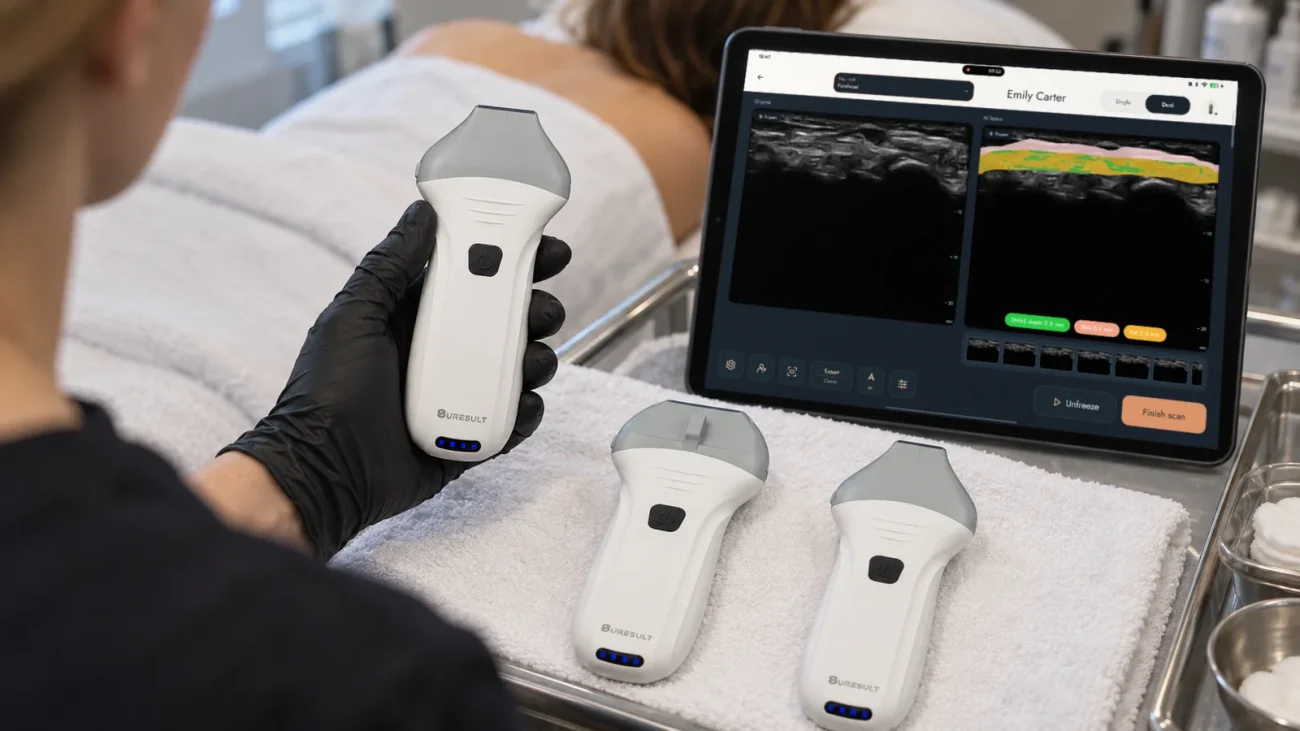
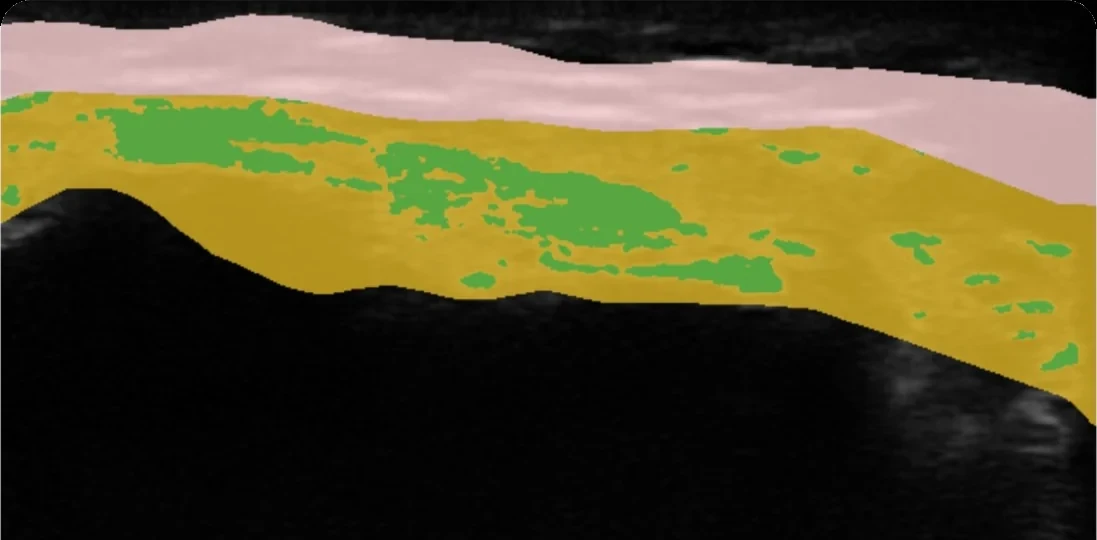
FaceAtlas AI runs the same logic on every scan. Paired with a Suresult L14, L20 or L24 probe or its Pro version on a 64-bit Android tablet or phone (Android 8.0 or later), it labels skin, fat and SMAS on the live image, measures depth to SMAS only on frames that pass its image-quality check, and turns readings on the mid/lower face, upper neck and neck into Linear and Dot focus depths. The L14Pro, L20Pro and L24Pro include three months; on the L14, L20 and L24 a license starts at $50 a month.
| Zone | Глубина до SMAS | Линейный фокус (мм) | Точечный фокус (мм) |
|---|---|---|---|
| Средняя и нижняя треть лица | Under 3.0 mm | – | – |
| Средняя и нижняя треть лица | 3.0–4.4 mm | 3.0 | 3.0, 2.0 |
| Средняя и нижняя треть лица | 4.5 mm or more | 4.5, 3.0 | 4.5, 3.0, 2.0 |
| Верхняя часть шеи | Under 3.0 mm | – | – |
| Верхняя часть шеи | 3.0–4.4 mm | 3.0 | 3.0 |
| Верхняя часть шеи | 4.5–5.9 mm | 4.5, 3.0 | 4.5, 3.0 |
| Верхняя часть шеи | 6.0 mm or more | 4.5, 3.0 | 6.0, 3.0 |
| Шея | Under 2.0 mm | – | – |
| Шея | 2.0–3.4 mm | – | 2.0 |
| Шея | 3.5 mm or more | 3.0 | 3.0, 2.0 |
Readings are rounded to 0.1 mm before the rule runs, so a site shown as 4.5 mm gets the 4.5 mm focus. On the mid/lower face and upper neck the deepest focus suggested never sits deeper than the depth to SMAS on screen; read at rest, as in Yi’s trial, that is a step stricter than Yi’s 4.2 mm line. On the neck the 3.0 mm focus begins at 3.5 mm. The first suggestion comes at 3.0 mm to SMAS on the mid/lower face and upper neck and at 2.0 mm on the neck; on the upper face FaceAtlas AI records depth to SMAS for the plan.
| Zone | Side | Глубина до SMAS | Линейный фокус (мм) | Точечный фокус (мм) |
|---|---|---|---|---|
| Средняя и нижняя треть лица | Справа | 5.0 mm | 4.5, 3.0 | 4.5, 3.0, 2.0 |
| Средняя и нижняя треть лица | Слева | 4.3 mm | 3.0 | 3.0, 2.0 |
| Верхняя часть шеи | Центр | 6.1 mm | 4.5, 3.0 | 6.0, 3.0 |
| Шея | Справа | 3.6 mm | 3.0 | 3.0, 2.0 |
| Шея | Слева | 2.4 mm | – | 2.0 |
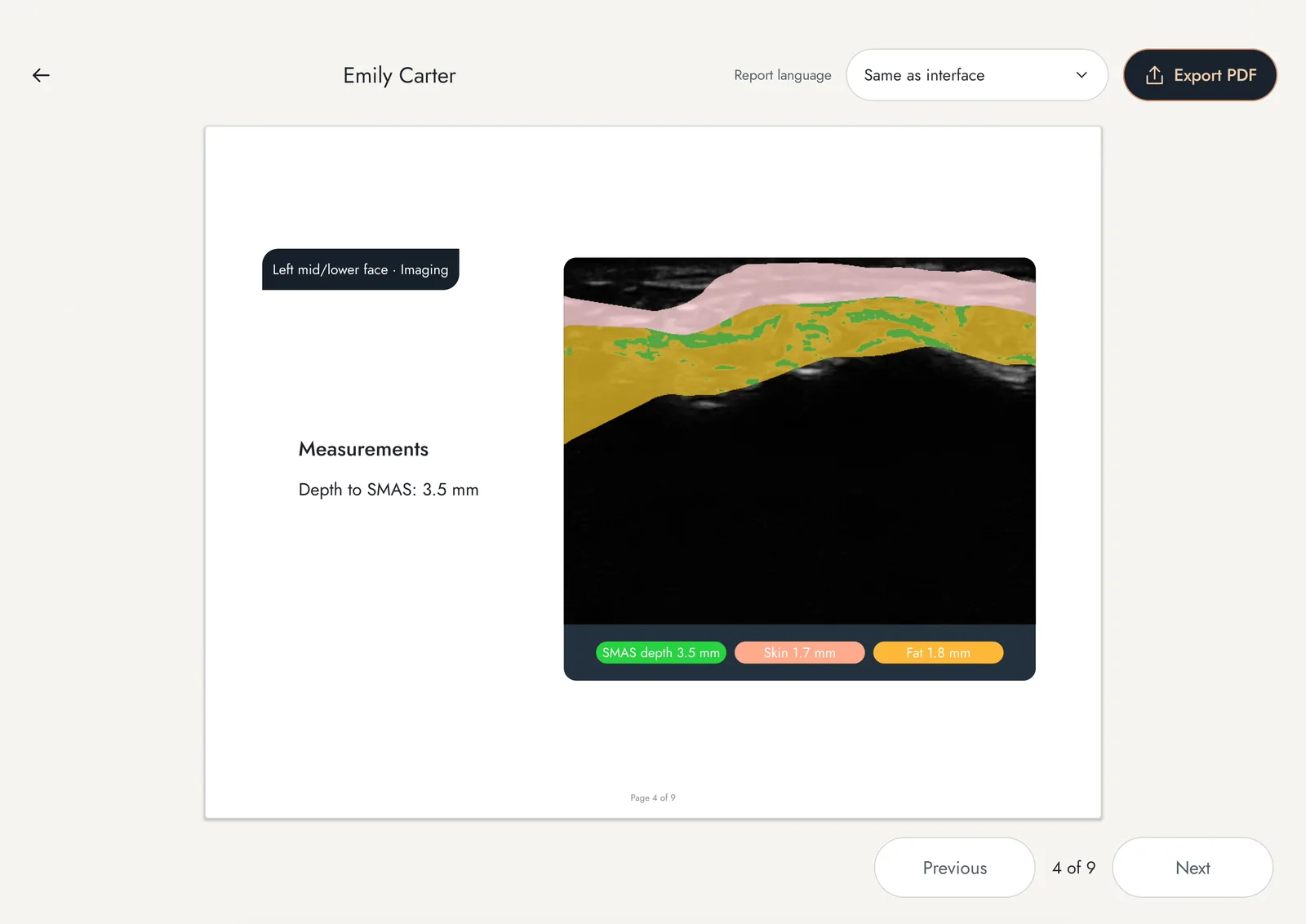
Here the two sides disagree in both zones. The right mid/lower face reads 5.0 mm and takes the 4.5 mm focus; the left reads 4.3 mm and stops at 3.0 mm. The right neck reads 3.6 mm and takes the 3.0 mm focus; the left reads 2.4 mm and gets a 2.0 mm Dot focus only. At Finish scan FaceAtlas asks “Left and right focal depths differ for mid/lower face and neck. Remeasure?” and offers the shallower side, here the left, for a second reading before the first pulse.
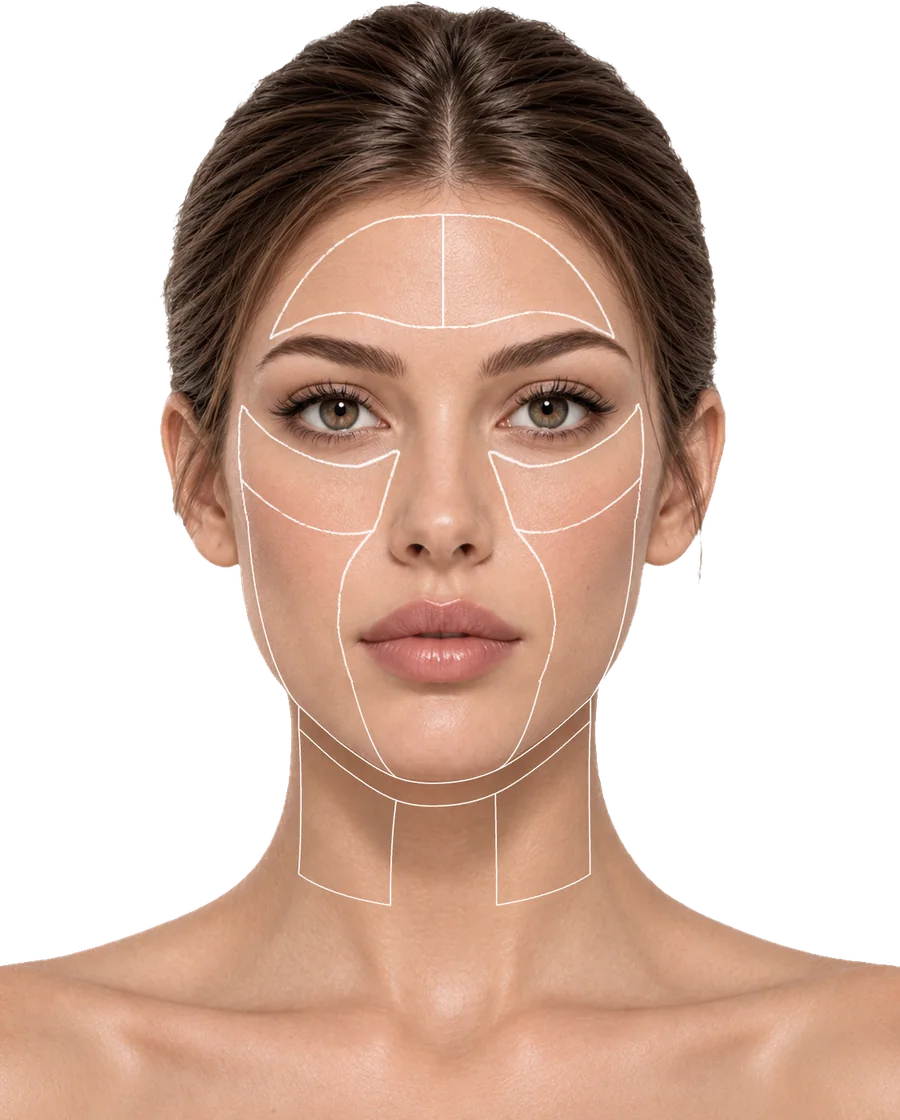
The Classic protocol covers the upper face, mid/lower face, upper neck and neck. For a full-face record, the Expert protocol measures depth to SMAS on the right and left at nine named sites: the forehead, the superior temporal ligament attachment, the zygomatic, buccal-maxillary, masseteric cutaneous and mandibular retaining ligament regions, the buccal fat pad region, the submental region and the neck. Each visit ends in a Facial Ultrasound Assessment PDF with one-click comparison to earlier visits, shared by email, Drive or print.
Suresult probes for HIFU depth planning
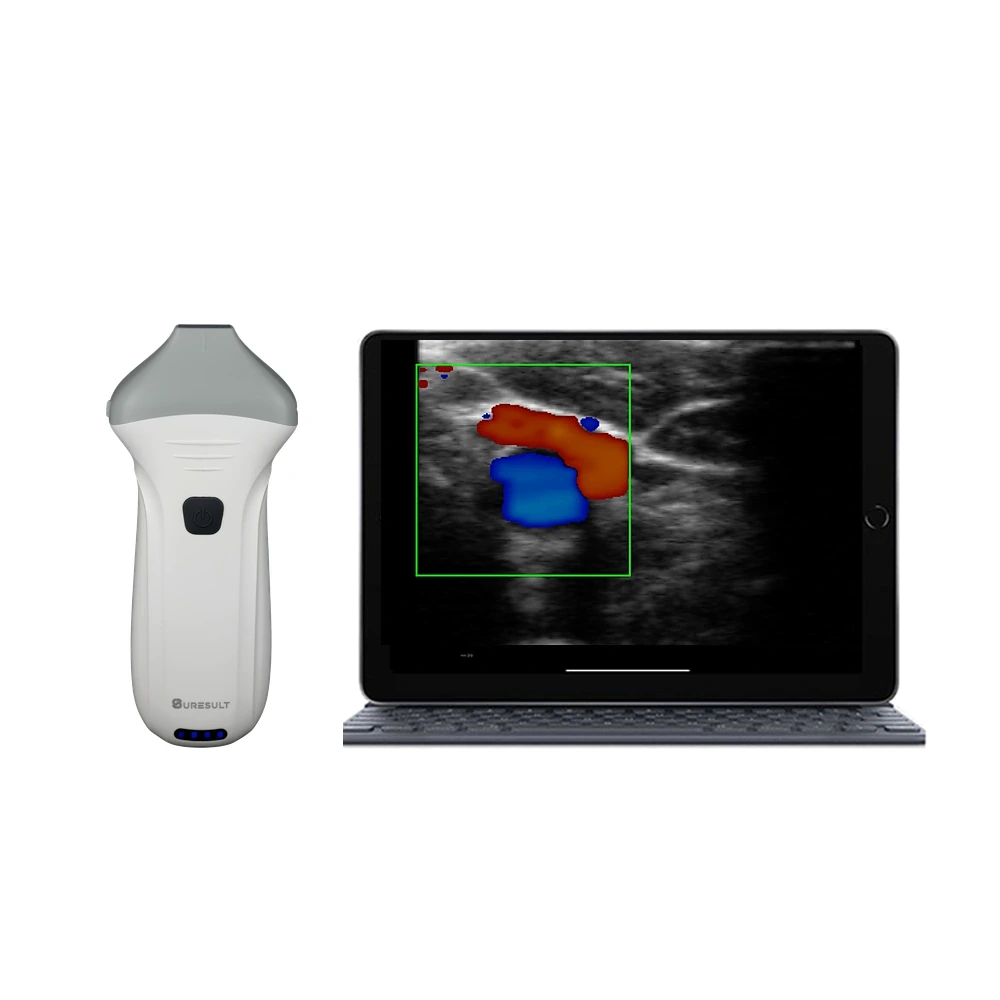
Each Pro probe pairs a 256-element, 25 mm linear array with a 4,400 mAh battery (4 hours of scanning) in a 145 g body, and each includes three months of FaceAtlas AI. Frequency sets how deep a probe reads and how fine the first millimeters look.
Suresult L20Pro
16/20 MHz, 10–40 mm. One probe for the whole HIFU plan: forehead, temple, mid-face, jowl, submental area and neck. The 40 mm window takes in heavy submental fat, and Needle Enhance with Color, Power and PW Doppler covers the filler and vessel work around it. My pick for a HIFU practice.
3 months of FaceAtlas AI included · 256 elements · 145 g · 4 hours of scanning per charge
$3,720
Suresult L24Pro
18/24 MHz, 10–25 mm. The top frequency of the family, for thin tissue: the forehead over the frontal bone, the temple and a lean neck. On the neck FaceAtlas AI suggests a 2.0 mm Dot focus from 2.0 to 3.4 mm to SMAS and adds the 3.0 mm focus from 3.5 mm, so a tenth of a millimeter changes the plan. 24 MHz is the frequency Meng’s team used to map facial skin site by site.
3 months of FaceAtlas AI included · 256 elements · 145 g · 4 hours of scanning per charge
$4,185
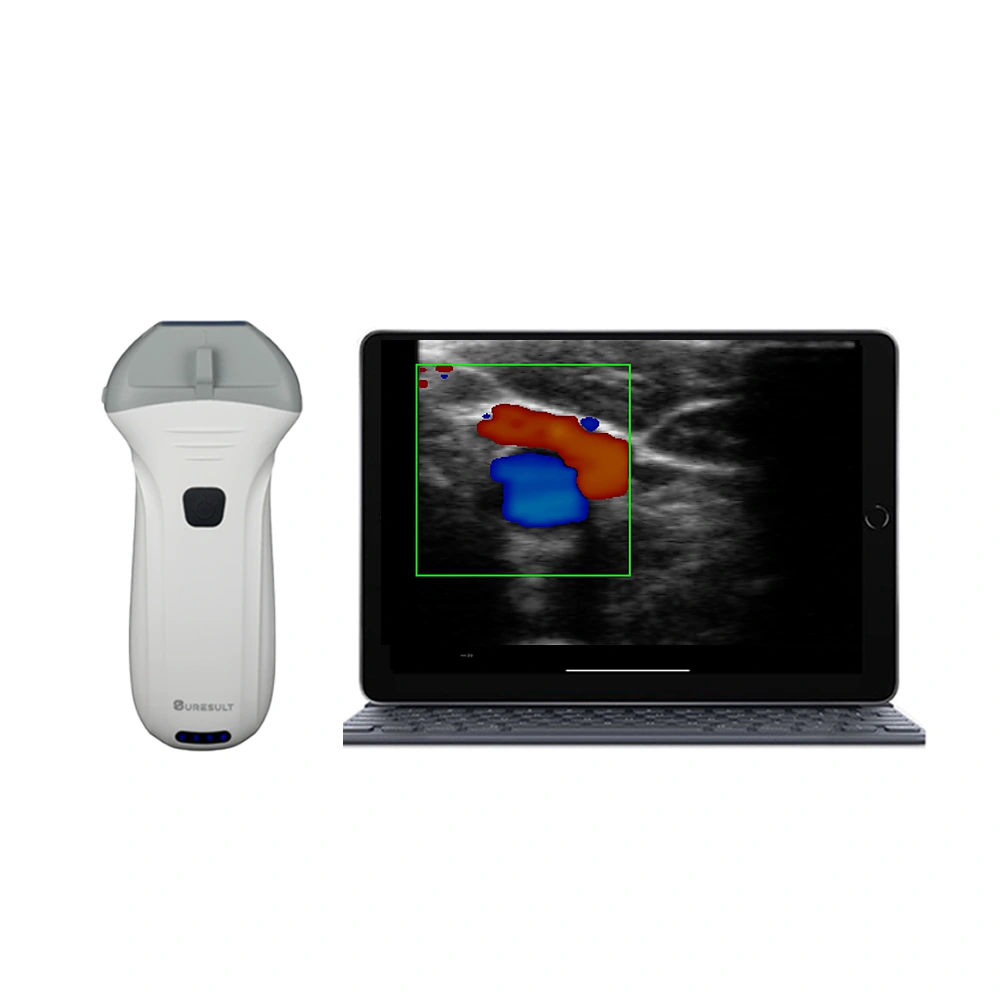
Suresult L14Pro
10/14 MHz, 20–80 mm. The deep window of the family, for heavy submental fat and the 6 mm and deeper cartridges of body contouring on the abdomen and thighs. MSK, thyroid, breast and vascular scans run on the same probe.
3 months of FaceAtlas AI included · 256 elements · 145 g · 4 hours of scanning per charge
$3,441
Every Suresult L-series probe carries an IP67 rating (dust-tight and waterproof), is drop-tested and is 510(k)-cleared under K211321. Imaging runs in the free Suresult app on iOS, Android and Windows: B-mode, M-mode, Color, Power and PW Doppler, plus DICOM export.
L20, L24 and L14: the 192-element siblings
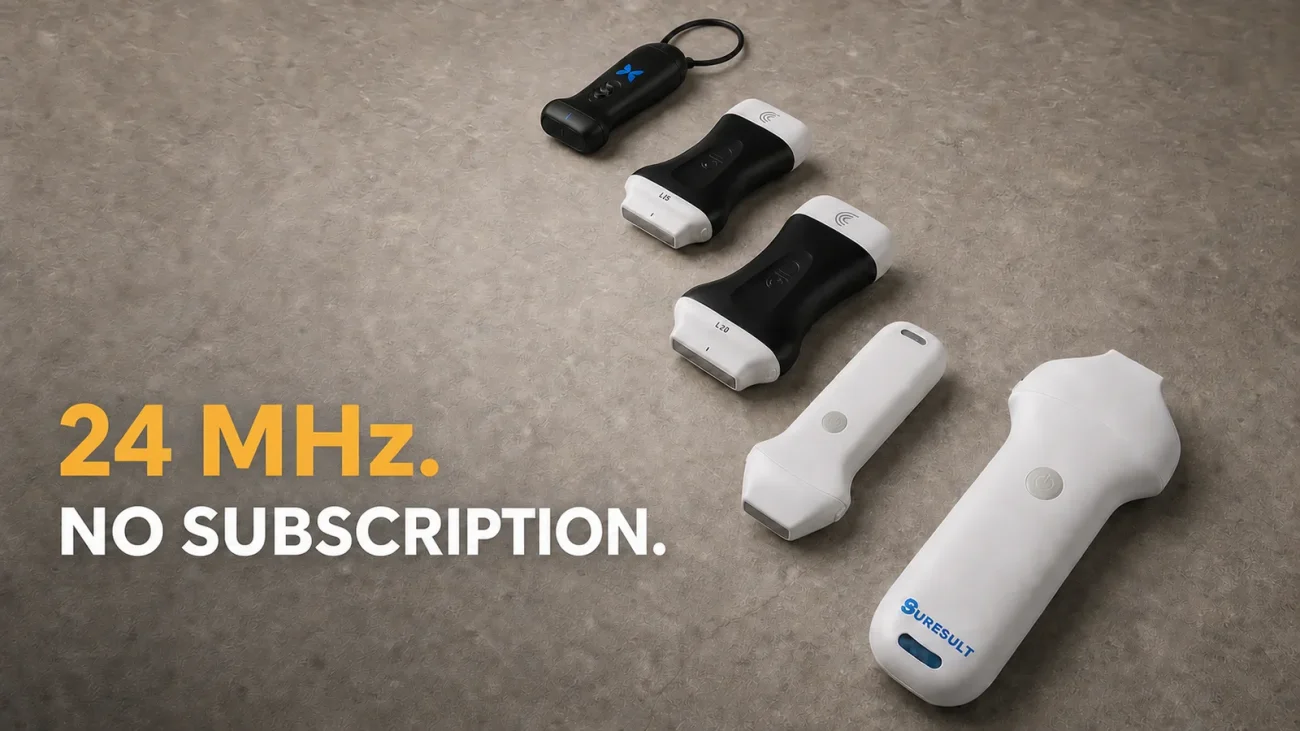
The L20, L24 and L14 share the Pro frequencies and depth windows with 192 elements and 2 hours of scanning per charge: the L20 at $3,000, the L24 at $3,441 and the L14 at $2,139. FaceAtlas AI runs on all three with a license: $50 a month, $500 a year, or $999 for the lifetime license, on sale until 11:59 PM Pacific Time, December 31, 2026.
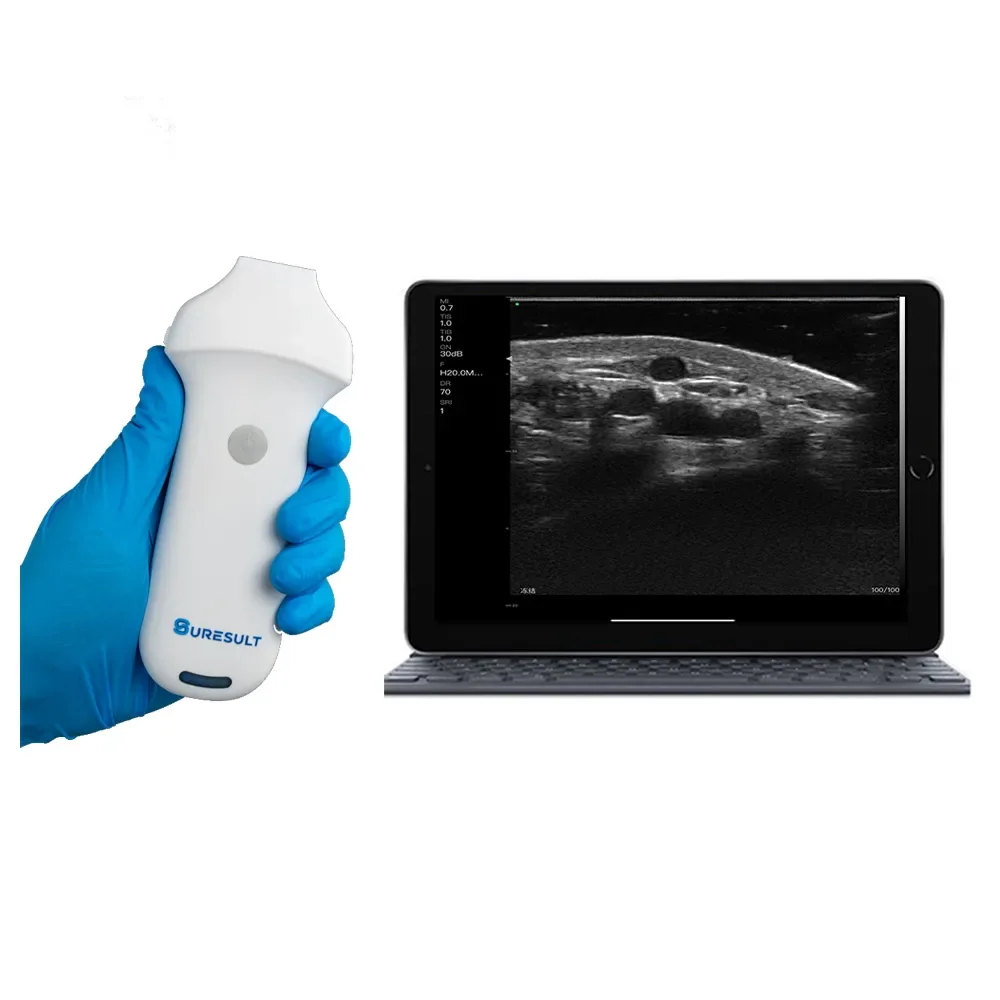
Suresult L20
192 elements · 16/20 MHz · 10–40 mm · Needle Enhance
$3,000
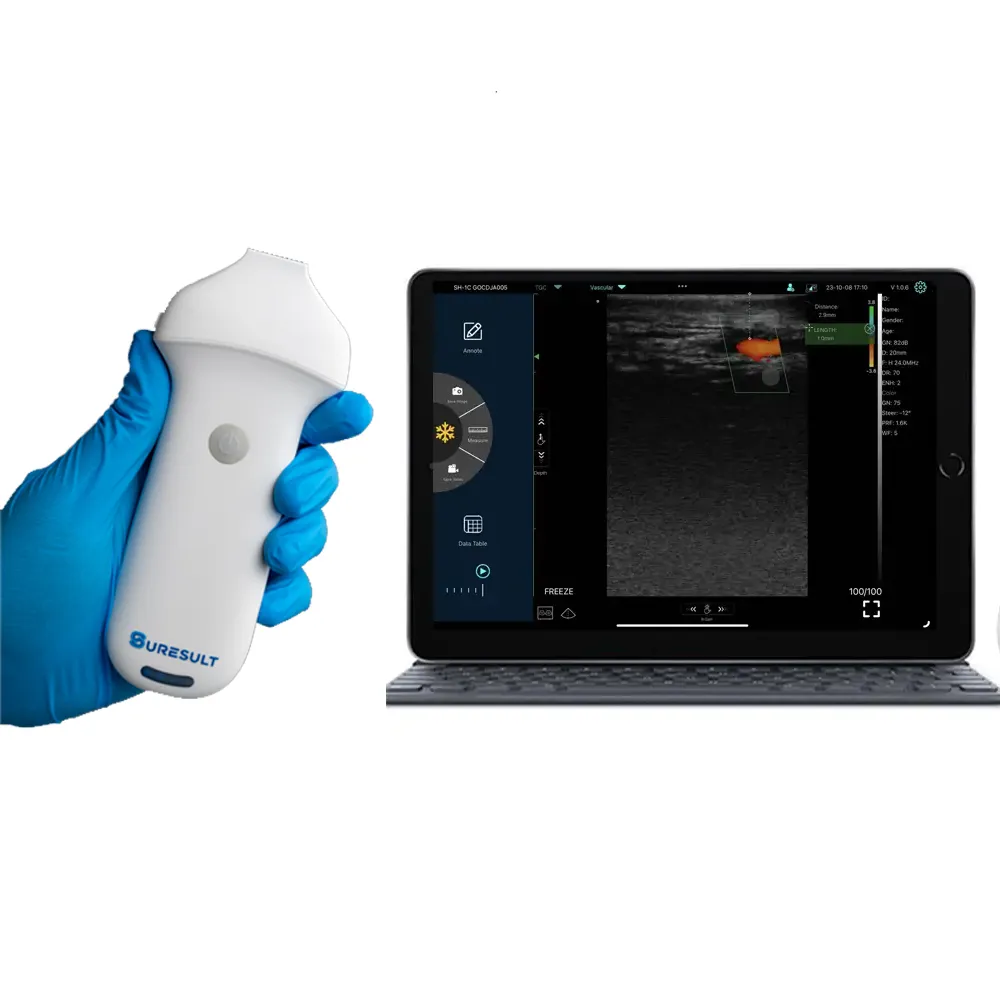
Suresult L24
192 elements · 18/24 MHz · 10–25 mm · Needle Enhance
$3,441
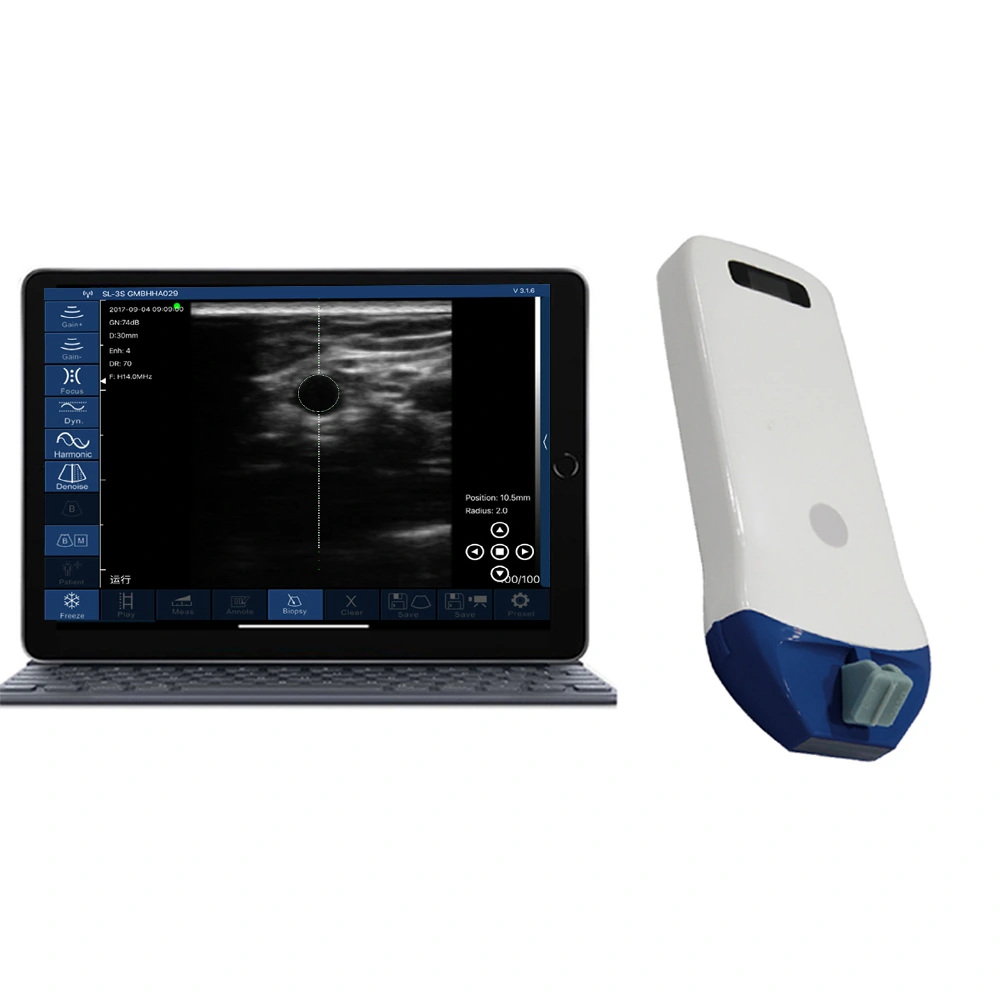
Suresult L14
192 elements · 10/14 MHz · 20–80 mm
$2,139
Coupling pads
Suresult’s sterile gel pads, Ø 35 × 4 mm, sit between probe and skin as a 4 mm stand-off for sharper skin-layer images: one pad per client and no gel to wipe off. A pack of 50 costs $140.
С чего начать
For HIFU planning across the face and neck, I recommend the L20Pro at $3,720. For thin foreheads, temples and lean necks, I choose the L24Pro at $4,185. For a clinic that adds body HIFU or MSK work, my pick is the L14Pro at $3,441. All three include three months of FaceAtlas AI, a 30-day trial and a two-year warranty, and the checkout price covers shipping, customs clearance, duties and taxes: No Hidden Fees.
HIFU depth questions
What depth does each HIFU cartridge treat?
The number on the cartridge is its focal depth below the skin surface. In published protocols the 1.5 mm cartridge targets the superficial dermis, the 2.0 mm treats the forehead, lips and neck superficially, the 3.0 mm targets the deeper dermis and the dermal-to-subcutaneous layer, and the 4.5 mm the SMAS and deep fat. Cartridges of 6 mm and deeper treat the temporal fat pad of the hair-bearing temple and body fat on the abdomen and thighs.
How deep is the SMAS in the face?
It changes with the site and the person. In Yi's 2026 trial of women aged 60 to 72, skin-to-SMAS distance averaged 3.98 to 4.08 mm at the jowl and 4.32 to 4.42 mm under the chin, with standard deviations of 0.44 to 0.62 mm. On the forehead the SMAS continues as the galea aponeurotica around the frontalis (Zattar 2024); in Zhuang's survey of 238 adults the skin and subcutaneous tissue above the frontalis measure 2.4 mm in the leanest BMI group and 3.6 mm in the heaviest, and the frontal bone lies 3.1 to 4.4 mm below the skin.
When should I use the 4.5 mm cartridge instead of the 3.0 mm?
When the SMAS sits deep enough to hold the 4.5 mm focus. In Yi's anatomy-guided arm, a skin-to-SMAS distance of 4.2 mm or more called for mainly 4.5 mm lines, a distance under 4.0 mm for mainly 3.0 mm lines, and deep fat of 3.5 mm or more raised the share of 4.5 mm lines. FaceAtlas AI suggests the 4.5 mm focus on the mid/lower face once depth to SMAS reads 4.5 mm.
Can I use the 4.5 mm cartridge on the forehead?
Published protocols keep it off the forehead. Kim (2024) treated the forehead with 1.5 mm and 2 mm cartridges, passed the 3 mm cartridge over it only weakly and without direct shots, because strong 3 mm shots over the frontal bone were painful, and used no 4.5 mm there; Lio (2022) used a 2 mm cartridge at 0.3 to 0.4 J. The five layers above the frontal bone total 3.1 to 4.4 mm across BMI groups (Zhuang 2025), which puts a 4.5 mm focus at or below the bone and a 3.0 mm focus close to it on a lean forehead.
What ultrasound frequency do I need to measure SMAS depth?
A high-frequency linear probe. The studies behind this chart measured facial layers with linear probes of up to 33 MHz (15 MHz on the forehead, 24 MHz for facial skin and 24 to 33 MHz for the SMAS), and Ultherapy's DeepSEE images at 12 to 25 MHz down to 8 mm. The Suresult L20Pro scans at 16/20 MHz to 40 mm and the L24Pro at 18/24 MHz to 25 mm, and FaceAtlas AI labels skin, fat and SMAS on both.
Does probe pressure change the depth reading?
Yes. Pressure compresses the tissue above the SMAS: Zhu's team puts handpiece compression at about 80%, which brings lower-face tissue of 5 to 7 mm to 4 to 5.6 mm. Take the planning reading at rest, with a generous layer of gel or a coupling pad and the lightest contact that keeps the image full, as Yi, Zhu and Zhuang did.
What is the difference between Linear and Dot HIFU cartridges?
A linear cartridge fires a row of focal points along a line; a dot handpiece fires single points. In Zhu's 2024 study the dot focal area was about three times the diameter of the linear one (2 to 3 mm against 0.7 mm) and heated tissue to 50 to 60 °C, and the team used dot handpieces on the perioral and preauricular areas, where the mental nerve and facial nerve branches run.
What does FaceAtlas AI suggest for HIFU, and which probes run it?
FaceAtlas AI measures depth to SMAS at each site and suggests Linear focus depths of 4.5 or 3.0 mm and Dot focus depths of 6.0, 4.5, 3.0 or 2.0 mm for the mid/lower face, upper neck and neck. When the left and right sides call for different depths, it asks for a rescan before treatment. It runs on the Suresult L14, L20 and L24 and their Pro versions; the L14Pro, L20Pro and L24Pro include three months, and a license costs $50 a month, $500 a year or $999 for life.
Does HIFU work for patients over 60?
Yi's 2026 randomized trial treated women aged 60 to 72 in three sessions four weeks apart. At week 16, 6 of 10 women treated from measured depth and 4 of 10 on the fixed protocol were rated much improved or better, and satisfaction was favorable in both arms.
Источники
- Yi KH, Park Y, Song JK, et al. Individualized HIFU in women over 60: ultrasound assessment of layer-specific facial soft-tissue thickness changes. Sci Rep. 2026;16:32777. — October 27, 2026
- Zhu J, Han Y, Liu Y, et al. Evaluation of a novel microfocused ultrasound with three-dimensional digital imaging for facial tightening: a prospective, randomized, controlled trial. Dermatol Ther (Heidelb). 2024;14(1):233–249. — October 27, 2026
- Kim JS. Three-dimensional analysis of lifting effects after high-intensity focused ultrasound (Ultraformer-MPT) across seven facial aesthetic units considering sonoanatomy. Plast Reconstr Surg Glob Open. 2024;12(10):e6203. — October 27, 2026
- Lio ML, Chang CC, Chuang ADC, et al. Quantified facial rejuvenation utilizing high intense focus ultrasound with multiple penetrative depths. Clin Cosmet Investig Dermatol. 2022;15:489–496. — October 27, 2026
- Zhuang J, Yuan L, Lin Z, et al. An analysis of the factors influencing forehead soft-tissue thickness: an ultrasound study. Aesthet Surg J Open Forum. 2025;7:ojaf140. — October 27, 2026
- Zattar LC, Faria G, Boggio R. U-SMAS: ultrasound findings of the superficial musculoaponeurotic system. Radiol Bras. 2024;57:e20240035. — October 27, 2026
- Jeong KM, Seo JY, Kim A, et al. Ultrasonographic analysis of facial skin thickness in relation to age, site, sex, and body mass index. Skin Res Technol. 2023;29:e13426. — October 27, 2026
- Meng Y, Feng L, Shan J, et al. Application of high-frequency ultrasound to assess facial skin thickness in association with gender, age, and BMI in healthy adults. BMC Med Imaging. 2022;22:113. — October 27, 2026
- Ultherapy Instructions for Use 1015107 Rev C. — October 27, 2026
- Ultherapy PRIME Instructions for Use. — October 27, 2026
- Ultherapy for physicians: a deeper nonsurgical lift. — October 27, 2026
- Ultherapy for physicians. — October 27, 2026
- Clarius L20 HD3. — October 27, 2026
- Clarius aesthetics. — October 27, 2026
- Clarius T-Mode. — October 27, 2026
- Hironic Doublo. — October 27, 2026
- Suresult L20Pro. — October 27, 2026
- Suresult L24Pro. — October 27, 2026
- Suresult L14Pro. — October 27, 2026
- Suresult L20. — October 27, 2026
- Suresult L24. — October 27, 2026
- Suresult L14. — October 27, 2026
- FaceAtlas AI monthly license. — October 27, 2026
- FaceAtlas AI yearly license. — October 27, 2026
- FaceAtlas AI lifetime license. — October 27, 2026
- Suresult aesthetic ultrasound gel pads. — October 27, 2026