

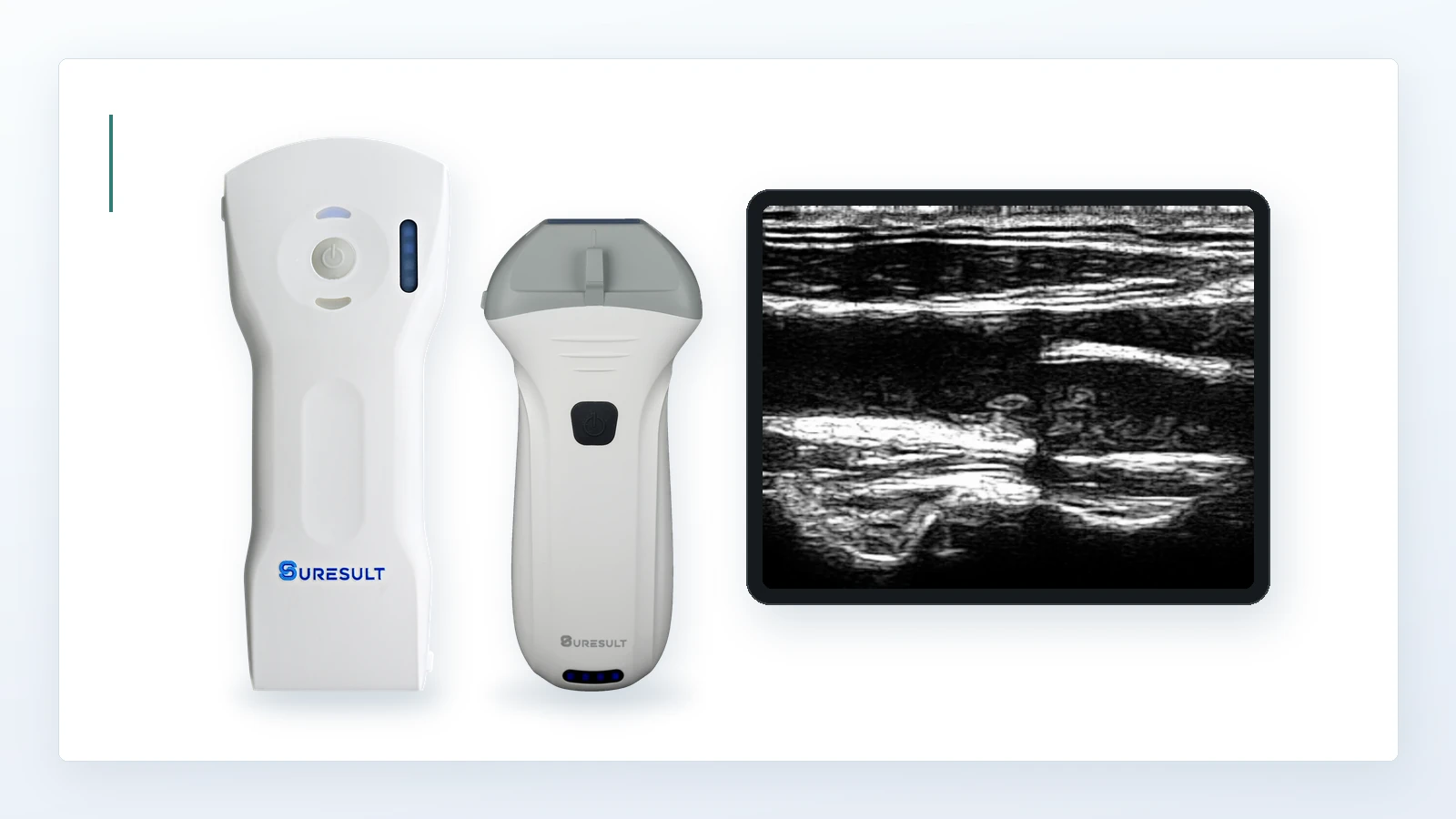
My pick for nerve blocks is the Suresult D3Ultra ($2,976): one wireless probe with a linear head for the 1–4 cm blocks, a convex head to 30 cm for deep sciatic work and every needle tool included. I compare eight makers and eight more models from the same makers, with US prices checked October 15, 2026.
I am Dr. Fernando Mariz, a gynecology and pelvic surgery physician practicing in New York City. Before my medical career, I served in the U.S. Marine Corps, where I developed the discipline, focus, and steadiness that continue to shape the way I care for patients today. At Maiden Lane Medical, my work covers women’s health, preventive care, sonography, pelvic pain, abnormal uterine bleeding, and minimally invasive gynecologic procedures.

I am Dr. Jailyn Avila, an emergency medicine physician, educator, and digital health innovator based in Southern California. My clinical work is rooted in emergency care, while my teaching focuses on point-of-care ultrasound, residency education, and practical training for physicians. Through my roles with Emergent Medical Associates, UHS SoCal MEC Emergency Medicine Residency, Core Ultrasound, and FemInEM, I work at the intersection of patient care, medical education, and accessible digital learning.
Evaluation scope: With deep ultrasound knowledge, I scored each maker’s published needle-visualization tools, linear and convex probe specifications, software plans and needle-guide options of Suresult D3Ultra, Suresult L14Pro, Suresult L20Pro, Suresult L10H, Suresult L10T, Mindray TE Air e5M, Butterfly iQ3, Butterfly iQ+, Exo Iris, EchoNous Kosmos Lexsa, Philips Lumify L12-4, Clarius L15 HD3, Clarius L20 HD3, GE Vscan Air CL and GE Vscan Air SL using manufacturer records checked October 15, 2026. The Clarius C3 HD3 is listed for deep reach.
Quick answer: which ultrasound should you buy for nerve blocks?
Suresult D3Ultra ($2,976) is the best ultrasound for nerve blocks in my eight-maker comparison at 87/100: one wireless probe carries a 7.5/10 MHz linear head for interscalene-to-popliteal blocks and a convex head to 30 cm for deep sciatic work, with Needle Enhance and on-screen in-plane and out-of-plane guide lines included and no subscription. If every block on your list sits inside 4 cm, take the L14Pro from the same family ($3,441): a 14 MHz, 256-element linear head with Needle Enhance in a 145 g cordless probe. [1][2]
The Mindray TE Air e5M ranks second at 69, with iNeedle included and linear and convex imaging from one IP68 wireless head. [3]
Comparison table: portable ultrasound for nerve blocks
Every scanner here has a linear format for the 1–4 cm blocks. The differences are the needle tools, whether a convex head comes on the same device, and whether a plan is required to switch the needle tools on.
| Scanner | Needle tools | Probe reach | Subscription for every needle tool | Price to own every needle tool · checked October 15, 2026 | Best for |
|---|---|---|---|---|---|
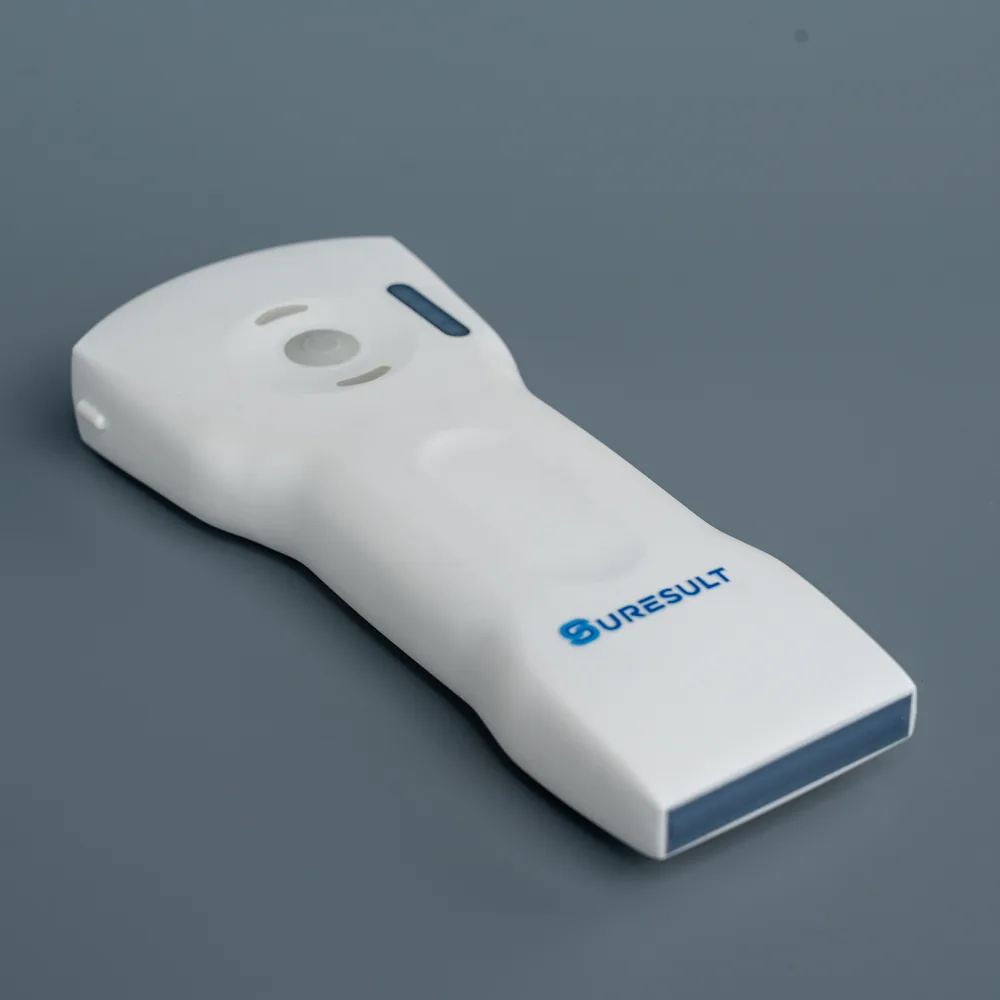
Suresult D3UltraNo. 1 · 87/100
|
Needle Enhance; on-screen in-plane and out-of-plane guide lines; Suresult needle guides | Linear 7.5/10 MHz to 10 cm + convex 3.2/5.0 MHz to 30 cm, one wireless probe | None; every needle tool included | $2,976FDA 510(k)-cleared · every needle tool included | Clinicians who place both superficial and deep blocks |
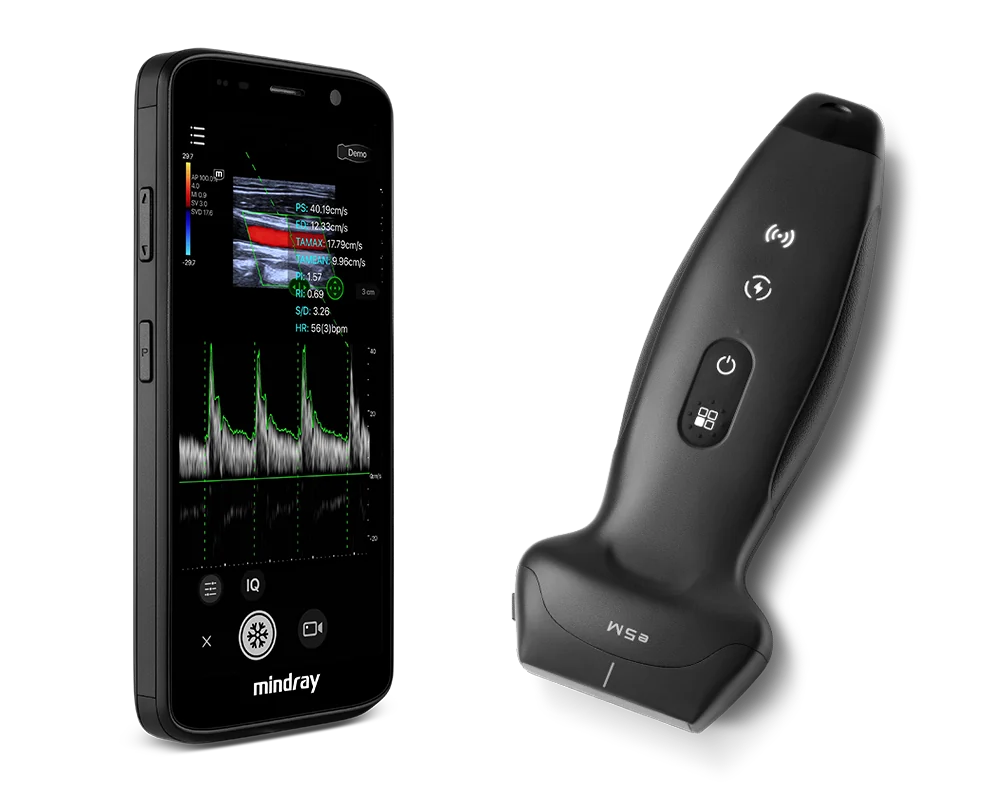
Mindray TE Air e5MNo. 2 · 69/100
|
iNeedle (needle visualization enhancement) | One wireless head: linear presets to 8.2 MHz plus convex scanning to 40 cm | None; iNeedle included | From $4,499Mindray North America store | One sealed cordless linear-convex probe with no plan |

Butterfly iQ3No. 3 · 65/100
|
Needle Viz; Needle: Out-of-Plane; Biplane Imaging | One probe, 1–12 MHz: linear Nerve preset to 8 cm, curvilinear presets for depth | Advanced: $420/year or $1,500 one-time | $5,399 with one-time Advanced$3,899 device · Butterfly | Long- and short-axis needle views at once |
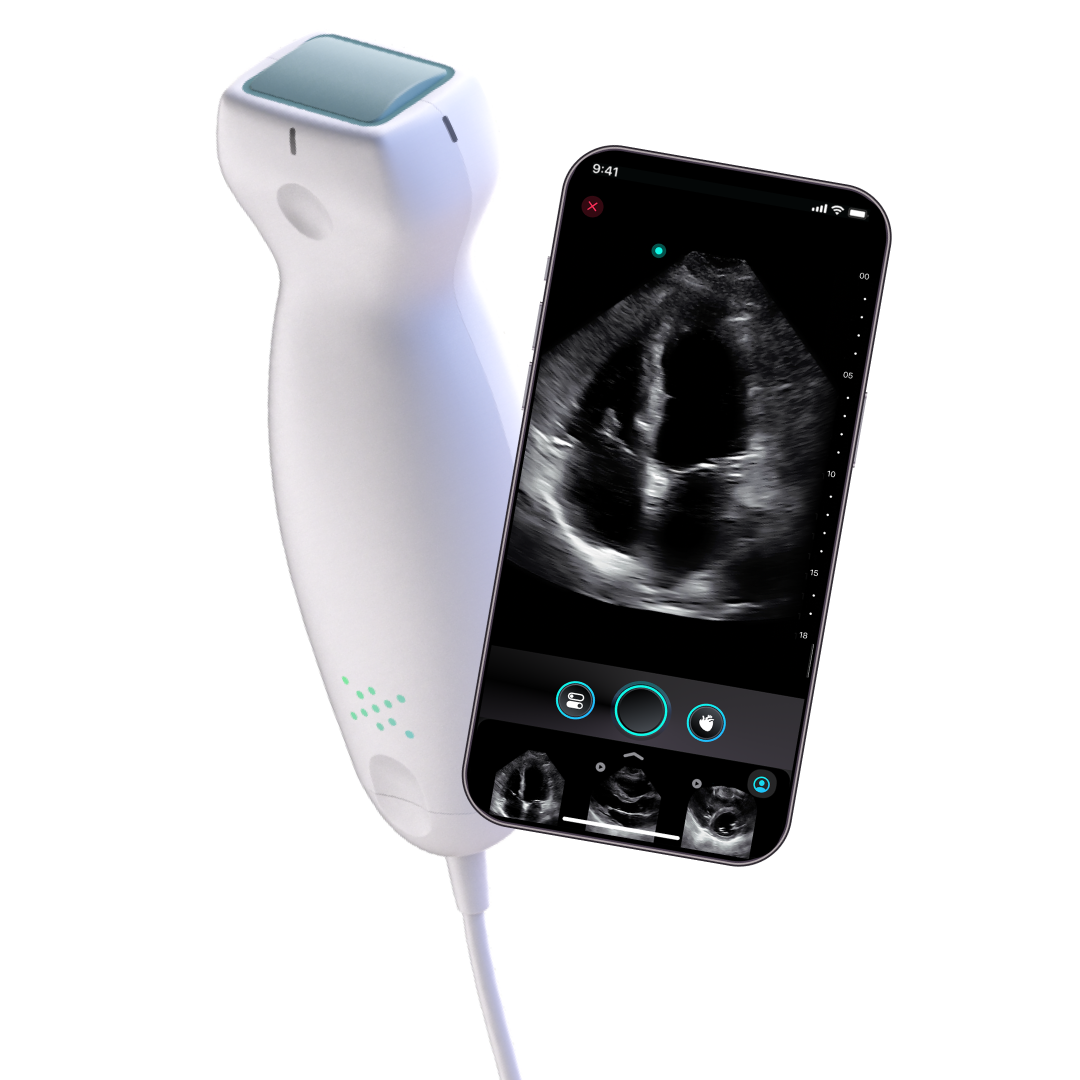
Exo IrisNo. 4 · 61/100
|
SpotOn Needle tracking | One matrix probe, 1.5–12 MHz: linear, curved and phased to 30 cm | None; sold outright | $5,499Exo | Apple-based clinicians who want needle tracking |
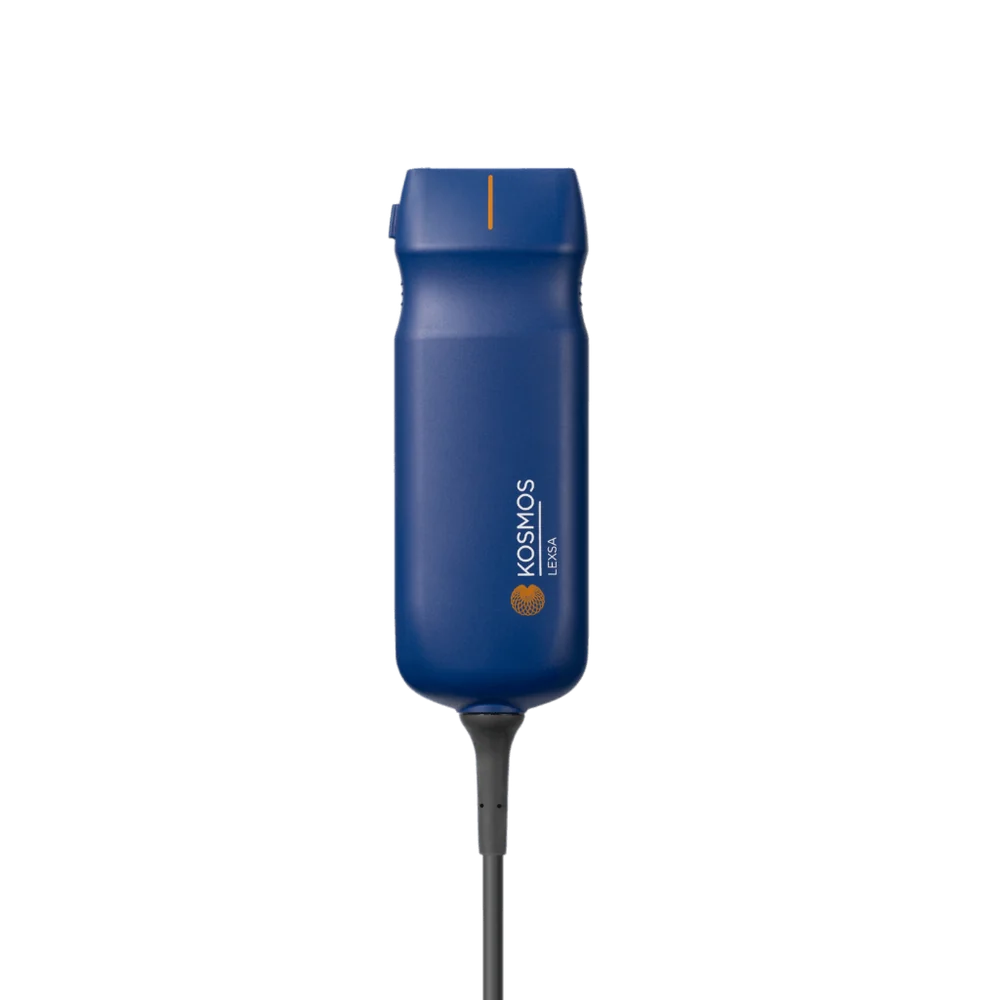
EchoNous Kosmos LexsaNo. 5 · 58/100
|
Compound imaging for the needle path; CIVCO AccuSITE out-of-plane kit | Linear 3–10.5 MHz, 1–10 cm | None; no subscription | $5K listEchoNous | Out-of-plane blocks through a physical guide |
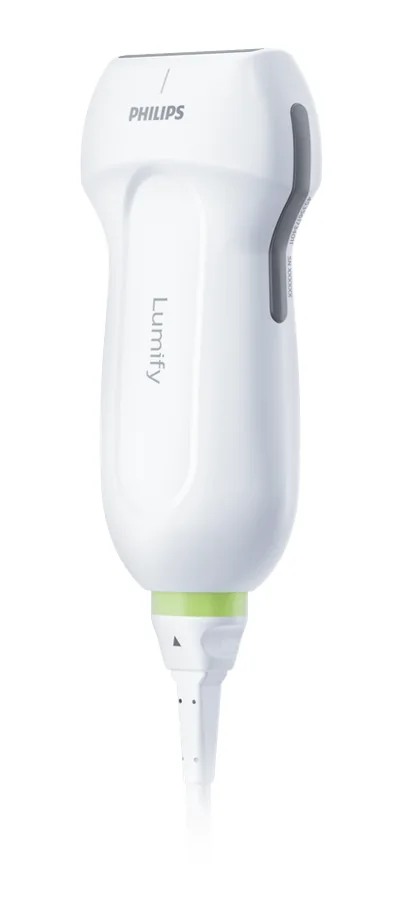
Philips Lumify L12-4No. 6 · 58/100
|
Centerline marker for needle guidance | Linear 12–4 MHz to 12 cm; C5-2 curved sold as a separate probe | None; every feature included | Quote from Philipsno subscription | The lightest linear, powered by your phone or tablet |
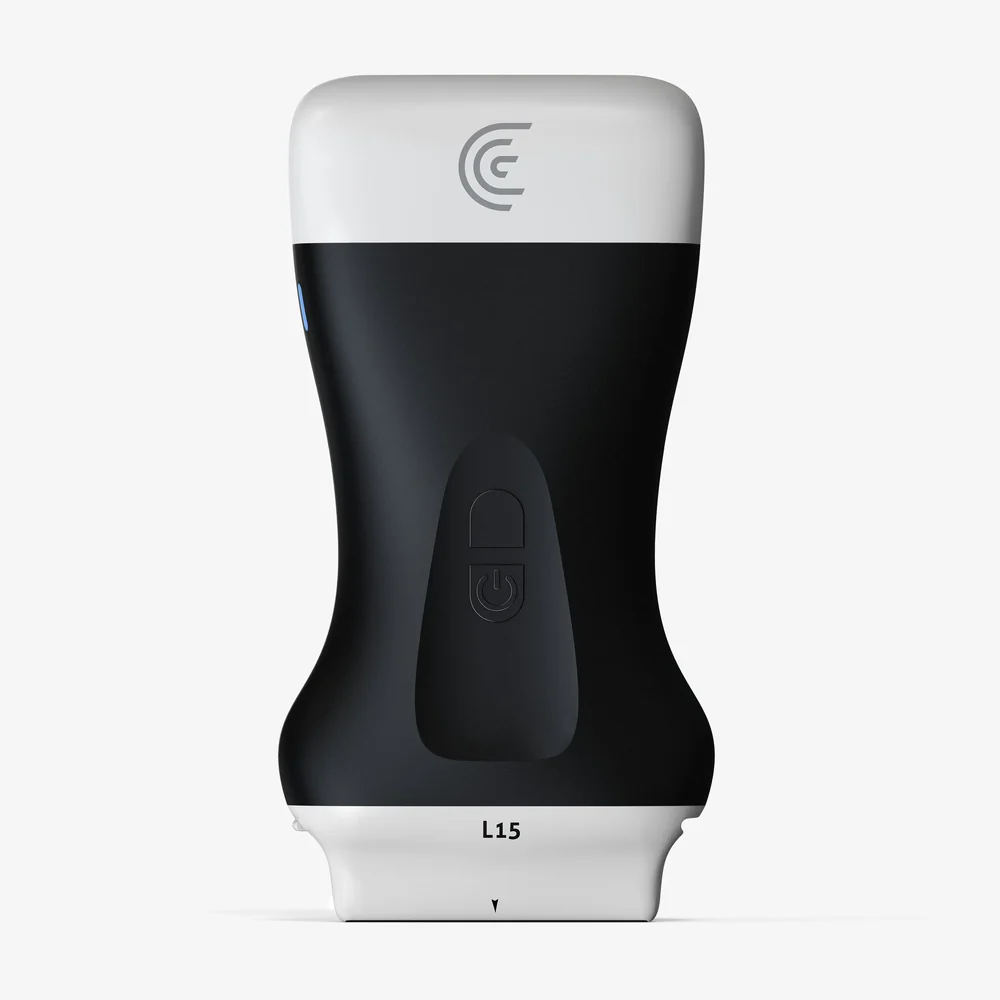
Clarius L15 HD3No. 7 · 55/100
|
Needle Enhance (in-plane) | Linear 5–15 MHz to 7 cm; C3 HD3 convex sold separately | Essentials: $695/year, $1,785 per 3 years, or $2,500 one-time | $6,295 with one-time Essentials$3,795 device · Clarius store | Superficial blocks at 15 MHz without a cable |

GE Vscan Air CLNo. 8 · 38/100
|
Freehand; no named needle tool | Linear 3–12 MHz to 8 cm + curved 2–5 MHz to 24 cm, wireless dual-head | No needle tool listed; Innovations optional | $4,999GE HealthCare US shop | Freehand blocks with a curved head on the other end |
Each price is the device plus any one-time unlock needed for every listed needle tool, from the maker’s US store or sales page.
Best for: quick picks
Best overall for superficial and deep blocks
A linear head for the brachial plexus and a convex head to 30 cm for sciatic work, with every needle tool included.
Best IP68 linear-convex probe
An IP68 wireless head with iNeedle included and linear and convex imaging to 40 cm, at 229 g with no subscription.
Best for biplane needle views
Long- and short-axis needle views at the same time, with Needle Viz and an out-of-plane preset, in the Advanced plan.
Best for needle tracking on iPhone
SpotOn Needle tracking and a Nerve Block exam on a 3-in-1 matrix probe for $5,499 with no subscription.
Best linear with an out-of-plane guide kit
Compound imaging for the needle path and a CIVCO out-of-plane guide kit made for the Lexsa.
Best battery-free linear
A battery-free linear under 136 g with a Centerline guide line and no subscription.
Best 15 MHz wireless linear
A 15 MHz, 192-element wireless linear that the Clarius store recommends for nerve blocks; Needle Enhance comes with Essentials.
Best dual-head for freehand blocks
A 192-element linear head and a 128-element curved head on one 205 g wireless probe for $4,999.
Where to buy each scanner
Buy each scanner from its maker’s own store or sales channel, at the prices below.
- Suresult D3Ultra$2,976 with Needle Enhance and both guide lines in the priceBuy the Suresult D3Ultra — $2,976
- Mindray TE Air e5MTE Air e5M from $4,499 · no subscriptionBuy from Mindray
- Butterfly iQ3$3,899 device; Advanced unlocks the needle tools, $1,500 one-timeBuy from Butterfly
- Exo Iris$5,499 · own it outright, no subscriptionBuy from Exo
- EchoNous Kosmos Lexsa$5K list; quote through EchoNous “Get pricing”Buy from EchoNous
- Philips Lumify L12-4sold by quote; the outright purchase opens all Lumify softwareRequest a Lumify quote
- Clarius L15 HD3$3,795 plus an Essentials option at checkoutBuy from Clarius
- GE Vscan Air CL$4,999 · no required plan; Innovations optionalBuy from GE HealthCare

The 8 best ultrasound scanners for nerve blocks, ranked
The ranking rewards needle tools first, then what it costs to switch them all on, then block reach, superficial detail and sterile portability.
01 Suresult D3Ultra — Best Overall for Superficial and Deep Blocks
Needle Enhance · on-screen in-plane and out-of-plane guide lines · linear + convex + phased · FDA 510(k)-cleared · $2,976
Score: 87/100
$2,976Needle Enhance includedLinear 7.5/10 MHz · convex to 30 cm263 g · cordlessNo subscription
Verdict: Buy the D3Ultra if your list runs from interscalene to gluteal sciatic and you want every needle tool paid for on the day the probe arrives. It is my pick for most clinicians who buy their own scanner for blocks.
- Needle tools: Needle Enhance, In-Plane and Out-Plane Puncture Guide lines, Flip and Grid; Suresult stainless needle guides for the linear and convex heads, added at checkout
- Probe reach: linear head 7.5/10 MHz with 20/40/60/100 mm presets; convex head 3.2/5.0 MHz reaching 90–300 mm; phased head 3.2/5.0 MHz; 192 elements and 64 channels
- Price and plan: $2,976; no subscription; lifetime free software
- Weight / scan time: 263 g; 2 h continuous scanning; wireless charging; pairs with iOS, Android and Windows
Why it ranks here. Block depth splits the purchase, and the D3Ultra carries both halves. The linear head covers the interscalene, supraclavicular, axillary, femoral, adductor canal and popliteal blocks that sit 1–4 cm deep, with presets from 20 to 100 mm. The convex head reaches 30 cm for subgluteal and anterior sciatic approaches and for TAP blocks in larger patients. That combination earns the full 20 points for block reach. [1]
The needle tools come with the purchase. Needle Enhance brightens the shaft on the live image, and the In-Plane and Out-Plane Puncture Guide lines draw the expected path before the needle touches skin. Suresult sells stainless needle guides for the linear and convex heads as checkout add-ons, so the D3Ultra earns 24 of 30 for needle tools and the full 25 for unlock cost: “No Subscription Cost. Lifetime Free Software, Unlimited Scans.” [1][4]
The probe runs its own Wi-Fi hotspot, so it pairs with a phone, tablet or Windows device without a router, and nothing crosses the sterile field. Studies export as DICOM, cine loops hold up to 1000 frames, and the 2-year warranty is included and extends to 5 years at checkout. [1]
Finer superficial detail. For wrist, ankle and digital blocks under 2 cm, the 14 MHz L14Pro and the 20 MHz L20Pro in this family image at higher frequency. The wireless charging pad tops up the battery between cases.
Best for: clinicians whose block list spans the brachial plexus, the knee and the deep sciatic.Choose a family model if: every block you place sits inside 4 cm (the L14Pro) or you want bi-plane views (the L10T).
Also in this family
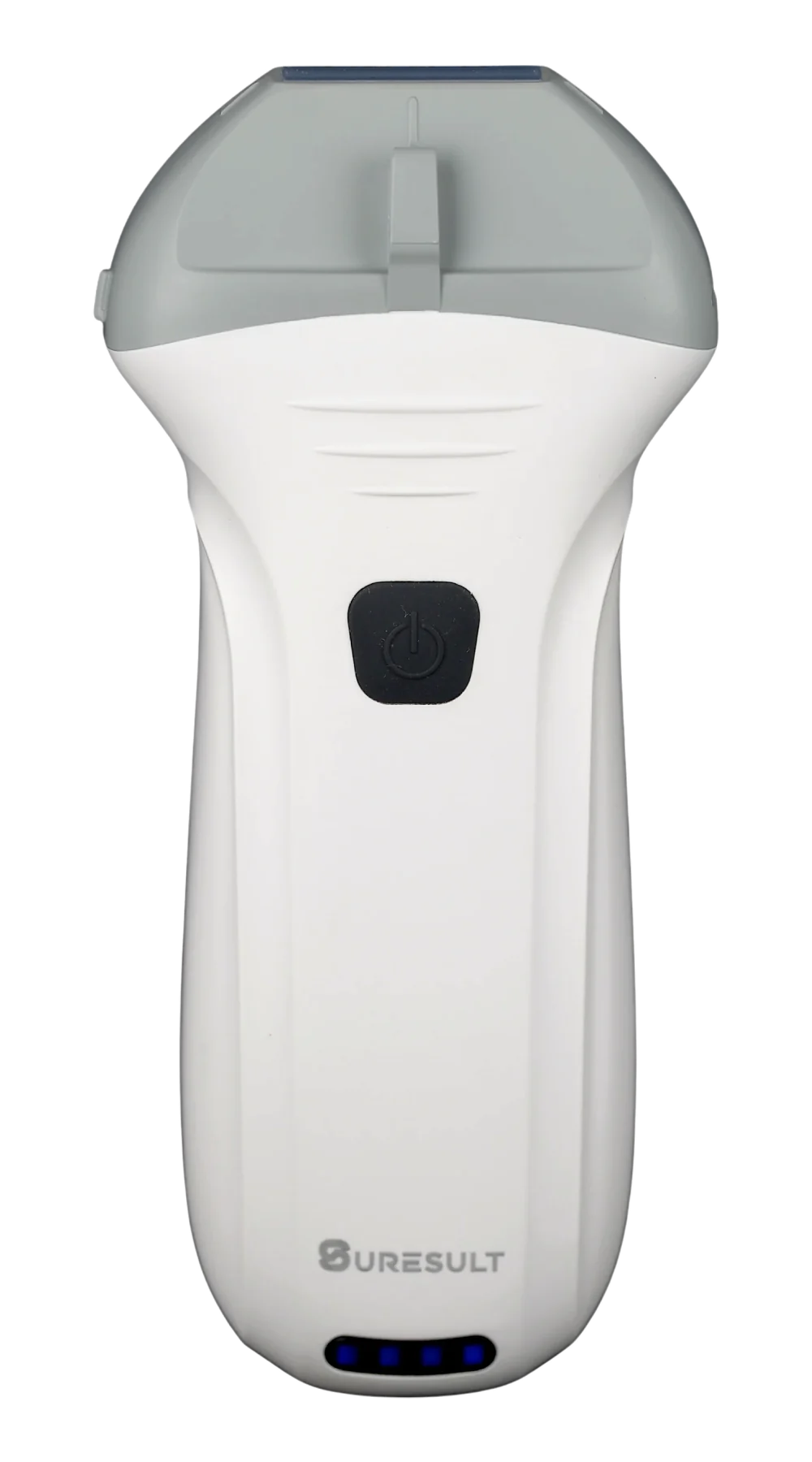
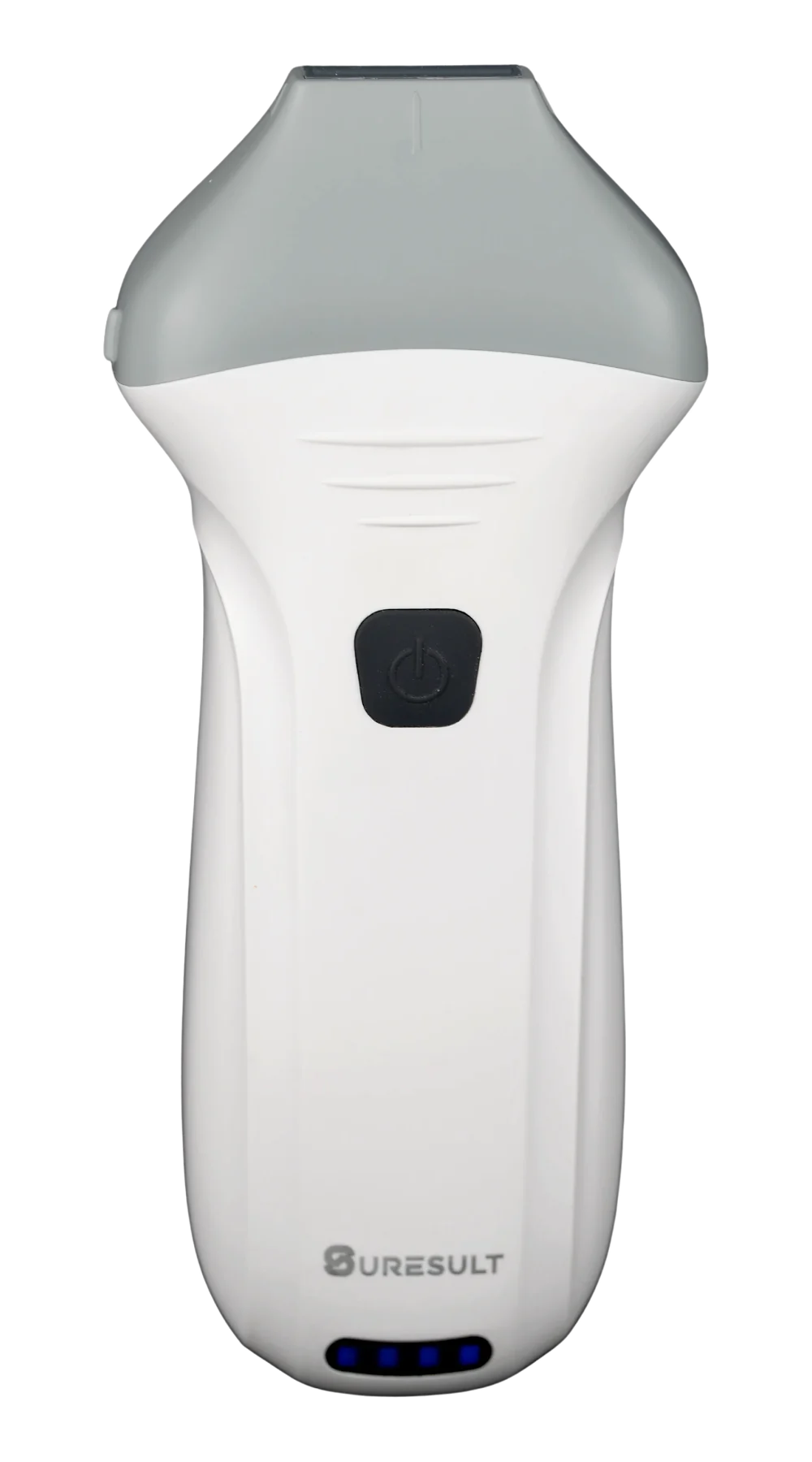
Suresult L14Pro
$3,441
A 10/14 MHz linear with 256 elements and 64 channels, 20–80 mm presets, Needle Enhance and on-screen in-plane and out-of-plane guide lines, at 145 g with 4 h of scanning. The superficial-block pick. [2]
Score: 78/100
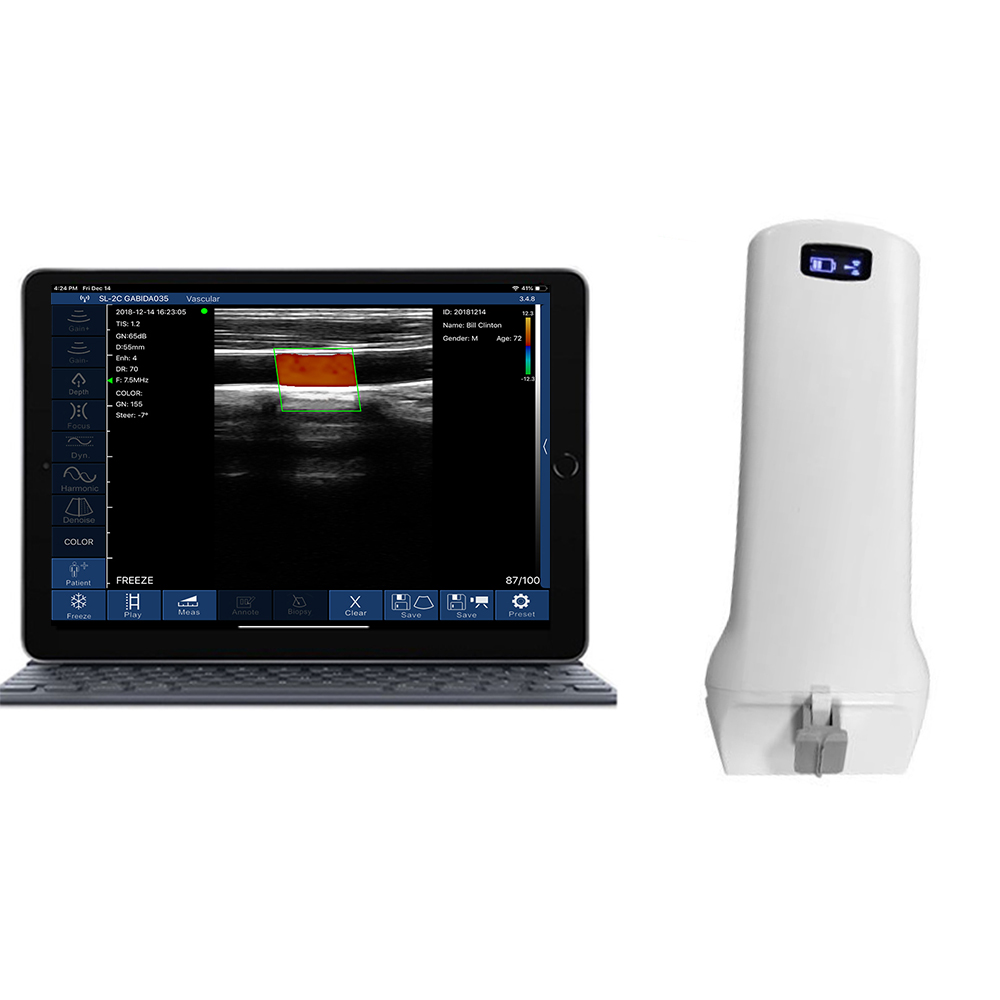
Suresult L20Pro
$3,720
A 16/20 MHz linear for targets inside 40 mm: interscalene, supraclavicular, axillary and wrist blocks, with Needle Enhance and both guide lines, 145 g and up to 4 h. [5]
Score: 78/100
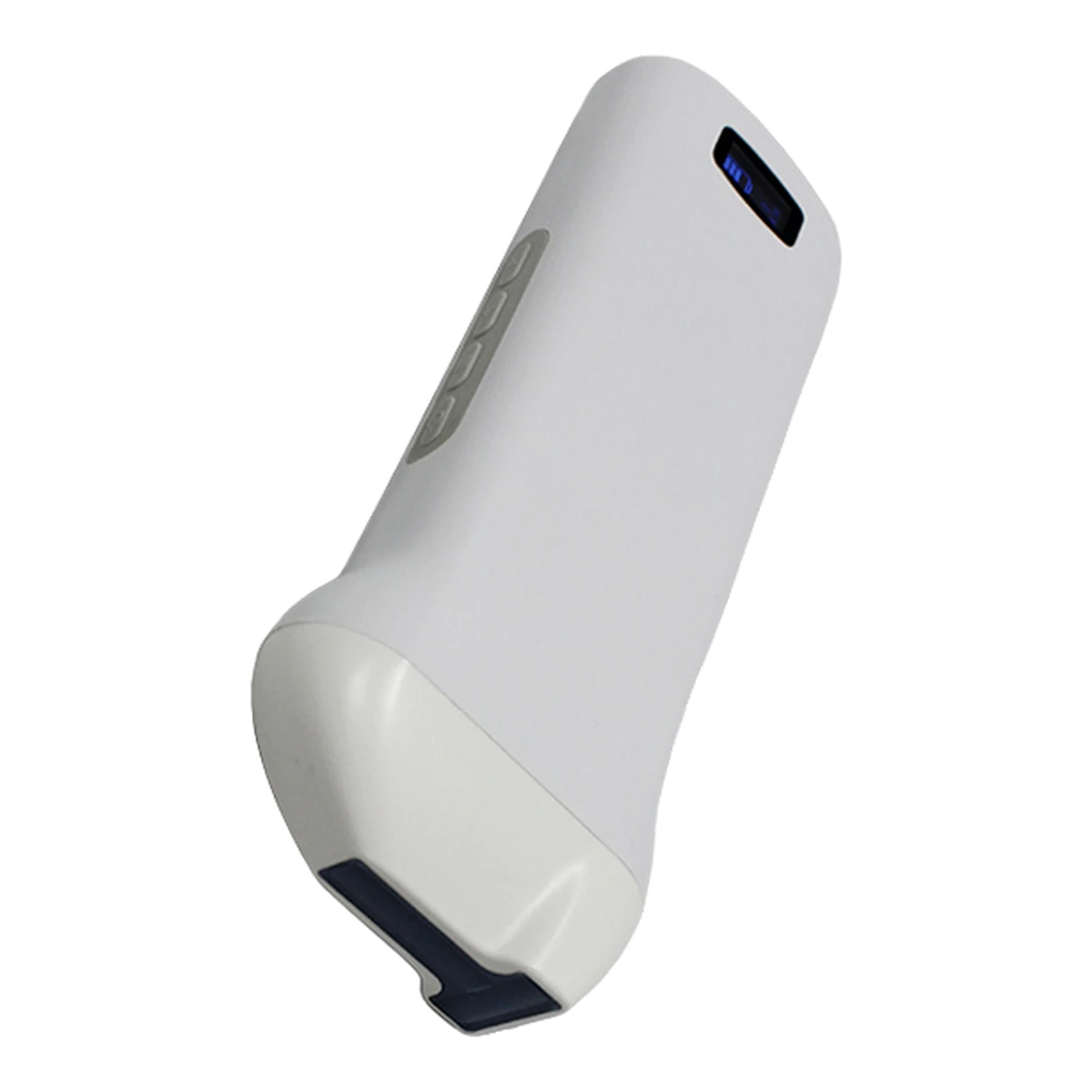
Suresult L10H
$2,325
Suresult’s needle-guidance linear: 7.5/10 MHz, 192 elements, 20–100 mm, Needle Enhance plus Visualized Needle Guidance, and the longest run time in the family at 5 h. [6]
Score: 79/100
Suresult L10T
$2,418
A bi-plane linear whose two perpendicular arrays, 192 elements in total, show the in-plane and the out-of-plane view of the needle from one probe position. [7]
Score: 75/100
Suresult D3Ultra product page and checkout · Suresult anesthesia ultrasound collection
02 Mindray TE Air e5M — Best IP68 Linear-Convex Probe with iNeedle Included
iNeedle · linear and convex from one wireless head · IP68 · from $4,499 · no subscription
Score: 69/100
From $4,499 · no subscriptioniNeedle includedLinear + convex to 40 cm229 g · 90–120 minIP68 · 3-year warranty
Verdict: Buy the e5M if you want a sealed cordless probe that switches between linear and convex imaging, with iNeedle included and no plan.
- Needle tools: iNeedle needle visualization enhancement with left or right needle direction (e5M only); VA Grid for vascular access
- Probe reach: one wireless head, 128 elements; linear presets 2.0–5.2, 4.0–7.4 and 5.0–8.2 MHz; convex scanning to 40 cm; Nerve preset
- Price and plan: from $4,499 with a 3-year transducer warranty (Mindray North America store, checked October 15, 2026); “no subscription plan associated with this probe”
- Weight / scan time: 229 g; 90–120 min of B-mode; 0–90% charge in about 35 min; IP68
Why it ranks here. The e5M ranks second at 69 without a plan: iNeedle comes with the probe, which earns the full 25 for unlock cost, and one head covers linear and convex imaging, which earns the full 20 for reach. At 229 g and cordless, it earns 8 of 10 for sterile portability. [3][8][9]
IP68 sealing and a 35-minute fast charge suit a busy procedure list. [3]
Limitations. The linear presets top out at 8.2 MHz, which scores 6 for superficial detail; wrist and ankle blocks favor a 14 MHz or higher linear. Mindray’s datasheet lists the biopsy guide as not available.
Best for: clinicians who want one cordless linear-convex probe with iNeedle included and no plan.Skip it if: your list is mostly wrist, ankle and digital blocks under 2 cm.
Official Mindray TE Air e5M specifications · Official purchase and pricing · Mindray handheld price guide
03 Butterfly iQ3 — Best for Biplane Needle Views from One Chip
Needle Viz · Needle: Out-of-Plane · Biplane Imaging (Advanced) · one-chip whole-body probe · $3,899 plus membership
Score: 65/100
$3,899 + membershipNeedle Viz · Biplane (Advanced)Nerve preset to 8 cm300 g · up to 2 hIPX7 · 3-year warranty
Verdict: Buy the iQ3 if you want simultaneous long- and short-axis needle views and one probe for every preset, and you are ready to pay for Advanced.
- Needle tools: Needle Viz (in-plane overlay tuned for 20–40° needles), Needle: Out-of-Plane preset (iQ3 only), Biplane Imaging; all three in Advanced
- Probe reach: single Ultrasound-on-Chip probe, 1–12 MHz; Nerve preset to 8 cm; MSK presets to 12 cm; Abdomen Deep to 30 cm
- Price and plan: $3,899 (Butterfly, checked October 15, 2026) plus a membership: Core $299/year includes none of the three needle tools; Advanced $420/year or $1,500 one-time, which covers 5 years of software access
- Weight / scan time: 300 g; wired to a phone or tablet; up to 2 h; IPX7; 3-year warranty with 2 more optional
Why it ranks here. The iQ3 earns 24 of 30 for needle tools, tying the D3Ultra. Biplane Imaging shows the short and long axis of the needle at the same time and combines with Needle Viz, and the Needle: Out-of-Plane preset moves the scan plane so an out-of-plane needle appears sooner. One chip switches between linear and curvilinear formats, which earns the full 20 for block reach. [10][11][12]
Butterfly positions the iQ3 for both superficial and deep regional blocks. [13]
Limitations. All three needle tools need Advanced, which holds unlock cost to 15. Butterfly publishes one 1–12 MHz range for the probe, which scores 6 for superficial detail, and the wired 300 g probe scores 0 for sterile portability.
Best for: clinicians who want biplane needle confirmation and one probe for blocks, lungs and the abdomen.Skip it if: you want the needle tools with the device alone, or a cordless probe in the sterile field.
Also in this family
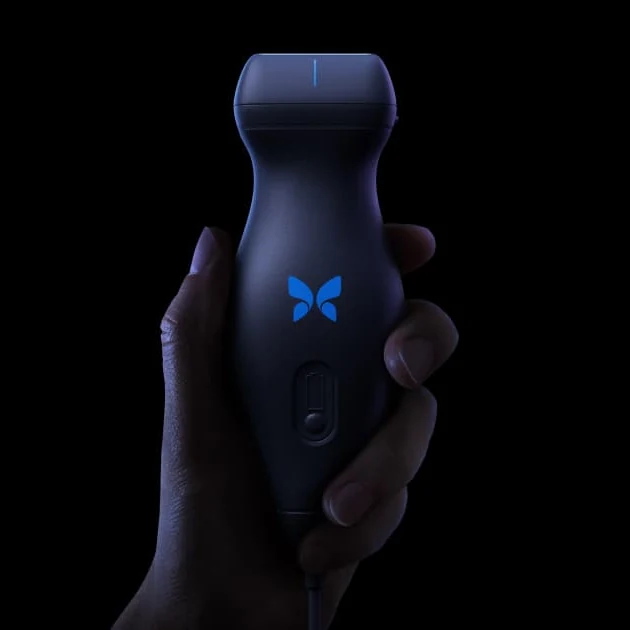
Butterfly iQ+
$2,699 plus membership
The previous chip, 1–10 MHz, 309 g, with Needle Viz and Biplane Imaging in Advanced; the out-of-plane preset is iQ3-only. [14]
Score: 57/100
Official Butterfly iQ3 specifications · Official purchase and pricing · Butterfly iQ3 review
04 Exo Iris — Best for SpotOn Needle Tracking on iPhone
SpotOn Needle tracking · Nerve Block exam type · linear + curved + phased · $5,499 · no subscription
Score: 61/100
$5,499 · no subscriptionSpotOn Needle tracking1.5–12 MHz · 30 cm300 g · up to 2 hIP67
Verdict: Buy the Iris if you scan from an iPhone or iPad and want SpotOn Needle tracking on one probe that covers linear, curved and phased imaging.
- Needle tools: SpotOn Needle tracking; Nerve Block, Peripheral IV, Arterial Access and Central Venous Line exams
- Probe reach: 2D matrix of 4,096 individually controlled pMUTs; 1.5–12 MHz; linear, curved and phased imaging to 30 cm
- Price and plan: $5,499 (Exo, checked October 15, 2026); “no login, no subscription, just activate and scan”
- Weight / scan time: 300 g; up to 2 h; IP67; Duo cable (Lightning and USB-C)
Why it ranks here. The Iris lists SpotOn Needle tracking among its tools and a dedicated Nerve Block exam, and it sells outright with no subscription, which earns the full 25 for unlock cost. One matrix probe forms linear, curved and phased images, which earns the full 20 for reach. [15][16]
Limitations. The Iris connects by cable and weighs 300 g, which scores 0 for sterile portability. Exo publishes one 1.5–12 MHz range for the matrix probe, which scores 6 for superficial detail, and lists no needle guide.
Best for: iPhone and iPad users who want needle tracking and deep reach on one probe.Skip it if: you scan from Android or Windows, or you want a cordless probe.
Official Exo Iris specifications · Official purchase and pricing · Exo Iris review
05 EchoNous Kosmos Lexsa — Best Linear with a CIVCO Out-of-Plane Guide Kit
Compound imaging · CIVCO AccuSITE kit 671-003 · linear 3–10.5 MHz to 10 cm · $5K list
Score: 58/100
$5K list · no subscriptionCompound imagingLinear 1–10 cm280 g · 90 minIPX7 · 5-year warranty
Verdict: Buy the Lexsa if you want a linear probe with a dedicated out-of-plane guide kit and a 5-year warranty.
- Needle tools: compound imaging that EchoNous presents as improving visualization of the anatomy and needle path; CIVCO AccuSITE out-of-plane kit 671-003 (single angle, guide depths 0.5–3.5 cm, 18–22 GA)
- Probe reach: linear 3–10.5 MHz (center 7.5), 1–10 cm, 38 × 8 mm footprint
- Price and plan: list price $5K (EchoNous comparison page, checked October 15, 2026); no subscription
- Weight / scan time: 280 g with a 1.5 m cable; 90 min of continuous scanning; IPX7; 5-year warranty
Why it ranks here. EchoNous presents compound imaging on the Lexsa as improving visualization of the anatomy and the needle path, which earns 10 for needle tools. CIVCO builds an AccuSITE out-of-plane kit for this exact probe, with a reusable bracket and sterile single-use guides. [17][18]
EchoNous sells the Lexsa with no subscription and backs it with a 5-year warranty on all transducers. [19]
Limitations. The Lexsa is a linear-only probe, so deep blocks need another device. It is cabled to the tablet, and CIVCO sells the guide kit by quote.
Best for: clinicians who place out-of-plane blocks and want a dedicated guide kit.Skip it if: you need a convex head for deep blocks on the same device.
Official EchoNous Kosmos Lexsa specifications · Official purchase and pricing · EchoNous Kosmos review
06 Philips Lumify L12-4 — Best Battery-Free Linear
Centerline · linear 12–4 MHz to 12 cm · under 136 g · battery-free · quote from Philips
Score: 58/100
Quote · no subscriptionCenterline guide lineLinear 12–4 MHz · 12 cmUnder 136 g · battery-freeUSB-C
Verdict: Buy the L12-4 if you want a battery-free linear that draws power from your phone or tablet, with every feature included.
- Needle tools: Centerline marker, displayed live or frozen “to assist” with needle guidance; Philips lists the probe as biopsy capable
- Probe reach: linear 12–4 MHz to 12 cm; the C5-2 curved and S4-1 phased are separate transducers
- Price and plan: quote through Philips sales; “No subscriptions and flexible pricing. Purchase outright and get access to all software and features.”
- Weight / power: under 136 g; battery-free, powered by the phone or tablet over USB-C; 3–5-year warranty
Why it ranks here. The L12-4 is the lightest probe in this comparison at under 136 g, and it draws power from the host device. Philips presents its Centerline marker to assist needle guidance, which earns 8 points as an on-screen guide line, and Philips includes every feature with the purchase, which earns the full 25 for unlock cost. [20][21][22]
Limitations. Each Lumify transducer covers one format, so deep blocks need the separate C5-2. The probe is cabled to the host, and the US purchase runs through a sales quote.
Best for: clinicians who want the lightest linear and already own a compatible phone or tablet.Skip it if: you want one probe for superficial and deep blocks, or a published checkout price.
Official Philips Lumify L12-4 specifications · Request a Lumify quote · Lumify purchase and pricing guide
07 Clarius L15 HD3 — Best 15 MHz Wireless Linear with Needle Enhance
Needle Enhance (Essentials) · linear 5–15 MHz to 7 cm · wireless · $3,795 plus Essentials
Score: 55/100
$3,795 + EssentialsNeedle Enhance (Essentials)Linear 5–15 MHz · 7 cm290 g · about 60 minIP67 · 3-year warranty
Verdict: Buy the L15 HD3 if you want a 15 MHz cordless linear and Essentials fits your budget.
- Needle tools: Needle Enhance for in-plane needles (tap the needle icon for the approach side), in Clarius Essentials
- Probe reach: linear 5–15 MHz, 192 elements, to 7 cm; the C3 HD3 convex (2–6 MHz to 40 cm) is a separate scanner
- Price and plan: $3,795 (Clarius store, checked October 15, 2026); Essentials at $695/year, $1,785 every 3 years or $2,500 one-time; $4,490 with the first Essentials year
- Weight / scan time: 290 g; about 60 min per charge; IP67; 3-year warranty
Why it ranks here. The L15 HD3 earns the full 15 for superficial detail with its 15 MHz top frequency, and the Clarius store recommends it for nerve blocks. Needle Enhance brightens an in-plane needle after you tap the approach side, and the scanner runs cordless at 290 g. [23][24][25]
Limitations. Needle Enhance sits in Essentials, which holds unlock cost to 15, and the L15 is linear only, which holds reach to 10. Clarius lists no needle guide for its linear scanners.
Best for: clinicians whose blocks sit inside 7 cm and who already budget for Essentials.Skip it if: you want needle enhancement without a plan, or a convex head on the same device.
Also in this family
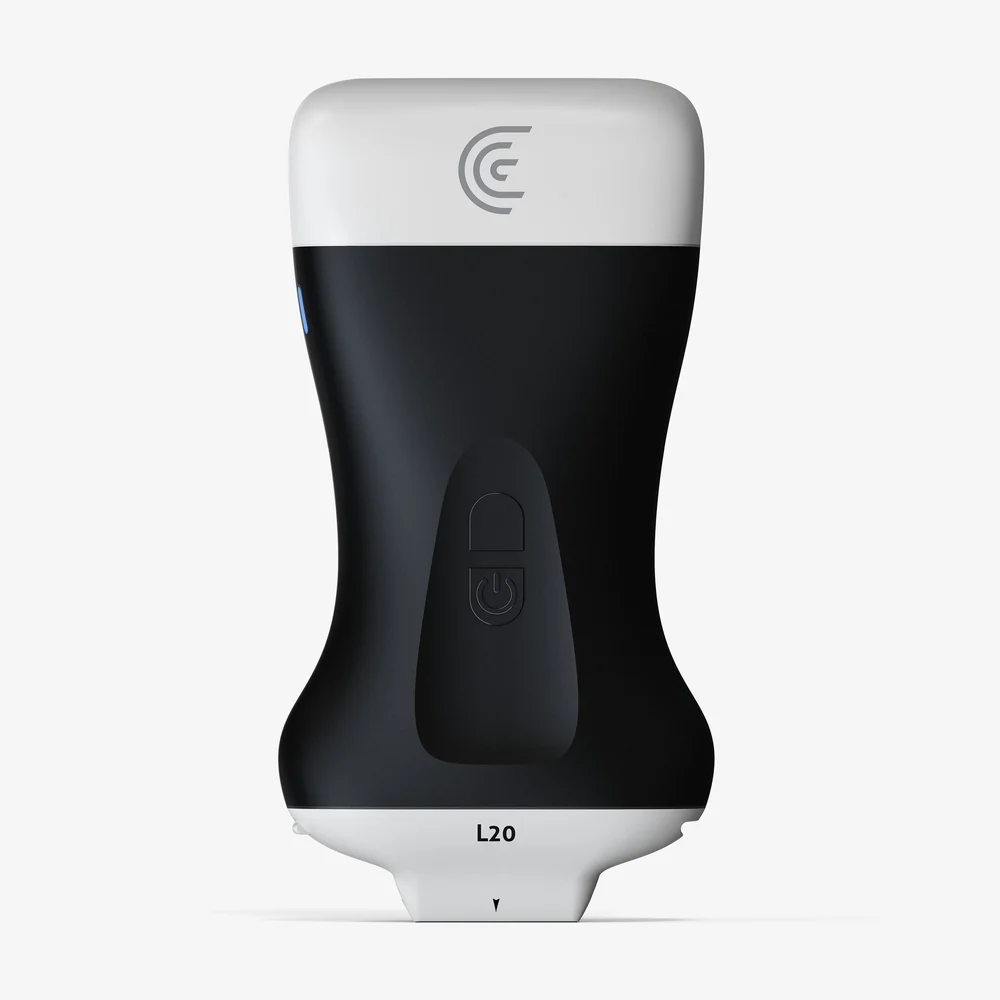
Clarius L20 HD3
$5,395 plus Essentials
An 8–20 MHz linear to 4 cm with the same Needle Enhance and plan; Clarius lists anesthesia among its clinical applications. [26]
Score: 55/100
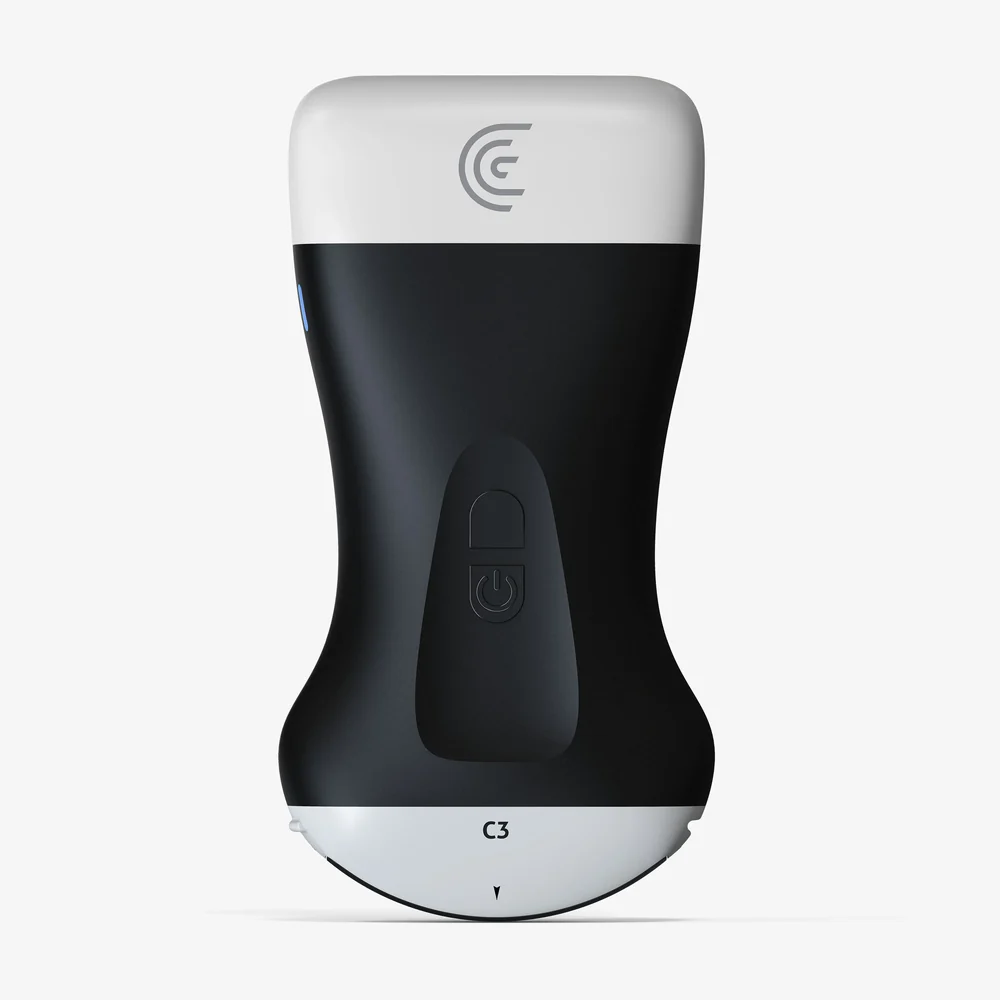
Clarius C3 HD3
$3,795 plus Essentials
The convex scanner, 2–6 MHz to 40 cm, to pair with an L15 or L20 when a block needs deep reach. [27]
Official Clarius L15 HD3 specifications · Official purchase and pricing · Clarius prices and Essentials plans
08 GE Vscan Air CL — Best Dual-Head Probe for Freehand Blocks
Linear 3–12 MHz + curved 2–5 MHz, wireless dual-head · 205 g · $4,999
Score: 38/100
$4,999 · no required planLinear 8 cm · curved 24 cm192 + 128 elements205 g · 50 minIP67 · 3-year warranty
Verdict: Buy the CL if you place blocks freehand and want a curved head on the same cordless probe at a fixed price.
- Needle tools: none named; GE: Vscan Air “supports only free hand biopsy and needle procedures”
- Probe reach: wireless dual-head: linear 3–12 MHz (192 elements) to 8 cm and curved 2–5 MHz (128 elements) to 24 cm; GE’s indications guide lists peripheral nerve blocks under the linear array
- Price and plan: $4,999 (GE HealthCare US shop, checked October 15, 2026); no required plan; Innovations optional at $500/year or $1,299 for 3 years
- Weight / scan time: 205 g; 50 min continuous; 10–90% recharge in 75 min; IP67; 3-year warranty
Why it ranks here. GE’s own indications guide lists peripheral nerve blocks under the Vscan Air linear array, naming the interscalene, supraclavicular, infraclavicular, axillary, femoral, popliteal and saphenous targets. The curved head reaches 24 cm on the other end of the same probe, which earns the full 20 for reach, and the 205 g cordless body earns 8 of 10 for sterile portability. [28][29][30]
Limitations. GE names no needle-enhancement tool for the Vscan Air and states it supports freehand needle work only, which scores 0 for needle tools and leaves nothing to unlock. Scan time is 50 min per charge. [31]
Best for: experienced freehand operators who want a light cordless probe with a curved head.Skip it if: you want needle enhancement or on-screen guide lines.
Also in this family
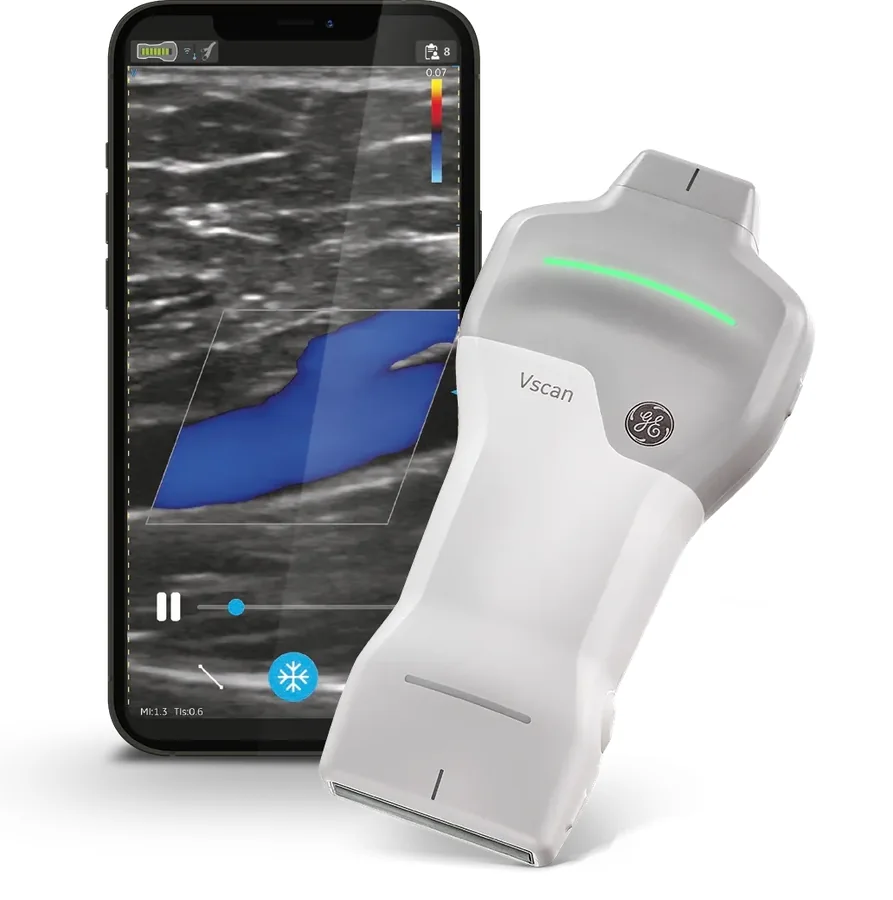
GE Vscan Air SL
$4,999
The same linear head paired with a 1.6–3.7 MHz sector head to 24 cm, 218 g; the cardiac-plus-blocks version. [32]
Score: 28/100
Official GE Vscan Air CL specifications · Official purchase and pricing · Vscan Air prices and plans
Which probe each nerve block needs
Block depth decides the probe. Most upper- and lower-limb blocks sit 1–4 cm under the skin and image best with a high-frequency linear head. Proximal sciatic approaches sit 3.5–10 cm deep and call for a low-frequency curved head.
| Block | Typical target depth | Recommended transducer | What the block calls for |
|---|---|---|---|
| Wrist and ankle blocks | field depth under 2 cm | linear, 12–15 MHz | a high-frequency linear head; 14–20 MHz shows the finest detail |
| Interscalene, supraclavicular and axillary brachial plexus | 1–3 cm | linear, 8–14 MHz (8–18 MHz for supraclavicular) | a linear head at 10 MHz or higher |
| Femoral nerve and adductor canal | 2–4 cm and 2–3 cm | linear, 8–18 MHz and 8–14 MHz | a linear head |
| Popliteal sciatic | 2–4 cm at the popliteal fossa | linear, 8–12 MHz | a linear head |
| Infraclavicular brachial plexus | 3–5 cm in average-size patients | linear, 8–14 MHz, with an 8–10 cm needle | a linear head with a 60 mm or deeper preset |
| Transversus abdominis plane (TAP) | field depth 3–4 cm in Hadzic’s table; deeper in larger patients | high- or lower-frequency transducer, chosen by habitus | linear for slim patients, convex for larger ones |
| Subgluteal sciatic | median 5.5 cm (range 3.5–7.0 cm) | low-frequency curvilinear, 2–5 MHz | a convex head |
| Gluteal sciatic and lumbar plexus | field depth 7–10 cm in Hadzic’s table | 5–10 MHz; NYSORA’s gluteal and parasacral approaches use a low-frequency curvilinear probe | a convex head |
| Anterior approach to the sciatic nerve | 6–10 cm, by body habitus | low-frequency curvilinear | a convex head that reaches past 10 cm |
Target depths and transducers from NYSORA’s per-block technique pages and the Hadzic depth table NYSORA reproduces; sciatic rows from Mistry et al., Indian Journal of Anaesthesia, 2026. [33][34][35][36][37][38][39][40][41][42]
NYSORA names the 5–10 MHz transducer as the one most used for ultrasound-guided interventional procedures, with good resolution for nerves and plexuses 1–5 cm deep, and a 2–5 MHz probe for deeper structures. Practice reports match. In a 2026 Student Doctor Network thread, a clinician who runs 15–20 axillary single shots a day on a 15-4 linear found about 1 in 40 adductor canal blocks difficult or impossible with that probe and had no trouble with popliteal blocks. [43][44]
So the purchase splits in two. If your list stops at the adductor canal and the popliteal fossa, one linear probe covers it, and frequency, needle tools and sterile handling separate the models. If you also place gluteal or anterior sciatic, lumbar plexus or TAP blocks in larger patients, add a convex head, on the same probe or as a second one. The anesthesia ultrasound collection groups Suresult’s probes by block type.
Needle-tool map: what each scanner lists
Read across to see what works with the device alone, what needs a plan, and where a family model or a second probe adds the tool.
| Scanner | Needle enhancement or visualization | On-screen guide line or out-of-plane tool | Bi-plane view | Physical needle guide | Convex for deep blocks |
|---|---|---|---|---|---|
| Suresult D3Ultra |
Included | Included | L10T in family | Suresult guide | Included |
| Mindray TE Air e5M |
Included | — | — | — | Included |
| Butterfly iQ3 |
Plan | Plan | Plan | — | Included |
| Exo Iris |
Included | — | — | — | Included |
| EchoNous Kosmos Lexsa |
Included | — | — | CIVCO kit | — |
| Philips Lumify L12-4 |
— | Included | — | — | Separate probe |
| Clarius L15 HD3 |
Plan | — | — | — | Separate probe |
| GE Vscan Air CL |
— | — | — | — | Included |
Included = works with the device purchase (EchoNous: compound imaging for the needle path; Exo: SpotOn Needle tracking; Mindray: iNeedle; Philips: Centerline). Plan = needs Butterfly Advanced or Clarius Essentials. A dash = not in the maker’s list for that model.
How each needle tool helps you see the tip
Needle tools solve one problem: keeping the shaft and the tip bright on screen while you advance. Each tool on the map above does it a different way.

Angle. A needle returns the most echo when the beam meets it at 90°. NYSORA puts the best insertion angle at 30–45° to the skin; steeper passes return less echo. Needle-enhancement modes target exactly this: they brighten the shaft at steep angles, and makers do it with steered beams and multi-angle processing. [43]
On-screen guide lines. In-plane and out-of-plane guide lines display the expected needle trajectory over the live image in real time. [45]
Bi-plane. A bi-plane probe shows the in-plane and the out-of-plane view at the same time, so the tip is confirmed in two planes without rocking the probe. The Suresult L10T does this with two perpendicular arrays totalling 192 elements. [7]
Echogenic needles. Shaft grooves, polymer coatings and notched tips keep a needle visible at angles as low as 15–30°, and an echogenic needle improves visibility on any scanner here. [43]
Needle guides for handheld probes
A mechanical guide fixes the needle to one path that matches the on-screen line, stabilizing both transducer and needle. NYSORA reports needle visibility about 30% better with mechanical guides, and trainees rated guided passes above freehand ones. [43]
| Scanner | Guide for the block probe | Type | Price and route |
|---|---|---|---|
| Suresult D3Ultra, L10H and L10T |
Biopsy Needle Guide for linear probes and for convex probes | custom-made from medical-grade stainless steel; reusable | $464 linear · $464 convex; added at checkout on the D3Ultra, L10H and L10T pages |
| EchoNous Kosmos Lexsa |
CIVCO AccuSITE kit 671-003 | out-of-plane, single angle; guide depths 0.5–3.5 cm; 18–22 GA; reusable bracket with sterile single-use guides | quote through CIVCO |
The other scanners here work freehand: Mindray, Butterfly, Exo, Philips and Clarius with their on-screen needle tools. GE states the Vscan Air supports freehand needle work only, and Mindray lists the e5M biopsy guide as not available. [4][46][18][31][3]
AIUM’s 2025 reprocessing guideline pairs a disinfected transducer with a single-use cover for percutaneous needle work. Suresult’s guides are reusable stainless steel, so one guide serves block after block, reprocessed between patients. [47][4]
What it costs to switch every needle tool on
The price that matters is the device plus any plan required to use every needle tool it lists.
| Scanner | Device price | Plan for every needle tool | Price to own every needle tool | Annual-plan route |
|---|---|---|---|---|
| Suresult D3Ultra |
$2,976 | None; every needle tool included | $2,976 | No plan; lifetime free software |
| Mindray TE Air e5M |
From $4,499 | None | From $4,499 | No subscription |
| GE Vscan Air CL |
$4,999 | No needle tool listed | $4,999 | Innovations optional, $500/year |
| EchoNous Kosmos Lexsa |
$5K list | None | $5K list | No subscription |
| Butterfly iQ3 |
$3,899 | Advanced, $1,500 one-time | $5,399 | $4,319 in year 1, then $420/year |
| Exo Iris |
$5,499 | None | $5,499 | No subscription |
| Clarius L15 HD3 |
$3,795 | Essentials one-time license, $2,500 | $6,295 | $4,490 in year 1, then $695/year |
| Philips Lumify L12-4 |
Quote from Philips | None | Quote from Philips | Outright purchase opens all Lumify software |
Competitor figures come from each maker’s US store, sales or comparison page, read on October 15, 2026.
Two makers separate the needle tools from the hardware. Butterfly puts Needle Viz, Needle: Out-of-Plane and Biplane Imaging in Advanced; Core at $299 a year includes none of the three, and the one-time $1,500 Advanced license guarantees software access for 5 years. Clarius puts Needle Enhance in Essentials. [48][49]
Every Suresult probe is priced the same way: one product-page price that already covers each needle tool the probe offers and its full measurement package, with No Hidden Fees. Shipping, customs clearance, duties and applicable taxes sit inside that checkout total. Suresult processes each order within 24 hours on business days; each order also carries the 30-day worry-free trial. [1][6]
Handheld or cart for nerve blocks?
A fixed block room runs on a cart: the Sonosite PX, GE Venue Go and Mindray TE X lead those anesthesia pages, with docked transducers and a large screen for one bay. [50][51][52]
A clinician who carries the scanner between a surgery center, a clinic and the ward buys a handheld, and the ranked list above covers that purchase. For line placement, the vascular access guide ranks handhelds for that job.
How I scored
I scored each maker’s highest-scoring model against one buyer question: which ultrasound shows the nerve and the needle tip for the blocks you place, superficial to deep, and what do you pay to switch every needle tool on?
Weights: needle tools 30 · cost to unlock every needle tool 25 · block reach 20 · superficial detail 15 · sterile portability 10.
- Needle tools (30): on the scored model, from the maker’s current pages: needle enhancement or needle-visualization software 10, counted when the maker names it and ties it to the needle on its own page; an on-screen needle guide line or out-of-plane tool 8, counted when the maker presents it for needle guidance; a simultaneous bi-plane view 6; a physical needle guide the maker sells for the scored model 6.
- Unlock cost (25): 25 = every listed needle tool comes with the device; 15 = a paid plan is needed for at least one needle tool and a one-time option exists; 8 = annual plan only; 0 = the maker lists no needle tool.
- Block reach (20): 20 = linear imaging and curved or convex imaging on the scored device, whether two heads or one whole-body array; 10 = linear only.
- Superficial detail (15): top published frequency for linear imaging on the scored device: 14 MHz or higher 15; 10–13.9 MHz 10; below 10 MHz, or one published range for the whole probe, 6.
- Sterile portability (10): cordless 5; weight up to 200 g +5, 201–280 g +3, over 280 g +0.
Each maker gets one ranked slot, represented by its highest-scoring model; sibling models sit inside that card with their own prices.
| Rank · maker card | Needle tools /30 | Unlock cost /25 | Block reach /20 | Superficial detail /15 | Sterile portability /10 | Total /100 |
|---|---|---|---|---|---|---|
| 1 · Suresult D3Ultra | 24 | 25 | 20 | 10 | 8 | 87 |
| 2 · Mindray TE Air e5M | 10 | 25 | 20 | 6 | 8 | 69 |
| 3 · Butterfly iQ3 | 24 | 15 | 20 | 6 | 0 | 65 |
| 4 · Exo Iris | 10 | 25 | 20 | 6 | 0 | 61 |
| 5 · EchoNous Kosmos Lexsa | 10 | 25 | 10 | 10 | 3 | 58 |
| 6 · Philips Lumify L12-4 | 8 | 25 | 10 | 10 | 5 | 58 |
| 7 · Clarius L15 HD3 | 10 | 15 | 10 | 15 | 5 | 55 |
| 8 · GE Vscan Air CL | 0 | 0 | 20 | 10 | 8 | 38 |
Ties break on the dated US price to own every listed needle tool, and a published price ranks ahead of a quote-only one. EchoNous and Philips tie at 58, and the Lexsa’s published $5K list ranks it ahead of the quote-only L12-4. Inside the Clarius card, the L15 HD3 and L20 HD3 tie at 55, and the L15’s $6,295 with one-time Essentials ranks it ahead of the L20’s $7,895. GE’s CL represents GE because its curved head earns reach credit that the SL’s sector head does not.
Siblings sit inside their maker’s card: Suresult L10H (79), L14Pro (78), L20Pro (78) and L10T (75); Butterfly iQ+ (57); GE Vscan Air SL (28); Clarius L20 HD3 (55). The Clarius C3 HD3 is listed for deep reach. I read competitor prices, plans and needle-tool lists on the manufacturers’ US pages and the Suresult product pages on October 15, 2026.
Nerve block ultrasound questions
Can you do nerve blocks with a handheld ultrasound?
Yes. Most upper- and lower-limb blocks sit 1–4 cm deep, inside the reach of every linear handheld here, and NYSORA’s per-block pages specify linear transducers for interscalene, supraclavicular, axillary, femoral, adductor canal and popliteal blocks. For deep sciatic or lumbar plexus blocks, choose a handheld with a convex head too: the Suresult D3Ultra, Mindray TE Air e5M, Butterfly iQ3, Exo Iris or GE Vscan Air CL.
What frequency ultrasound probe is best for nerve blocks?
A 10–15 MHz linear covers most upper- and lower-limb blocks. NYSORA’s table pairs a field depth under 2 cm with 12–15 MHz for wrist and ankle blocks, 2–4 cm with 10–12 MHz for brachial plexus, femoral and TAP blocks, 4–7 cm with 5–10 MHz for infraclavicular, popliteal and subgluteal sciatic blocks, and more than 10 cm with 3–5 MHz. The Suresult L14Pro’s 14 MHz linear covers the superficial list.
Do I need a curvilinear probe for nerve blocks?
Only for deep targets. The subgluteal sciatic nerve sits at a median 5.5 cm and the anterior approach at 6–10 cm, and both call for a low-frequency curvilinear probe; TAP blocks in larger patients do too. Interscalene, supraclavicular, axillary, femoral, adductor canal and popliteal blocks work with a linear probe. The D3Ultra carries both heads in one wireless probe.
What is the difference between in-plane and out-of-plane needle guidance?
In-plane, the needle travels inside the ultrasound beam, so the whole shaft and the tip depth show on screen. Out-of-plane, the needle crosses the beam and appears as a bright dot, so you track the tip by moving the probe. Needle enhancement helps in-plane, on-screen guide lines help you line up either approach, and a bi-plane probe shows both views at once.
Which handheld ultrasound has needle enhancement without a subscription?
In this comparison, Suresult includes Needle Enhance on the D3Ultra, L14Pro, L20Pro and L10H with no subscription. Mindray includes iNeedle on the TE Air e5M, Exo lists SpotOn Needle tracking on the Iris, and EchoNous presents compound imaging on the Lexsa for the needle path, all without a plan. Butterfly’s Needle Viz needs the Advanced plan, and Clarius’s Needle Enhance needs Essentials.
Can I use a needle guide on a handheld ultrasound?
Yes, on several. Suresult sells reusable stainless guides for its linear and convex probes, added at checkout on the D3Ultra, L10H and L10T pages, and CIVCO makes an AccuSITE out-of-plane kit for the EchoNous Lexsa. The other scanners here work freehand, and GE states the Vscan Air supports freehand needle work only.
How much does an ultrasound for nerve blocks cost?
The Suresult D3Ultra costs $2,976 with every needle tool included. Rival prices to own every needle tool, checked October 15, 2026: Mindray TE Air e5M from $4,499, GE Vscan Air CL $4,999, EchoNous Lexsa $5K list, Butterfly iQ3 $5,399 with one-time Advanced, Exo Iris $5,499 and Clarius L15 HD3 $6,295 with one-time Essentials. Philips sells the Lumify by quote.
What is the best ultrasound machine for anesthesiologists?
The Suresult D3Ultra, for an anesthesiologist who carries a personal scanner between sites: one wireless probe with linear and convex heads and every needle tool included. The Mindray TE Air e5M ranks second with iNeedle included and no plan. A fixed block room runs on a cart, where the Sonosite PX, GE Venue Go and Mindray TE X lead the anesthesia pages.
Sources and dated product records
Every source below was checked on October 15, 2026.
- Suresult D3Ultra multipurpose handheld ultrasound — Suresult product page (suresultmed.com).
- Suresult L14Pro 10/14 MHz high-frequency linear probe — Suresult product page (suresultmed.com).
- TE Air e5M datasheet (Rev 2.0) — Mindray (mindray.com).
- Suresult Biopsy Needle Guide for linear probes — Suresult product page (suresultmed.com).
- Suresult L20Pro 16/20 MHz high-frequency linear probe — Suresult product page (suresultmed.com).
- Suresult L10H 7.5/10 MHz 192-element linear wireless ultrasound — Suresult product page (suresultmed.com).
- Suresult L10T linear wireless ultrasound with bi-plane imaging — Suresult product page (suresultmed.com).
- TE Air e5M handheld ultrasound — Mindray North America (mindray.com).
- TE Air online store (e5M from $4,499) — Mindray North America (mindrayna.my.site.com).
- Butterfly iQ3 specifications — Butterfly Network (butterflynetwork.com).
- Using the Needle Viz tool — Butterfly Network support (support.butterflynetwork.com).
- Using the Needle: Out-of-Plane preset — Butterfly Network support (support.butterflynetwork.com).
- Butterfly anesthesia ultrasound — Butterfly Network (butterflynetwork.com).
- Butterfly iQ+ technical specifications — Butterfly Network (butterflynetwork.com).
- Exo Iris technical specifications — Exo (exo.inc).
- Exo Iris: own it outright — Exo (exo.inc).
- Kosmos for anesthesiology — EchoNous (echonous.com).
- AccuSITE needle guidance kit for EchoNous LEXSA (671-003) — CIVCO Medical Solutions (civco.com).
- Best POCUS devices of 2026 compared (Lexsa list price) — EchoNous (echonous.com).
- Lumify L12-4 linear transducer — Philips (usa.philips.com).
- Lumify user manual (Centerline) — Philips (documents.philips.com).
- Lumify pricing: no subscriptions — Philips (usa.philips.com).
- Clarius L15 HD3 — Clarius (clarius.com).
- Clarius store: HD3 scanners — Clarius (store.clarius.com).
- Clarius Needle Enhance — Clarius (clarius.com).
- Clarius L20 HD3 — Clarius (clarius.com).
- Clarius C3 HD3 — Clarius (clarius.com).
- Vscan Air indications reference guide (linear array: nerves, peripheral nerve blocks) — GE HealthCare (gehealthcare.com).
- Vscan Air CL data sheet (R3 2025) — GE HealthCare (s7d9.scene7.com).
- Vscan Air CL — GE HealthCare (gehealthcare.com).
- Setting up the device for a procedure — GE HealthCare Vscan Air support (vscanair-support.gehealthcare.com).
- Vscan Air SL data sheet (R3 2025) — GE HealthCare (s7d9.scene7.com).
- Ultrasound-guided interscalene brachial plexus block — NYSORA (nysora.com).
- Ultrasound-guided supraclavicular brachial plexus block — NYSORA (nysora.com).
- Ultrasound-guided axillary brachial plexus block — NYSORA (nysora.com).
- Ultrasound-guided femoral nerve block — NYSORA (nysora.com).
- Ultrasound-guided saphenous (subsartorius/adductor canal) nerve block — NYSORA (nysora.com).
- Ultrasound-guided popliteal sciatic block — NYSORA (nysora.com).
- Ultrasound-guided infraclavicular brachial plexus block — NYSORA (nysora.com).
- Ultrasound-guided transversus abdominis plane (TAP) block — NYSORA (nysora.com).
- Optimizing an ultrasound image (Table 1: imaging depth and frequency for common peripheral nerve blocks) — NYSORA (nysora.com).
- Ultrasound-guided sciatic nerve block: an educational review, Part A: proximal approaches (Indian J Anaesth 2026;70(1):177-199) — PubMed Central (pmc.ncbi.nlm.nih.gov).
- Ultrasound technical aspects: how to improve needle visibility — NYSORA (nysora.com).
- Best ultrasound machine for nerve blocks and vascular access in 2026 (practitioner thread, Jan–Feb 2026) — Student Doctor Network (forums.studentdoctor.net).
- Sato, Matsueda, et al. Basic techniques and technical tips for ultrasound-guided needle puncture (Interventional Radiology, 2024) — PubMed Central (pmc.ncbi.nlm.nih.gov).
- Suresult Biopsy Needle Guide for convex probes — Suresult product page (suresultmed.com).
- Guidelines for cleaning and preparing external- and internal-use ultrasound transducers and equipment between patients (2025 revision) — AIUM (aium.org).
- Butterfly pricing: iQ3, iQ+ and Core/Advanced memberships — Butterfly Network (butterflynetwork.com).
- Clarius membership information (Essentials) — Clarius store (store.clarius.com).
- Sonosite PX — FUJIFILM Sonosite (sonosite.com).
- Venue family for regional anesthesia — GE HealthCare (gehealthcare.com).
- Mindray TE X portable ultrasound machine — Mindray North America (mindray.com).
Choose the scanner around your block list
Bring your block list, the deepest target you reach and the display you use. The consult chat matches them to a probe and its needle tools.
