
Alle Ultraschallaufnahmen auf dieser Seite sind unbearbeitet: klinische Aufnahmen mit Suresult Geräten und eine Aufnahme aus der Suresult Referenzbibliothek ·8.717 Ärzte vertrauen darauf →
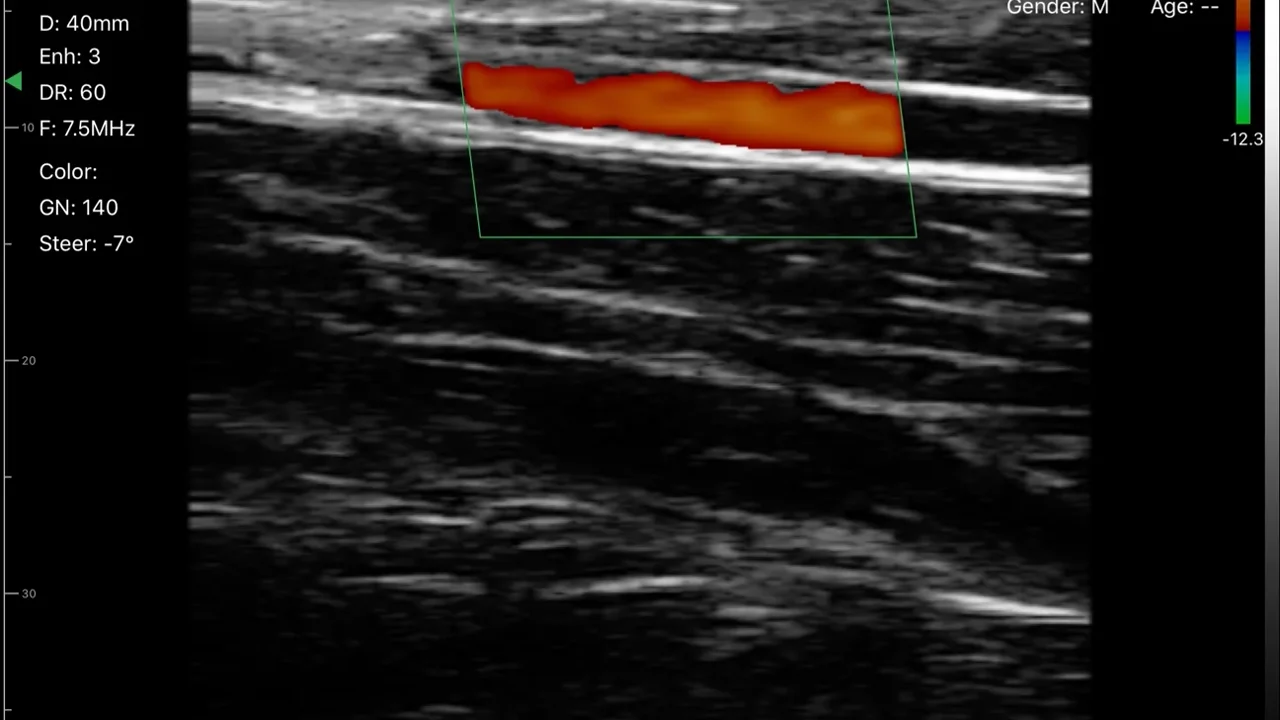
Wählen Sie eine Karte, um die Aufnahme zu wechseln
Die Aufnahmen zu De Quervain, zum Ellenbogen und zum Seitenvergleich wurden mit Suresult Geräten erstellt; das Bild der Handgelenksgefäße stammt aus der Suresult Referenzbibliothek.
Kurze Antwort
Ein Ultraschallgerät für die Rheumatologie ist ein Hochfrequenz-Ultraschallgerät zur Graduierung der Synovitis, zur Untersuchung von Sehnen und Enthesen sowie zur Beurteilung der Arthritisaktivität im Verlauf.
- Auflösung bei 16–20 MHz: kleine Gelenke mit der für sie geeigneten Frequenz darstellen
- Power-Doppler zur Entzündungsbeurteilung: Graduierung der Aktivität an Synovialis und Enthesen
- Sofortige Dokumentation: Cine-Loops und DICOM für Verlaufskontrollen nach dem Treat-to-Target-Prinzip
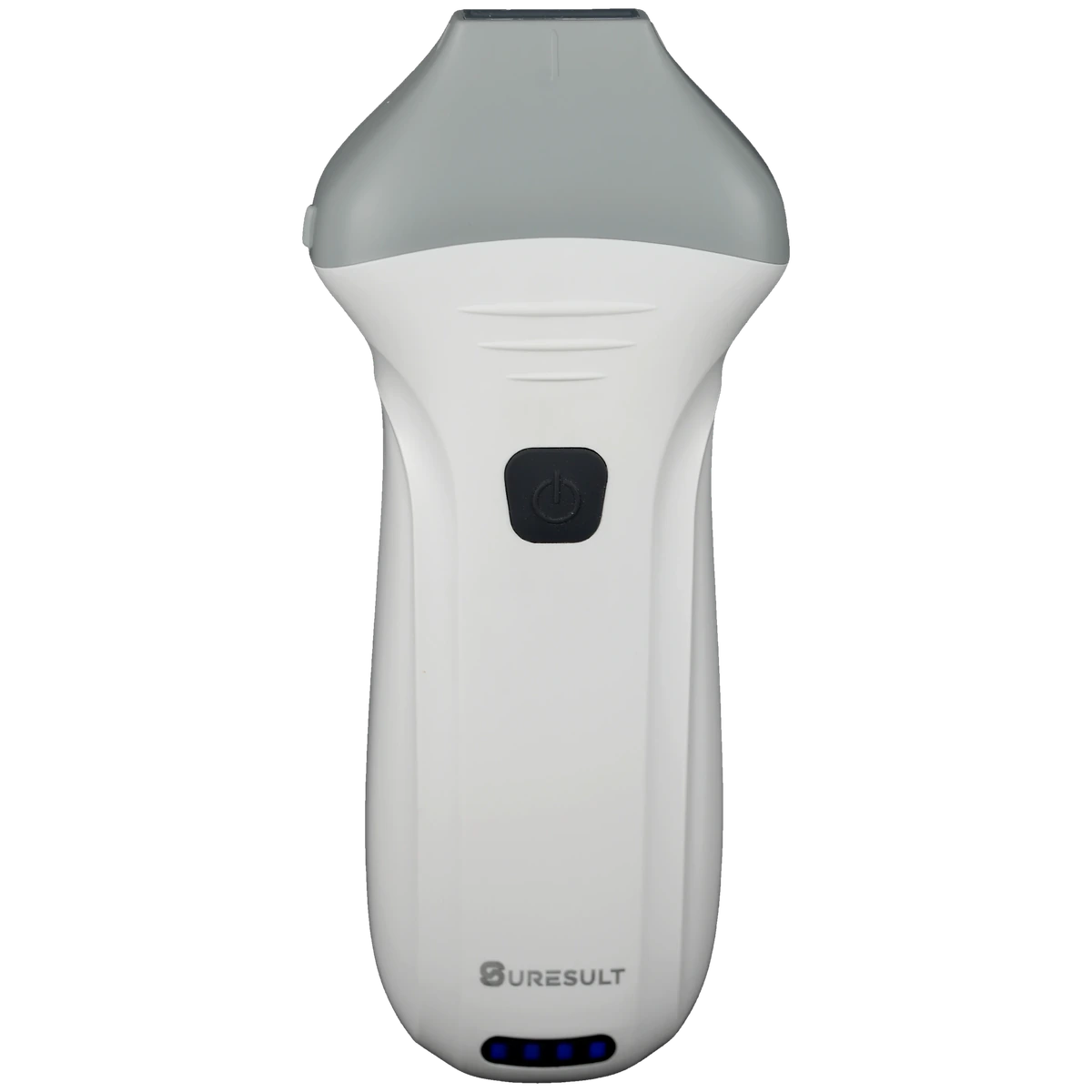
Was es im Alltag leistet
Die vier rheumatologischen Untersuchungen mit einem Handheld-Ultraschallgerät
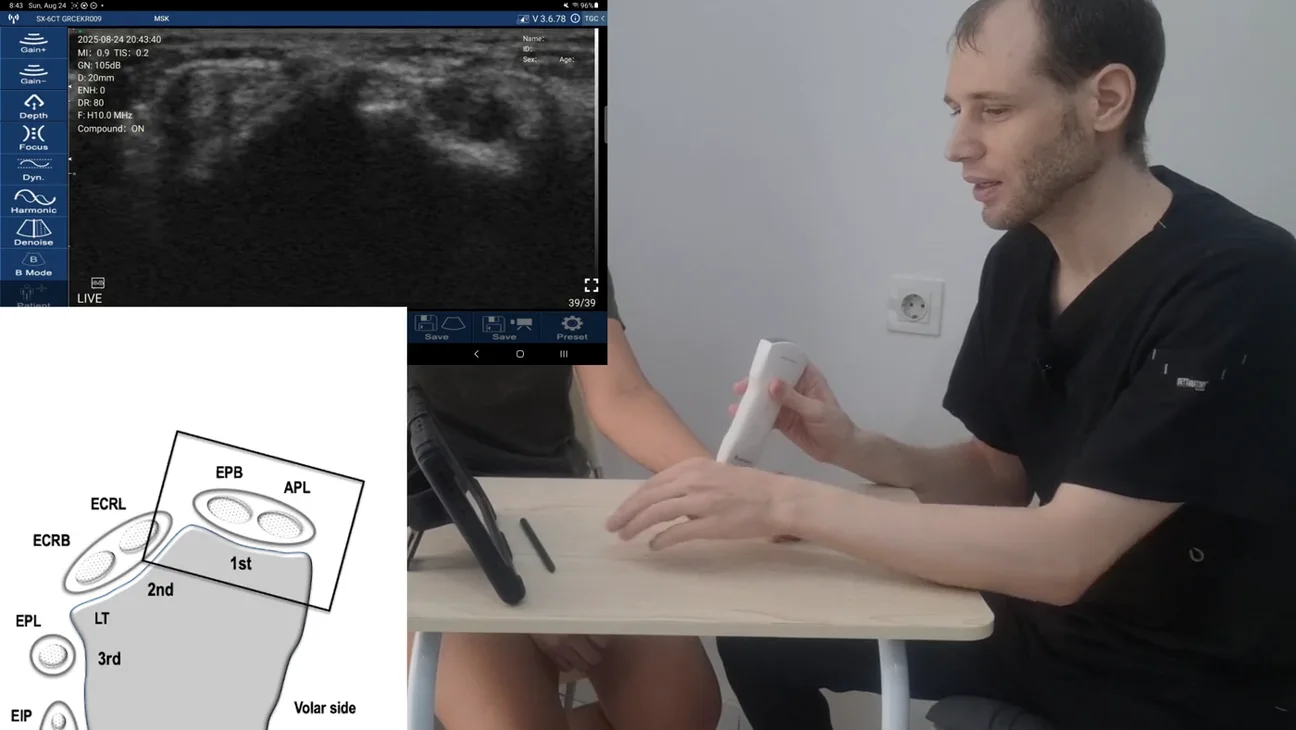
Synovitis kleiner Gelenke
MCP-, PIP- und Handgelenke bei 16/20 MHz: Synovialverdickung, Erguss und frühe Erosionen lassen sich mit der für kleine Gelenke erforderlichen Frequenz darstellen.
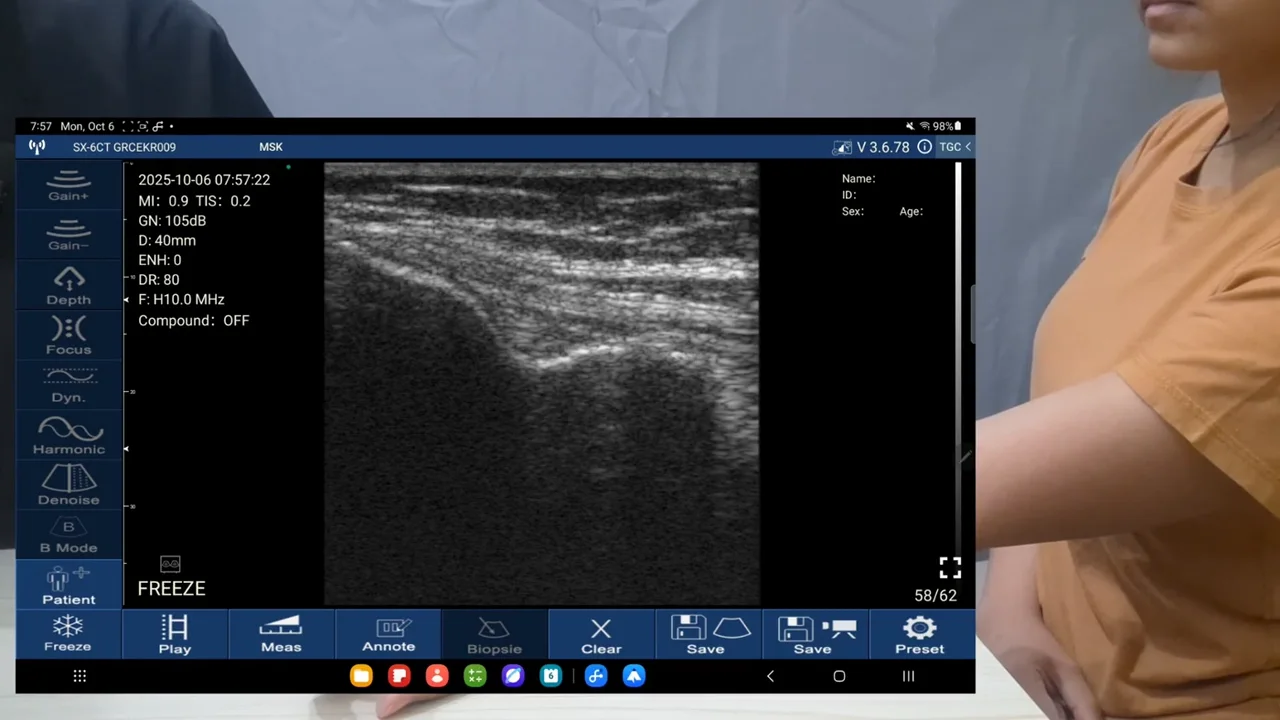
Untersuchung von Sehnen und Enthesen
Gemeinsame Extensoren- und Flexorenursprünge, Achillessehnen- und Patellarsehnenansätze: Eine Enthesitis zeigt sich als Verdickung und Verlust der fibrillären Struktur – in Sekunden beurteilbar.

Power-Doppler-Aktivität
Aktive Entzündung leuchtet auf. Die semiquantitative Graduierung an Synovialis und Enthesen unterstützt bei jedem Termin Therapieentscheidungen nach dem Treat-to-Target-Prinzip.
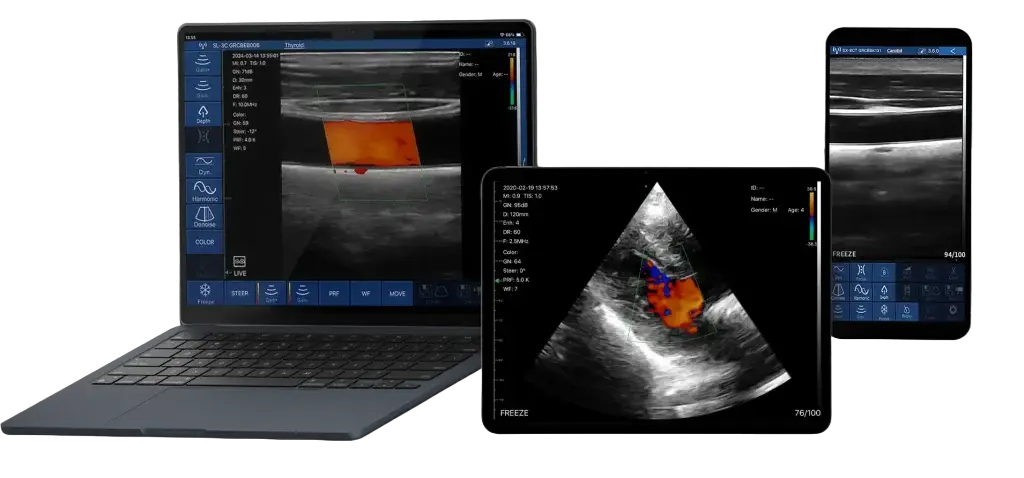
Verlaufsdokumentation
Untersuchungen werden lokal gespeichert und lassen sich als JPEG, MP4, PNG und DICOM exportieren. Die Aufnahme von vor zwölf Wochen steht neben der heutigen, sodass die Krankheitsaktivität im Verlauf sichtbar wird.
Grundlagen der Untersuchungstechnik
So läuft eine Gelenksonografie ab
- Beginnen Sie mit der höchsten Frequenz.
Kleine Gelenke lassen sich mit 16/20 MHz am besten darstellen, wenn die Bildtiefe auf den ersten Zentimeter eingestellt ist.
Das Modell mit 20 MHz: L20Pro - Schallen Sie die Standardschnitte durch.
Dorsale Schnitte an Handgelenk und MCP-Gelenken decken die meisten Fragestellungen zur Synovitis ab; vergleichen Sie die linke mit der rechten Seite.
Dorsaler Handgelenksschnitt 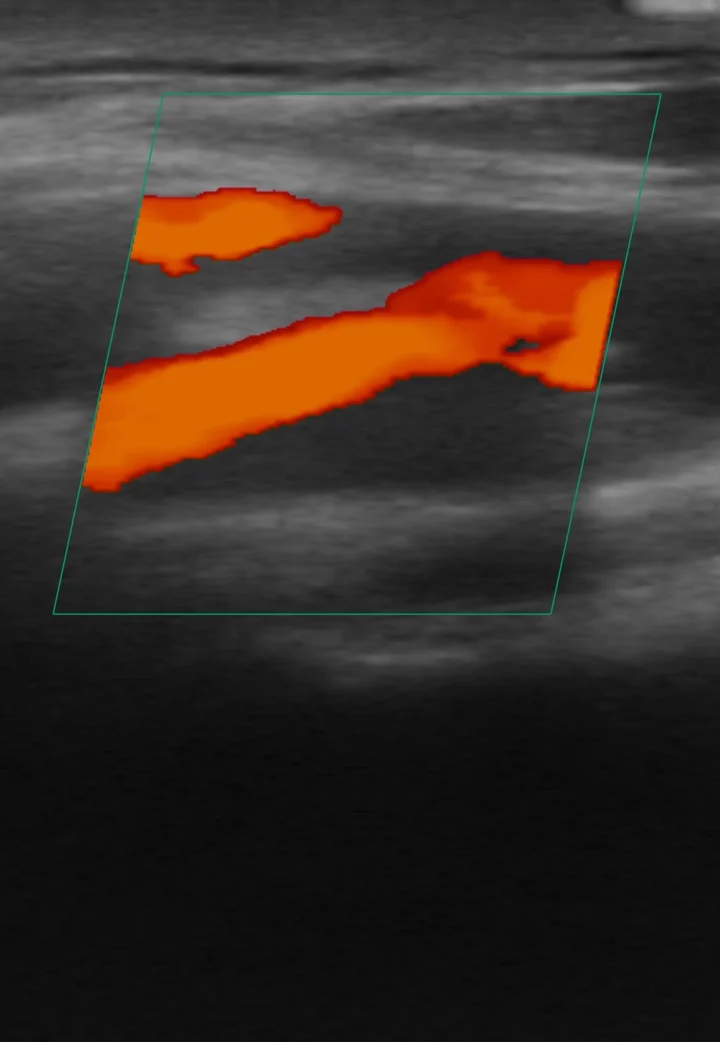 Graduieren Sie die Aktivität mit Power-Doppler.
Das Graustufenbild zeigt die Schwellung; der Power-Doppler zeigt, ob die Synovialmembran entzündlich aktiv ist.
Power-Doppler, Aufnahme eines Käufers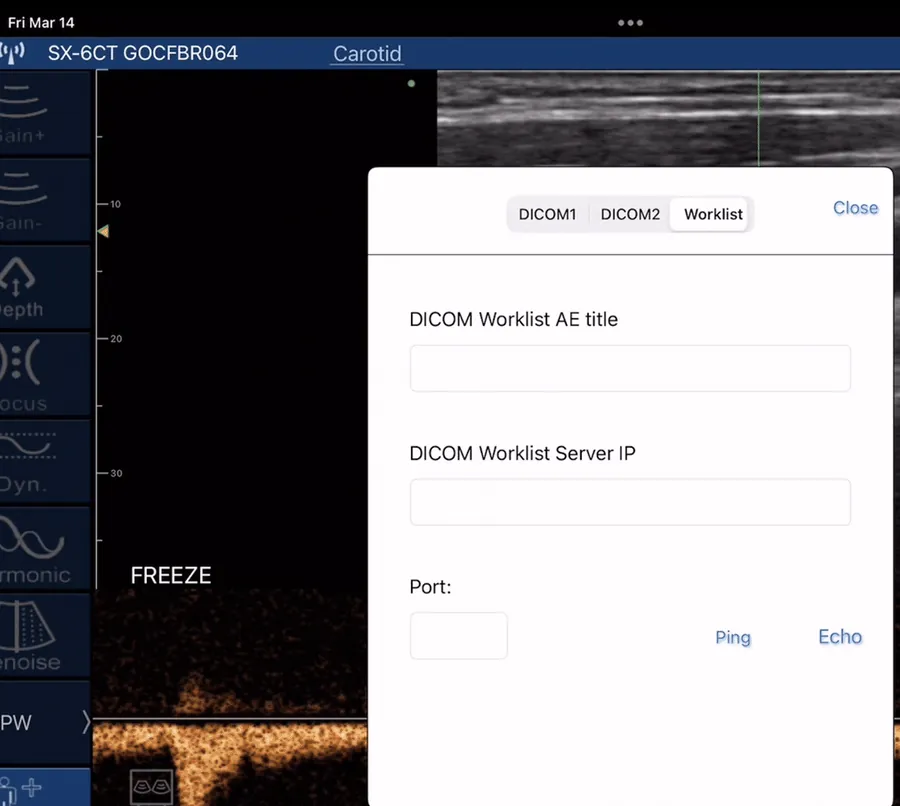 Speichern Sie die Schallsequenz statt des Standbilds.
Cine-Loops mit DICOM-Export ermöglichen es, bei Verlaufskontrollen Bewegungsabläufe miteinander zu vergleichen.
Cine- + DICOM-Einstellungen
Was die Forschung zeigt
Die Evidenz für Ultraschall in der Rheumatologie
- Erkennt, was im Röntgenbild verborgen bleibt.
Bei früher rheumatoider Arthritis wurden sonografisch mehr Knochenerosionen nachgewiesen als im Röntgenbild.
Wakefield et al., Arthritis Rheum 2000 - Der klinischen Untersuchung überlegen.
Europäische Empfehlungen: Ultraschall ist beim Nachweis einer Synovitis sensitiver als die klinische Untersuchung.
Colebatch et al., Ann Rheum Dis 2013 - Ein standardisierter Score liegt vor.
EULAR-OMERACT veröffentlichte eine Konsensdefinition und ein kombiniertes Graduierungssystem aus Graustufenbild und Power-Doppler für Synovitis bei RA. Bei der Untersuchung an Patienten blieb der mittlere Kappa-Wert für alle Komponenten unter 0,50. Die Autoren fordern eine weitere Evaluation vor dem Einsatz in klinischen Studien.
D’Agostino et al., RMD Open 2017
Erfahrungsberichte von Käufern
Von Ärzten, die Gelenke sonografisch untersuchen
„Die Hochfrequenz-Linearsonde von Suresult eignet sich hervorragend für muskuloskelettale Untersuchungen, etwa zur Erkennung von Sehnenrissen oder Muskelzerrungen. Dank der kabellosen Funktion kann ich mich frei in der Praxis bewegen. Für Untersuchungen tiefer liegender Strukturen ist sie allerdings weniger geeignet, deshalb verwende ich sie ausschließlich für Gelenke und oberflächliche Strukturen. Hervorragend für eine schnelle Diagnostik!“
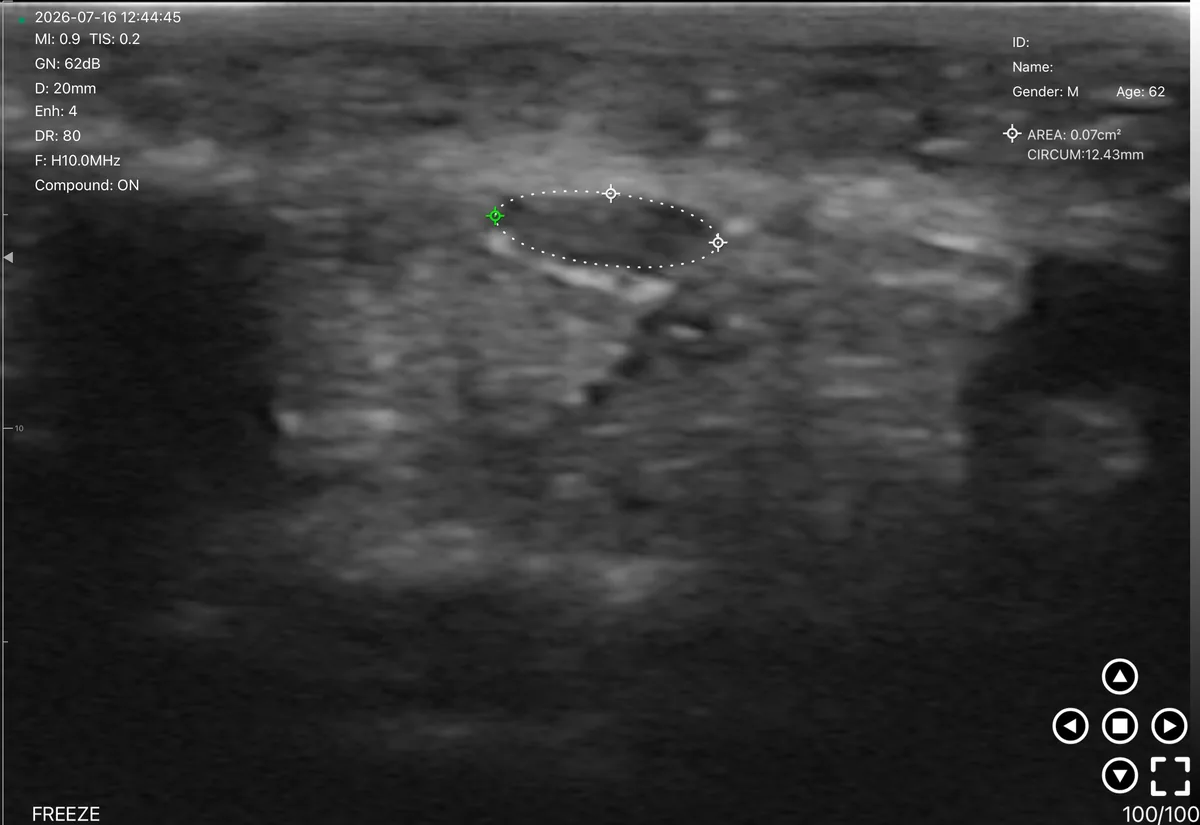
Mit dieser Hardware gemessen
Karpaltunnel: gemessen und nicht geschätzt
Die Querschnittsfläche des Nervus medianus am Handgelenk ist das Standardmaß beim Screening auf ein Karpaltunnelsyndrom. Mit diesem Gerät genügt es, die Kontur nachzuzeichnen und den Wert abzulesen. Ein Neurologe, der das D3Ultra gekauft hat, schickte diese Aufnahme: Nerv umfahren, Fläche auf dem Bildschirm angezeigt und in der Untersuchungsakte gespeichert.
“Querschnittsfläche des Nervus medianus am Handgelenk gemessen.” — Enrique Botia Paniagua, Neurologe · Käuferbericht
Wählen Sie Ihr Modell
Das beste Ultraschallgerät für die Rheumatologie? Entscheidend ist Ihr Praxisalltag
AM HÄUFIGSTEN GEWÄHLTKleine Gelenke bestimmen Ihren AlltagL20Pro
Kleine Gelenke bestimmen Ihren AlltagL20ProMCP-, PIP- und Handgelenke sowie Enthesen mit 16/20 MHz und Power-Doppler-Graduierung – das Modell mit der höchsten Frequenz in diesem Vergleich.
$3,720 L20Pro · 256 ElementeJetzt kaufenL20Pro ansehen →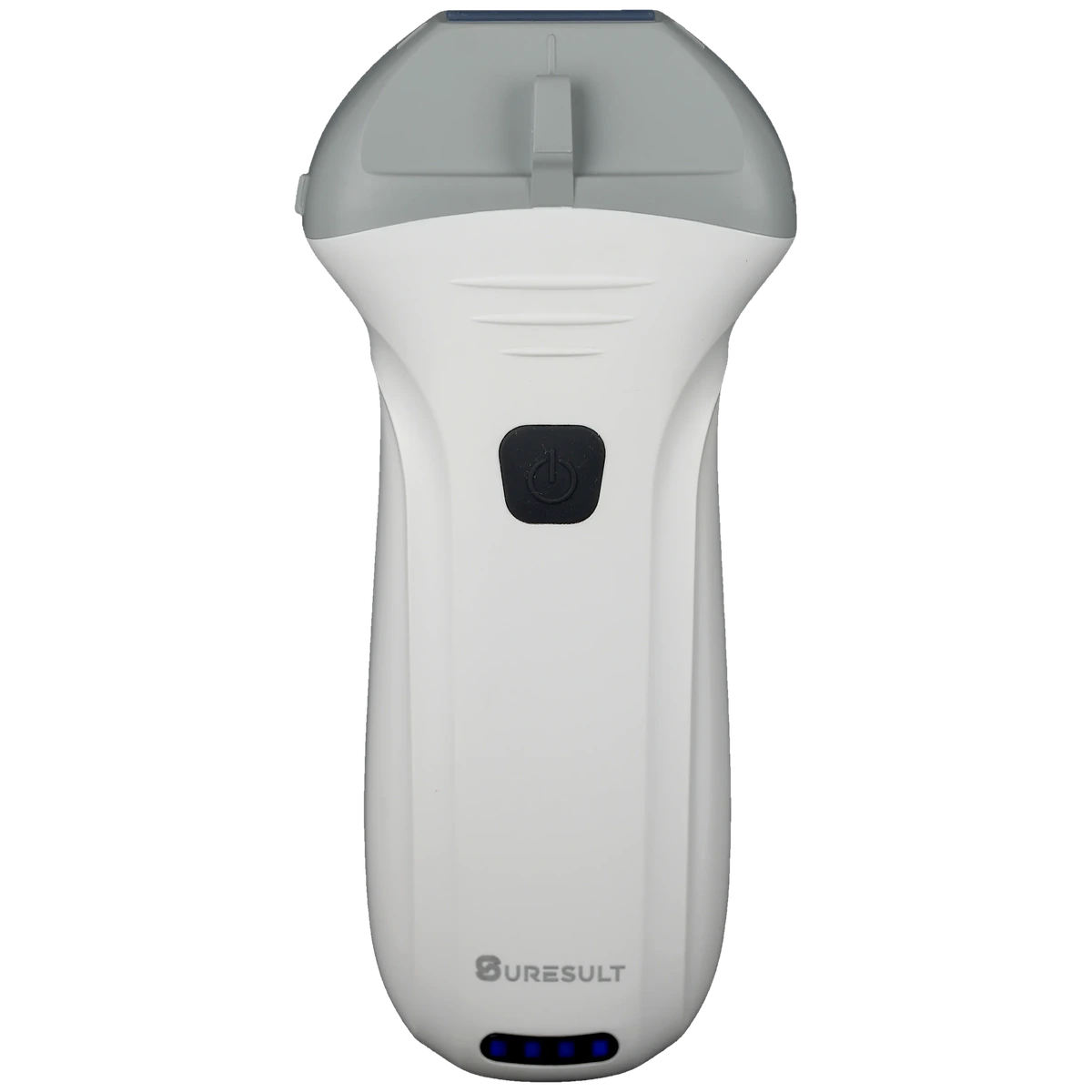 Vielseitiger Praxisalltag, größere UntersuchungstiefeL14Pro
Kleine Gelenke sowie Schultern, Hüften und tiefer liegende Sehnen: 10/14 MHz bei bis zu 80 mm Untersuchungstiefe vereinen beides in einer Sonde.
$3,441 L14Pro · 256 ElementeJetzt kaufenL14Pro ansehen →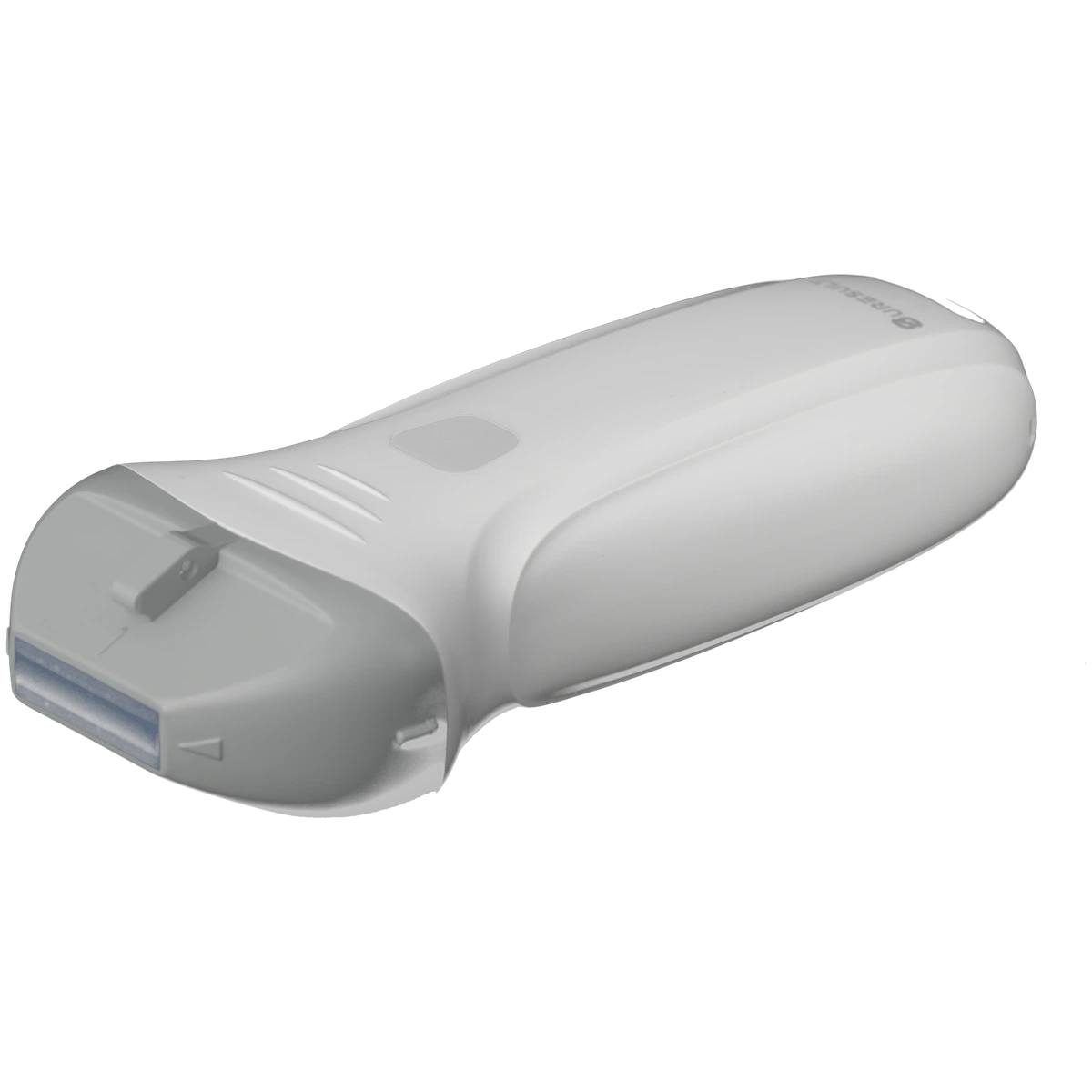 Budgetbewusst einsteigenL14
Starten Sie mit dem L14 bei 10/14 MHz; steigen Sie auf 16/20 MHz um, sobald es Ihr Budget erlaubt.
$2,139 L14 · abJetzt kaufenL14 ansehen →Ultraschallgeräte im Vergleich
Fünf Suresult-Modelle als Ultraschallgeräte für die Rheumatologie
Wischen Sie, um alle Spalten zu sehen →
| Modell | Preis | Frequenz | Tiefe | Am besten geeignet für |
|---|---|---|---|---|
 L20Pro L20Pro | $3,720 | 16/20 MHz | 10/20/30/40 mm | Kleine Gelenke, Enthesen, Synovitis im Power-Doppler |
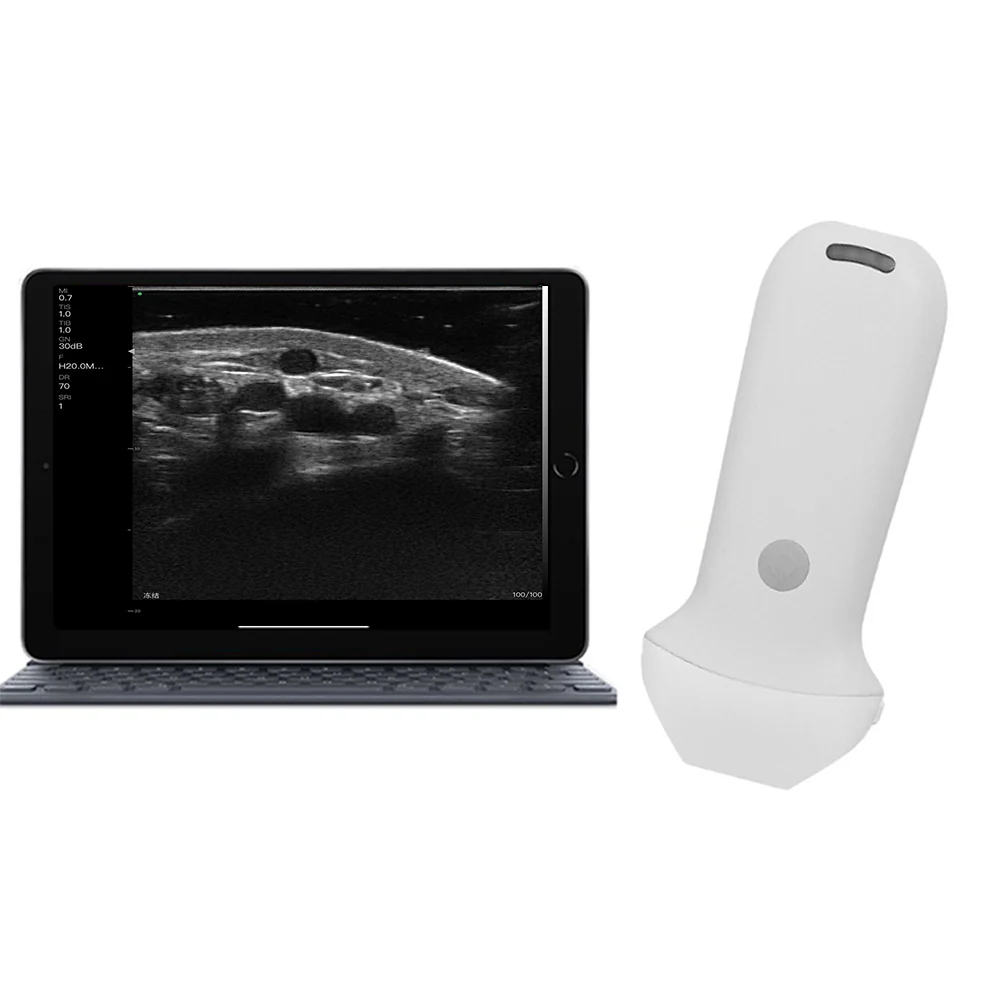 L20 L20 | $2,790 | 16/20 MHz | 10–40 mm | Gleiches Frequenzband, Standardplattform |
 L14Pro L14Pro | $3,441 | 10/14 MHz | 20/40/60/80 mm | Kleine Gelenke + tiefer liegende Schulter- und Hüftgelenke |
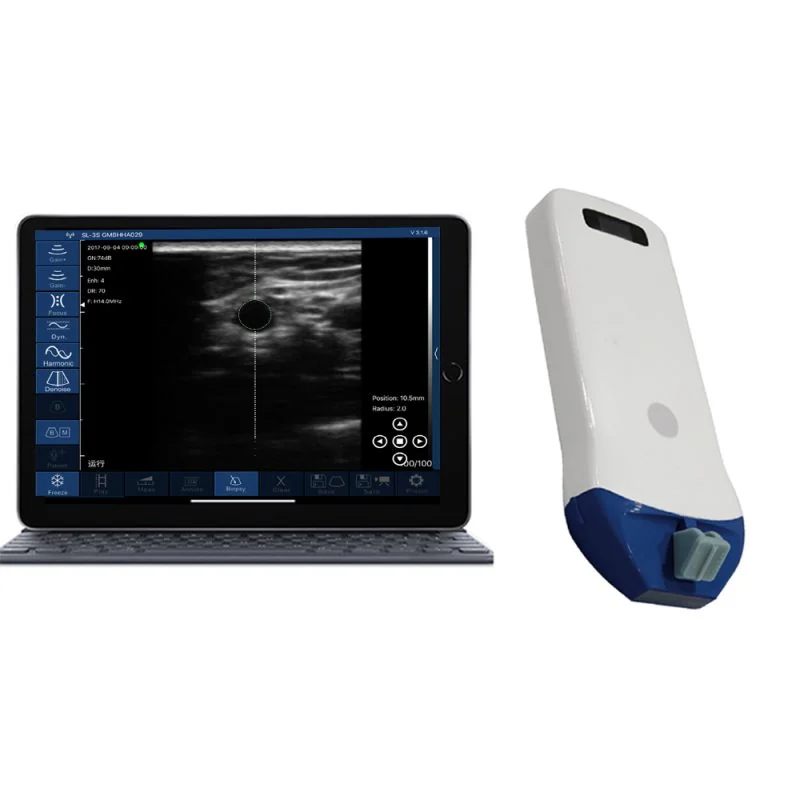 L14 L14 | $2,139 | 10/14 MHz | 20–80 mm | Linear-Einstiegsmodell für vielseitige MSK-Untersuchungen |
 D3Ultra D3Ultra | $2,976 | 7.5/10 + 3.2/5 MHz | 20–100 mm linear | Ein gemeinsames Gerät für Rheumatologie und weitere POCUS-Anwendungen |
Im Vergleich mit bekannten Marken
Suresult im Vergleich mit Clarius, Butterfly und GE Vscan für die Rheumatologie
Wischen Sie, um alle Spalten zu sehen →
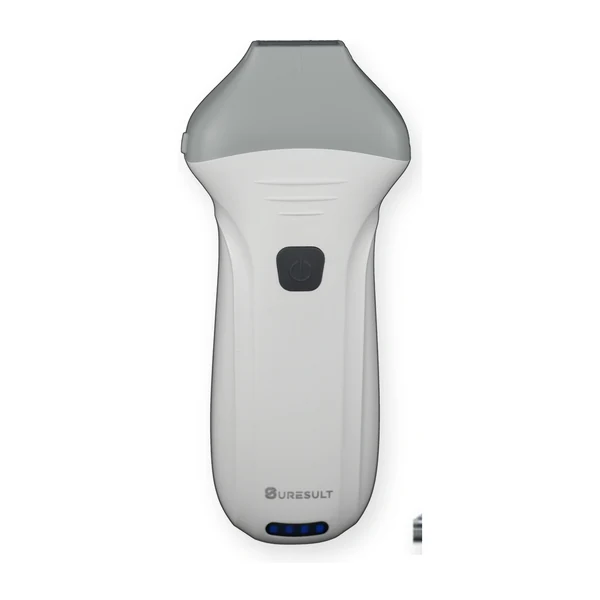 Suresult-Modell Suresult-Modell | 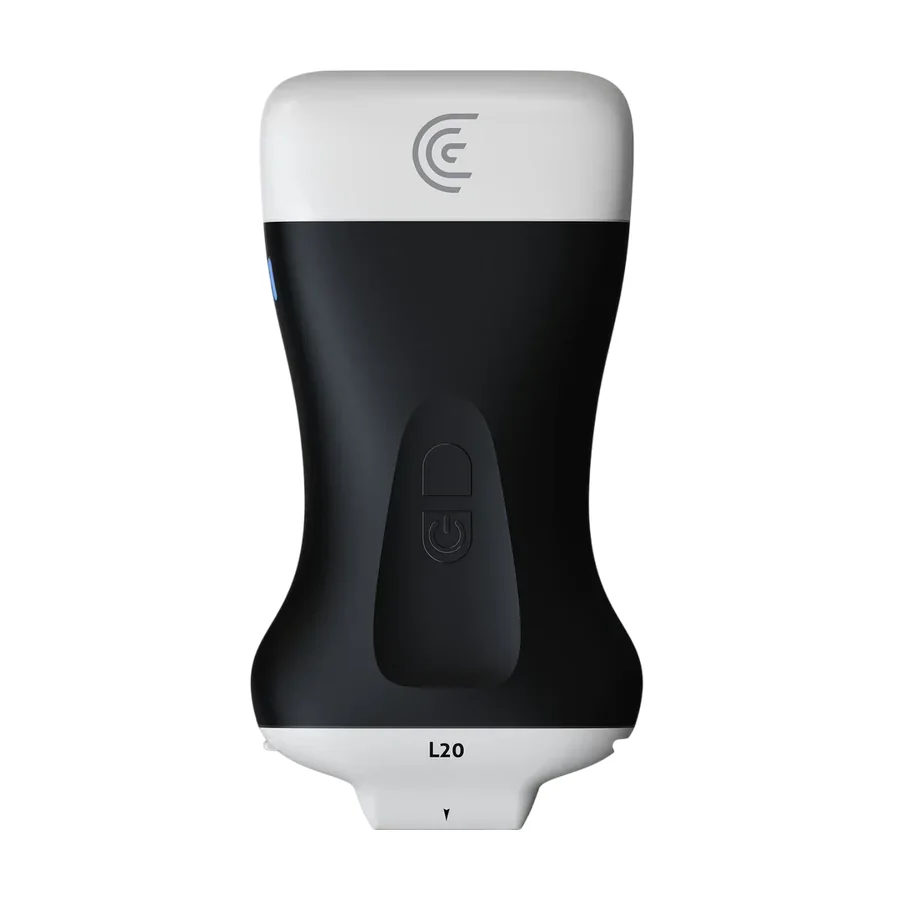 Clarius L20 HD3 Clarius L20 HD3 | 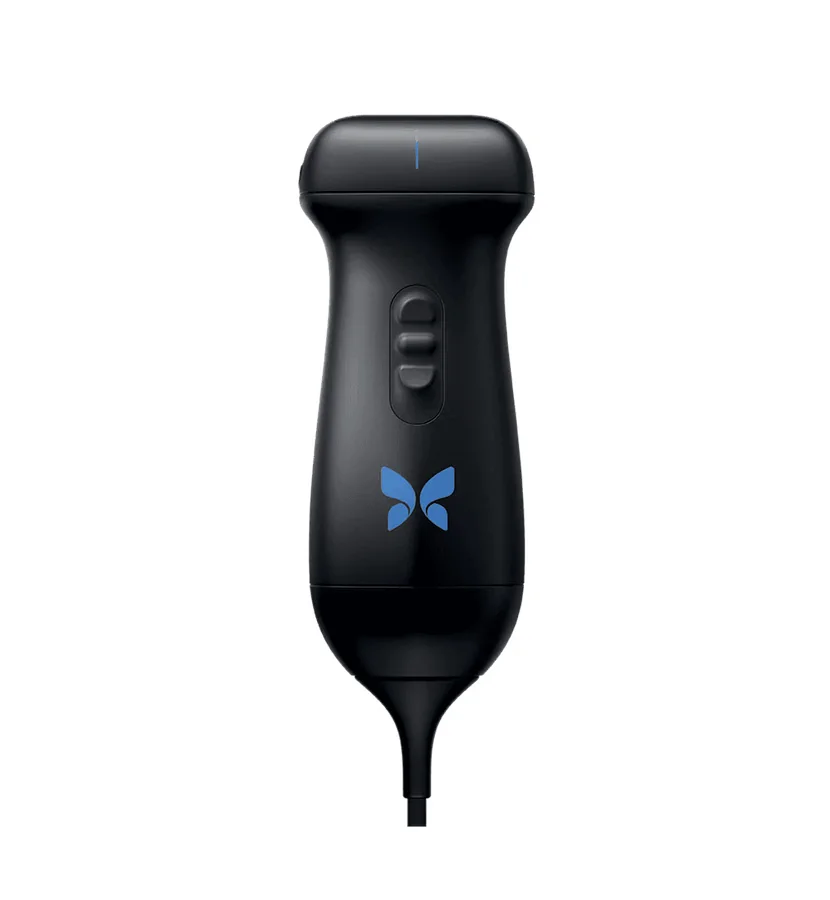 Butterfly iQ3 Butterfly iQ3 | 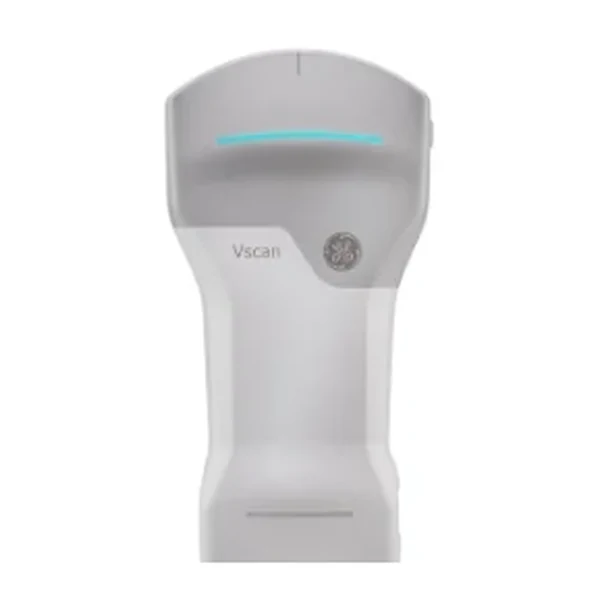 GE Vscan Air CL GE Vscan Air CL | |
|---|---|---|---|---|
| Frequenz | 16/20 MHz (L20-Serie) | 8–20 MHz | 1–12 MHz Einzelchip | 3–12 MHz Linearseite |
| Gerätepreis | $2,139–$3,720, veröffentlichte Preise | $5,395 laut Preisangabe | $3,899 veröffentlichter Preis | $4,999 laut Preisangabe |
| Abonnement | Keine: Software inklusive | Mitgliedschaft für $695/Jahr, $1,785 für drei Jahre oder einmalig $2,500 | Erforderlich: $299–$420/Jahr | per Abonnement freigeschaltete digitale Werkzeuge |
| Gesamtkosten bis zur Lieferung | Zoll + Versand inklusive, 1–7 Tage | US-Listenpreis, zzgl. Zoll | US-Listenpreis, zzgl. Zoll | US-Listenpreis, zzgl. Zoll |
| Regulatorische Registrierungen | FDA 510(k) · ISO 13485 · EU MDR (CE) · TGA · ANVISA · Health Canada | FDA 510(k) | FDA 510(k) | FDA 510(k) |
Wo Suresult überzeugt
- 20 MHz genau dort, wo die Gelenke liegen.Dieselbe Höchstfrequenz von 20 MHz wie das teuerste Ultraschallgerät in diesem Vergleich, abgestimmt auf die Detaildarstellung kleiner Gelenke.
- Power-Doppler + Farbdoppler serienmäßig.Die Beurteilung der Synovitisaktivität ist immer im Grundumfang enthalten.
- Der Preis an der Kasse ist der Gesamtpreis bis zur Zustellung.Zölle und Versand inklusive, Lieferung in 1–7 Tagen.
- Registriert, wo Sie praktizieren.FDA 510(k) · ISO 13485 · EU MDR (CE) · TGA · ANVISA · Health Canada.
Die Fünfjahresrechnung
Die Clarius-Mitgliedschaft für $695/Jahr summiert sich nach fünf Jahren auf $3,475, zuzüglich des Kaufpreises für das L20 HD3. Das obligatorische Butterfly-Abonnement verursacht zusätzliche Kosten von $1,495–$2,100.
L14, einmalig bezahltClarius L20 HD3: Scanner + Mitgliedschaft= $3,475 allein an Gebühren bis zum fünften Jahr
Drei Modelle, Entscheidung in einer Zeile
Sie fragen sich, welches Modell passt zu Ihrer Praxis?
Ein Gespräch liefert Ihnen eine klare Empfehlung: die passende Suresult-Sonde oder ein ehrliches “keine von beiden.”
L20Pro
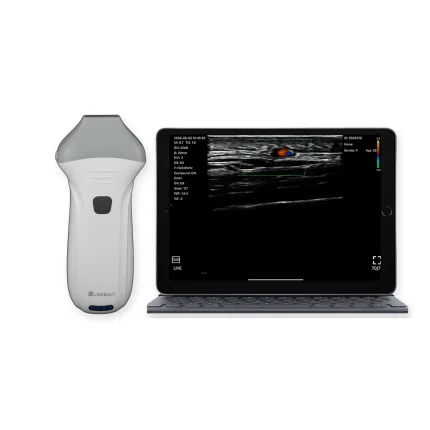
Hochfrequenz-Ultraschallkopf Suresult L20Pro für das Gesicht – 16/20 MHz, 256 Elemente, kabellos
Frequenz: 16/20 MHz
Bildgebungstiefe: 10/20/30/40 mm
Rheumatologie
buy scanner

L24Pro
L24Pro 18/24 MHz Ultraschallsonde mit 256 Elementen für ästhetische Medizin und Filler
Frequenz: 18/24 MHz
Bildgebungstiefe: 10/15/20/25mm
Rheumatologie
buy scanner

D3Ultra
D3Ultra Mehrzweck-Handheld-Ultraschall mit Konvex-, Linear- und Phased-Array-Funktion
Frequenz: Konvex- / Phased-Array-Sonde 3.2/5.0MHz Linearsonde 7.5/10MHz
Bildgebungstiefe: Linearsonde: 20–100 mm, Konvexsonde & Phased-Array-Sonde: 90–300 mm
Rheumatologie
buy scanner




Fachkundige Beratung
Sprechen Sie mit einem Spezialisten für Ultraschallgeräte
Beschreiben Sie Suresult Ihren täglichen Arbeitsablauf und erhalten Sie eine individuelle Geräteempfehlung mit einem Komplettangebot.
- Kostenlose Beratung zur Gerätewahl — Schallköpfe, Frequenz und Tiefe auf Ihre Verfahren abgestimmt
- Komplettangebot — Versand, Zollabfertigung und anfallende Steuern inklusive
- Schnelle Lieferung — Versand innerhalb von 24 Stunden, Lieferung bis an Ihre Tür in 1–7 Tagen
- Kein Software-Abonnement erforderlich — Apps für iOS, Android und Windows inklusive
- 30 Tage Rückgaberecht und Support rund um die Uhr
Der Live-Chat öffnet sich direkt hier — Sie können sofort losschreiben.
