The right scanner runs the highest frequency that still reaches the clinic’s deepest recurring target, then completes the full Doppler, archive and ownership-cost workflow.
4obecne systemy
3zakresy częstotliwości
5kryteria zakupu
Suresult prices update live from the Suresult store; Clarius prices and plans checked October 30, 2026. This guide compares diagnostic high-frequency ultrasound machines for aesthetics and superficial imaging.
Inna kategoriaA diagnostic scanner receives echoes to form real-time B-mode and Doppler images. HIFU concentrates acoustic energy at a focal zone as treatment. One word, two purchases: the scanner images the tissue, and HIFU treats it.
What MHz Do Fillers and Facial Arteries Need?
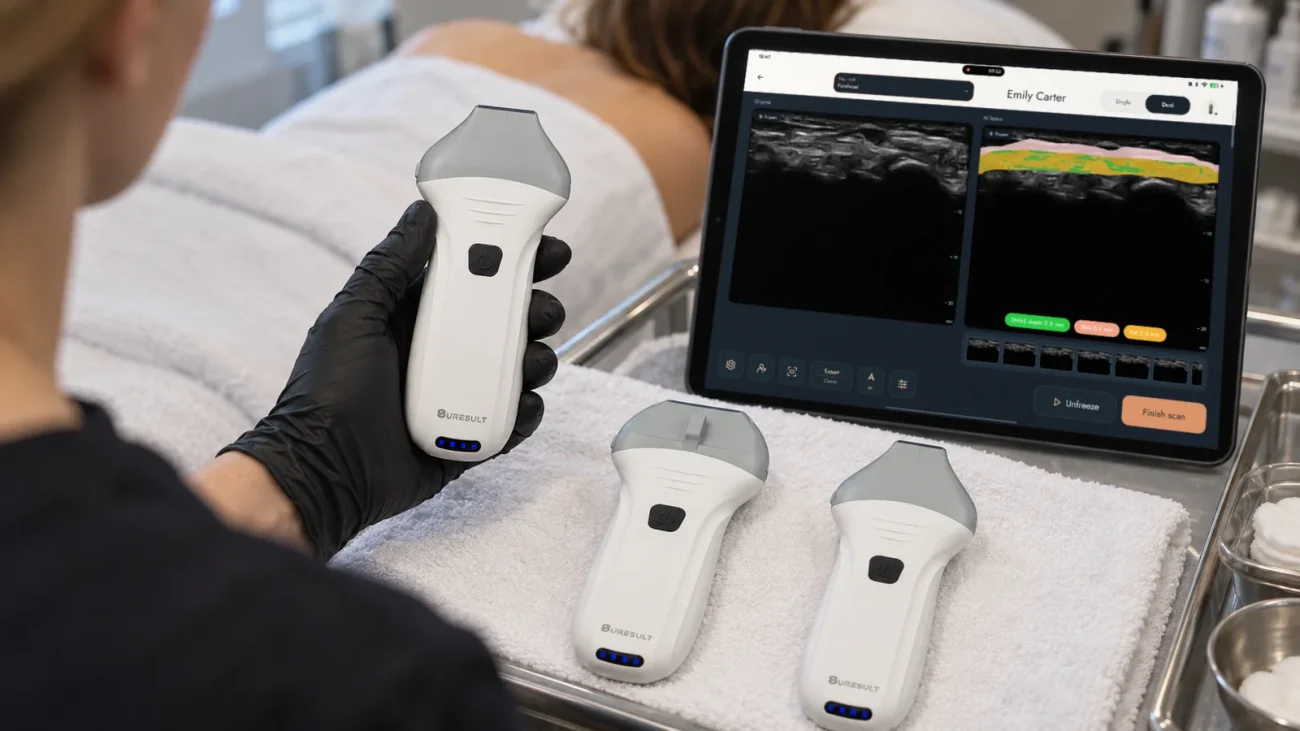
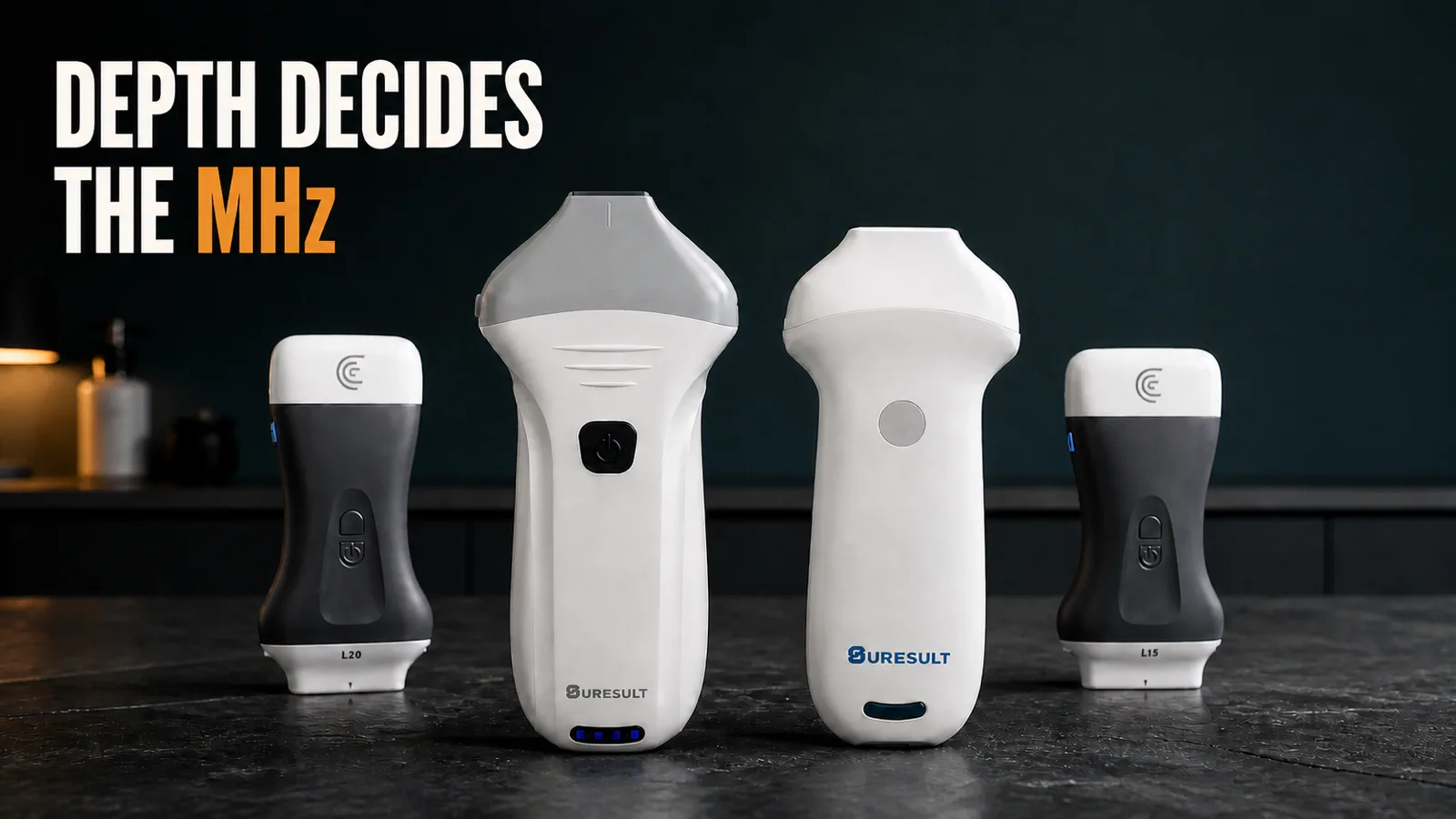
For fillers and facial arteries, use 18–24 MHz at the forehead, glabella, nose and lips, where the arteries sit 2.52 to 5.6 mm deep, and 16–20 MHz along the facial artery, 6.27 to 8.04 mm deep. A 2025 Delphi consensus recommends a 15 MHz linear probe as the minimum. Suresult’s L24Pro (18/24 MHz) serves the shallow band and the L20Pro (16/20 MHz) the facial artery, cheek and jawline.
| Struktura docelowa | Głębokość | Band for this depth | Ręczny aparat USG Suresult |
|---|---|---|---|
| Skin layers and superficial fillerEpidermis, dermis, upper subcutis | First 10 mmMlosek 2021: 20 MHz reaches about 10 mm | 20–24 MHz | L24Pro or L2418/24 MHz, 10–25 mm |
| Dorsal nasal arteryNasion | 2,52 mm po lewej (mediana), 2,66 mm po prawej (średnia)Ortiz Middleton 2025, 50 women | 18–24 MHz | L24Pro or L2418/24 MHz, 10–25 mm |
| Superficial temporal artery, frontal branchMiddle forehead, lateral canthal line | 2.7 mmPhumyoo 2020, 19 cadavers and 14 volunteers | 18–24 MHz | L24Pro or L2418/24 MHz, 10–25 mm |
| Supratrochlear arteryGlabella at rest | 3.34 mm (SD 0.6)Cotofana 2020a, 41 volunteers | 18–24 MHz | L24Pro or L2418/24 MHz, 10–25 mm |
| Supraorbital arteryGlabella at rest | 3.54 mm (SD 0.8)Cotofana 2020a, 41 volunteers | 18–24 MHz | L24Pro or L2418/24 MHz, 10–25 mm |
| Tętnica kątowaBeside the nose, deep pyriform space | 3.6 mm (SD 1.7)Franceschelli 2024, 332 hemifaces | 18–24 MHz | L24Pro or L2418/24 MHz, 10–25 mm |
| Inferior labial arteryWarga dolna | 5.2 mmCotofana 2020b, 41 volunteers | 18–24 MHz | L24Pro or L2418/24 MHz, 10–25 mm |
| Superior labial arteryWarga górna | 5.6 mmCotofana 2020b, 41 volunteers | 18–24 MHz | L24Pro or L2418/24 MHz, 10–25 mm |
| Tętnica twarzowaFrom the mandibular border up to the lateral nasal ala | Od 6,27 mm do 8,04 mmPourani 2025, 10 Doppler studies | 16–20 MHz | L20Pro or L2016/20 MHz, 10–40 mm |
Band basis: Mlosek 2021 favors 20–30 MHz once a scan includes the dermis and subcutaneous tissue; Vasconcelos-Berg 2024 images the infraorbital artery at 18 MHz and the nose and tear trough at 20 MHz; Jaguś 2021 states that 18–22 MHz shows vessels about 0.1 mm across.
Decyzja zakupowa oparta na częstotliwości
Zakup aparatu do dermatologii? Strona poświęcona dermatologii porównuje modele Suresult do tych zastosowań według poszczególnych zakresów obrazowania, z rzeczywistymi zapisami badań, zweryfikowanymi parametrami i aktualnymi cenami. Zobacz stronę o dermatologii →
Wybrać zakres roboczy, a następnie sprawdzić przebieg pracy.
Oznaczenia 15, 20 i 24 MHz zawężają wybór. O zakupie decydują demonstracja na tej samej strukturze, pełny zestaw funkcji Dopplera, sposób archiwizacji, kompatybilność z platformami oraz koszt za pięć lat.
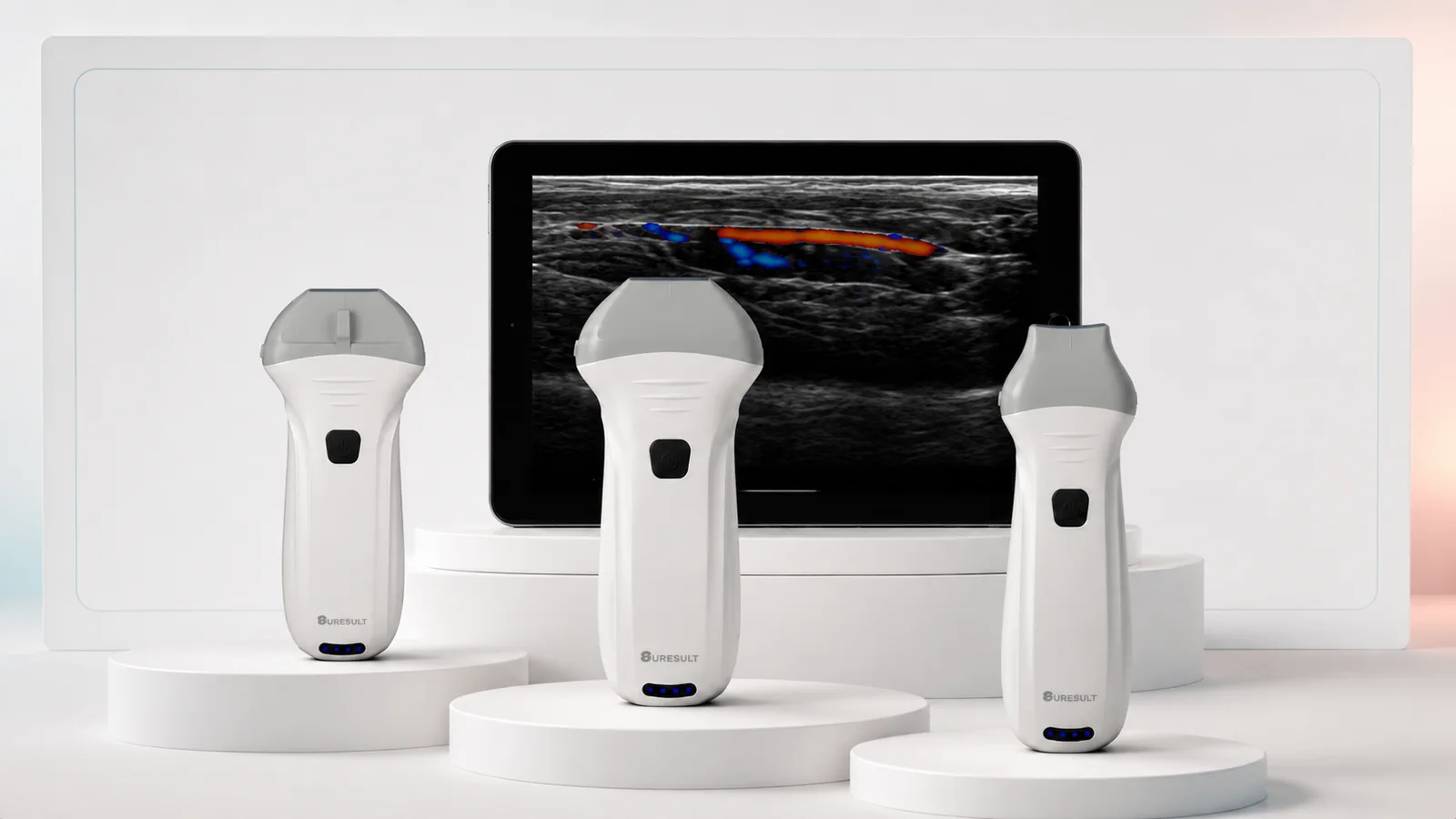


Co ocenialiśmy: As independent equipment evaluators with deep ultrasound knowledge, our frequency-led scope covered Suresult L24Pro, Suresult L20, Clarius L20 HD3 and Clarius L15 HD3 under the same published buyer criteria.
Krótka odpowiedź
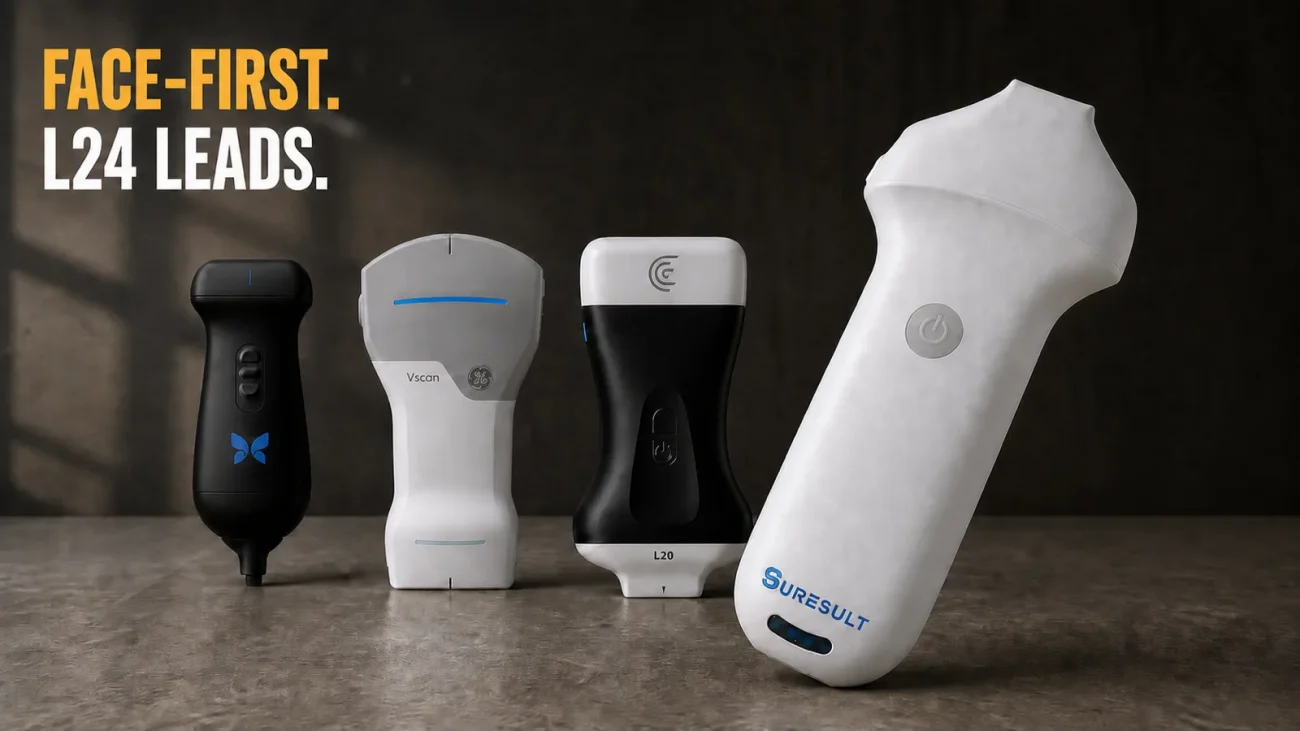
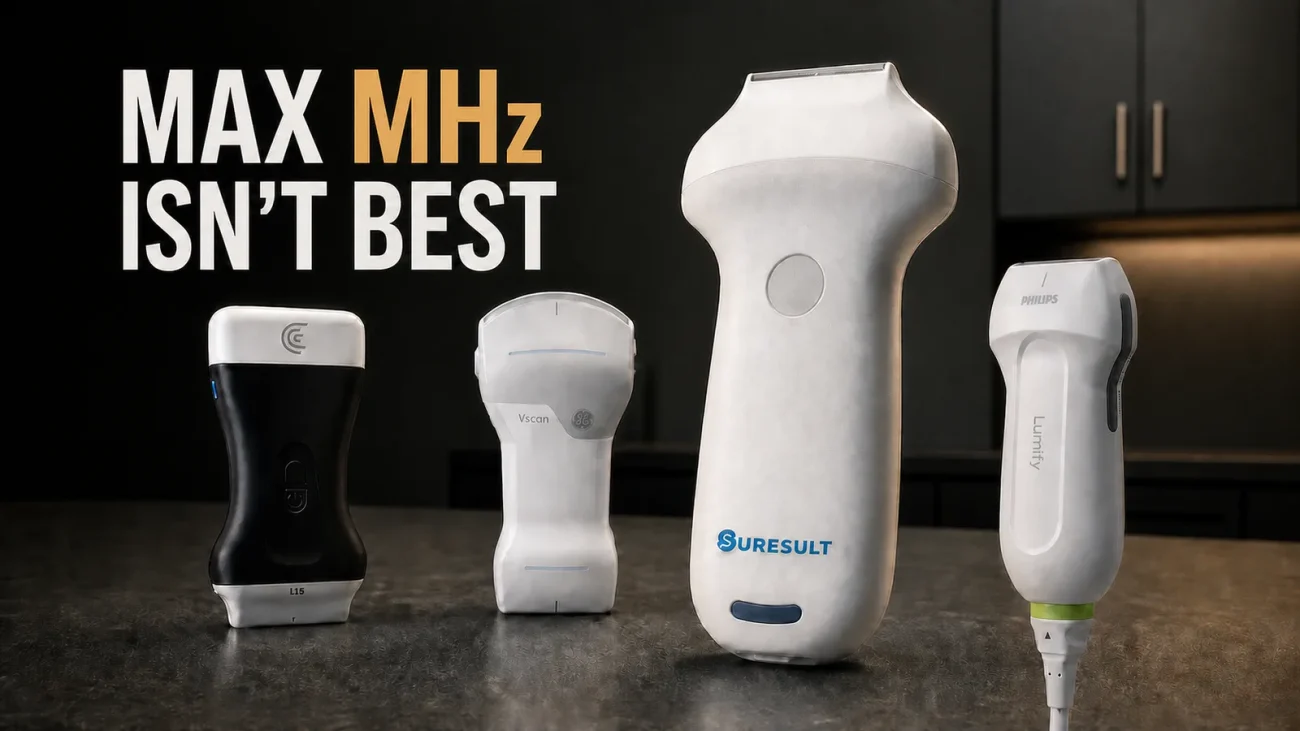
For shallow, face-first diagnostic imaging, we choose the Suresult L24Pro as the premium specialist; the Suresult L20 is the value route at $2,790, with the 16/20 MHz band and depth settings to 40 mm.
Clarius L20 HD3 to opcja premium z ekosystemem oprogramowania i szkoleń. Wybór pada na Clarius L15 HD3, gdy szerszy zakres badanych struktur anatomicznych, szersze pole widzenia lub struktury położone głębiej niż 4 cm mają większe znaczenie niż specjalistyczne zastosowania w zakresie 20–24 MHz.
For high frequency ultrasound for aesthetics, we choose by the live image at the deepest target the clinic must see. The demo-day acceptance test runs Color, Power and PW Doppler, the archive and export path, platform compatibility, heat, battery and support on that same target.
Najkrótsza zasada: wybrać najwyższą użyteczną częstotliwość, która nadal pozwala obrazować najgłębiej położoną z regularnie badanych struktur, a następnie wymagać pomyślnego wyniku demonstracji na tej samej strukturze z użyciem dokładnie tego aparatu, który ujęto w ofercie.
Cztery aktualne opcje zakupu
Porównanie aparatów USG wysokiej częstotliwości
Ranked for clinics whose main work is diagnostic imaging of the superficial face. The first columns carry the fields that decide fit.
Clarius Oct 30, 2026 · Suresult live · USD| System | Częstotliwość / głębokość | Proces diagnostyczny | Aktualna cena / abonament | Najlepsze zastosowanie / nasza ocena |
|---|---|---|---|---|
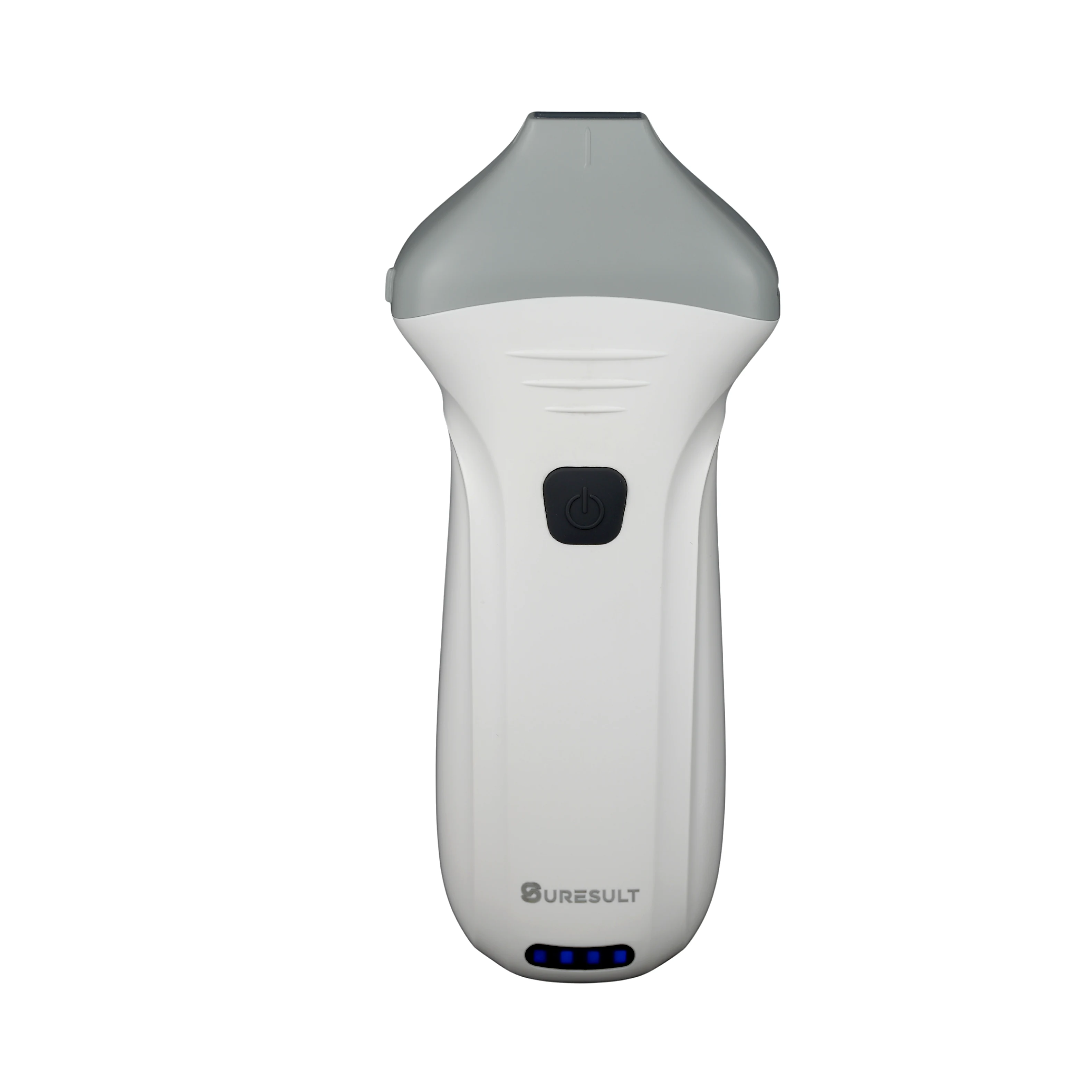 Suresult L24ProPozycja 1 · premium z naciskiem na badania twarzy |
18/24 MHz 10, 15, 20 or 25 mm |
B, M, Color, Power, PW, Needle Enhance; iOS, Android, Windows; local files and DICOM | $4,185 Free lifetime software |
Preferowany model specjalistyczny do regularnej pracy z powierzchownymi strukturami twarzy. Deeper facial planes to 40 mm: L20Pro. |
 Suresult L20Pozycja 2 · najlepszy stosunek jakości do ceny |
16/20 MHz 10, 20, 30 or 40 mm |
B, M, Color, Power, PW, Needle Enhance; iOS, Android, Windows; local files and DICOM | $2,790 Free lifetime software |
Najlepszy stosunek możliwości do ceny z większym zapasem głębokości. 24 MHz facial work: L24Pro or L24. |
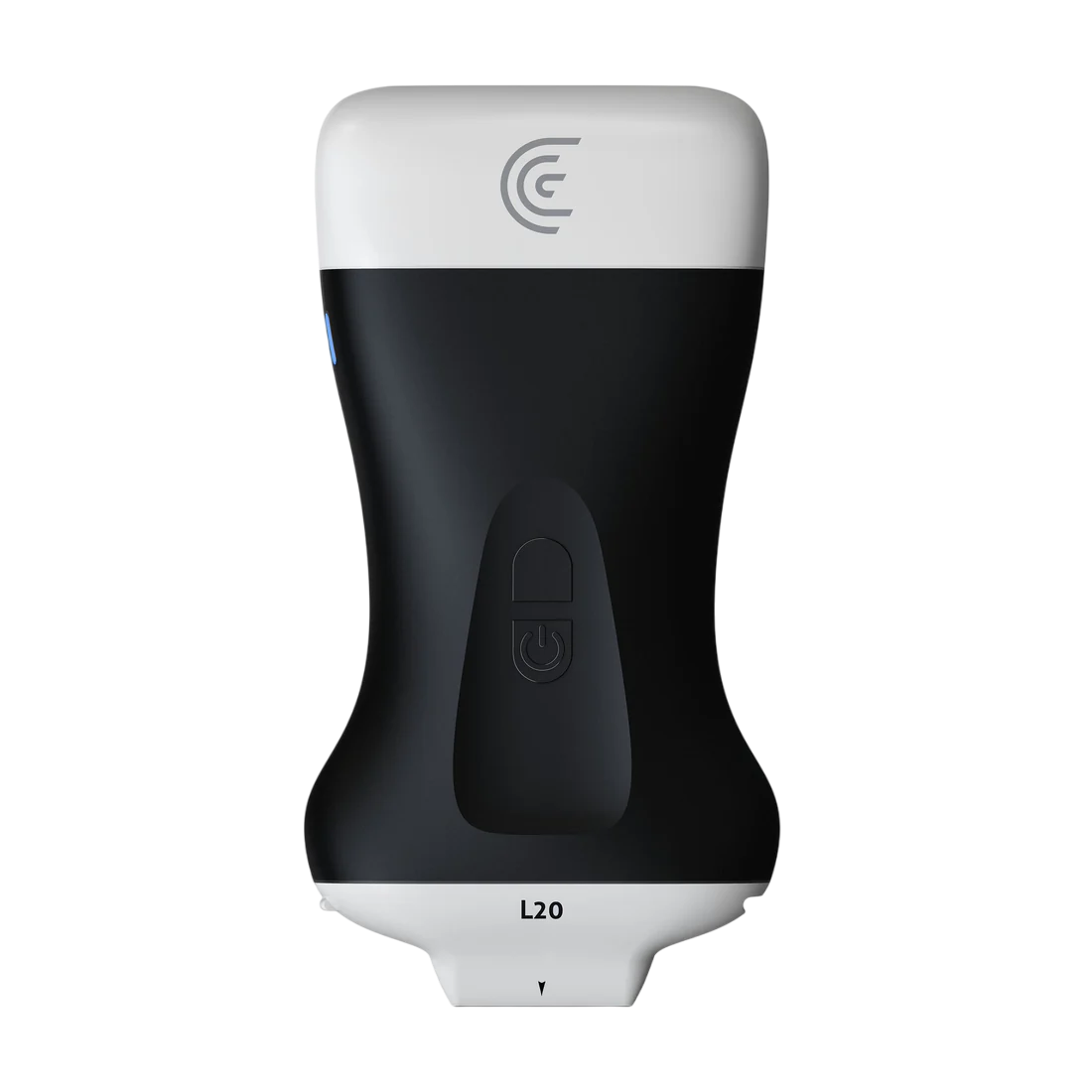 Clarius L20 HD3Pozycja 3 · opcja oparta na ekosystemie |
8–20 MHz Up to 4 cm |
B, M, Color, Power; PW, Needle Enhance, local/cloud storage and DICOM with Essentials; iOS 16+ and Android 13+ | $5,395 Essentials $695/rok |
Ekosystem oprogramowania i edukacji klasy premium. Essentials adds PW Doppler, Needle Enhance and DICOM. |
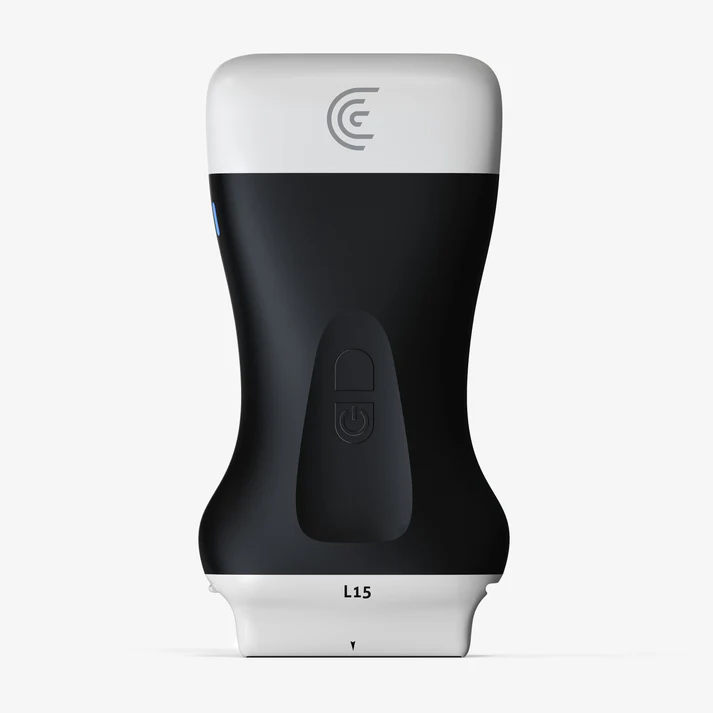 Clarius L15 HD3Pozycja 4 · większy zakres głębokości |
5–15 MHz Up to 7 cm |
B, M, Color, Power; PW, Needle Enhance, local/cloud storage and DICOM with Essentials; iOS 16+ and Android 13+ | $3,795 Essentials $695/rok |
Rozwiązanie do obrazowania twarzy i ciała w szerszym zakresie głębokości. 50 mm field of view for larger areas. |
Clarius Essentials also comes at $1,785 for three years or $2,500 once (Clarius US store, October 30, 2026).
Który wariant częstotliwości odpowiada potrzebom kliniki?
Choose an ultrasound machine for facial aesthetics by the deepest structure the clinic needs to see. That one depth sets the frequency lane, and the lane sets the model.
Krótka lista: nasze cztery aktualne rekomendacje
Uszeregowaliśmy aparaty pod kątem potrzeb nabywcy poszukującego urządzenia wysokiej częstotliwości do medycyny estetycznej i obrazowania struktur powierzchownych. Każdy model oceniliśmy według tych samych pięciu kryteriów.
01 · Dopasowanie do zastosowaniaDo the frequency and depth match the clinic’s recurring target?
02 · Przebieg pracyCzy dostępne są potrzebne funkcje trybu B, Dopplera, archiwizacji i platformy?
03 · Koszt w ciągu pięciu latIle łącznie kosztują obecnie sprzęt i wymagane oprogramowanie?
04 · Ścieżka wdrożeniaCzy nabywca może pozyskać ten konkretny system, opanować jego obsługę, uzyskać wsparcie i użytkować go długoterminowo?
05 · RoutingWhich work does it lead, and which model fits the rest?
- Suresult L24ProBest face-first specialist fit in this set: 18/24 MHz across 10–25 mm, with the L20Pro for planes to 40 mm.
- Suresult L20Strongest price-to-workflow value: B, M, Color, Power and PW Doppler with depth settings to 40 mm.
- Clarius L20 HD3Strong premium ecosystem alternative: 8–20 MHz to 4 cm, with Clarius aesthetics software in Essentials.
- Clarius L15 HD3Correct conditional choice for broader and deeper work: 5–15 MHz to 7 cm across a 50 mm field.
Przegląd czterech aparatów USG wysokiej częstotliwości
Each system is judged on the five criteria above and ends with the work it leads and the model that fits the rest.
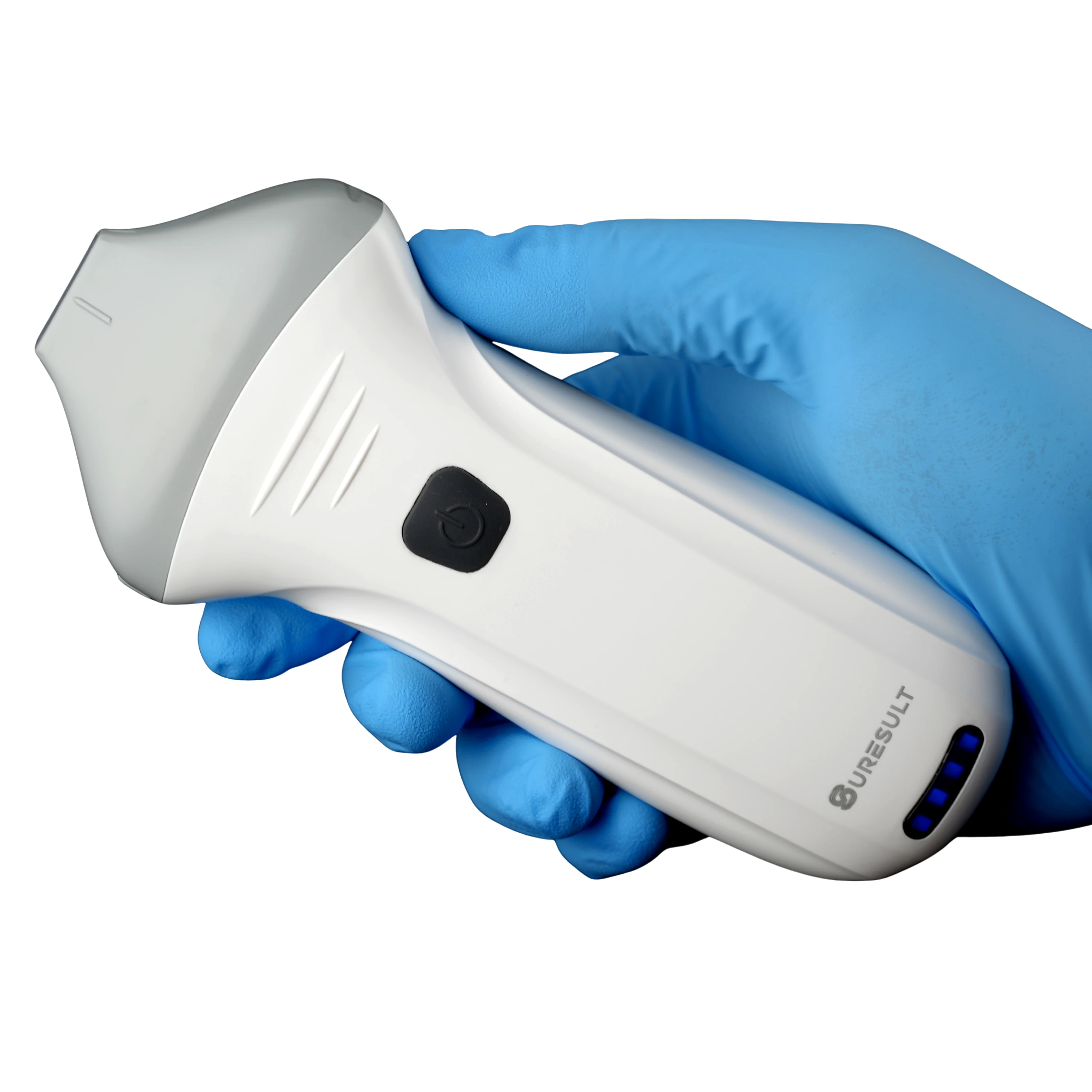
01 · Preferowany wybór premium z naciskiem na badania twarzy
01Suresult L24Pro
Nasz werdykt: the most task-specific route here for clinics that repeatedly image shallow facial targets inside the 10–25 mm lane.
Częstotliwość / głębokość18/24 MHz · 10–25 mm
Organizacja pracyB/M/Color/Power/PW
Aktualna cena$4,185 · software included
Najlepsze zastosowanieStała praca z powierzchownymi strukturami twarzy
The L24Pro runs two settings, 18 and 24 MHz, with selectable depths of 10, 15, 20 and 25 mm. It carries 256 elements and 64 channels, runs B, M, Color, Power and PW Doppler with Needle Enhance, and scans for up to 4 hours per charge. It works on iOS, Android and Windows, saves local files and DICOM, and is FDA 510(k)-cleared under K211321, IP67-rated and drop-tested.
The buyer case is specialization. When the practice’s daily questions stay close to the surface, a shallow working window keeps the purchase focused. The L24Pro’s $4,185 checkout price is also its five-year hardware-plus-software total, because the imaging software and its updates are free for the life of the probe.
Dlaczego zajął pierwsze miejsceIts 18/24 MHz, 10–25 mm lane is the closest match to the face-first buyer, and the full Doppler stack, three-platform support and lifetime free software complete the route.
Pozostałe zadania wykonujeDeeper facial planes to 40 mm: the Głowica L20Pro (16/20 MHz, 10–40 mm). Body and MSK work: the Głowica L14Pro (10/14 MHz, 20–80 mm).
The deciding test is a live image at the clinic’s deepest recurring target, followed by the Color, Power and PW Doppler, save, export and reopen loop. The L20 a L24 — porównanie aparatów USG do medycyny estetycznej puts the two Suresult bands side by side.

02 · Najlepszy stosunek jakości do ceny i zapas głębokości
02Suresult L20
Nasz werdykt: the value first buy when the clinic wants a 20 MHz superficial route and depth settings to 40 mm, with a five-year total equal to its $2,790 price.
Częstotliwość / głębokość16/20 MHz · 10–40 mm
Organizacja pracyB/M/Color/Power/PW
Aktualna cena$2,790 · software included
Najlepsze zastosowanieTwarz i szerszy zakres badań struktur powierzchownych
The L20 offers 16 and 20 MHz settings with depths of 10, 20, 30 and 40 mm. It carries 192 elements and 64 channels, runs B, M, Color, Power and PW Doppler with Needle Enhance, and works on iOS, Android and Windows with local files and DICOM. Depth to 40 mm makes it the first purchase when the practice needs depth reserve. On the L20, FaceAtlas AI starts at $50 a month.
At $2,790 with lifetime free software, the L20’s hardware price is also its five-year total. The demo-day test sets that price beside the full workflow: slow-flow Doppler, contact on facial curves, connection stability, export, heat and the actual display device.
Dlaczego zajął drugie miejsceIt combines a high-frequency superficial lane, depth to 40 mm, the full Doppler stack and three-platform support.
Pozostałe zadania wykonujeShallow 24 MHz facial work: the Głowica L24Pro (18/24 MHz, 10–25 mm). Body and MSK work: the Głowica L14Pro (10/14 MHz, 20–80 mm). Longer sessions and 3 months of FaceAtlas AI: the Głowica L20Pro (same band, 256 elements, up to 4 hours per charge).
The L20 ships with duties-paid delivery, a 2-year warranty and a 30-day trial, and like the L24Pro it is FDA 510(k)-cleared under K211321, IP67-rated and drop-tested. When a 25 mm face-first specialist and a 40 mm value route both fit, run the same target and record loop on both before choosing.
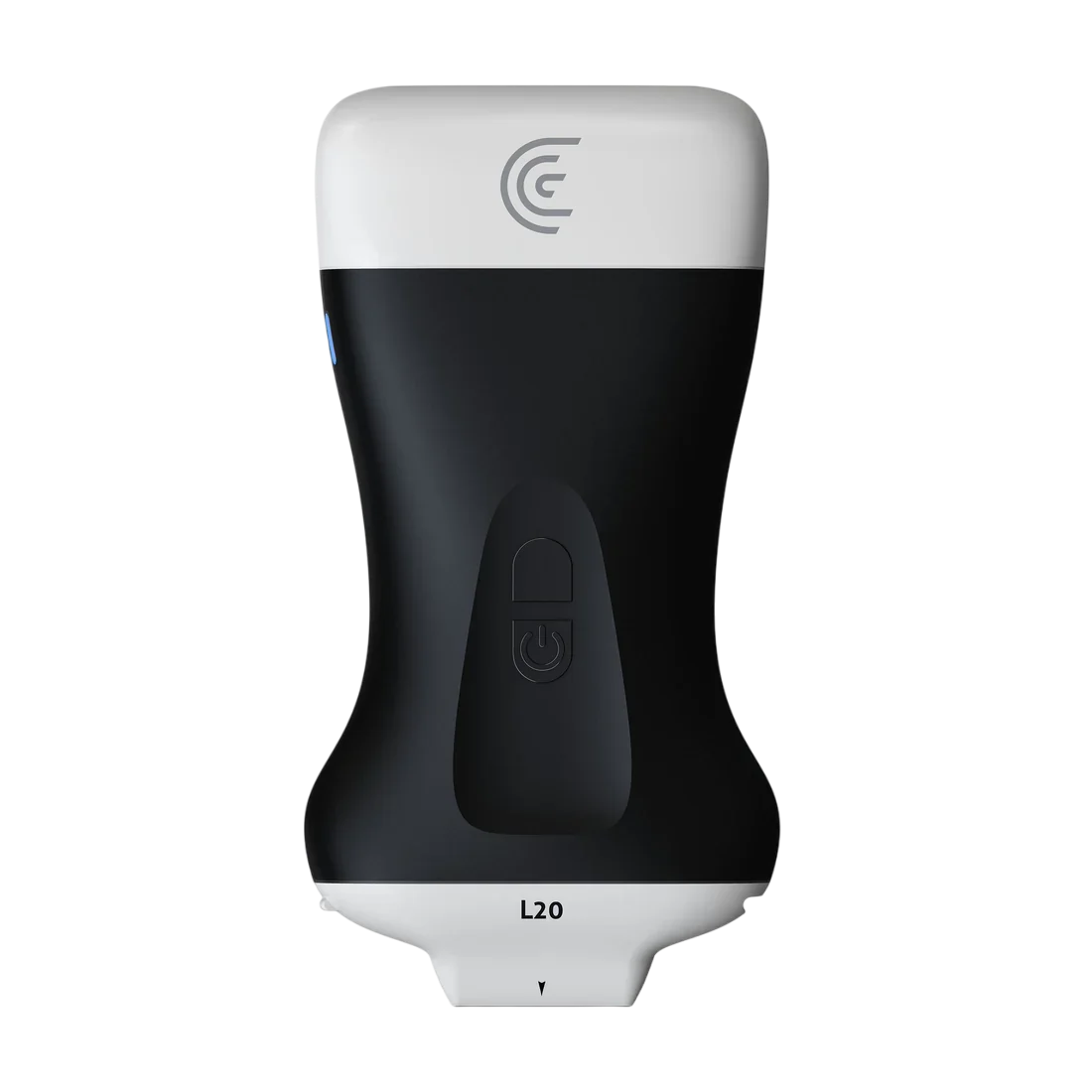
03 · Alternatywa z ekosystemem premium
03Clarius L20 HD3
Nasz werdykt: choose this route when the clinic wants the polished Clarius aesthetics, education, storage and DICOM ecosystem.
Częstotliwość / głębokość8–20 MHz · do 4 cm
Organizacja pracyB/M/Doppler kolorowy/Doppler mocy · PW z Essentials
Aktualna cena$5,395 · opcje Essentials za dopłatą
Najlepsze zastosowanieOpcja premium z aplikacją i edukacją
Podane parametry Clarius L20 HD3 to zakres 8–20 MHz, głębokość do 4 cm i pole widzenia 25 mm. Aktualna oferta sklepu w USA obejmuje tryby B i M, Doppler kolorowy i Doppler mocy, natomiast Doppler pulsacyjny (PW), zapis lokalny/w chmurze oraz DICOM są dostępne z Essentials. Obecnie obsługiwane systemy to iOS 16+ i Android 13+. To spójne rozwiązanie do pracy specjalistycznej, szczególnie dla nabywców, którzy już cenią platformę Clarius.
On October 30, 2026 the Clarius US store priced the scanner at $5,395 and Essentials at $695 for one year, $1,785 for three years or $2,500 as a one-time license. Five annual payments bring the five-year total to $8,870; the one-time route brings it to $7,895.
Dlaczego zajął trzecie miejsceIts 8–20 MHz specialist lane, 4 cm reach, 25 mm footprint and mature software and education route make it the closest premium ecosystem alternative.
Pozostałe zadania wykonujeWindows workstations and lifetime free software: the Głowica L24Pro lub Głowica L20Pro, both on iOS, Android and Windows. Body and MSK work: the Głowica L14Pro (10/14 MHz, 20–80 mm).
Clarius gives the scanner about 60 minutes of scanning per charge and a recommended maximum exam time of 20 minutes, so the demo runs B-mode and Doppler through a full clinic session while watching heat, frame rate, connection recovery and battery. The scanner comes with product support and 30-day returns, and Essentials adds on-demand education (Clarius US store, October 30, 2026). The broader poradnik zakupu aparatu USG do klinik medycyny estetycznej omawia dobór według ekosystemu i zakresu wykonywanych zabiegów, uwzględniając większą liczbę aparatów.
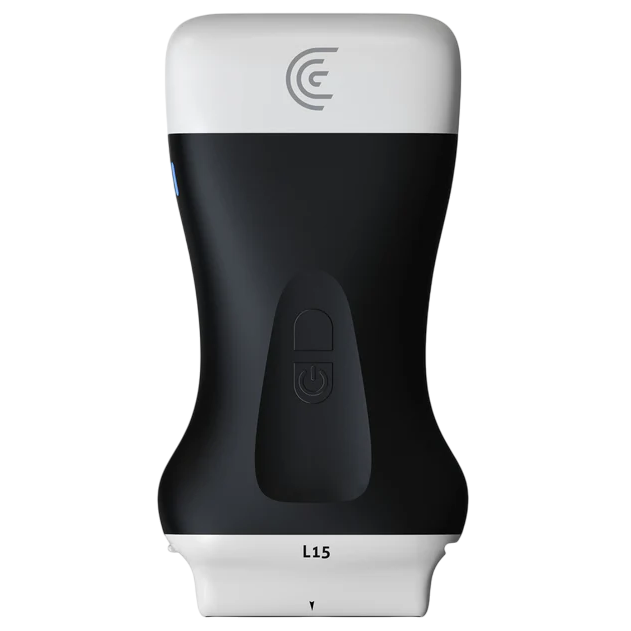
04 · Gdy większy zakres głębokości zmienia wybór
04Clarius L15 HD3
Nasz werdykt: odpowiedni wybór pod warunkiem, że szerszy zakres zastosowań na twarzy i ciele oraz obrazowanie struktur poza specjalistycznym zakresem 4 cm mają większe znaczenie niż najwyższa częstotliwość do obrazowania powierzchownego.
Częstotliwość / głębokość5–15 MHz · do 7 cm
Organizacja pracyB/M/Doppler kolorowy/Doppler mocy · PW z Essentials
Aktualna cena$3,795 · opcje Essentials za dopłatą
Najlepsze zastosowanieSzerszy zakres obrazowania twarzy i ciała
Clarius L15 HD3 publishes a 5–15 MHz band, depth up to 7 cm and a 50 mm field of view. It reaches the 15 MHz minimum recommended in the 2025 modified Delphi consensus for learning and routine diagnostic ultrasound in cosmetic filler practice. Doppler, archive and live-image evaluation decide the rest of the purchase.
On October 30, 2026 the Clarius US store priced the L15 HD3 at $3,795, with the same Essentials options. Five annual payments of $695 bring the total to $7,270; the $2,500 one-time license brings it to $6,295. The wider field and deeper reach make it a different purchase from a 20–24 MHz face-first specialist.
Dlaczego znalazł się w zestawieniuIt offers the deepest maximum depth in the four-device set, 7 cm, with a 50 mm field of view, and meets the consensus 15 MHz floor for aesthetic injectables.
Pozostałe zadania wykonujeShallow facial targets: the Głowica L24Pro or the L24 (18/24 MHz, 10–25 mm). Facial planes to 40 mm: the Głowica L20Pro or the L20 (16/20 MHz). Body and MSK work on lifetime free software: the Głowica L14Pro (10/14 MHz, 20–80 mm).
This is the route for a mixed workload. A clinic that regularly crosses face, body and moderately deeper superficial anatomy gains more from working range than from the largest MHz label. The demo tests the 50 mm footprint on curved facial regions and images the deepest real target. The L15 HD3 sells through the official Clarius store with the same scanner inclusions and Essentials options as the L20 HD3. The ręczny aparat USG w dermatologii to strona omawiająca szerszy kontekst tej specjalności.
Buyer framework · three frequency lanes
Zakres częstotliwości 15/20/24 MHz
Choose by the deepest target the clinic must see reliably. Each lane names the frequency, the working depth and the models that fit it.
Kategoria 15 MHzSzerszy zakres pracyAparat USG 15 MHz jest odpowiedni do badań zarówno twarzy, jak i ciała oraz do zastosowań wymagających szerszego pola obrazowania lub większego zapasu głębokości. Dla modelu Clarius L15 HD3 podano zakres 5–15 MHz i głębokość do 7 cm.Odniesienie do konsensusu: spełnia przytoczone minimum 15 MHz dla diagnostyki związanej z zabiegami iniekcyjnymi w medycynie estetycznej.
Kategoria 20 MHzWariant pośredniA 20 MHz ultrasound machine targets superficial facial detail with several centimeters of working depth: the Suresult L20 and L20Pro run 16/20 MHz to 40 mm, and the Clarius L20 HD3 runs 8–20 MHz to 4 cm.Buyer cue: compare both at the same anatomy and depth.
Kategoria 24 MHzSpecjalistyczny zakres obrazowania z naciskiem na twarzA 24 MHz ultrasound machine fits recurring very superficial facial targets. The Suresult L24Pro and L24 run 18/24 MHz with selectable depth from 10 to 25 mm.Buyer cue: deeper recurring targets go to the 20 MHz lane.
Image quality also rests on bandwidth, array, focusing, beamforming, Doppler sensitivity, settings, contact and operator technique.
What MHz Tells You, and What to Check Next
Search labels overlap. A buyer looking for high frequency skin ultrasound or high resolution ultrasound for skin is comparing superficial ultrasound machines, and a HIFU platform is a separate treatment purchase. In a clinic that already runs one, the same scanner measures skin-to-SMAS depth before each HIFU cartridge is picked, and the Wykres głębokości HIFU lists the published depths site by site. For aesthetic ultrasound equipment, the purchase begins with target depth and ends with a same-target Doppler and record-workflow test.
Wyższa częstotliwość to więcej szczegółów struktur powierzchownych kosztem głębokości penetracji
Higher frequency creates a shorter wavelength and finer superficial detail, while attenuation rises and penetration falls. Cross-brand image quality also rests on the array, beamforming and settings behind the top-frequency label.
Using 1,540 m/s as the soft-tissue sound speed, the wavelength is about 0.103 mm at 15 MHz, 0.077 mm at 20 MHz and 0.064 mm at 24 MHz. Axial resolution also depends on spatial pulse length, bandwidth, focusing and system processing.
Read a range and two settings as different specifications
Clarius gives a band such as 8–20 MHz; Suresult gives two settings such as 18 and 24 MHz. The demo-day test compares both probes on the same target.
What to check beyond MHz
- zmierzona rozdzielczość aparatu;
- czułość Dopplera w wykrywaniu wolnego przepływu;
- charakterystyka obrazowania w polu bliskim;
- liczba klatek na sekundę podczas długotrwałej pracy;
- przyleganie głowicy do zakrzywionych powierzchni twarzy;
- stabilność aplikacji lub połączenia;
- czy eksport wymaga płatnego pakietu;
- powtarzalność wyników uzyskiwanych przez operatora.
Fifteen MHz is the consensus floor
Pewien konsensus z 2025 r. wypracowany zmodyfikowaną metodą delficką opracowany z udziałem 15 ekspertów z siedmiu specjalności i 11 krajów zalecił głowicę liniową o częstotliwości co najmniej 15 MHz do nauki i rutynowej diagnostyki w praktyce stosowania wypełniaczy w medycynie estetycznej. W tym samym konsensusie za obowiązkowe uznano tryb B, Doppler kolorowy, Doppler spektralny oraz archiwizację obrazów i nagrań wideo, a Doppler mocy zalecono. Ręczne aparaty USG uznano za odpowiednie.
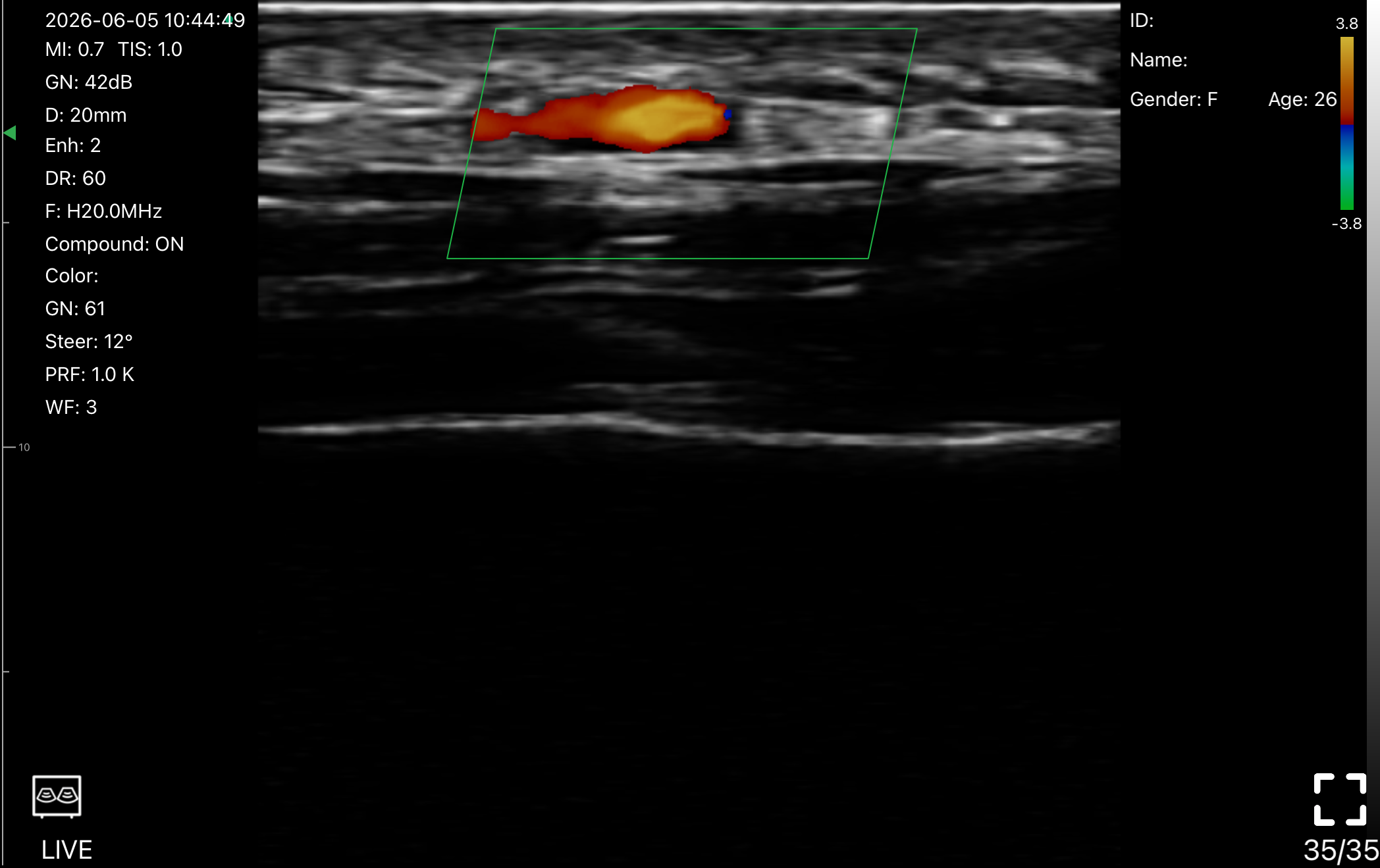
That is a strong purchasing floor for filler practice. Above it, the choice turns on slow-flow Doppler, footprint, archive and usability. Facial arteries run slowly; the Ustawienia Dopplera przy okluzji naczyniowej spowodowanej wypełniaczem ustawić skalę Dopplera kolorowego na około 3 cm/s oraz obniżyć PRF i próg filtra ściennego.
Read vendor depth as a device field
A vendor depth is a selectable display setting; a paper’s depth is tissue penetration measured under its own setup. Use vendor depth as a device field, then test the real anatomy at the real depth. Specialized clinical and research systems reach 30–70 MHz as a separate class, with their own form factor, field of view, penetration and purchasing context.
Wniosek praktyczny: częstotliwość zawęża wybór. O wyborze aparatu decydują obraz tej samej struktury, odpowiedź w badaniu dopplerowskim, powierzchnia kontaktowa głowicy, cykl zapisu oraz przebieg pracy podczas długotrwałego użytkowania.
High-Frequency Ultrasound Machine Price: Five-Year Totals
High frequency ultrasound machine price is the first line of the purchase; required software sets the rest of the five-year total. The table puts each scanner beside its annual and one-time software routes.
Suresult totals update live from the Suresult store; Clarius prices and plans were read on the Clarius US store on October 30, 2026. The Clarius annual route adds five payments of $695 to the scanner price, and the one-time route adds $2,500. Suresult’s checkout price covers shipping, customs clearance, duties and taxes: No Hidden Fees. The imaging software is free for the life of the probe, so each Suresult five-year total equals its hardware price.
| Sposób zakupu | Cena sprzętu | Przyjęta opłata cykliczna | Five-year total, annual plan | Five-year total, one-time |
|---|---|---|---|---|
| Suresult L24Pro | $4,185 | W cenie | $4,185 | $4,185 |
| Suresult L20 | $2,790 | W cenie | $2,790 | $2,790 |
| Clarius L20 HD3 | $5,395 | $695/rok Essentials | $8,870 = $5,395 + (5 × $695) | $7,895 = $5,395 + $2,500 |
| Clarius L15 HD3 | $3,795 | $695/rok Essentials | $7,270 = $3,795 + (5 × $695) | $6,295 = $3,795 + $2,500 |
Each total is hardware plus the software the clinic needs for five years. Clarius Essentials adds dedicated aesthetics presets, T-Mode AI Aesthetics, Vessel Depth AI, Needle Enhance, PW Doppler, cloud storage and DICOM, so a clinic that uses them counts them in the value. For a quote matched to the clinic’s targets, send the target list.
Choose the Highest Frequency When…
A specialist pays off when the clinic has the specialist workload and all five conditions below hold.
Targets stay shallowThe recurring anatomy sits inside the 10–25 mm lane; planes to 40 mm go to the L20Pro.
The face leads the workFacial detail is the daily job; body and MSK work goes to the L14Pro at 10/14 MHz.
The record path is completeDoppler, storage, export and DICOM all run in the configuration being bought.
The cost is in writingSoftware, accessories, support and service all appear in the written configuration.
Live proof existsThe probe has passed a same-target acceptance test on the clinic’s own anatomy.
Przeprowadzić ten test odbiorczy w dniu prezentacji
The acceptance test puts the intended operator on the exact system being purchased: scan, show flow, save, retrieve and sustain the workflow.
- Zabrać ze sobą listę struktur docelowych i głębokości ich położenia.Spisać najbardziej powierzchowne i najgłębiej położone struktury, które trzeba uwidocznić w gabinecie, oraz zakrzywione okolice twarzy, gdzie dopasowanie powierzchni kontaktowej głowicy i uzyskanie kontaktu ze skórą są utrudnione.
- Test powinien wykonać docelowy użytkownik, korzystając z docelowego wyświetlacza.Scan on the exact iPhone, iPad, Android or Windows hardware and current OS, with the clinic’s own operator performing every decisive step.
- Porównać obraz w trybie B na tej samej rzeczywistej strukturze.Wykorzystać tę samą odpowiednio dobraną osobę badaną lub ten sam fantom, tę samą okolicę anatomiczną, płaszczyznę i głębokość oraz porównywalny sposób ustawiania wzmocnienia. Zapisywać surowe obrazy statyczne i pętle cine zamiast fotografować ekran.
- Przetestować wymagane tryby obrazowania naczyń.Run Color, Power and PW or spectral Doppler on a slow facial vessel; the live flow signal shows slow-flow sensitivity.
- Domknąć obieg dokumentacji.Label, save, export, close and reopen the exam. Suresult probes save local files and DICOM with free software; on Clarius, local storage, cloud storage and DICOM come with Essentials (Clarius US store, October 30, 2026).
- Test sustained use.Run long enough to observe heat, frame rate, battery, grip, screen glare and connection recovery. Interrupt the connection once and check that the saved work is intact.
- Przetestować ścieżkę uzyskiwania pomocy technicznej.Skorzystać z faktycznie udostępnionych materiałów wdrożeniowych i zapytać, jak awarie połączenia, problemy z oprogramowaniem lub zgłoszenia serwisowe sprzętu są przekazywane na wyższy poziom wsparcia. Porównać odpowiedź z pisemnym zakresem pakietu.
Kryterium zaliczenia: the intended operator completes the real image, Doppler and record workflow at the deepest recurring target on the exact quoted configuration. Every critical step passes before the order.
Jak ocenialiśmy te aparaty
We ranked four current purchase routes for a U.S. clinic prioritizing diagnostic superficial facial imaging. The five criteria were fixed before ordering the models: frequency-to-task fit, diagnostic workflow completeness, five-year ownership cost, support and adoption path, and routing to the right model for the rest of the work.
We used official U.S. product and store pages, read October 30, 2026, for price, software, frequency, depth and platforms, and primary or peer-reviewed sources for diagnostic-ultrasound definitions and physics.
The final selection rests on a live, same-target acceptance test and the exact written configuration.
Data źródłaProduct facts and Clarius prices read October 30, 2026; Suresult prices update live from the Suresult storeRynekPrices in U.S. dollarsRodzaj rankinguEvidence-cited buyer fitPorównywane modeleL24Pro, L20, Clarius L20 HD3, Clarius L15 HD3
Aparaty USG wysokiej częstotliwości: najczęściej zadawane pytania
What MHz ultrasound probe do I need to see dermal fillers and facial arteries?
Use 18–24 MHz for the superficial face and 16–20 MHz for the facial artery. Published depths run from 2.52 mm at the dorsal nasal artery to 5.6 mm at the superior labial artery, well within the 20 MHz reach of about 10 mm (Mlosek 2021), while the facial artery deepens from 6.27 mm near the jawline to 8.04 mm beside the nose. Pair the band with Color Doppler, which the 2025 WFUMB position paper requires in every aesthetic study. The Suresult L24Pro runs 18/24 MHz and the L20Pro 16/20 MHz, both with Color, Power and PW Doppler.
Do czego służy aparat USG wysokiej częstotliwości?
A high-frequency ultrasound machine is used to create real-time B-mode and Doppler images of superficial anatomy such as skin, subcutaneous tissue, vessels, and other shallow targets. In aesthetic practice, clinics use it for diagnostic imaging and documentation; HIFU is the separate device that delivers treatment energy. The correct frequency route is the highest usable setting that still reaches the clinic’s deepest recurring target.
Czy diagnostyczna ultrasonografia wysokiej częstotliwości to to samo co HIFU?
Nie. Diagnostyczna ultrasonografia wysokiej częstotliwości emituje fale dźwiękowe i odbiera powracające echa, tworząc w czasie rzeczywistym obrazy w trybie B i obrazy dopplerowskie. HIFU to technologia terapeutyczna, która skupia energię akustyczną w strefie ogniskowej, aby ogrzewać tkankę lub poddawać ją ablacji. Są to różne kategorie urządzeń o odmiennych funkcjach, sposobach pracy i kryteriach zakupu.
Is a 15 MHz linear probe enough for aesthetic filler injections, or do I need 20–24 MHz?
15 MHz is the floor: the 2025 modified Delphi consensus recommends a minimum linear 15 MHz transducer for learning and regular diagnostics, and the 2025 WFUMB position paper sets the same minimum. For superficial filler work, go higher. The forehead, glabella, nose and lip arteries sit 2.52 to 5.6 mm deep, inside the reach of an 18–24 MHz band, and Jaguś 2021 states that 18–22 MHz shows vessels about 0.1 mm across. The Suresult L24Pro runs 18/24 MHz for that work; the L20Pro’s 16/20 MHz suits the cheek, jawline and the facial artery, which deepens to 8.04 mm, with depth settings to 40 mm.
What ultrasound frequency is best for imaging facial skin layers, the SMAS and facial vessels before injections?
Set the band by depth. Dermis and subcutis: 20–24 MHz, inside the 20–30 MHz range Mlosek 2021 favors once a scan includes those layers. The forehead, glabella, nose and lip arteries, 2.52 to 5.6 mm deep: 18–24 MHz. The facial artery, 6.27 to 8.04 mm deep: 16–20 MHz. Vasconcelos-Berg 2024 images the SMAS over the zygoma at 18 and 20 MHz; FaceAtlas AI, included for 3 months with the Suresult L24Pro and L20Pro, labels skin, fat and SMAS on the live image.
What is the difference between 20 MHz i 24 MHz ultrasound?
Przy 24 MHz the wavelength in soft tissue is about 0.064 mm, against 0.077 mm za 20 MHz, so 24 MHz brings finer superficial detail and 20 MHz reaches deeper tissue. The Suresult L24Pro and L24 run 18/24 MHz with depth to 25 mm; the L20Pro and L20 run 16/20 MHz with depth to 40 mm. Bandwidth, array design, beamforming, settings, Doppler sensitivity, contact and operator technique also shape the usable image.
What is the best high-frequency handheld ultrasound probe for facial filler work in 2026?
Our first pick for face-first filler work is the Suresult L24Pro: 18/24 MHz, depth from 10 to 25 mm, B and M modes plus Color, Power and PW Doppler, and 3 months of FaceAtlas AI included. The Suresult L20 is our value pick at $2,790, with 16/20 MHz and depth to 40 mm for the cheek, jawline and the facial artery; the L20Pro adds 64 more elements (256 vs 192) and 3 months of FaceAtlas AI on the same band. The L20 vs L24 comparison settles which band fits a clinic’s caseload.
Ile kosztuje aparat USG wysokiej częstotliwości w 2026 roku?
Suresult prices update live from the Suresult store: $2,790 for the L20 and $4,185 for the L24Pro, with lifetime free software. On October 30, 2026 the Clarius US store priced the L20 HD3 at $5,395 and the L15 HD3 at $3,795, with Essentials at $695 for one year, $1,785 for three years or $2,500 as a one-time license.
Co należy przetestować przed wyborem aparatu USG?
Przetestować urządzenie z udziałem docelowego operatora, na planowanym urządzeniu wyświetlającym i na najgłębiej położonej regularnie badanej strukturze. Porównać tryb B oraz wymagany przebieg pracy z Dopplerem kolorowym, Dopplerem mocy lub Dopplerem pulsacyjnym (PW); następnie opisać, zapisać, wyeksportować, zamknąć i ponownie otworzyć badanie. Sprawdzić także wielkość powierzchni styku głowicy i jej przyleganie, przywracanie połączenia, nagrzewanie i pracę akumulatora podczas dłuższego użytkowania, kompatybilność urządzeń, czyszczenie, eskalację zgłoszeń do pomocy technicznej oraz dokładny pakiet oprogramowania i gwarancji ujęty w ofercie.
What does a subscription-free scanner cost over five years?
Its hardware price. The Suresult L20 at $2,790 and the L24Pro at $4,185 run their imaging software free for the life of the probe, so each five-year total equals the hardware price. Five annual Clarius Essentials payments of $695 make the total $8,870 for the L20 HD3 and $7,270 for the L15 HD3 (Clarius US store, October 30, 2026).
Źródła & daty weryfikacji
- U.S. Food and Drug Administration. Obrazowanie ultrasonograficzne. Przegląd diagnostycznego obrazowania USG i technik dopplerowskich. Dostęp: 30 lipca 2026 r.
- U.S. Food and Drug Administration. Instrukcja użytkowania Sonalleve MR-HIFU. Opis zogniskowanej energii terapeutycznej. Dostęp: 30 lipca 2026 r.
- Velthuis PJ, Alfageme F, Cartier H, et al. Zastosowanie obrazowania ultrasonograficznego w iniekcyjnych zabiegach medycyny estetycznej: konsensus uzyskany zmodyfikowaną metodą Delphi. J Plast Reconstr Aesthet Surg. 2025;104:33–37. PMID 40101353. Dostęp: 30 lipca 2026 r.
- Wortsman X, et al. Wytyczne grupy DERMUS dotyczące wykonywania dermatologicznych badań ultrasonograficznych. Dostęp: 30 lipca 2026 r.
- NCBI Bookshelf. Systemy obrazowania medycznego, rozdział 11. Częstotliwość, długość fali, rozdzielczość i tłumienie. Dostęp: 30 lipca 2026 r.
- Mlosek RK, Migda B, Migda M. Ultrasonografia wysokiej częstotliwości w 21. wieku. J Ultrason. 2021;20(83):e233–e241. PMID 33500789. Accessed July 30, 2026.
- Suresult. Oficjalna strona produktu L24Pro. Price, frequency, depth, architecture, modes, platforms, software terms and FaceAtlas AI terms read October 30, 2026.
- Suresult. Oficjalna strona produktu L20. Price, frequency, depth, modes, platforms and software terms read October 30, 2026.
- Suresult. L14Pro official product page. Frequency and depth read October 30, 2026.
- Clarius (store.clarius.com). L20 HD3 — oficjalna strona sklepu w USA. Scanner price, Essentials options, frequency, depth, workflow, inclusions and platforms read October 30, 2026.
- Clarius (store.clarius.com). L15 HD3 — oficjalna strona sklepu w USA. Scanner price, Essentials options, frequency, depth, workflow, inclusions and platforms read October 30, 2026.
- Cotofana S, Alfertshofer M, Frank K, et al. Relationship Between Vertical Glabellar Lines and the Supratrochlear and Supraorbital Arteries. Aesthet Surg J. 2020;40(12):1341–1348. PMID 32469392. Accessed October 30, 2026.
- Cotofana S, Alfertshofer M, Schenck TL, et al. Anatomy of the Superior and Inferior Labial Arteries Revised: An Ultrasound Investigation and Implication for Lip Volumization. Aesthet Surg J. 2020;40(12):1327–1335. PMID 32469050. Accessed October 30, 2026.
- Franceschelli A, Cazzulani M, Urso SU, et al. In Vivo Ultrasound Study of the Angular Artery Anatomy: Practical Indications for the Treatment of the Deep Pyriform Space. Aesthet Surg J Open Forum. 2024;6:ojae113. PMID 40007597. Accessed October 30, 2026.
- Ortiz Middleton E, Aguilar A. Anatomical Mapping of Nasal Arteries in Chilean Patients Using Doppler Ultrasound: Clinical Application for Injectables. Aesthet Surg J Open Forum. 2025;7:ojaf016. PMID 40255966. Accessed October 30, 2026.
- Pourani MR, Ebrahimzade M, Goudarzi E, et al. Evaluation of Facial Artery Course Variations, Diameters, and Depth Using Doppler Ultrasonography: A Systematic Review and Meta-Analysis. J Cosmet Dermatol. 2025;24(9):e70431. PMID 40874402. Accessed October 30, 2026.
- Phumyoo T, Jiirasutat N, Jitaree B, et al. Localization and Topography of the Arteries on the Middle Forehead Region for Eluding Complications Following Forehead Augmentation: Conventional Cadaveric Dissection and Ultrasonography Investigation. J Craniofac Surg. 2020;31(7):2029–2035. PMID 32604295. Accessed October 30, 2026.
- Vasconcelos-Berg R, Desyatnikova S, Bonavia P, et al. Best Practices for the Use of High-Frequency Ultrasound to Guide Aesthetic Filler Injections, Part 2: Middle Third of the Face, Nose, and Tear Troughs. Diagnostics (Basel). 2024;14(22):2544. PMID 39594210. Accessed October 30, 2026.
- Jaguś D, Skrzypek E, Migda B, et al. Usefulness of Doppler sonography in aesthetic medicine. J Ultrason. 2021;20(83):e268–e272. PMID 33505714. Accessed October 30, 2026.
- Chammas MC, Sigrist R, Alfageme F, et al. WFUMB Position Paper: Consensus on Best Practice in Aesthetic Dermatologic Ultrasound. Ultrasound Med Biol. 2025;51(11):2173–2193. PMID 40866164. Accessed October 30, 2026.
- Suresult. L20Pro official product page. Frequency, depth, elements, scan time, imaging modes, platforms and FaceAtlas AI terms read October 30, 2026.
- Suresult. L24 official product page. Frequency and depth read October 30, 2026.
Dobór częstotliwości do rzeczywistych potrzeb w pracy
Share the target anatomy, deepest recurring target, monthly volume, display devices, archive requirements, software-fee tolerance and budget. The reply routes the clinic to the L24Pro, L20Pro, L20 or L14Pro, or to the competing system that fits, and names the deciding condition.