

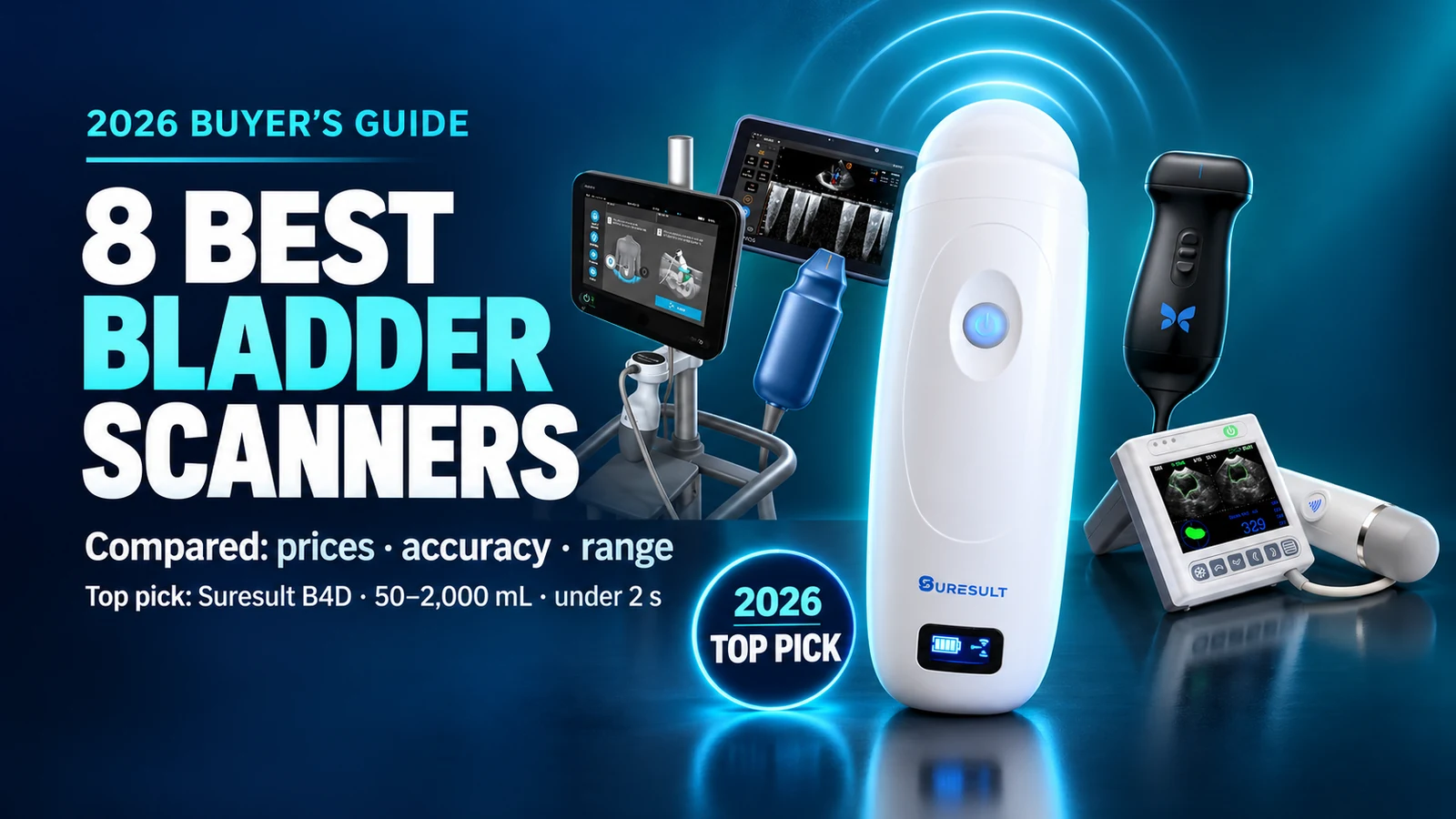
A bladder scanner answers one question at the bedside — how much urine is in the bladder right now — without passing a catheter. I compared the scanners a clinician can buy in 2026 on what actually decides that purchase: how each one measures, the accuracy its maker publishes, how fast the number appears, and what it costs to own, with every figure read from its maker’s own page on October 8, 2026.

Über Dr. Mariz
Ich bin Dr. Fernando Mariz, Facharzt für Gynäkologie und Beckenchirurgie mit Praxis in New York City. Vor meiner medizinischen Laufbahn diente ich im US-Marinekorps, wo ich die Disziplin, Konzentration und Besonnenheit entwickelte, die bis heute meine Art der Patientenversorgung prägen. Bei Maiden Lane Medical umfasst mein Tätigkeitsbereich die Frauengesundheit, Vorsorgeuntersuchungen, Sonographie, Beckenschmerzen, abnormale Gebärmutterblutungen sowie minimalinvasive gynäkologische Eingriffe.

Über Dr. Avila
Ich bin Dr. Jailyn Avila, Fachärztin für Notfallmedizin, Dozentin und Innovatorin im Bereich digitale Gesundheit mit Sitz in Südkalifornien. Meine klinische Arbeit hat ihren Schwerpunkt in der Notfallversorgung, während sich meine Lehrtätigkeit auf Point-of-Care-Ultraschall, die Ausbildung von Assistenzärzten und die praktische Fortbildung von Ärzten konzentriert. Durch meine Tätigkeiten bei Emergent Medical Associates, dem UHS SoCal MEC-Ausbildungsprogramm für Notfallmedizin, Core Ultrasound und FemInEM arbeite ich an der Schnittstelle zwischen Patientenversorgung, medizinischer Ausbildung und barrierefreiem digitalem Lernen.
Kurze Antwort
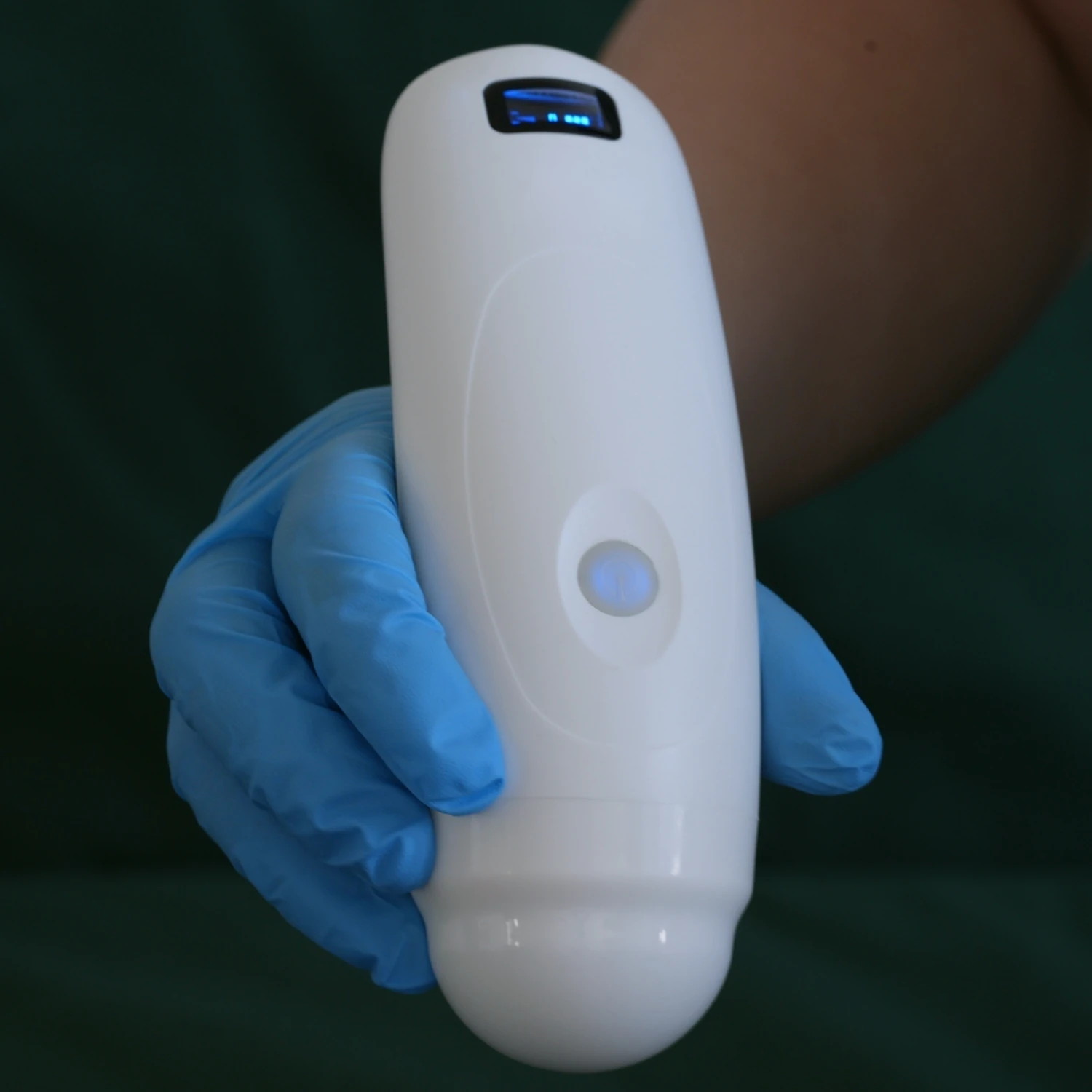
The Suresult B4D is my pick among portable bladder scanners in 2026: a 200 g wireless 4D scanner that measures 50 to 2,000 mL in under two seconds, carries FDA 510(k) clearance K172750 and costs $2,600 with no subscription — the lowest published price of any dedicated scanner on this page. The EchoNous Kosmos Bladder publishes the tightest accuracy here, ±3% above 100 mL on phantoms, and shows a live image while it measures; it is sold by quote. The Verathon BladderScan i10 is the hospital-fleet standard, also quote-only, with a five-year factory warranty. If you want one probe for the whole body, the Butterfly iQ3 and the Clarius C3 HD3 both measure bladder volume, and both put that tool behind a paid membership.
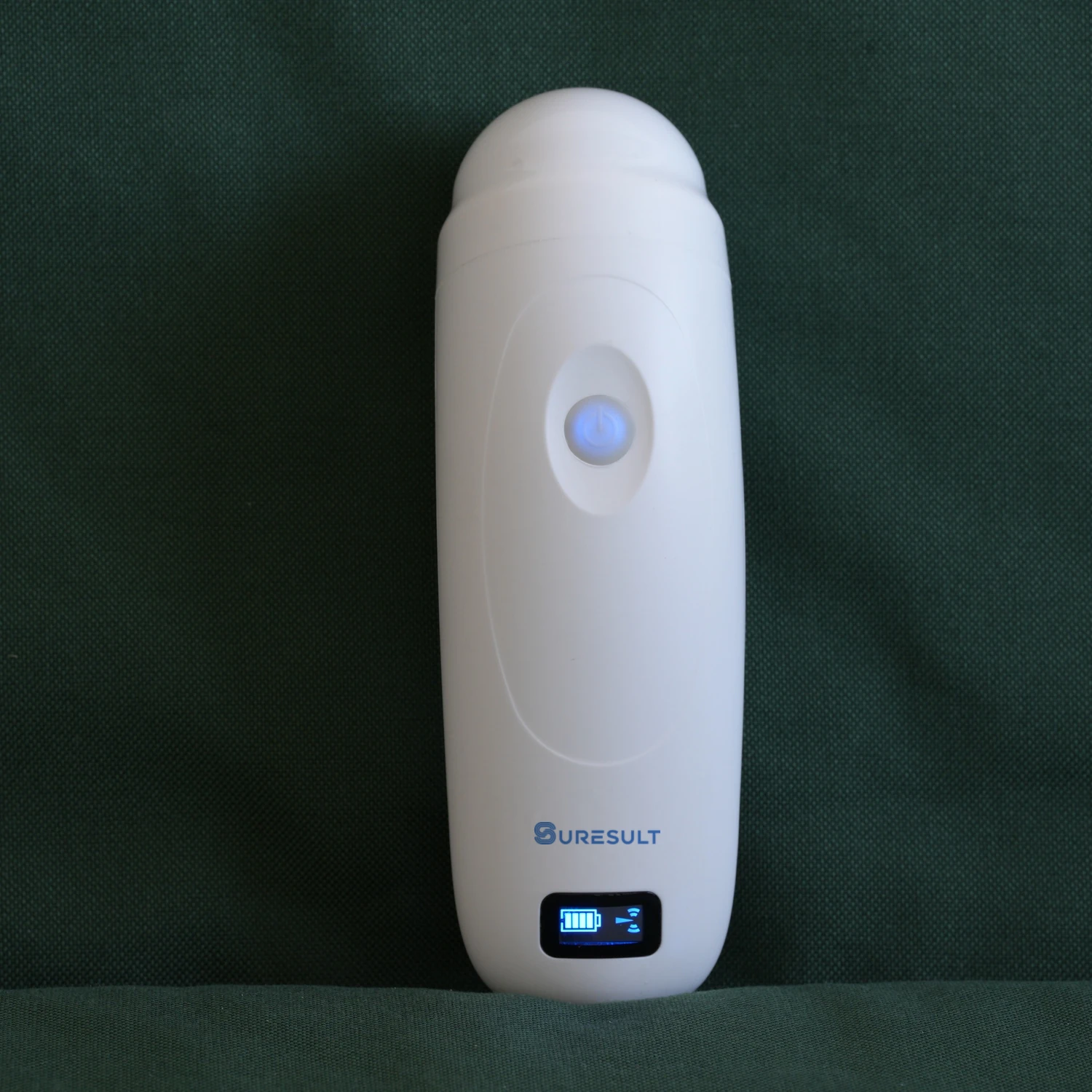
Suresult B4D — my pick$2,600 at checkout, no subscription. 50–2,000 mL in under two seconds, 200 g, iOS app over its own Wi-Fi, FDA 510(k) K172750.
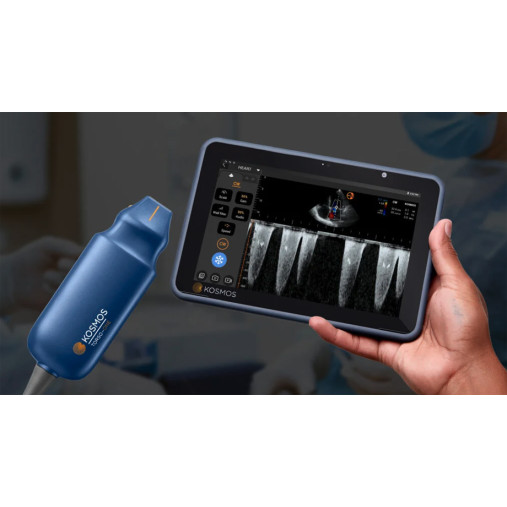
EchoNous Kosmos Bladder — tightest published accuracyQuote only. ±3 mL under 100 mL and ±3% above on phantoms, AI calipers on a live image, five-year warranty.
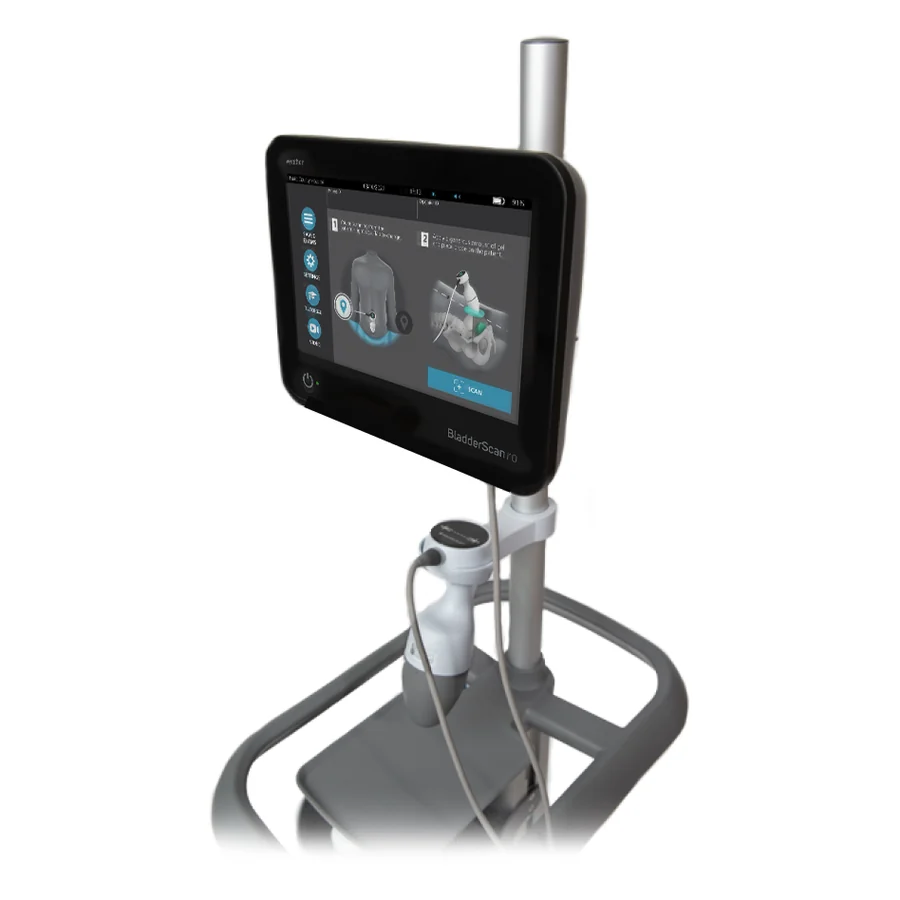
Verathon BladderScan i10 — hospital-fleet standardQuote only. 0–999 mL at ±7.5%, 10.1-inch console with a sealed 3D probe, five-year factory warranty.
This guide ranks devices that measure bladder volume. For diagnostic bladder and kidney images — stones, hydronephrosis, the prostate — start with my bladder and kidney imaging comparison; for urology practice as a whole, the urology ultrasound hub.
Every price and specification on this page comes from the maker’s own product page, specification sheet or FDA 510(k) summary, read on October 8, 2026. Suresult prices render live from the store. Where a maker sells only by quote, the entry says so and gives the price at which US dealers listed units that day, labeled as a dealer price and never as an official one.
Grundlage für die Bewertung: I bring deep ultrasound knowledge from daily clinical scanning and from years of teaching point-of-care imaging, and I judged every scanner ranked here — the Suresult B4D, the EchoNous Kosmos Bladder, the Verathon BladderScan i10, the BladGo 2.0, the Butterfly iQ3, the Clarius C3 HD3, the Vitacon Vitascan LT and the Caresono PadScan HD2 — on its maker’s published specifications, prices, terms and FDA records as they stood on October 8, 2026. This scope statement covers this bladder-scanner comparison only.
The Quick List: what separates these eight in one minute
Range decides who you can measurePublished upper limits run from 740 mL to 2,000 mL across this field. Retention patients live at the top of that scale, and the urology definition of chronic retention begins above 300 mL.
Accuracy is a published toleranceAbove 100 mL the field spans ±3% to ±15%, each figure the maker’s own or its FDA filing, most measured on tissue phantoms. On a 400 mL bladder, ±15% is a 120 mL window from end to end.
Half the field has no priceVerathon, EchoNous, Vitacon and Caresono sell by quote. Among dedicated scanners only the B4D and BladGo publish a price, and both whole-body tools add a yearly membership.
A number or an imageA dedicated scanner returns a volume in seconds; a whole-body handheld also shows the kidneys and prostate. Decide which question you need answered before you compare models.
How I ranked eight bladder scanners
Six criteria, applied in this order, every figure from the maker’s own published page or FDA filing on October 8, 2026:
- Published accuracy and method. The tolerance each maker publishes above and below 100 mL, and how the device reaches it — an automated multi-plane sweep, AI calipers on two views, or a single-plane estimate.
- Range and speed. The published volume range, which decides whether large retention volumes can be measured at all, and the published time from scan to result.
- Bedside workflow. Weight, whether it needs a tablet or carries its own screen, battery, printing and charting, and whether it shows you an image.
- Cost to own. The published price plus any membership the bladder function depends on, and the warranty that comes with it.
- Regulatory record. The FDA 510(k) that covers the model you would actually order.
- Bestellbarkeit. Whether a clinician can see a price and order today, or must start a quote process.
This page ranks volume measurement. Diagnostic imaging of the bladder and kidneys is a different purchase with different winners, and my imaging comparison covers it.
Eight bladder scanners at a glance
| Scanner | Typ | Published range | Published accuracy | Published price, Oct 8, 2026 | Softwaretarif | Am besten für |
|---|---|---|---|---|---|---|
|
Dedicated wireless scanner, 4D array | 50–2,000 mL | Under 5% | $2,600 at checkout | Kein Abonnement erforderlich | Ward rounds, home visits and any clinician buying one scanner |
|
AI biplane scanner with live image | 4 to over 1,400 mL | ±3% | Quote only; no price on echonous.com | No subscription fees (EchoNous) | Clinics that want the image and the tightest published accuracy |
|
Dedicated console, 3D probe, AI | 0–999 mL | ±7.5% | Quote only; Verathon publishes no price | None listed by Verathon | Hospital units buying a fleet with service |
|
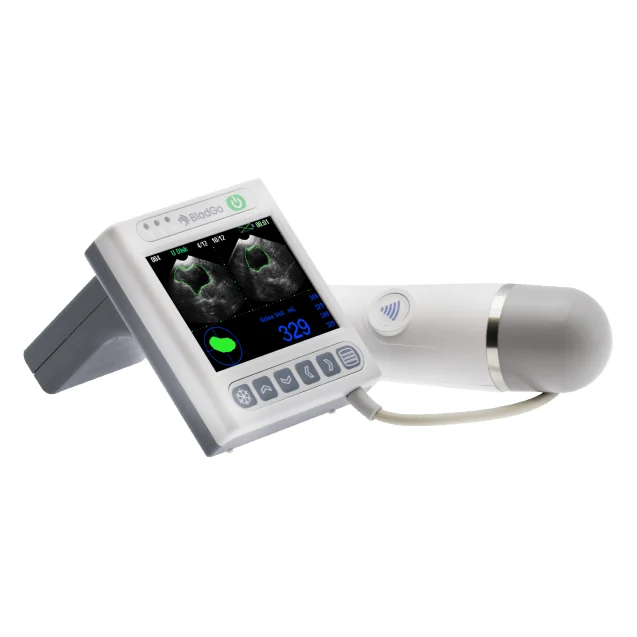
Dedicated all-in-one, built-in screen | 20–999 mL | ±10% | $3,999 list; $3,499 with code BladGo to Oct 15, 2026 | None listed by BladGo | A standalone scanner with its own screen |
|
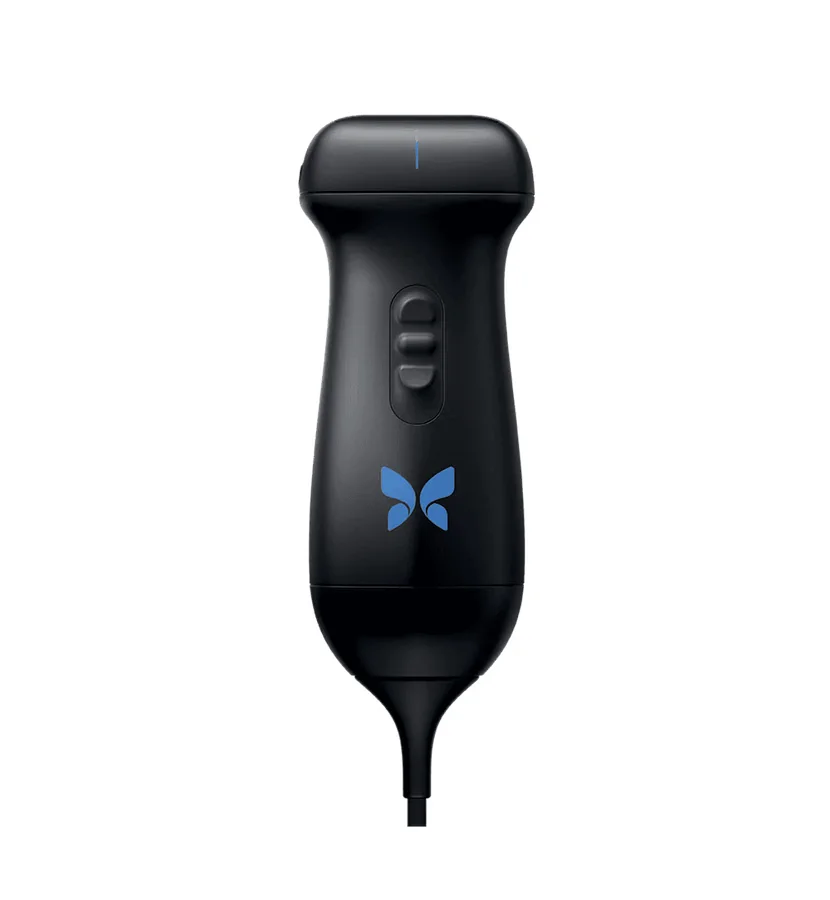
Whole-body handheld with bladder tool | 0–740 mL, adults | ±7.5% | $3,899 probe + Advanced membership ($420/yr or $1,500 for 5 yrs) | Bladder tool requires the Advanced membership | Clinicians who want whole-body imaging with a bladder tool |
|
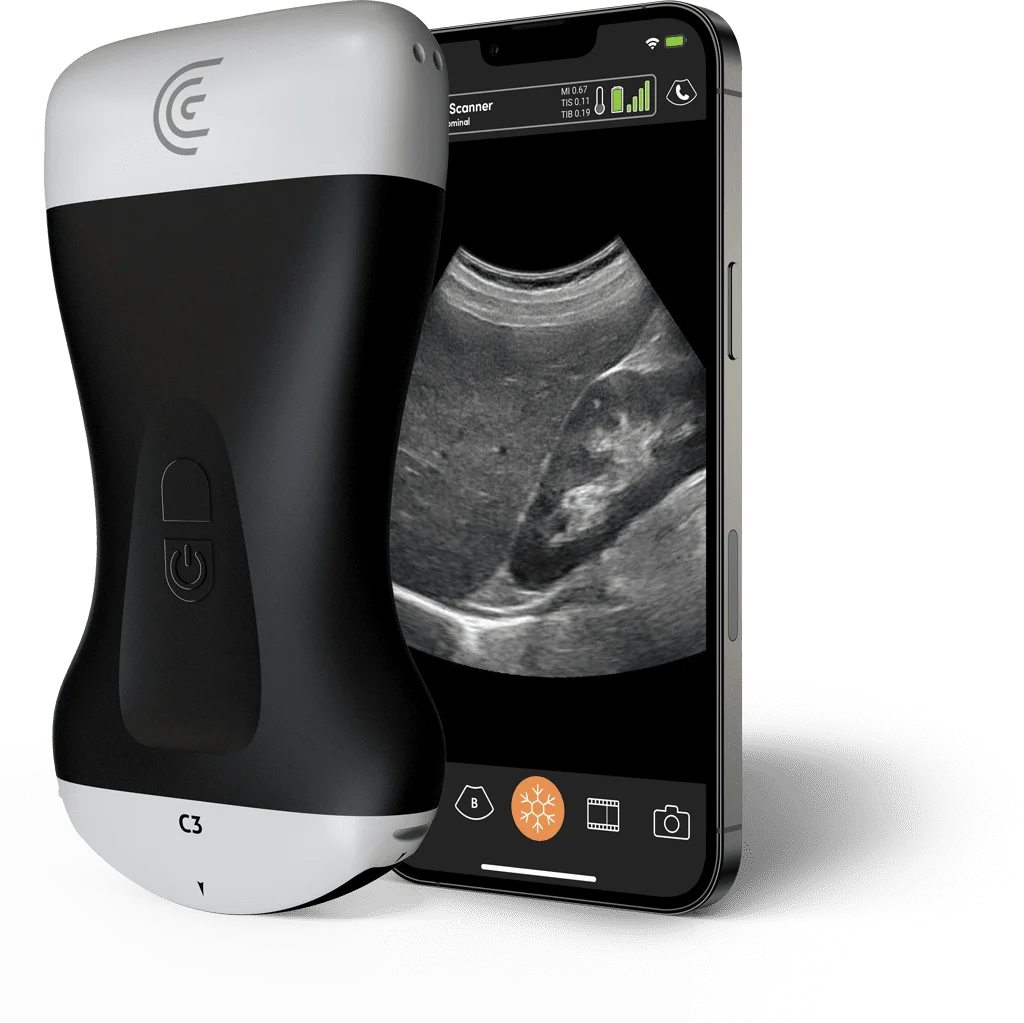
Whole-body convex handheld with Bladder AI | Image-based; adults | Non-inferior to expert calipers (FDA) | $4,490 year one: $3,795 scanner + $695/yr Essentials | Bladder AI runs under the Essentials membership | Clarius users adding bladder volume to whole-body work |
|
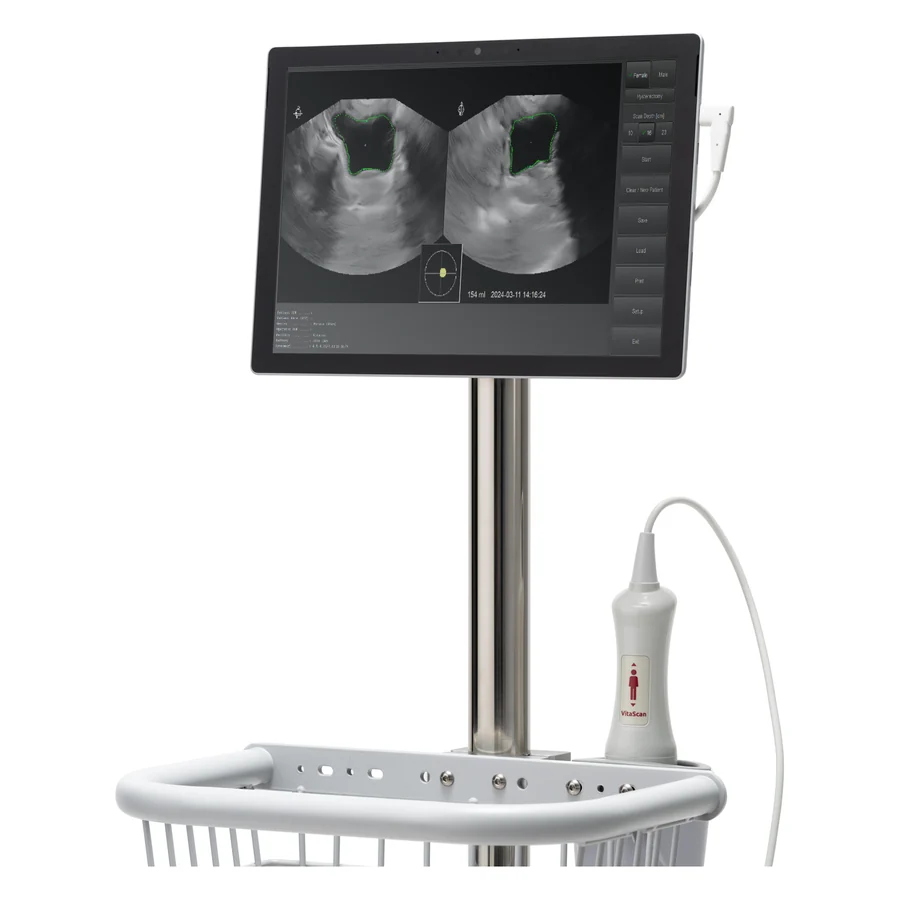
3D probe on a Windows tablet | 0–1,000 mL | ±7.5% | Quote only; a US dealer lists it at $6,995–$9,995 | None listed; free software upgrades | Facilities that send every scan to their records |
|
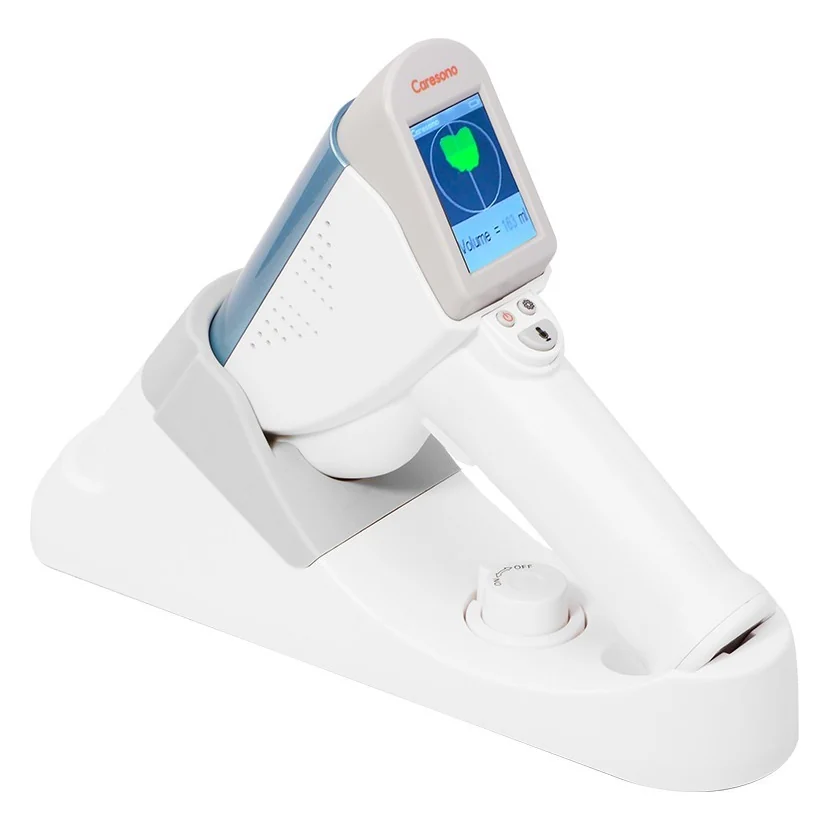
All-in-one handheld, built-in screen | 0–999 mL | ±15% | Quote only; US dealers list it at $4,256–$5,994 | None listed by Caresono | A no-tablet handheld at a dealer price |
Ranges, accuracy figures and prices are each maker’s published figures read on October 8, 2026 — from its product page, specification sheet or FDA 510(k) summary — and most accuracy figures were measured on phantoms. Where a maker sells only by quote, the price cell says so and gives the range at which US dealers listed units that day, labeled as a dealer price. Suresult prices render live from the store.
Which bladder scanner for which job
Ward rounds and post-operative checksThe job is many quick post-void residuals between catheter decisions. The Suresult B4D gives a number in under two seconds from a 200 g unit that travels in a pocket; a unit buying ten or more scanners with a service contract should also price the Verathon BladderScan i10.
Continence and urology clinicsHere the volume often leads to a second question about the bladder wall or the prostate. The EchoNous Kosmos Bladder measures on a live image with the tightest published tolerance; if you also want full diagnostic imaging, a whole-body handheld or an imaging probe fits better.
Home health and long-term careWeight, battery and no extra hardware matter most when the scanner rides in a visit bag. The B4D runs from an iPad over its own Wi-Fi with more than 200 scans per charge; BladGo 2.0 is the choice if you want the screen built in.
Emergency and point-of-care physiciansIf you already scan lungs, abdomens and vessels, a bladder tool on your whole-body probe saves a second device. The Butterfly iQ3 and Clarius C3 HD3 both offer one, each under a yearly membership; the B4D is the cheaper add-on when you would rather not subscribe.
Every scanner’s published range, on one ruler
Each bar is the volume range its maker publishes, on one 0–2,000 mL ruler; the figure on the right is the published accuracy above 100 mL. The dashed line marks 300 mL, the post-void residual the American Urological Association uses to define chronic urinary retention.
Suresult B4D4D array · under 2 s
<5%
EchoNous Kosmos BladderAI biplane · live image
±3%
Verathon BladderScan i103D probe · console
±7.5%
BladGo 2.012-plane sweep · 4 s
±10%
Butterfly iQ3Whole-body · adults
±7.5%
Vitacon Vitascan LT3D probe · Windows tablet
±7.5%
Caresono PadScan HD2All-in-one · 2.5-inch screen
±15%
0 mL5001,0001,5002,000 mL
Clarius Bladder AI calculates volume from the images you capture, with no fixed range, so it has no bar. Kosmos Bladder’s bar ends at 1,400 mL because EchoNous publishes “over 1,400 mL” as its upper reach. Accuracy figures are the maker’s own, except Caresono’s, which comes from its FDA 510(k) summary. Read October 8, 2026.
Eight bladder scanners, ranked for 2026
01 Suresult B4D Meine Wahl
$2,600 at checkout · dedicated wireless scanner, 4D electronic array · 50–2,000 mL · under 5% measurement error · under 2 seconds from scan to result · 200 g · Apple iOS app over the scanner’s own Wi-Fi · more than 200 scans per charge · FDA 510(k) cleared, K172750 · specifications and price read October 8, 2026
First place goes to the scanner that does the core job with the least in the way. The B4D sweeps the bladder with a four-dimensional electronic array, reports volume and post-void residual in under two seconds, and its published range runs from 50 to 2,000 mL — the only range on this page that reaches 2,000. At 200 g it weighs less than the iQ3 (300 g), the BladGo 2.0 (750 g) or the i10’s probe alone (470 g): a pocket instrument, not a console you wheel between rooms.
On cost it is decisive. The price above is the whole bill: Suresult charges no software subscription, and the app runs on an Apple iOS device over the scanner’s own Wi-Fi, so it works in a patient’s home as well as on a ward. Among the dedicated scanners on this page only one other maker, BladGo, publishes a price at all, and its list price is $3,999. The clearance is on record: the FDA cleared this hardware under 510(k) K172750, where it is listed as model BProbe, to calculate bladder volume non-invasively.
Where it loses: the app is iOS-only, so an Android-only team adds an iPad to the order, and there is no screen on the scanner itself. It shows its measurement planes, not a diagnostic image — if the question is why the bladder is full, an imaging handheld answers it and the B4D does not.
Details und aktueller Preis: Suresult B4D product page · When you also need the image: bladder and kidney imaging compared
02 EchoNous Kosmos Bladder Tightest published accuracy
Quote only — echonous.com publishes no Kosmos Bladder price · AI-guided transverse and sagittal views with automatic calipers on the Kosmos Torso-One probe · 4 mL to over 1,400 mL · ±3 mL under 100 mL, ±3% above (tissue phantoms) · iOS tablet or Kosmos Tablet G1 on a stand · no subscription fees · 5-year warranty · read from echonous.com October 8, 2026
Second place goes to the tightest accuracy any maker here publishes. EchoNous states ±3 mL under 100 mL and ±3% above it on tissue-equivalent phantoms, and its AI finds the largest transverse and sagittal sections and drops the calipers itself, with separate pre-void and post-void workflows. Unlike a dedicated volume scanner, it shows a real ultrasound image of the bladder while it measures, and the same platform expands into full point-of-care imaging.
What keeps it out of first is the buying process. Kosmos Bladder has no published price: the product page offers a demo request, and EchoNous’s own cost page lists Kosmos bundles from $7.7K to under $21K with no bladder configuration among them. In its favor, EchoNous states no subscription fees and backs the hardware with a five-year warranty.
Where it loses: you reach it through a sales conversation, and a tablet on a stand is a cart workflow rather than a pocket one. If you will carry the scanner from room to room or house to house, the B4D is the easier instrument to live with.
Maker’s page: EchoNous Kosmos Bladder · The wider platform: my Kosmos review
03 Verathon BladderScan i10 Hospital-fleet standard
Quote only — Verathon publishes no price · dedicated console with a 10.1-inch touchscreen and a sealed 3D probe, ImageSense AI · 0–999 mL · ±7.5% from 100 to 999 mL, ±7.5 mL below (phantom) · result “within seconds” · console 1.8 kg, probe 470 g · optional printer, barcode charting · 5-year factory warranty · read from verathon.com October 8, 2026
Third place goes to Verathon’s current system. The i10 pairs a sealed 3D probe with a 10.1-inch touchscreen console and ImageSense deep-learning software that finds and measures the bladder automatically across adult and pediatric patients, with an optional live pre-scan to locate it first. Verathon states that no routine calibration is needed, even when probes are swapped, and the factory warranty runs five years.
What holds it at third is cost visibility and size. Verathon publishes no price, so every i10 begins with a quote, and the warranty covers units bought through an authorized dealer. The console weighs 1.8 kg before the 470 g probe: a ward instrument built to be shared across a unit, not carried in a bag.
Where it wins outright: a hospital buying a fleet gets barcode charting, a probe rated IPX4 that survives a 4-foot drop, and a service model built for many hands. Verathon has retired the Prime Plus in most markets, so the i10 is the system a new order buys.
Maker’s page: Verathon BladderScan i10
04 BladGo 2.0
$3,999 list; $3,499 with the code BladGo through October 15, 2026 (bladgo.com) · dedicated all-in-one scanner, 12-plane 3D sweep, built-in 3.5-inch screen · 20–999 mL · ±10 mL below 100 mL, ±10% above · under 4 seconds · 750 g, up to 5 hours per charge · 2-year limited warranty · read October 8, 2026
Fourth place goes to the dedicated scanner that needs nothing else. BladGo 2.0 carries its own 3.5-inch screen, stores 999 patient records on the device, runs up to five hours on a charge and offers male, female, female-with-hysterectomy and child modes. It is the only dedicated scanner here, besides the B4D, with a price on its own website.
Against the B4D it costs more and covers less: $3,999 at list, or $3,499 with the current code, for a 20 to 999 mL range in under four seconds, against the B4D’s 50 to 2,000 mL in under two. BladGo states FDA 510(k) clearance; the FDA lists the BladGo 2 under K223448, cleared to Xuzhou Kaixin as model BVT02.
Where it loses: at 750 g it is the heaviest single handheld unit here, and its published range ends at 999 mL, so the largest retention volumes sit outside it.
Maker’s page: BladGo 2.0
05 Butterfly iQ3
$3,899 probe (butterflynetwork.com) plus the Advanced membership that Auto Bladder Volume requires — $420 a year, or $1,500 one-time for five years · whole-body single-probe handheld; the bladder tool sweeps 25 images from one probe position · 0–740 mL, adults only · ±7.5 mL to 100 mL, ±7.5% from 101 to 740 mL · 300 g · iOS and Android · 3-year warranty · FDA 510(k) K200980 for the bladder tool · read October 8, 2026
Fifth place goes to the strongest whole-body handheld with a bladder tool. The iQ3 is a complete point-of-care scanner first; its Auto Bladder Volume tool acquires 25 images from a single probe position and returns a volume with a 3D rendering in seconds, so the probe that answers the bladder question also images the kidneys, the abdomen and the lungs.
The bladder tool is not in the base price. Butterfly includes Auto Bladder Volume only in its Advanced membership — $420 a year, or $1,500 for five years — on top of the $3,899 probe, so a five-year owner pays at least $5,399. The Core plan at $299 a year leaves it out. Butterfly also sells a cart-mounted iQ+ Bladder system, by quote.
Where it loses as a bladder scanner: the tool is cleared for adults only and measures up to 740 mL, the narrowest range on this page, so chronic-retention volumes beyond that need another instrument.
Maker’s page: Butterfly bladder scanning · Price and plans in depth: my Butterfly iQ3 review
06 Clarius C3 HD3
$4,490 at checkout: $3,795 for the scanner plus $695 a year for Clarius Essentials, the membership its AI tools run under (store.clarius.com) · whole-body convex handheld, 2–6 MHz to 40 cm · Bladder AI detects the sagittal and transverse views and measures height, width and length · adults only · FDA 510(k) K232257 · read October 8, 2026
Sixth place goes to the second whole-body route. Clarius Bladder AI, cleared by the FDA in November 2023 (K232257), recognizes the transverse and sagittal views, places the calipers and calculates volume on the C3 HD3, and you can move any caliper before you accept the number. In the clearance study its automatic volumes were non-inferior to the mean of three expert clinicians’ manual measurements. The C3 HD3 itself images to 40 cm, so the purchase covers abdominal, pelvic and thoracic work as well.
The cost is a scanner plus a membership: $3,795 for the C3 HD3 and $695 a year for Clarius Essentials, charged together at $4,490 in the first year. Clarius states that Bladder AI comes with a membership, so the AI is a recurring cost rather than a one-time purchase.
Where it loses: the tool is indicated for adults only and it is semi-automatic — you obtain both views yourself — so the number is only as good as the images you capture.
Maker’s page: Clarius Bladder AI · Membership costs over time: the Clarius price breakdown
07 Vitacon Vitascan LT
Quote only from vitacon.com; CardiacDirect, a US dealer, listed LT configurations at $6,995–$9,995 on October 8, 2026 (dealer prices) · 3D probe with 12 or 24 rotation positions across a 130° sweep, on USB to a Windows tablet · 0–1,000 mL · ±7.5% above 100 mL, ±7.5 mL below (phantom) · probe 380 g, tablet 0.78 kg · Wi-Fi report transfer, optional barcode scanner · free software upgrades · 2-year warranty · FDA 510(k) K121689 · read from vitacon.com October 8, 2026
Seventh place goes to the scanner built for hospital IT. The Vitascan LT pairs a 380 g 3D probe, rotating through 12 or 24 positions across a 130° sweep, with a Windows tablet over USB, sends each report over certificate-authenticated Wi-Fi, takes an optional barcode scanner and needs no routine calibration. Vitacon publishes ±7.5% above 100 mL on its tissue phantom — the same tolerance Verathon publishes for the i10.
What holds it at seventh is cost. Vitacon sells by quote, and a US dealer listed LT configurations between $6,995 and $9,995 on October 8, 2026 — up to two and a half times BladGo’s list price, for a range that ends at 1,000 mL. Its FDA 510(k), K121689, covers this exact model.
Where it wins: a facility that already runs Windows tablets and wants every scan written into its records gets that integration without a proprietary console.
Maker’s page: Vitacon Vitascan LT
08 Caresono PadScan HD2
Quote only from caresono.com; US dealers listed it at $4,256–$5,994 on October 8, 2026 (dealer prices) · all-in-one handheld with a 2.5-inch screen, 3.5 MHz · 0–999 mL · ±15%, ±15 mL (FDA 510(k) summary) · expert and easy modes, SD-card storage, voice notes, urine-volume alarm · FDA 510(k) K153581 · read October 8, 2026
Eighth place goes to the compact all-in-one that many US dealers stock. The PadScan HD2 puts the probe, battery and a 2.5-inch screen in one handheld unit, with expert and easy modes, SD-card storage, voice notes and a urine-volume alarm, cleared by the FDA under K153581.
It ranks last on the first criterion: the accuracy in its FDA filing is ±15% or ±15 mL, double the tolerance Verathon, Vitacon and Butterfly publish. Caresono sells through dealers without a published price, and dealer listings ran from $4,256 to $5,994 in October 2026 — above the B4D’s price for a range that stops at 999 mL.
Where it wins: a self-contained scanner with its own screen, no tablet and no plan, at a dealer price well under the Vitacon console’s.
Maker’s page: Caresono PadScan HD2
How a bladder scanner turns an echo into milliliters
Every device on this page does the same physical job: it sends ultrasound through the lower abdomen, finds the wall of the bladder in more than one plane, and converts that outline into a volume. Where they differ is how many planes they capture, who chooses them, and whether you can see what the machine saw before you trust the number.
A dedicated scanner sweeps the planes for you. The B4D fires a four-dimensional electronic array and its app lays the captured slices out side by side, so the reading arrives with its own proof sheet. A whole-body handheld with a bladder tool works the other way round: you obtain the views, and the software outlines and multiplies them. That second route gives you a real image of the bladder and everything around it; the first gives you a faster, more repeatable number with less operator skill.
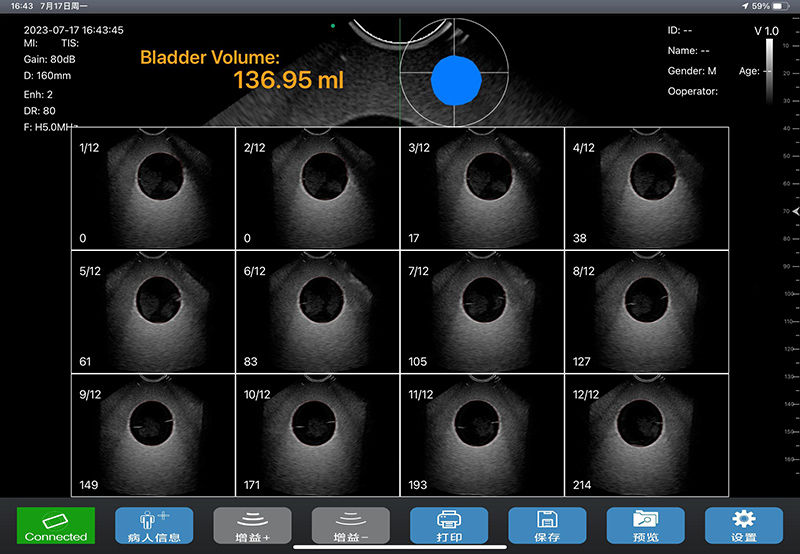
The plane count is not a marketing detail. In a 2025 prospective study in Diagnostik, novice operators measured fifty-three bladders both ways against the voided volume: a handheld three-dimensional device — a Butterfly iQ — landed within a median 11.2–12.0% of the truth, while conventional two-dimensional calipers missed by 27.6–36.7%, and two different operators agreed more closely on the 3D readings (intraclass correlation 0.977 against 0.927). Both methods read low, so the habit of confirming a borderline number survives any purchase.
Bladder shape sets the ceiling on any of these devices. A 2019 study in Neurourology and Urodynamics paired 590 scanner readings with catheter volumes in sixty-one patients: the average gap was 30.8 mL, but it rose to 109.2 mL in bladders reshaped by augmentation cystoplasty. In women with stage II or greater pelvic organ prolapse, a portable scanner’s post-void residual matched the catheter within six milliliters on average, with error climbing at stage III and IV. That is why I give credit for an on-screen image that lets you confirm the aim, and for patient modes that adjust the model to anatomy.
Where a bladder scanner earns its price
The strongest argument for buying one is a catheter you never insert. The CDC’s guideline for preventing catheter-associated urinary tract infection tells facilities to “consider using a portable ultrasound device to assess urine volume in patients undergoing intermittent catheterization to assess urine volume and reduce unnecessary catheter insertions” (recommendation II.H), and pairs it with three conditions for anyone who does: clearly stated indications, trained nursing staff, and cleaning and disinfection of the equipment between patients (II.H.1).
The size of the prize is on record. At Yale-New Haven Hospital, a program that combined order-entry prompts with handheld bladder scanners and a nurse-directed protocol cut urinary catheter use by 81% and took the general-medicine CAUTI rate from 36 to 11 per 1,000 catheter-days. A scanner was one of three levers there, and it is the one a single clinician can buy.
Retention follow-up is the second workload. The American Urological Association’s consensus definition of non-neurogenic chronic urinary retention is a post-void residual above 300 mL, persisting at least six months and documented on two or more occasions — a diagnosis built from repeated volume checks, which is exactly the job a scanner makes quick and catheter-free.
The third is continence care in long-term settings. A 2023 rapid review by Canada’s drug and health technology agency, CADTH, found that adding a bladder scanner to continence care in personal care homes reduced daytime urine loss and pad use without adding to caregivers’ workload, across the two studies it identified.
Getting a reading you can act on
- Choose the patient mode first. Where the device offers male, female or child settings, set it before you scan; the volume model depends on it.
- Place the head just above the pubic bone with ample gel, angled down toward the bladder, and keep the patient lying flat and still.
- Check the outline before the number. If the screen shows the bladder cut off at an edge, re-aim and scan again; a clipped outline under-reads.
- Repeat a borderline result. Two readings that agree are worth more than one, and both comparative studies above found scanners under-reading on average.
- Clean and disinfect the scan head between patients, the condition the CDC attaches to scanner use.
Who should not buy a bladder scanner
You need to see why the bladder is fullA volume scanner answers “how much”, not “why”. If your decisions turn on hydronephrosis, stones, a thickened wall or the prostate, an imaging handheld is the right purchase, and my bladder and kidney imaging comparison covers that job.
You want to scan yourself at homeEvery scanner here is built for a clinician’s hands, and its number only helps inside a protocol that says what to do next. Home use runs through a nurse or a continence service that owns that protocol; for imaging at home, my Leitfaden zur Ultraschalluntersuchung zu Hause sets out which routes actually exist.
Your patients have reconstructed bladdersAfter augmentation cystoplasty the bladder stops resembling the shape a volume model assumes, and published error grows several-fold. A scanner still screens these patients, but it is not a good fit as the only measurement — keep catheter or imaging confirmation in the protocol.
You are equipping a whole hospital fleetA forty-scanner rollout buys service contracts, loaner pools and on-site training as much as hardware, and that is the job the quote-based fleet vendors are built for. This guide is written for the clinician or small team buying one or two devices.
Bladder scanners: questions buyers ask
What is a bladder scanner?
A bladder scanner is a portable ultrasound device that measures how much urine is in the bladder without a catheter. It scans the lower abdomen in several planes, outlines the bladder and reports a volume in milliliters, usually to check post-void residual or suspected retention.
Which bladder scanner should I buy?
My picks for 2026: the Suresult B4D for range, speed and price, the EchoNous Kosmos Bladder for the tightest published accuracy, and the Verathon BladderScan i10 for hospital fleets. Butterfly and Clarius add bladder tools to whole-body probes under a yearly membership.
Are bladder scanners accurate?
For routine post-void residual checks, yes. In women with pelvic organ prolapse, scanner readings matched catheter volumes within six milliliters on average. Error grows with irregular bladder shape, and three-dimensional capture beats two-dimensional calipers, so confirm borderline readings.
How do you use a bladder scanner?
Pick the patient mode if offered, apply gel above the pubic bone and aim the head toward the bladder with the patient lying flat. Trust the number once the whole outline sits on screen, and scan twice when a reading is borderline.
What is a normal bladder scanner reading after voiding?
Under 50 mL is the common result: in a study of 987 ambulatory women aged 55 to 75, 79% measured below 50 mL by bladder ultrasound and 5% measured 200 mL or more. The AUA sets chronic retention above 300 mL.
What post-void residual counts as chronic urinary retention?
The American Urological Association defines non-neurogenic chronic urinary retention as a post-void residual above 300 mL that persists for at least six months and is documented on two or more occasions. Your facility’s protocol sets the threshold that triggers catheterization.
What is the difference between a bladder scanner and a bladder ultrasound?
A bladder scanner is built to return a volume quickly with little operator skill. A diagnostic bladder ultrasound produces images a clinician interprets for stones, wall thickening, masses or hydronephrosis. Whole-body handhelds with a bladder tool sit between the two.
Can a bladder scanner be used at home?
Yes, in clinician-directed care. Home-health nurses and continence services carry scanners on visits and own the protocol for acting on the number. The number decides whether to catheterize, so the protocol belongs to the clinician who writes it.
How should a bladder scanner be cleaned between patients?
Wipe away the gel, then clean and disinfect the scan head with the agent its maker approves before the next patient. The CDC makes cleaning and disinfection between patients one of its three conditions for scanner use, alongside stated indications and trained staff.
How much does a bladder scanner cost?
Published prices on October 8, 2026: Suresult B4D $2,600, BladGo 2.0 $3,999, Butterfly iQ3 $3,899 plus $420 a year for its bladder tool, Clarius C3 HD3 $4,490 in year one. Verathon, EchoNous, Vitacon and Caresono sell by quote.
What CPT code covers a bladder scan?
CPT 51798 covers measurement of post-void residual urine by ultrasound. It is a technical-only code: office practices bill it for the scan itself, and in hospital inpatient, outpatient and emergency settings the hospital’s facility payment covers it.
Which bladder scanners have no subscription?
Suresult and EchoNous state that the B4D and Kosmos Bladder carry no subscription, and BladGo, Vitacon and Caresono list none. Butterfly puts Auto Bladder Volume in its Advanced membership at $420 a year, and Clarius Bladder AI runs under Clarius Essentials at $695 a year.
Is the Suresult B4D FDA cleared?
Yes. The FDA cleared the B4D hardware under 510(k) K172750 in 2018, where it is listed as model BProbe, to image the bladder through the lower abdomen of a non-pregnant patient and calculate its volume non-invasively.
Can a bladder scanner measure children?
Some can. The Verathon BladderScan i10 measures adult and pediatric patients automatically, and BladGo 2.0 has a child mode. The Butterfly and Clarius bladder tools are cleared for adults only, so match the indication to your patients before you order.
How fast does a bladder scanner give a result?
The Suresult B4D reports volume in under two seconds and BladGo 2.0 in under four. Verathon, Butterfly and Vitacon state that their results arrive within seconds.
Methodik
I scored all eight scanners against six criteria, applied in this order: published accuracy and method, range and speed, bedside workflow, cost to own, regulatory record and buyability. Every price, range, tolerance, weight and warranty term comes from the maker’s own product page, brochure, manual or FDA 510(k) summary, read on October 8, 2026, and each regulatory number was checked against the FDA’s 510(k) database the same day.
Where a maker sells only by quote, I record that as the price finding and give the range at which established US dealers listed units that day, labeled as a dealer price. Accuracy figures are reported exactly as each maker publishes them, including the test basis where it is stated; most were measured on tissue-equivalent phantoms. Devices that a maker has discontinued, or that its main US distributor no longer lists, are left out of the ranking.
Quellen und Überprüfungsdaten
- Suresult B4D product page and specification table — suresultmed.com/shop/handheld-ultrasounds/b4d-wireless-4d-bladder-scanner/. Accessed Oct 8, 2026. Suresult warranty policy — suresultmed.com/suresult-warranty-policy/. Accessed Oct 8, 2026.
- FDA 510(k) K172750, Wireless Probe Type Ultrasound Scanner (Model: UProbe-C; UProbe-L; BProbe), Guangzhou Sonostar Technologies, decision Feb 28, 2018 — accessdata.fda.gov. Accessed Oct 8, 2026.
- EchoNous Kosmos Bladder product page, brochure and launch announcement; EchoNous ultrasound cost page — echonous.com. Accessed Oct 8, 2026.
- Verathon BladderScan i10 product page, brochure and operations manual; discontinued-devices notice — verathon.com. Accessed Oct 8, 2026. FDA listing under 510(k) K172356.
- BladGo 2.0 product page, specifications and warranty — bladgo.com. Accessed Oct 8, 2026. FDA 510(k) K223448 (Bladder Scanner Model BVT02).
- Butterfly iQ3 pricing and membership page, iQ3 specifications, bladder scanning page — butterflynetwork.com. Accessed Oct 8, 2026. FDA 510(k) K200980 (Auto 3D Bladder Volume Tool) and K232808 (iQ3).
- Clarius Bladder AI page — clarius.com; C3 HD3 store page — store.clarius.com. Accessed Oct 8, 2026. FDA 510(k) K232257 (Clarius Bladder AI), decision Nov 13, 2023.
- Vitacon Vitascan LT product page and technical specification brochure (2/2026) — vitacon.com. Accessed Oct 8, 2026. FDA 510(k) K121689 (Vitascan LT).
- Caresono PadScan HD2 product page — caresono.com. Accessed Oct 8, 2026. FDA 510(k) K153581 (Bladder Scanner, model PadScan HD2).
- US dealer listings (Caresono PadScan HD2: MFI Medical, CardiacDirect, Quince Medical, Medical Device Depot; Vitacon Vitascan LT: CardiacDirect), read Oct 8, 2026.
- Stoffel JT et al. AUA White Paper on Nonneurogenic Chronic Urinary Retention. J Urol 2017;198:153–160. PMID 28163030.
- Alfuraih AM et al. Accuracy and Reproducibility of Handheld 3D Ultrasound Versus Conventional 2D Ultrasound for Urinary Bladder Volume Measurement. Diagnostik 2025;15:2229. PMID 40941716.
- Theisen JG et al. The Accuracy of Portable Ultrasound Bladder Scanner Measurements of Postvoid Residual Volume in Women With Pelvic Organ Prolapse. Female Pelvic Med Reconstr Surg 2019;25:388–391. PMID 29424755.
- Zhao L et al. Effects of bladder shape on accuracy of measurement of bladder volume using portable ultrasound scanner. Neurourol Urodyn 2019;38:653–659. PMID 30620102.
- Topal J et al. Prevention of nosocomial catheter-associated urinary tract infections through computerized feedback to physicians and a nurse-directed protocol. Am J Med Qual 2005;20:121–126. PMID 15951517.
- CDC/HICPAC Guideline for Prevention of Catheter-Associated Urinary Tract Infections, Summary of Recommendations II.H and II.H.1 — cdc.gov. Accessed Oct 8, 2026.
- CADTH. Bladder Scanners in Personal Care Homes: Rapid Review, 2023 — NCBI Bookshelf NBK601830. Accessed Oct 8, 2026.
- Huang AJ et al. Clinical significance of postvoid residual volume in older ambulatory women. J Am Geriatr Soc 2011;59:1452–1458. PMID 21806559.
- Rubenstein J, Painter M. Coding for bladder scan raises several questions. Urology Times, June 3, 2020 — urologytimes.com. Accessed Oct 9, 2026.
Not sure which scanner fits your rounds?
Tell me where the scans happen — ward, clinic, patients’ homes — how many a day, and whether you also need to see the kidneys or the prostate. The reply names one device, or tells you to keep your money.

