
O atlas de doze bloqueios reúne imagens clínicas sem edição desta família de equipamentos; a ilustração de fluxo em cores é uma captura da biblioteca de referência da Suresult ·Conta com a confiança de 8.717 profissionais da área médica →
Resposta rápida
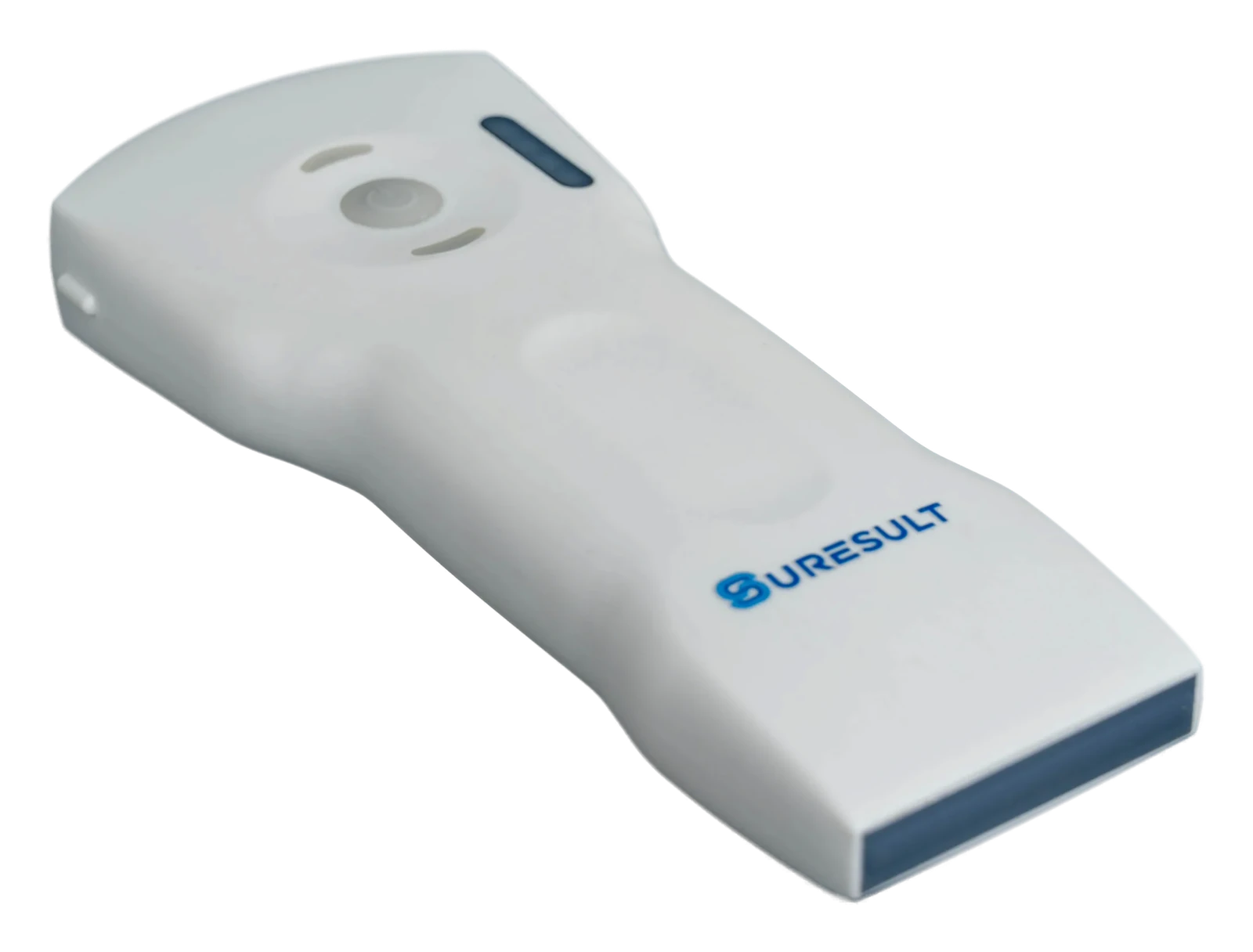
Um aparelho de ultrassom para bloqueios nervosos é o sistema de imagem que mostra o nervo-alvo e orienta a agulha até ele em tempo real. Também confirma a dispersão do anestésico local ao redor do nervo. Ultrassons portáteis sem fio de duas cabeças, como o Suresult D3Ultra, agora abrangem bloqueios de plexos superficiais e janelas profundas, como a do ciático por via anterior, procedimentos que antes exigiam um aparelho sobre carrinho.
- Duas cabeças: linear para plexos superficiais, convexa para janelas profundas do ciático
- Guias de agulha na tela: no plano e fora do plano, com indicações de posição e ângulo
- Qualidade de imagem para ensinar: cada bloqueio salvo em sequências de cine e DICOM
O atlas de bloqueios
Doze bloqueios nervosos, com imagens obtidas em um único ultrassom portátil
“É um excelente ultrassom portátil para realizar anestesia regional… Realizo anestesia regional em cirurgias ambulatoriais, cirurgias hospitalares de grande porte, na unidade de terapia intensiva e na medicina de emergência pré-hospitalar.”
— David Heimpel, que capturou as imagens dos doze bloqueios abaixo com seu D3UltraImagens clínicas sem edição · dados do guia de agulha em cada quadro · selecione qualquer imagem para ampliar
Imagens capturadas por um anestesiologista alemão com seu próprio aparelho. Os rótulos na tela estão em alemão: Ângulo = ângulo da agulha, Posição = ponto de entrada da agulha em relação ao transdutor, em mm.
Ombro & braço1 bloqueio
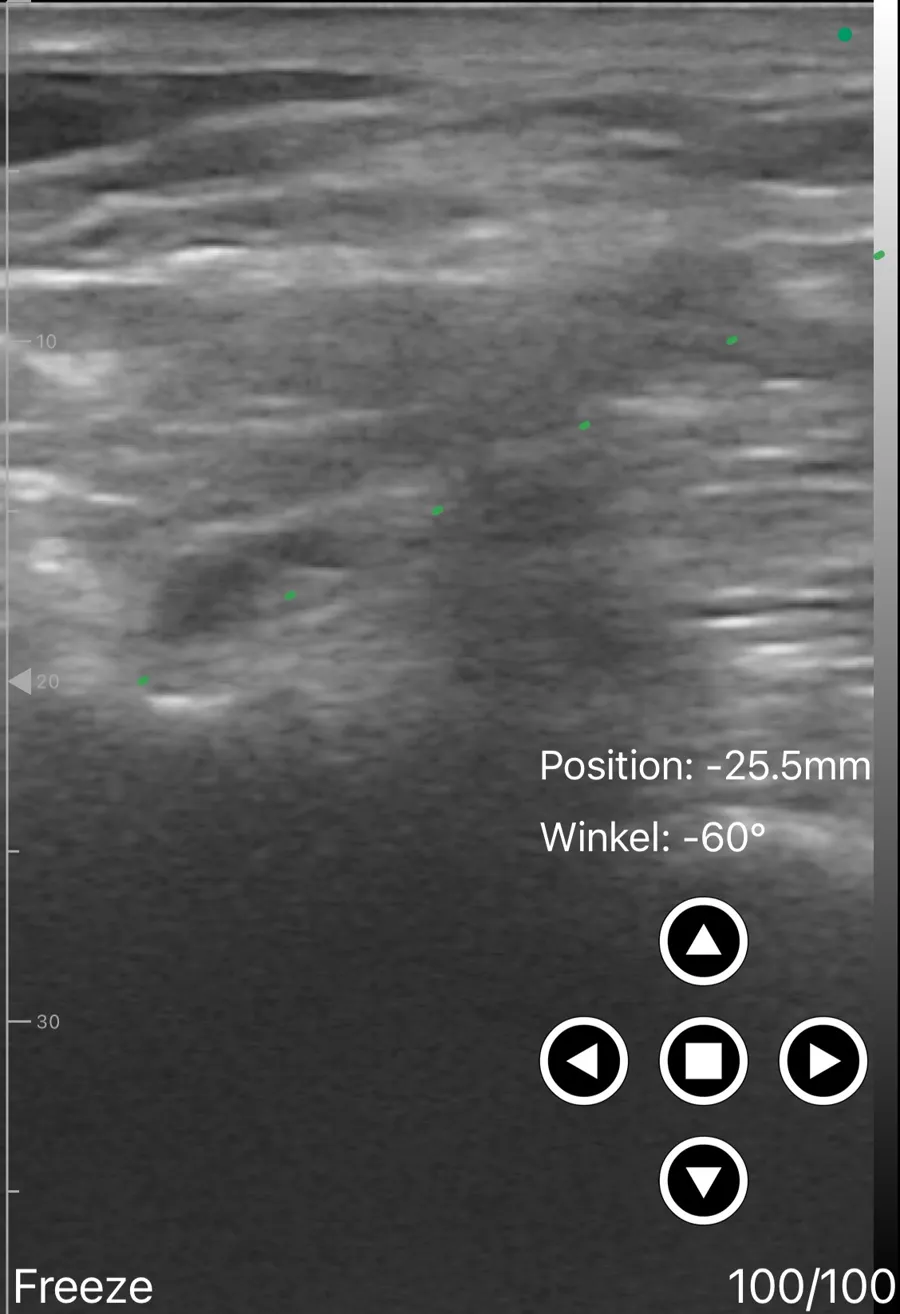
Bloqueio interescalênico do plexo braquial
As raízes entre os escalenos: cirurgia do ombro e do braço. Superficiais, a 1–3 cm, visualizadas com a cabeça linear de alta frequência.
Tórax & tronco4 bloqueios
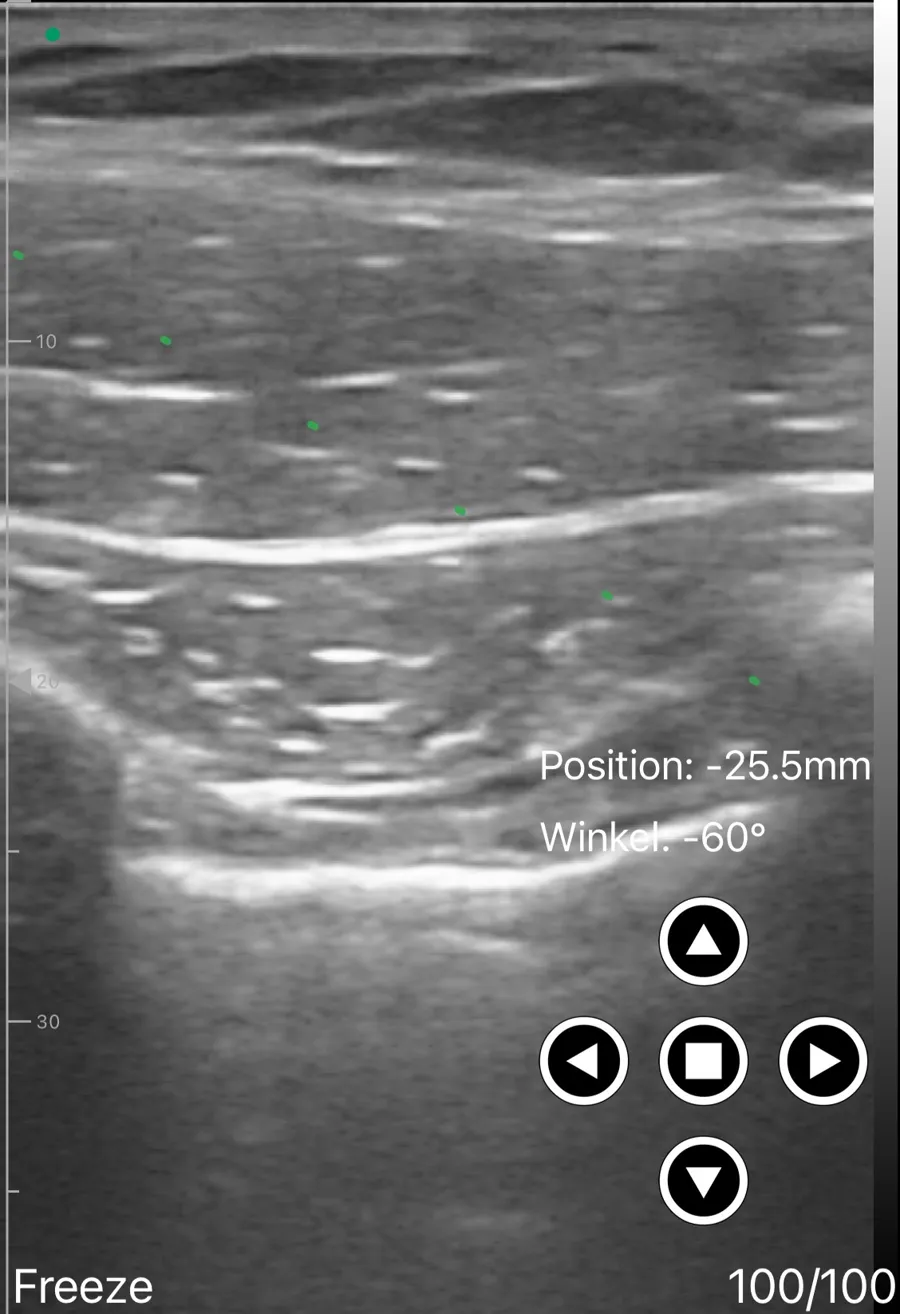
Bloqueio PECS
Nervos peitorais para cirurgia da mama e da parede torácica anterior. Planos fasciais entre os músculos peitoral maior, peitoral menor e serrátil, visualizados com a cabeça linear.
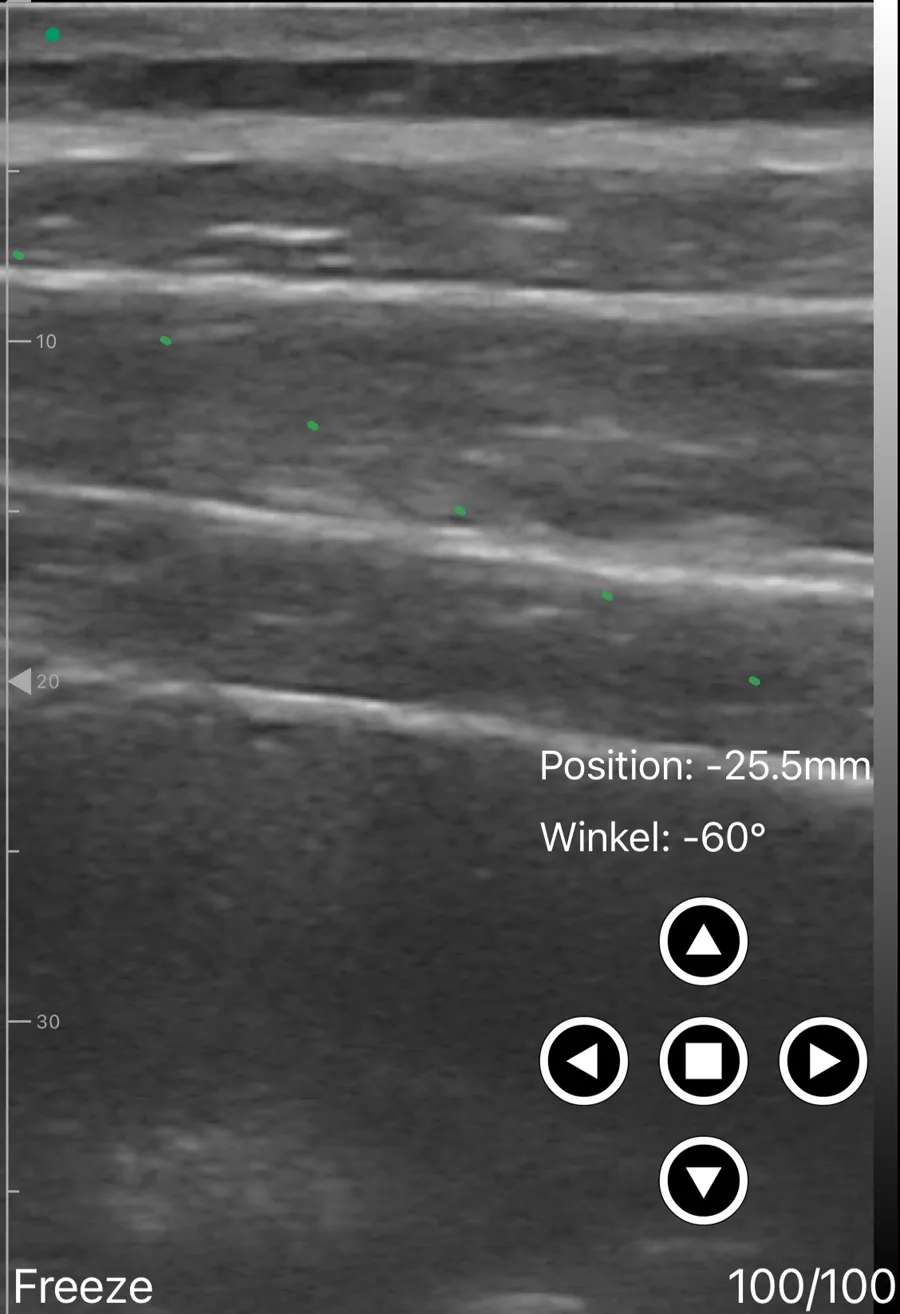
Bloqueio TAP
Analgesia da parede abdominal. O plano entre os músculos oblíquo interno e transverso do abdome, visualizado com a cabeça linear na região lateral do abdome.
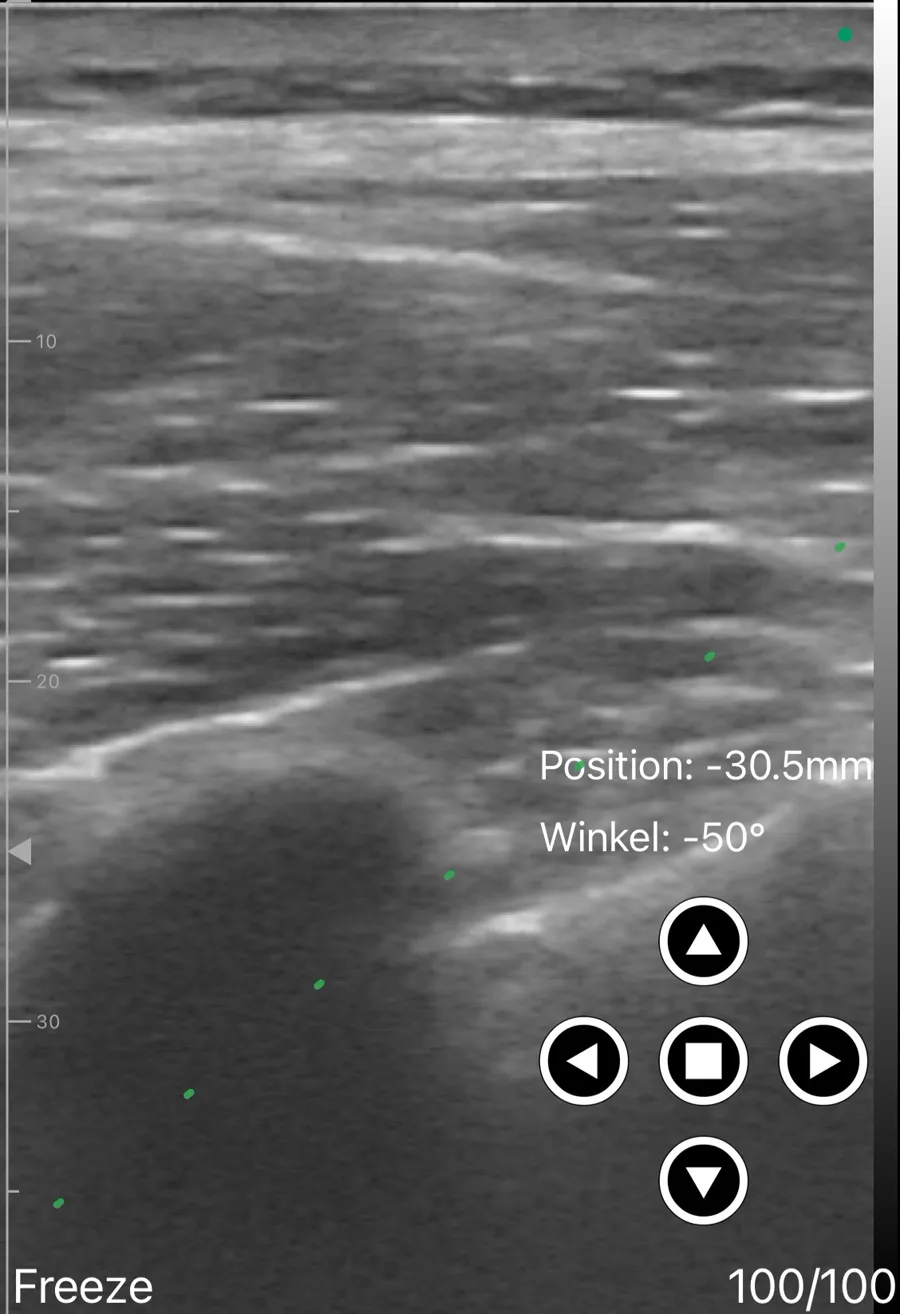
Bloqueio paravertebral
Analgesia torácica segmentar ao lado da coluna. O espaço situa-se profundamente ao processo transverso e lateralmente ao corpo vertebral, ao alcance da cabeça linear na maioria dos adultos.
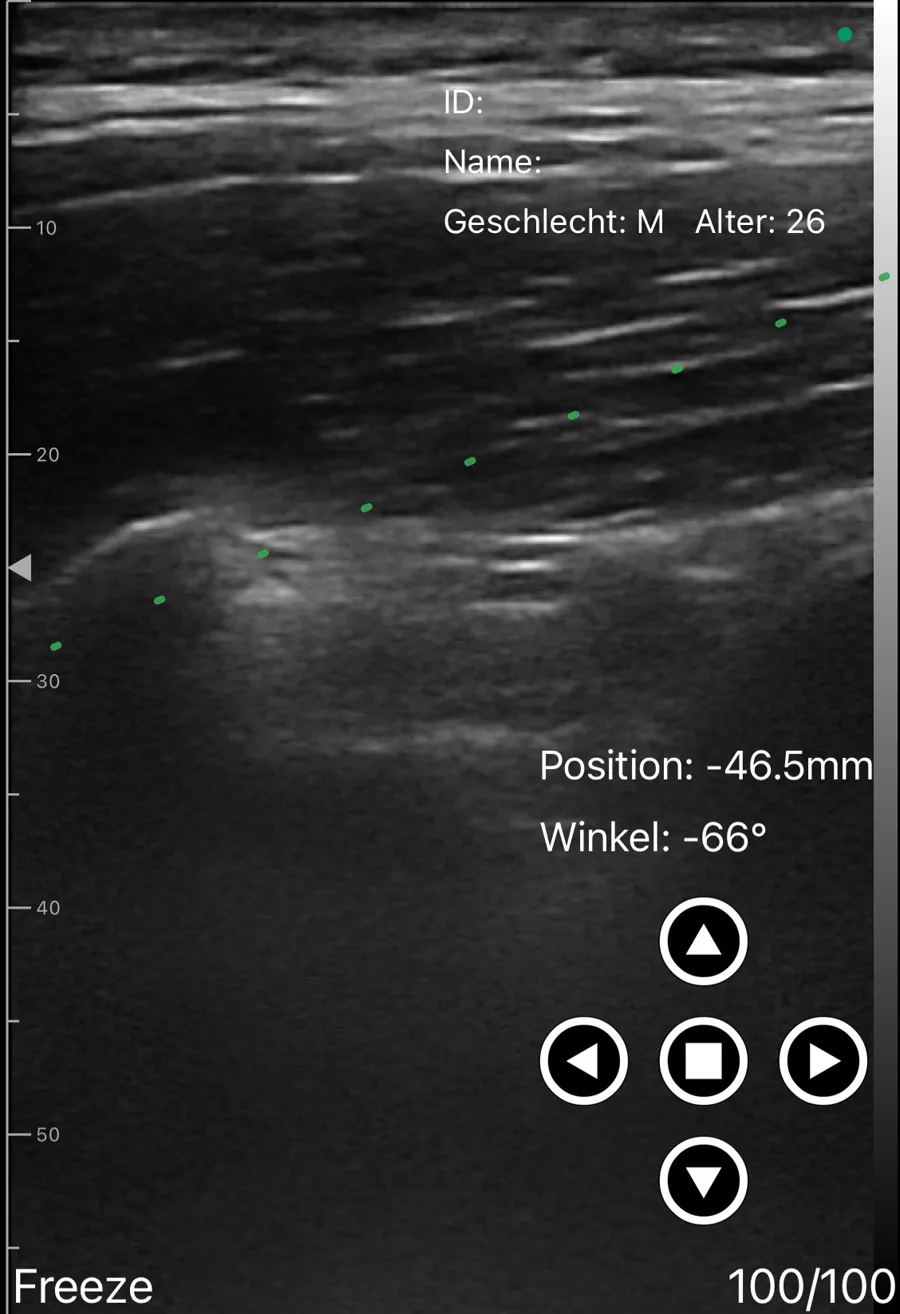
Bloqueio do plano dos músculos eretores da coluna
O plano fascial do ESP: um nível, ampla dispersão torácica. Profundamente ao músculo eretor da espinha, junto ao processo transverso. Cabeça linear ou convexa conforme o biotipo.
Quadril & pelve3 bloqueios
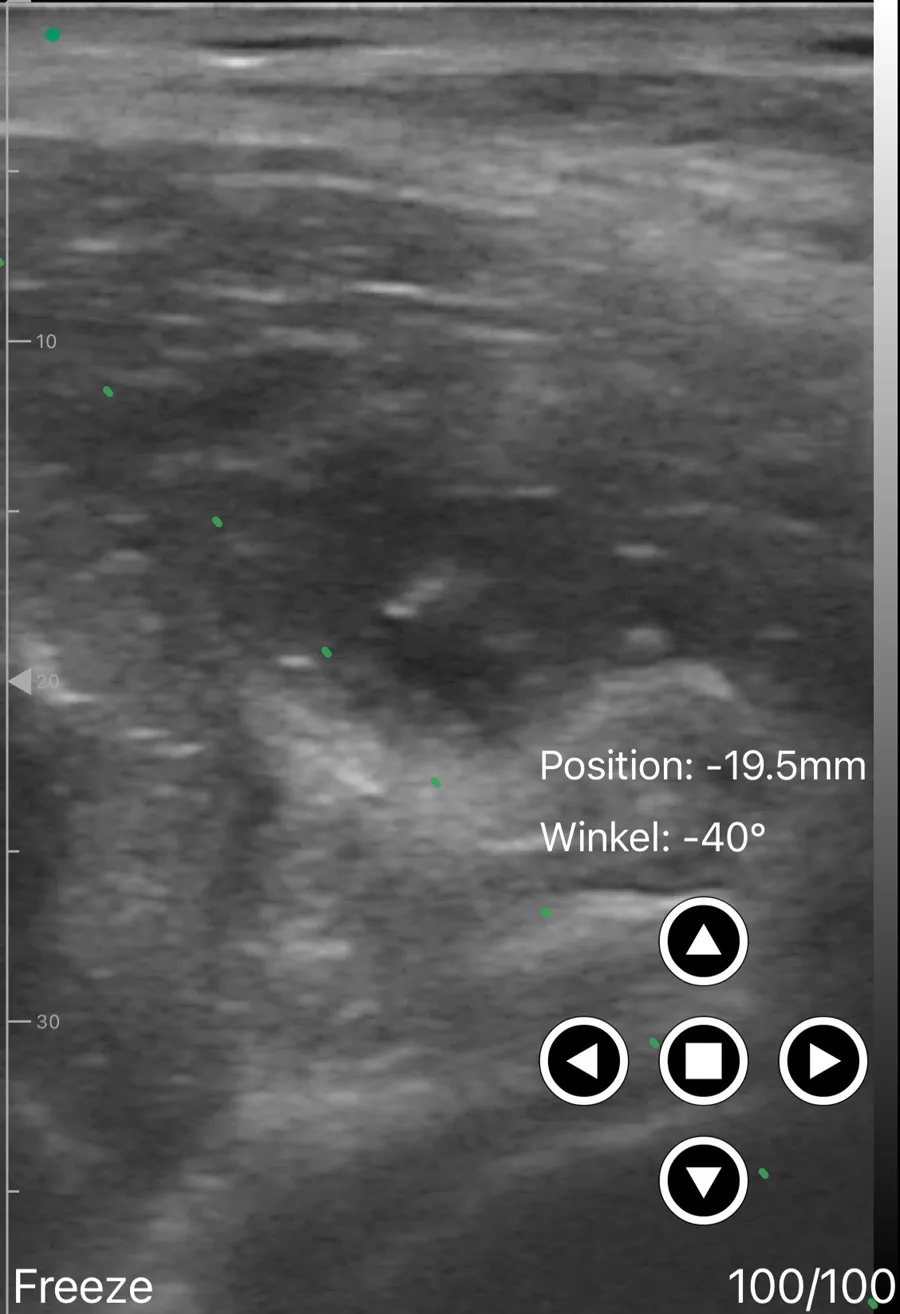
Bloqueio PENG
Grupo de nervos pericapsulares para fratura e cirurgia do quadril. Entre a espinha ilíaca anteroinferior e a eminência iliopúbica, uma janela mais profunda que favorece a cabeça convexa em pacientes de maior porte.
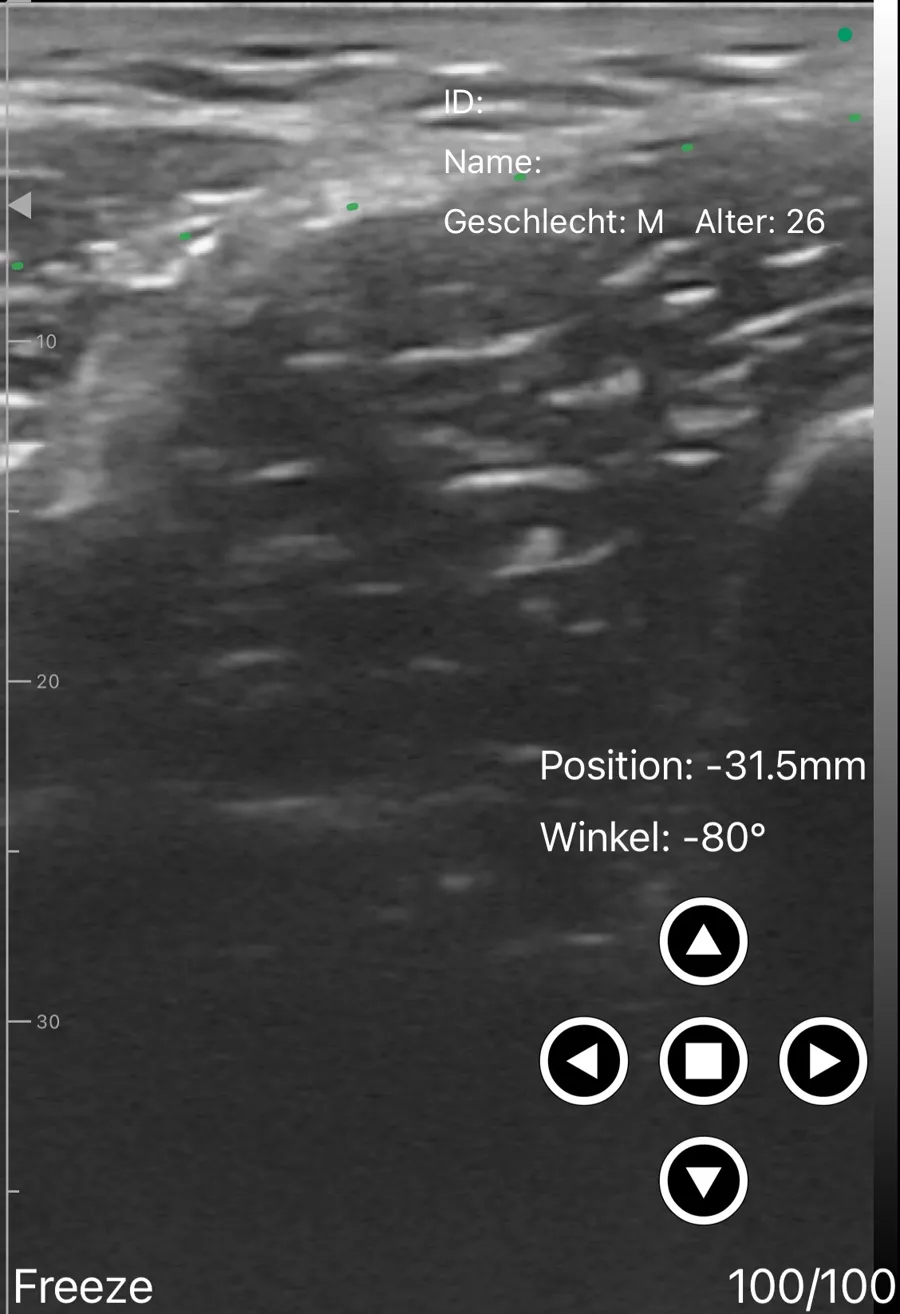
Bloqueio suprainguinal da fáscia ilíaca
A abordagem alta da fáscia ilíaca para fratura e cirurgia do quadril. Acima do ligamento inguinal, sob a fáscia ilíaca na fossa ilíaca; cabeça linear na maioria dos biotipos.
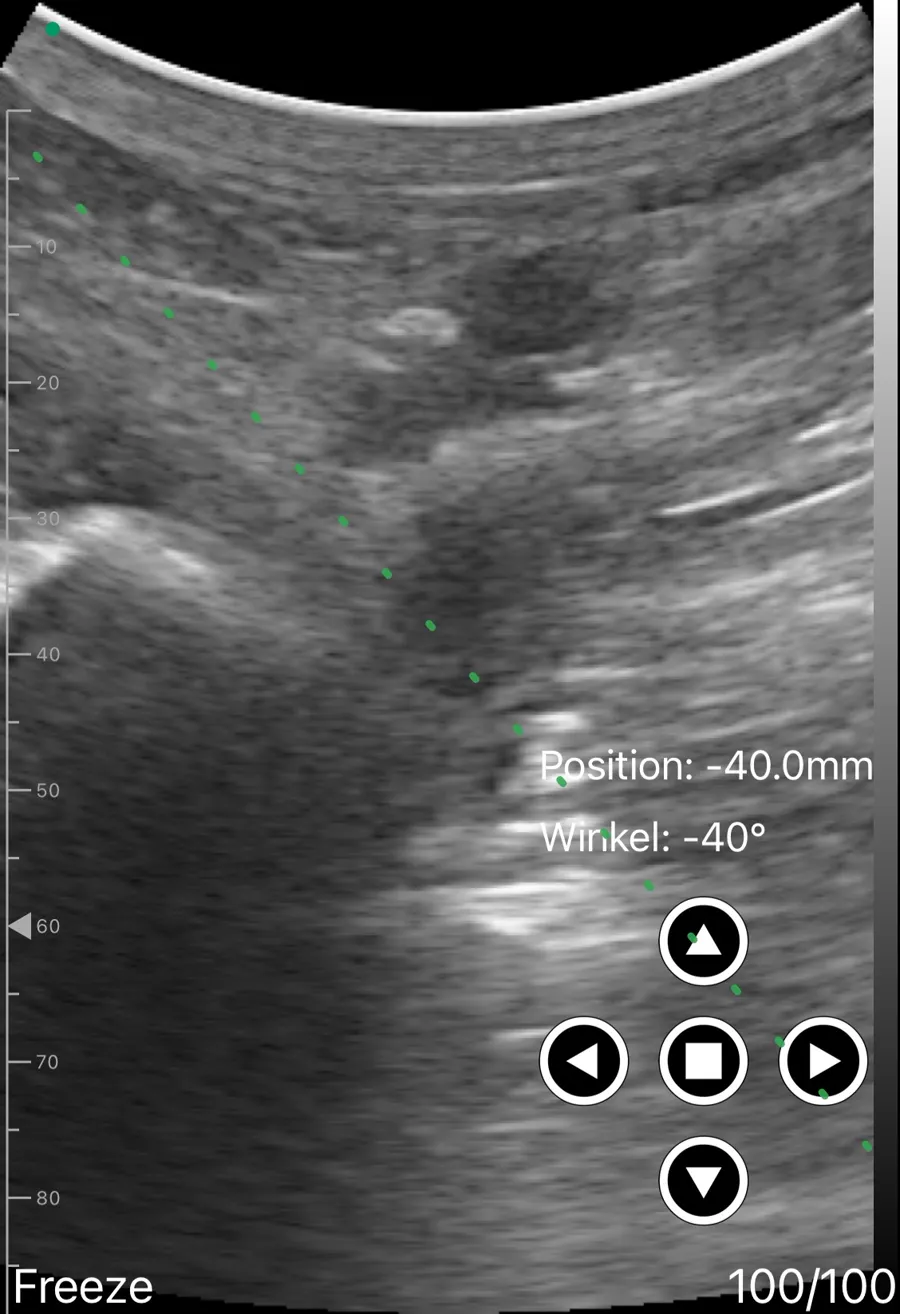
Bloqueio ciático proximal (anterior)
A janela anterior profunda para o nervo ciático proximal. A janela mais profunda desta página, a 6–10 cm, área de atuação da cabeça convexa.
Joelho & perna4 bloqueios
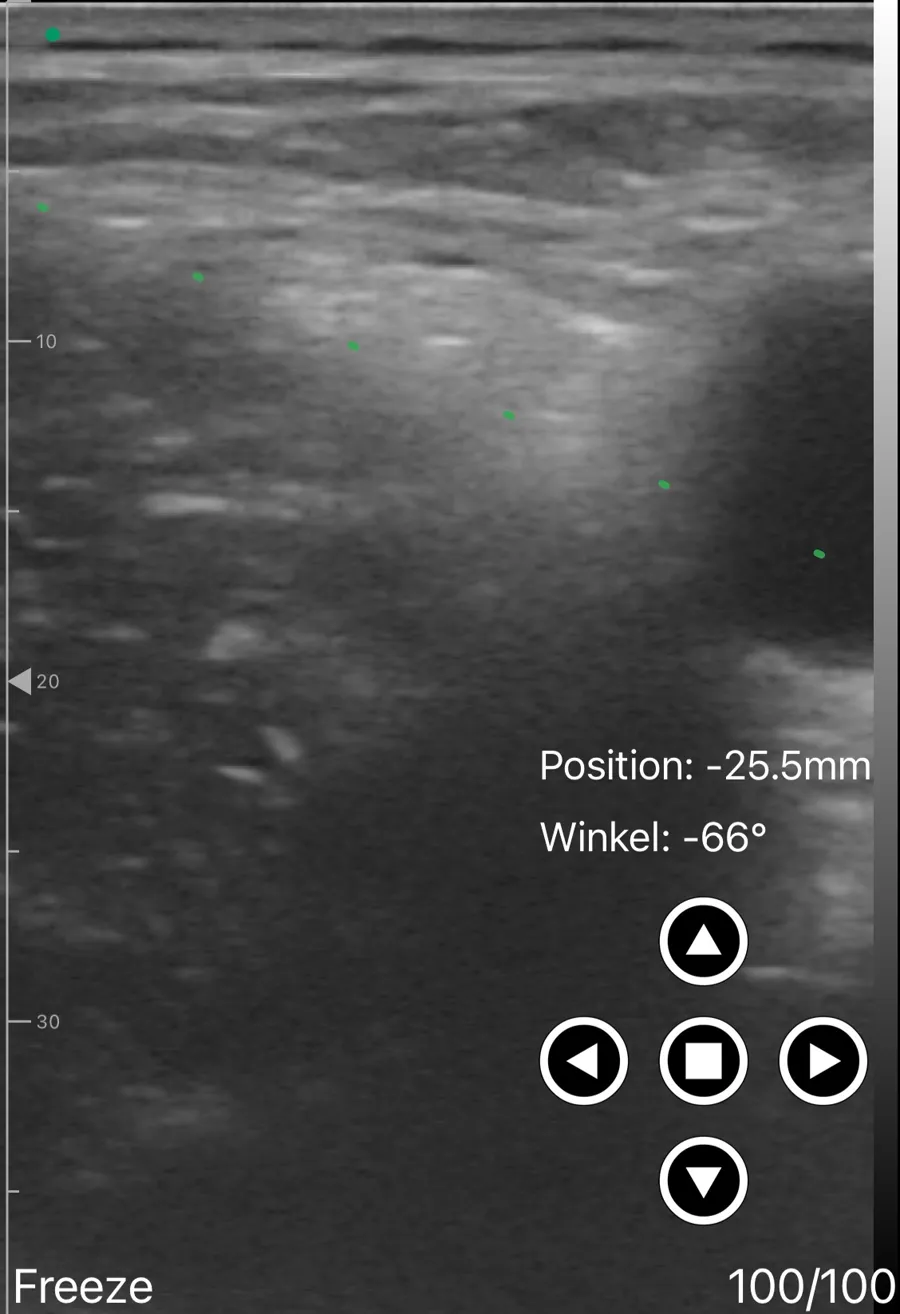
Bloqueio do nervo femoral
Cirurgia do joelho e da coxa; o nervo situa-se lateralmente à artéria femoral, logo abaixo do ligamento inguinal. Superficial, visualizado com a cabeça linear.
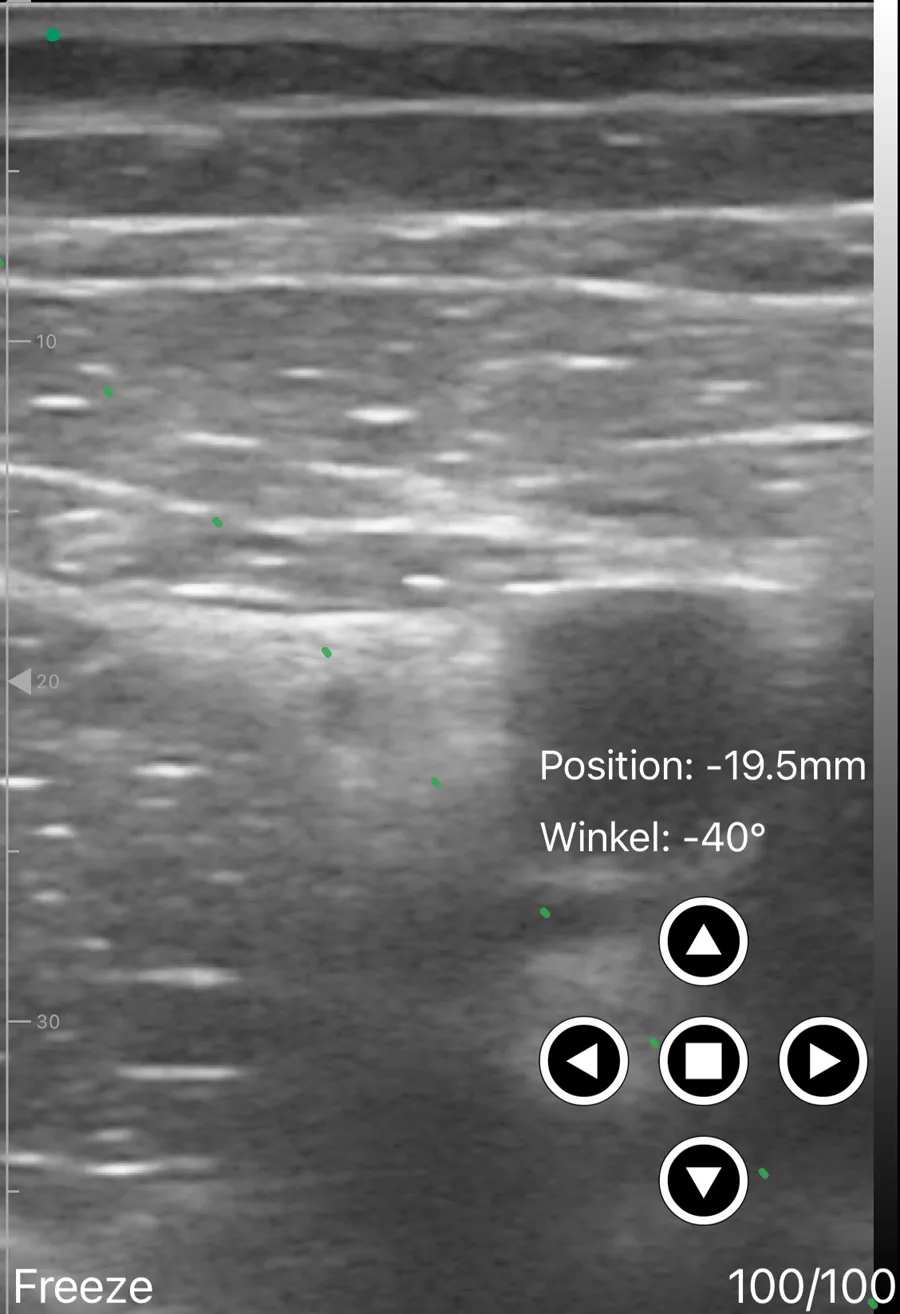
Bloqueio do canal dos adutores / do nervo safeno
O nervo safeno no canal dos adutores: analgesia com preservação motora para cirurgia do joelho. No meio da coxa, sob o sartório, ao lado dos vasos femorais, visualizado com a cabeça linear.
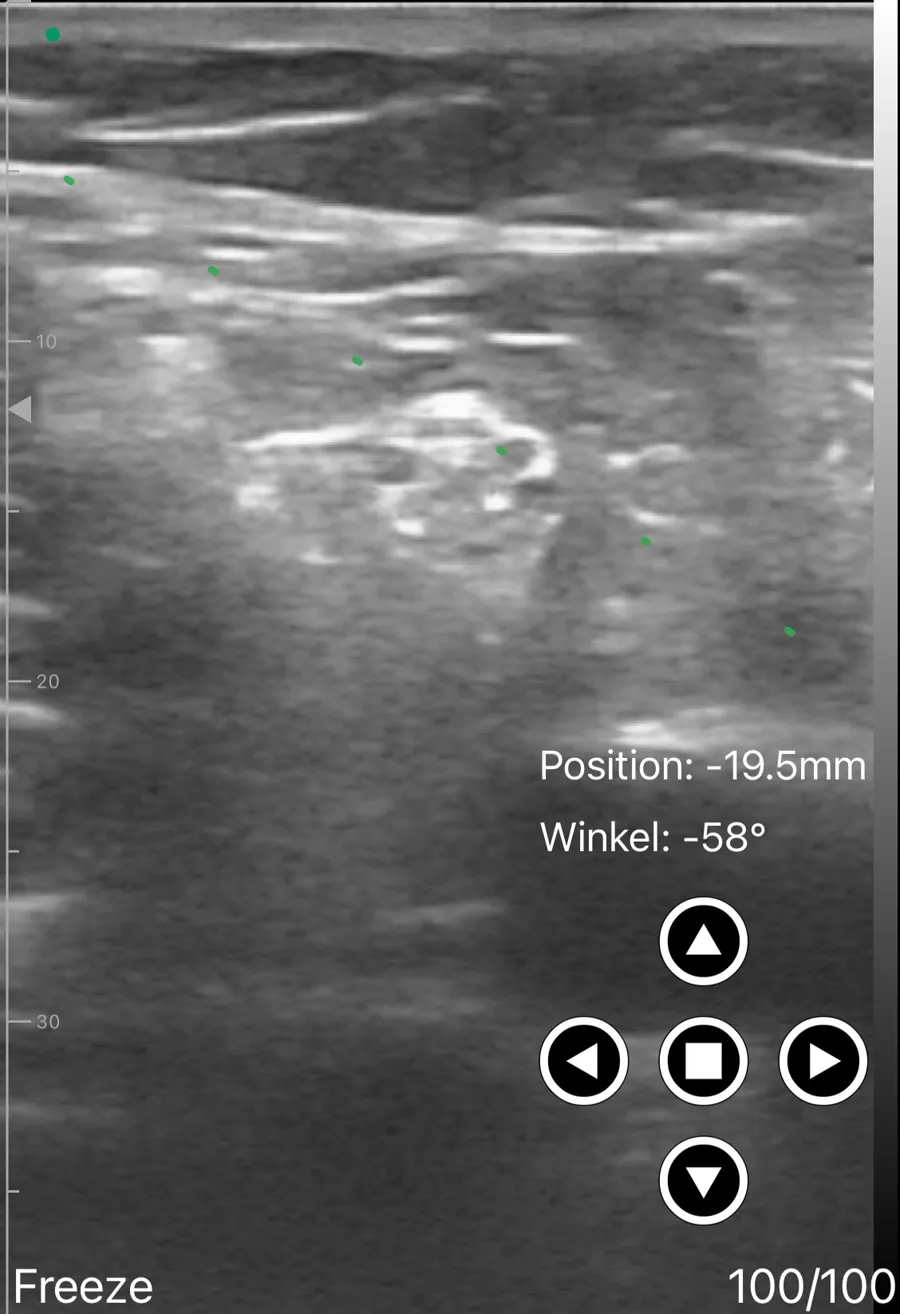
Bloqueio ciático distal
O nervo ciático imediatamente antes de se dividir nos nervos tibial e fibular comum, acima da prega poplítea. Cabeça linear em profundidade moderada.
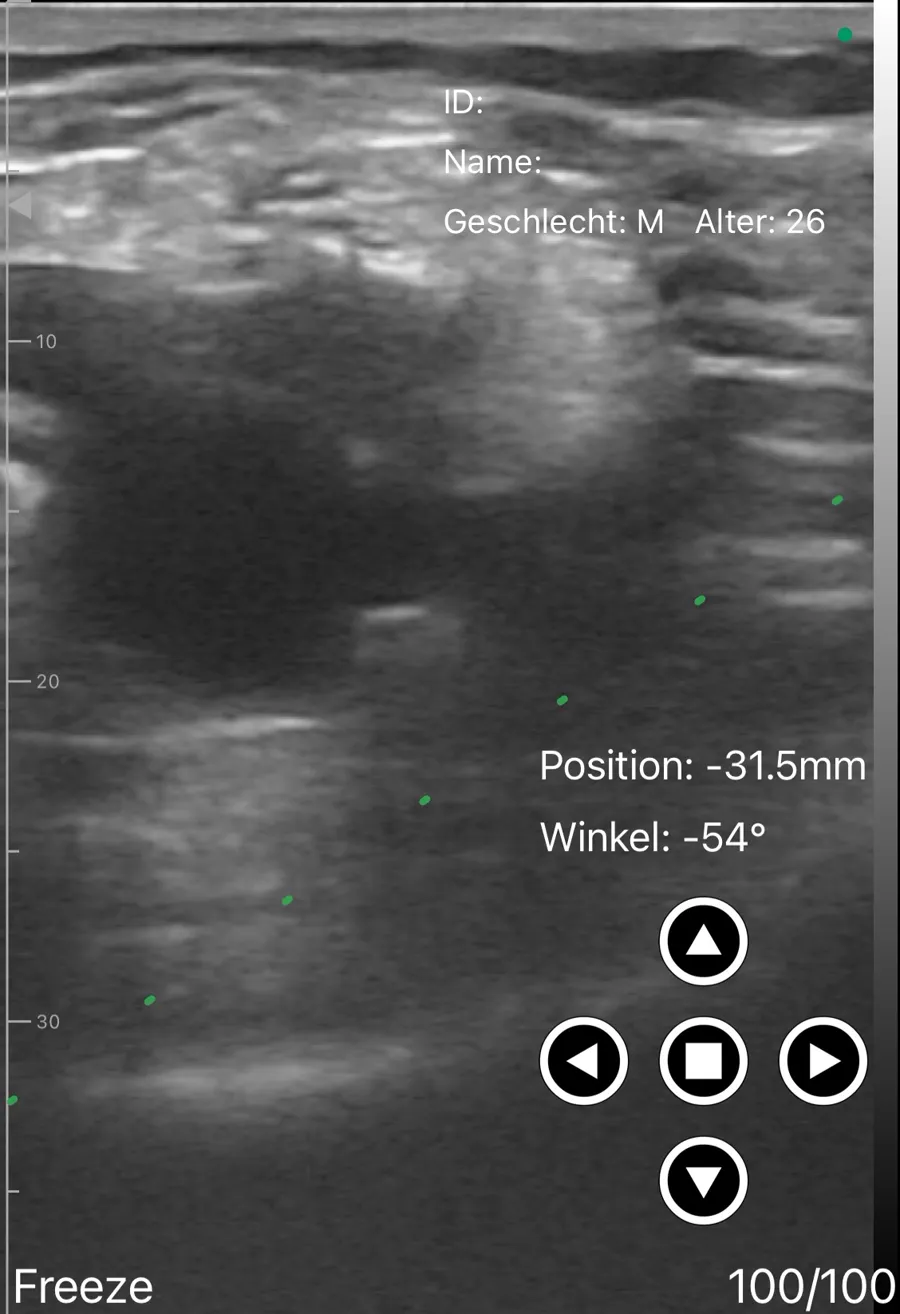
Bloqueio IPACK
Analgesia posterior do joelho após artroplastia. O anestésico local é depositado entre a artéria poplítea e a cápsula posterior, no nível dos côndilos femorais.
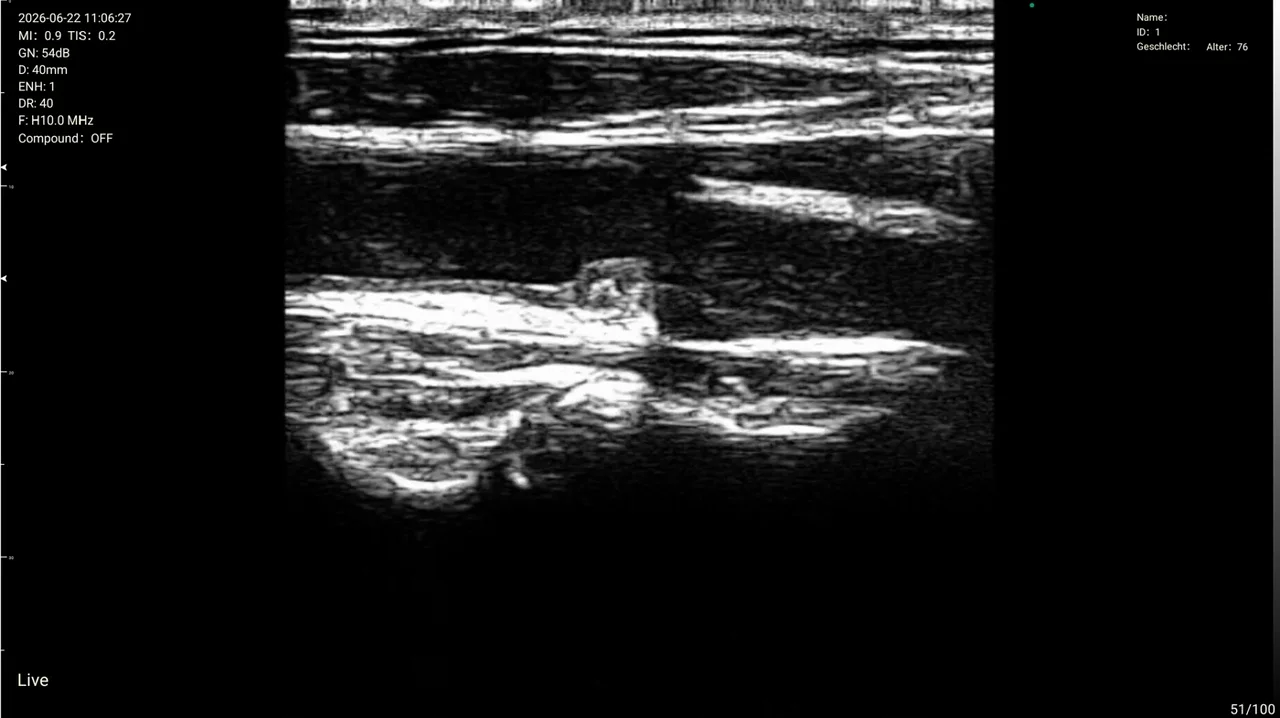
Selecione um cartão para alternar a captura
Vídeos clínicos reais: as imagens dos plexos e as passagens da agulha de um dia inteiro de anestesia regional.
Noções básicas da técnica
Como realizar bloqueios nervosos guiados por ultrassom com um aparelho portátil
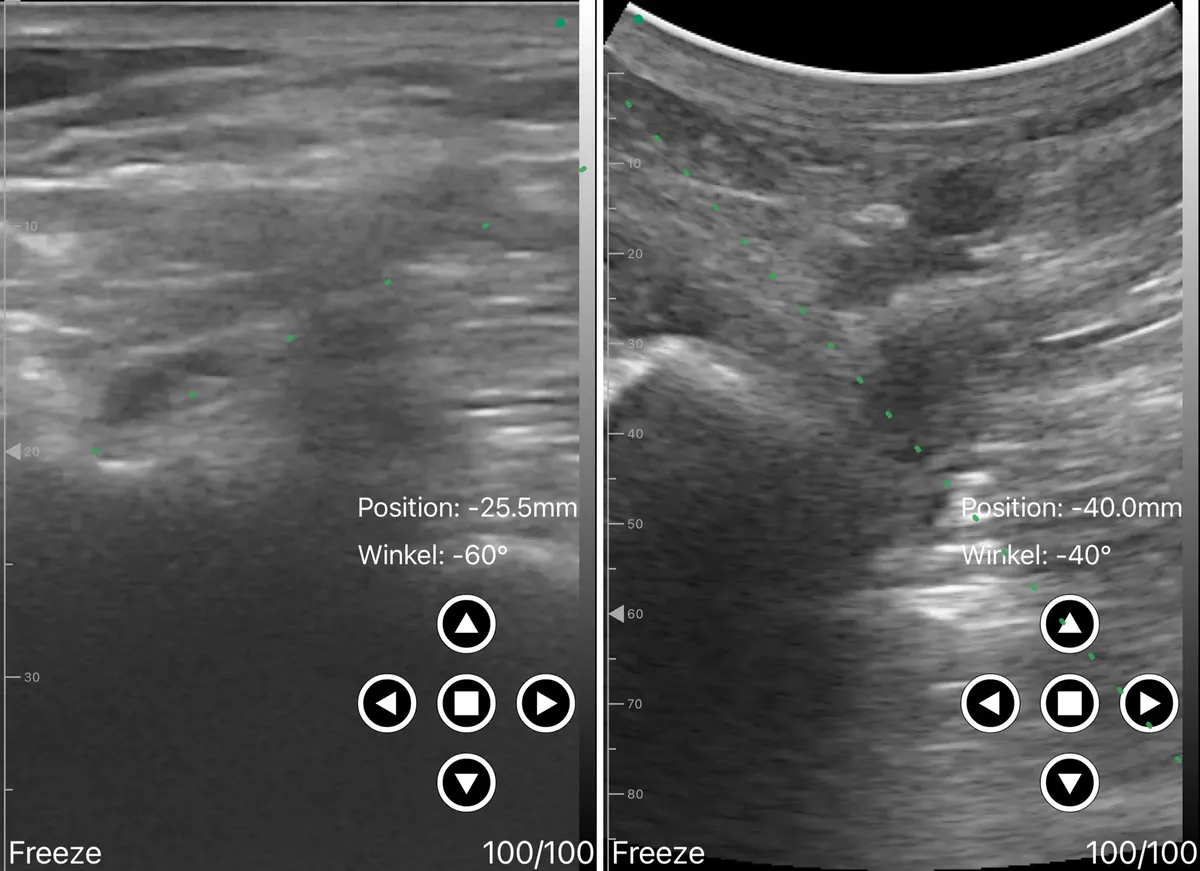 Escolha a cabeça conforme a profundidade.
Bloqueios de plexos superficiais são realizados com a cabeça linear; as janelas profundas do ciático ficam a cargo da cabeça convexa.
Linear e convexa em um único D3Ultra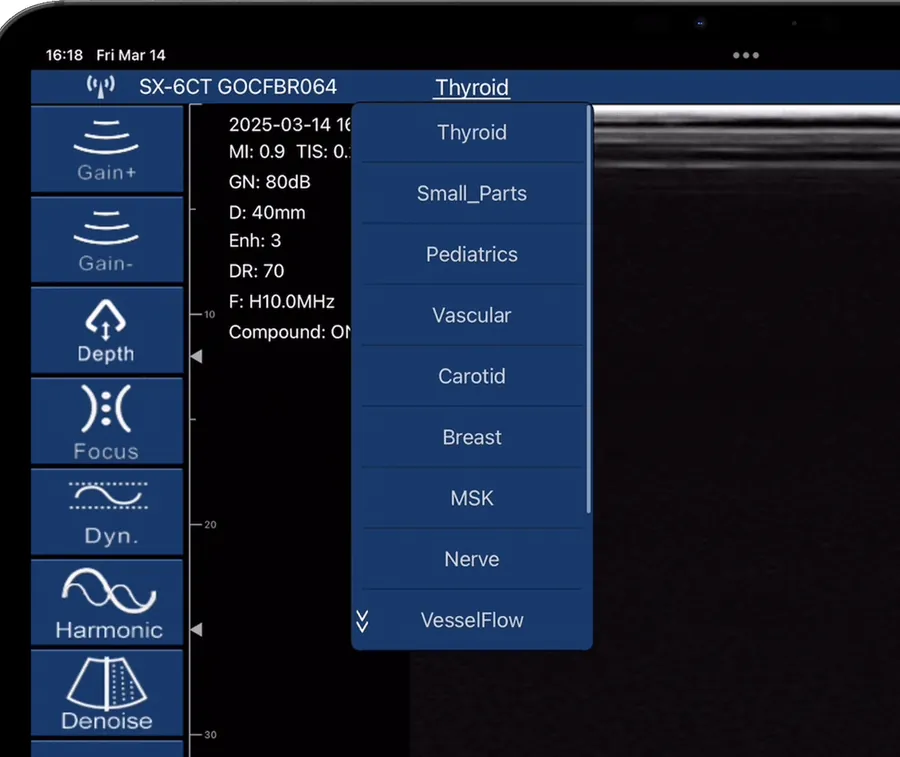 Ajuste primeiro a profundidade e a predefinição.
Comece pela predefinição de nervos e ajuste a profundidade um pouco além do plano-alvo antes de introduzir a agulha.
Lista de predefinições no aplicativo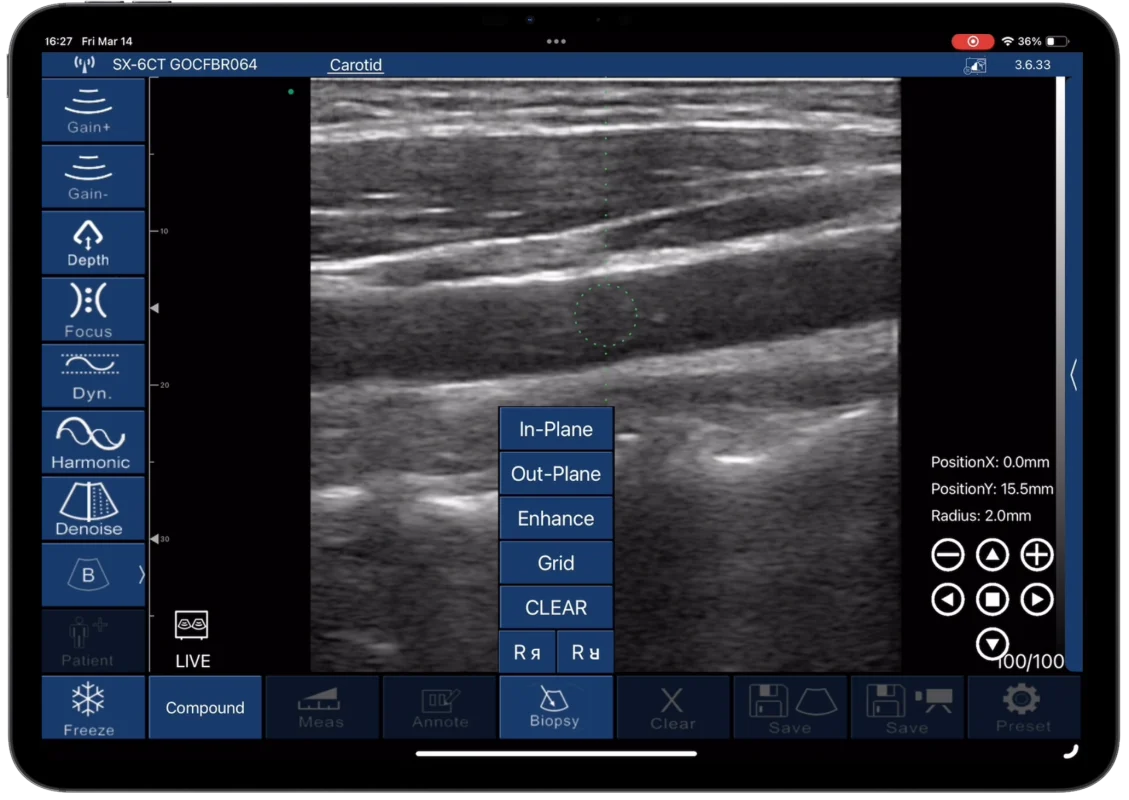 Mantenha a agulha no plano.
Avance ao longo do eixo longitudinal do transdutor, mantendo a ponta visível; o guia na tela e a indicação do ângulo mostram o trajeto planejado.
Dados do guia de agulha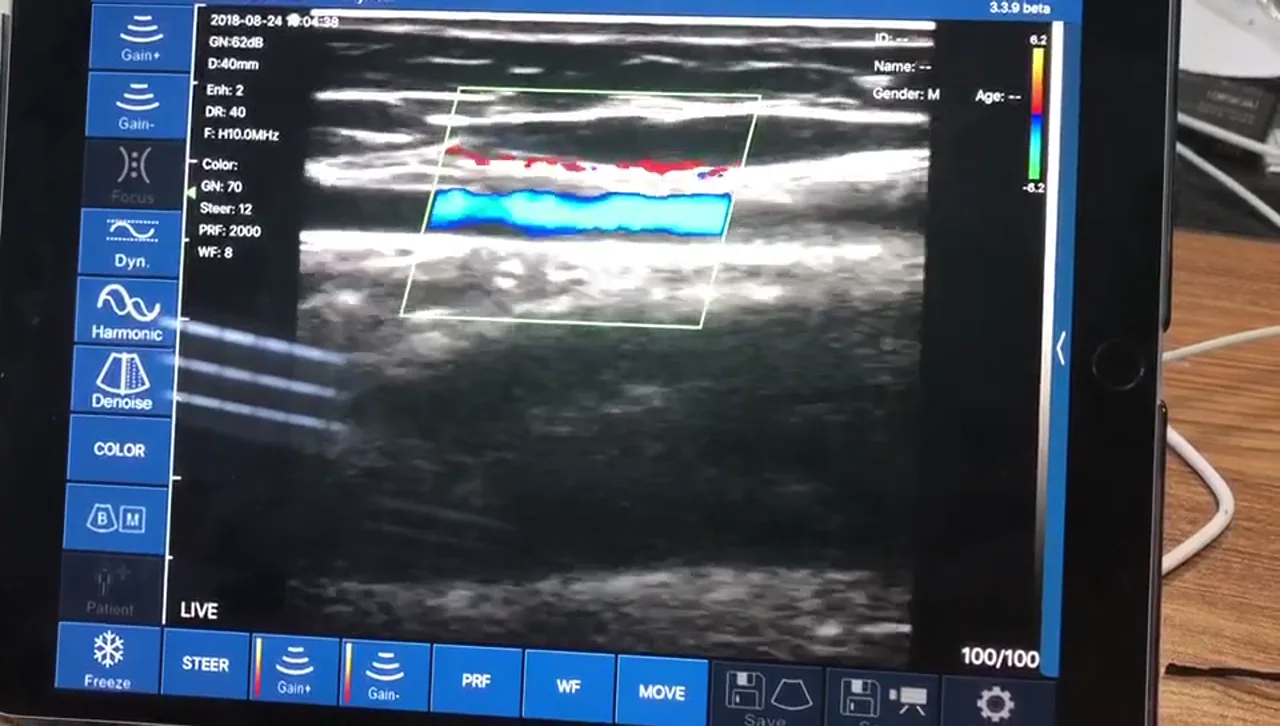 Confirme a dispersão.
O Doppler colorido antes da passagem da agulha mostra os vasos presentes em seu trajeto; deve-se visualizar o anestésico local se dispersando ao redor do nervo.
Fluxo em cores, biblioteca de referência Suresult
O que dizem as pesquisas
As evidências para bloqueios nervosos guiados por ultrassom
- Maior sucesso, início de ação mais rápido.
Uma metanálise de 2009 publicada no British Journal of Anaesthesia constatou que a orientação por ultrassom reduziu as falhas de bloqueio em mais da metade em comparação com a neuroestimulação (risco relativo de 0,41). O início de ação foi 29% mais rápido e os bloqueios duraram 25% mais.
Abrahams et al., Br J Anaesth 2009 - Menos punções vasculares.
Uma revisão Cochrane de 2015 sobre bloqueios de membros constatou menos punções vasculares acidentais e menos parestesias com a orientação por ultrassom.
Lewis et al., Cochrane 2015 - Menor risco de toxicidade.
Um estudo de registro de 2013 com 25.336 bloqueios nervosos na Austrália e na Nova Zelândia associou a orientação por ultrassom a uma menor taxa de toxicidade sistêmica por anestésicos locais (LAST).
Barrington & Kluger, RAPM 2013
Escolha o seu modelo
O melhor aparelho de ultrassom para anestesiologistas depende dos bloqueios que você mais realiza
MAIS ESCOLHIDOSAnestesia regional é o seu dia a diaD3Ultra
Anestesia regional é o seu dia a diaD3UltraO aparelho para os doze bloqueios acima: a combinação linear e convexa abrange todos os doze alvos do atlas, do interescalênico ao ciático profundo.
$2,976 D3Ultra · cabeçote duploCompre agoraVer D3Ultra →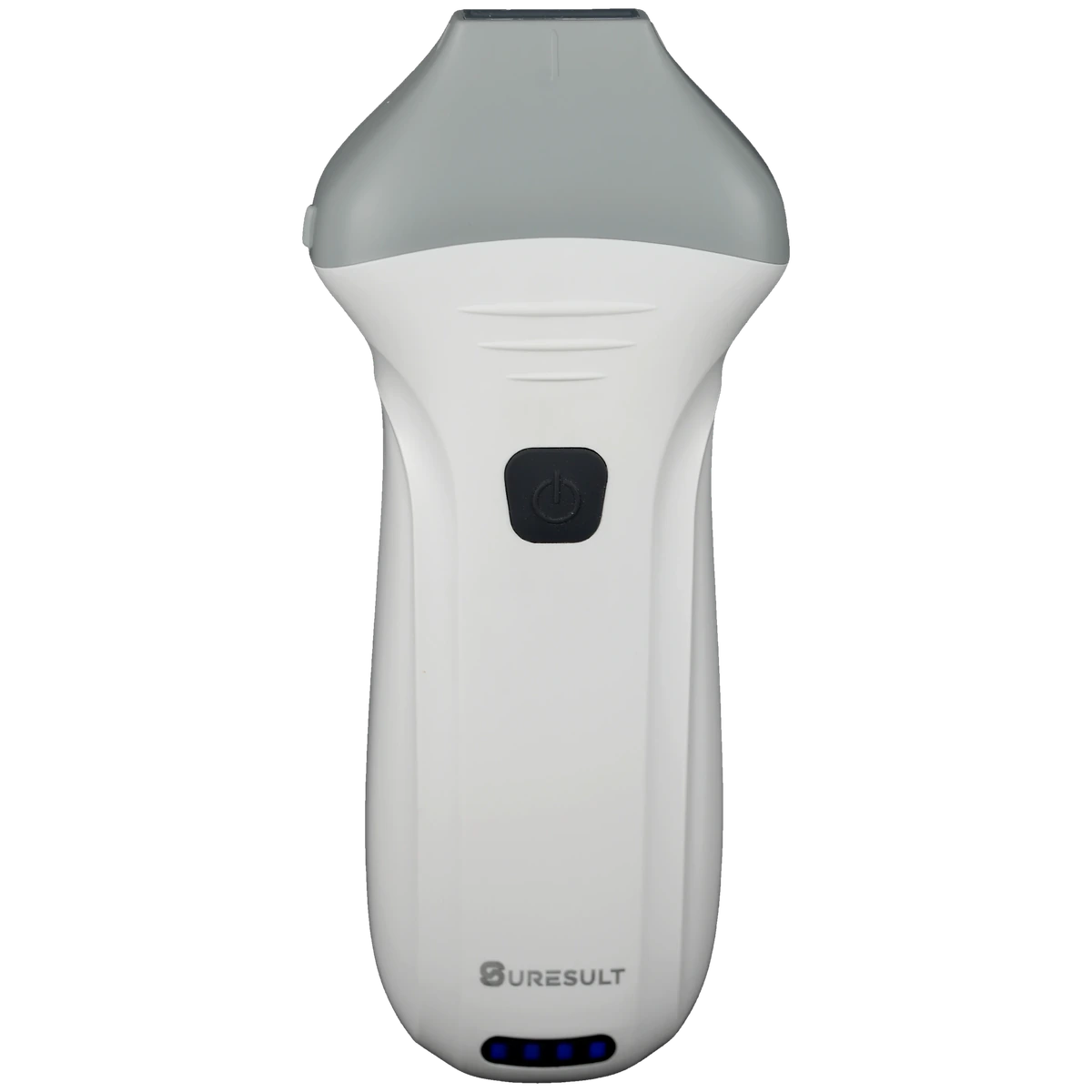 Bloqueios superficiais & pediátricosL20Pro
16/20 MHz permite distinguir nervos superficiais finos e pequenas estruturas anatômicas, onde o detalhe define o bloqueio.
$3,720 L20Pro · 256 elementosCompre agoraVer L20Pro →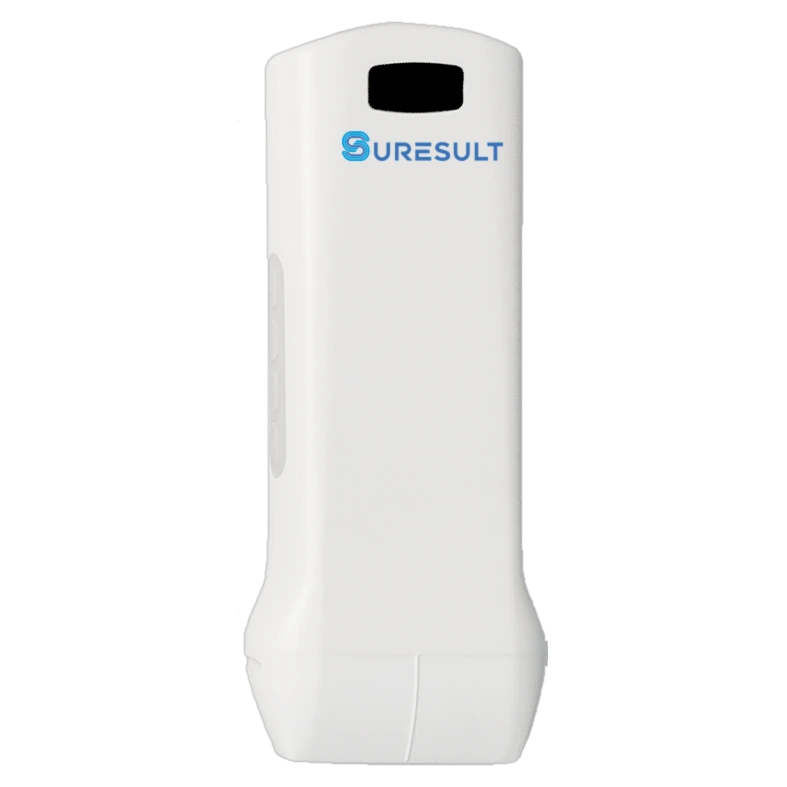 Para começar, priorize o orçamentoL10H
O modelo linear de 7.5/10 MHz atende à maioria dos bloqueios de plexos e planos fasciais com preço de entrada.
$2,325 L10H · linear de entradaCompre agoraVer L10H →Comparação de aparelhos de ultrassom
Seis modelos Suresult para bloqueios nervosos: de ultrassom cardíaco portátil Suresult em comparação
Deslize para ver todas as colunas →
| Modelo | Preço | Frequência | Profundidade | Melhor para |
|---|---|---|---|---|
 D3Ultra D3Ultra | $2,976 | 7.5/10 + 3.2/5 MHz | 20–100 mm linear | O aparelho para os doze bloqueios do atlas: dos superficiais ao ciático profundo |
 D3Pro D3Pro | $2,697 | 7.5/10 + 3.2/5 MHz | 20–80 mm linear | Três formatos com bateria de 3 horas para longas jornadas de bloqueios |
 L20Pro L20Pro | $3,720 | 16/20 MHz | 10/20/30/40 mm | Máximo detalhamento em bloqueios superficiais e pediátricos |
 L14Pro L14Pro | $3,441 | 10/14 MHz | 20/40/60/80 mm | Bloqueios e exames musculoesqueléticos e vasculares em um único transdutor |
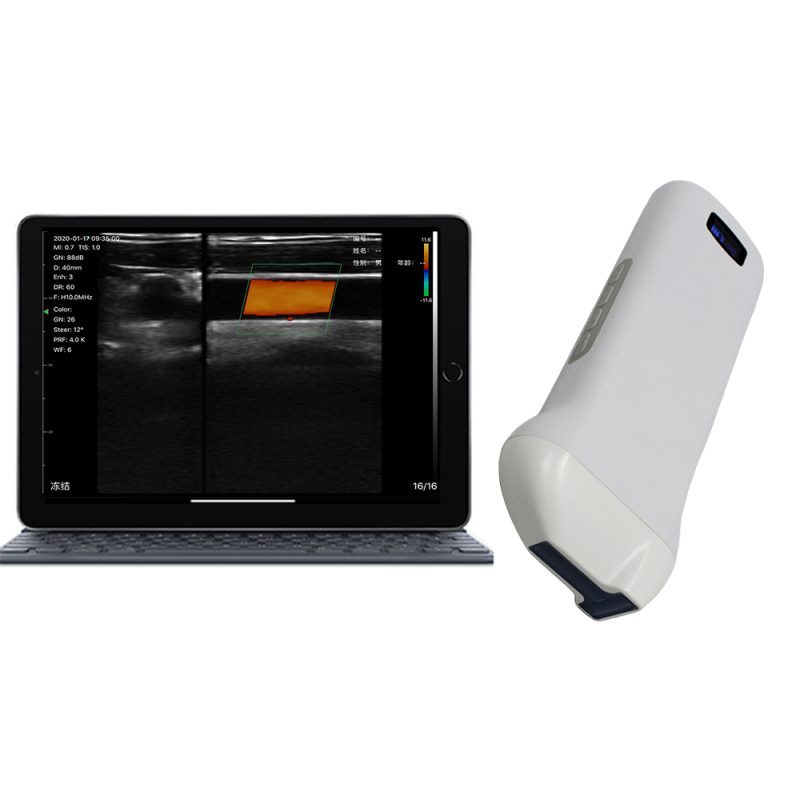 L10T L10T | $2,418 | 7.5/10 MHz | 20/40/60/100 mm | Visualização biplanar: agulha e alvo na mesma tela |
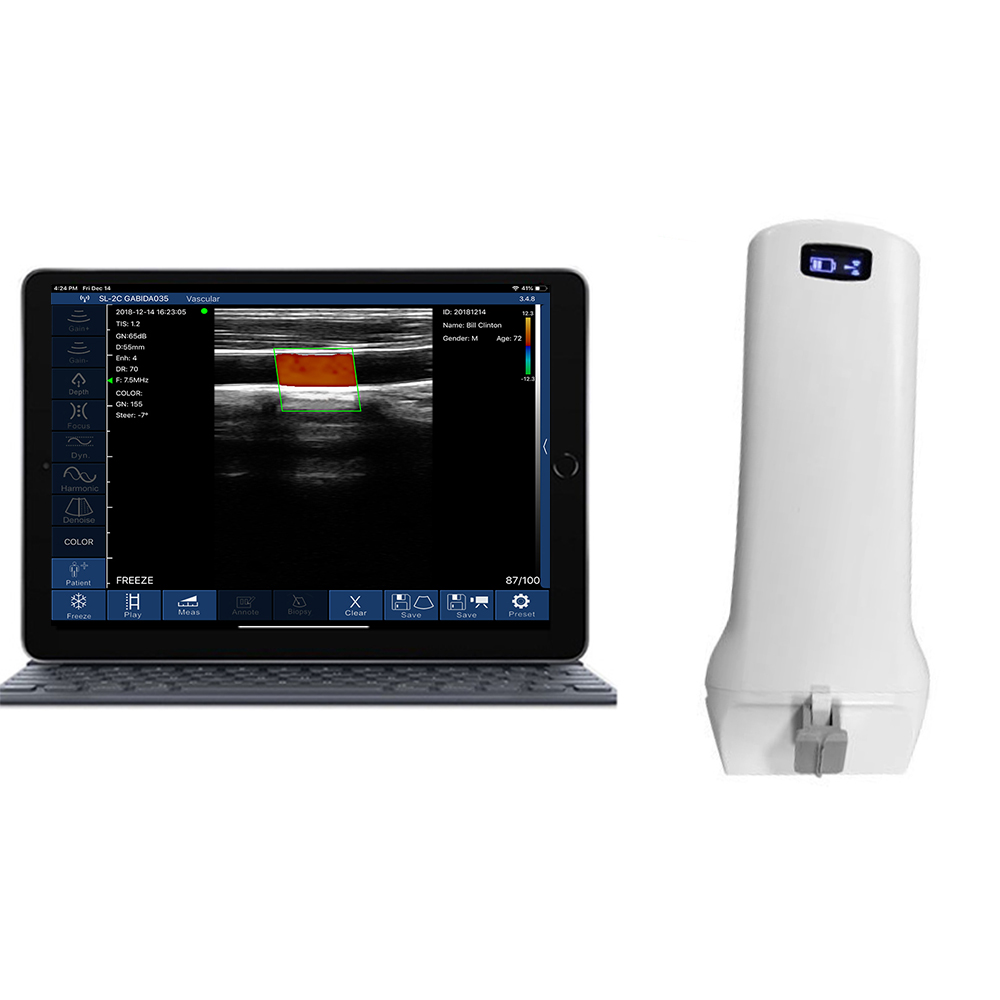 L10H L10H | $2,325 | 7.5/10 MHz | 20/40/60/100 mm | Linear com preço de entrada para plexos e planos fasciais |
Em comparação com as marcas conhecidas
Suresult vs Clarius, Butterfly e GE Vscan para bloqueios nervosos
Deslize para ver todas as colunas →
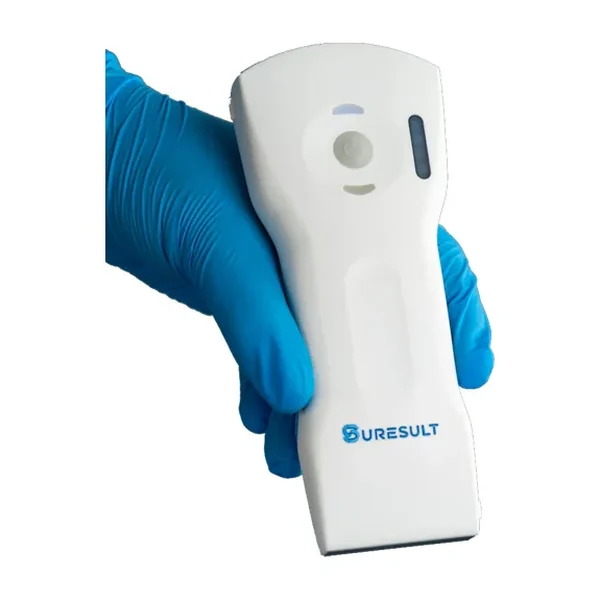 Suresult Suresult | 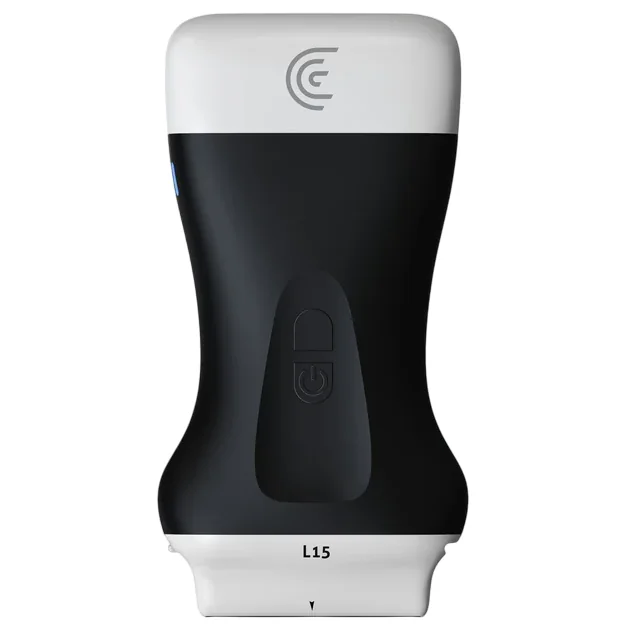 Clarius L15 HD3 Clarius L15 HD3 | 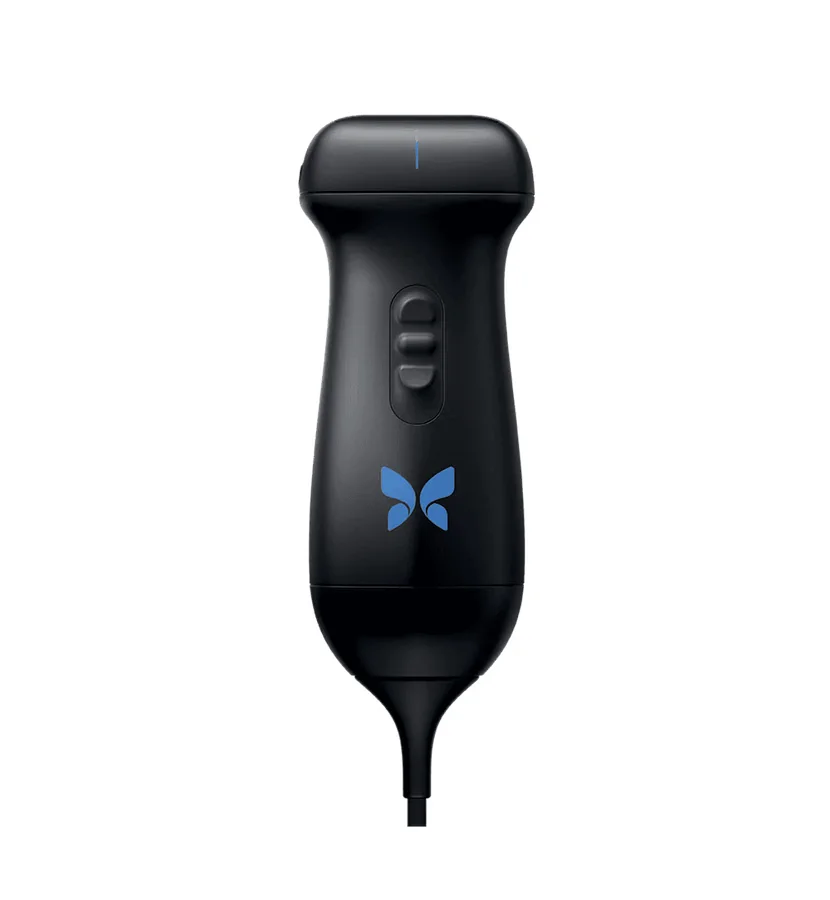 Butterfly iQ3 Butterfly iQ3 | 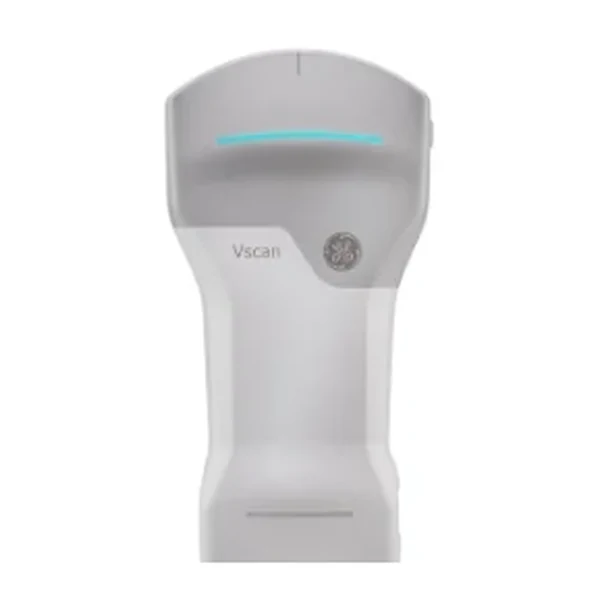 GE Vscan Air CL GE Vscan Air CL | |
|---|---|---|---|---|
| Imagens para bloqueios | Cabeça dupla: linear + convexa no D3Ultra | 5–15 MHz linear | 1–12 MHz, chip único | Lado linear de 3–12 MHz |
| Preço do aparelho | $2,325–$3,720, preço anunciado | Preço divulgado: $3,795 | $3,899 (preço publicado) | $4,999 anunciados |
| Assinatura | Nenhuma: software incluído | Assinatura de $695/ano, $1,785 por três anos ou $2,500 em pagamento único | Necessário: $299–$420/ano | Os recursos do Digital Tools exigem uma assinatura |
| Custo total até a entrega | Taxas alfandegárias + frete incluídos, 1–7 dias | Preço de tabela nos EUA; taxas alfandegárias e frete adicionais fora dos EUA | Preço de tabela nos EUA; taxas alfandegárias e frete adicionais fora dos EUA | Preço de tabela nos EUA; taxas alfandegárias e frete adicionais fora dos EUA |
| Registros regulatórios | FDA 510(k) · ISO 13485 · MDR da UE (CE) · TGA · ANVISA · Health Canada | FDA 510(k) | FDA 510(k) | FDA 510(k) |
Onde a Suresult se destaca
- Doze bloqueios, documentados.Cada captura do atlas acima é um exame realizado por um comprador, sem edição, agrupado por região do corpo, com os valores do guia de agulha na tela.
- Uso sem assinatura, com software gratuito.Doppler colorido, guias de agulha, medições e exportação DICOM vêm incluídos em todos os aparelhos.
- O preço de finalização da compra é o preço total com entrega.Impostos de importação e frete incluídos, entrega em 1–7 dias.
- Registrado onde você atua.FDA 510(k) · ISO 13485 · EU MDR (CE) · TGA · ANVISA · Health Canada.
As contas para cinco anos
A assinatura da Clarius de $695/ano totaliza $3,475 ao fim de cinco anos, antes de incluir o custo do aparelho. O plano obrigatório da Butterfly acrescenta $1,495–$2,100.
D3Ultra, pagamento únicoClarius L15 HD3: aparelho + assinatura= $3,475 apenas em taxas até o quinto ano
Três modelos, uma decisão
Não sabe qual modelo é adequado aos seus casos clínicos?
Uma conversa resulta em uma recomendação direta: a sonda Suresult adequada ou um simples “nenhuma das duas”.

D3Ultra
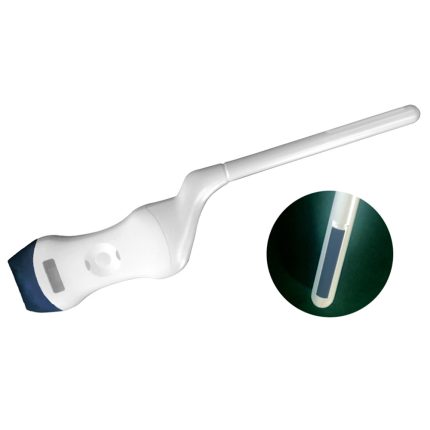
Ultrassom portátil multiuso D3Ultra convexo, linear e setorial
Frequência: Transdutor convexo / setorial 3.2/5.0MHz Transdutor linear 7.5/10MHz
Profundidade de varredura: Linear: 20-100 mm, convexo e setorial: 90-300 mm
Anestesiologia
comprar scanner

L14Pro
Transdutor linear de ultrassom sem fio Suresult L14Pro para imagem musculoesquelética – 10/14 MHz, 256 elementos
Frequência: 10/14 MHz
Profundidade de varredura: 20/40/60/80 mm
Anestesiologia
comprar scanner

D3Pro
Ultrassom portátil sem fio Suresult D3Pro – 3 em 1 convexo, linear e setorial, 192 elementos
Frequência: Transdutor convexo / setorial 3.2/5.0MHz, transdutor linear 7.5/10MHz
Profundidade de varredura: Transdutor convexo / setorial: 90-305 mm, transdutor linear: 20-80 mm
Anestesiologia
comprar scanner




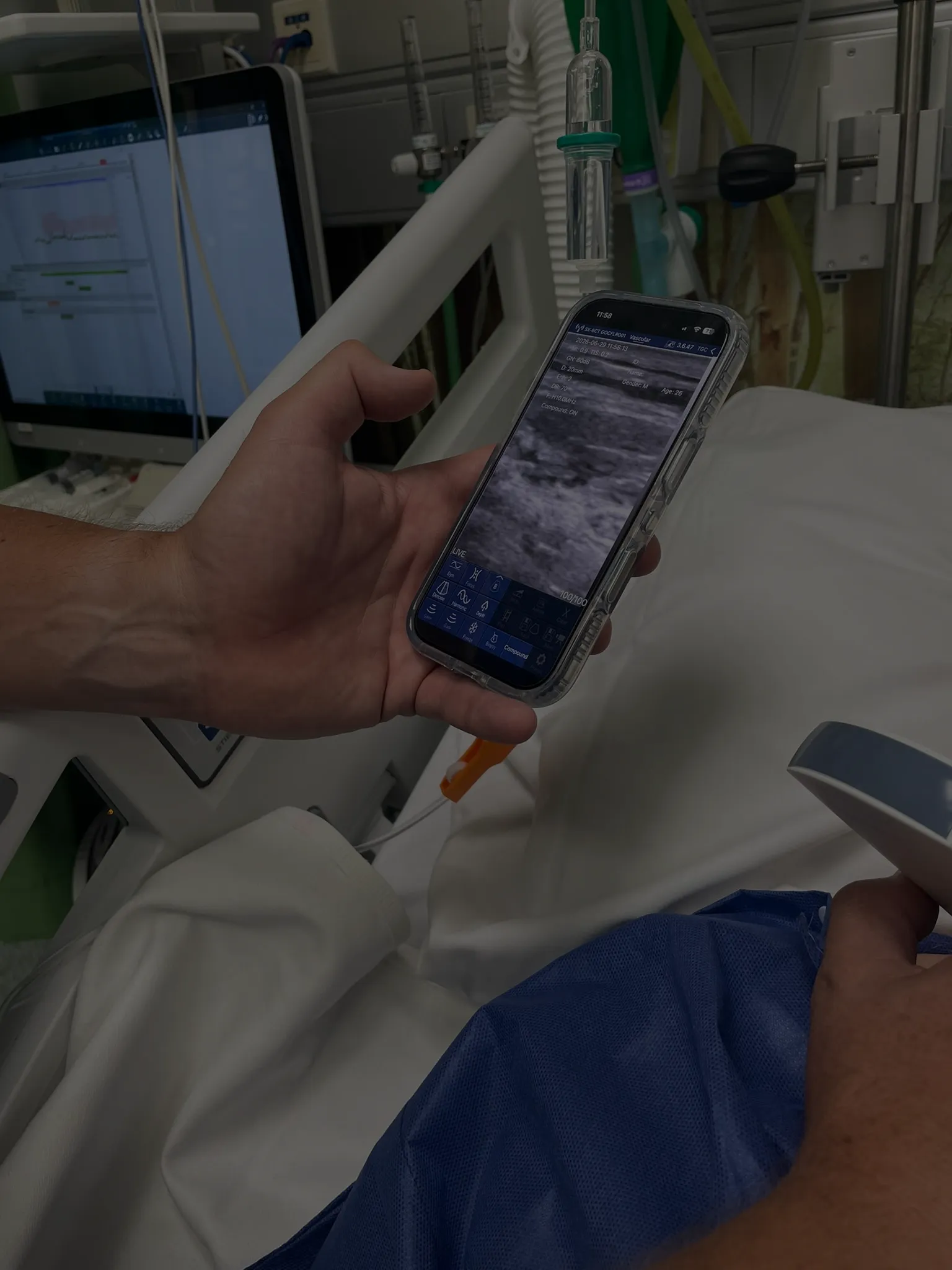
Orientação especializada
Fale com um especialista em aparelhos de ultrassom
Conte à Suresult sobre o seu fluxo de trabalho diário e receba uma recomendação personalizada de aparelho de ultrassom, acompanhada de um orçamento com tudo incluído.
- Consultoria gratuita para escolher o aparelho de ultrassom adequado — sondas, frequência e profundidade adequadas aos seus procedimentos
- Orçamento com tudo incluído — frete, desembaraço aduaneiro e impostos aplicáveis incluídos
- Entrega rápida — envio em até 24 horas, entrega porta a porta em 1 a 7 dias
- Não é necessária nenhuma assinatura de software — aplicativos para iOS, Android e Windows incluídos
- Devoluções em até 30 dias e suporte 24 horas por dia, 7 dias por semana
O chat ao vivo é iniciado aqui mesmo — sem formulários, sem espera.
