
L'atlante dei dodici blocchi presenta filmati clinici senza montaggio acquisiti con questa famiglia di dispositivi; l'immagine del flusso a colori proviene dall'archivio di riferimento Suresult ·La fiducia di 8.717 clinici →
Risposta rapida
Un ecografo per i blocchi nervosi è il sistema di imaging che visualizza il nervo bersaglio e guida l’ago verso di esso in tempo reale. Conferma inoltre la diffusione dell’anestetico locale attorno al nervo. Gli ecografi palmari wireless a doppia testina, come Suresult D3Ultra, coprono oggi i blocchi superficiali dei plessi e le finestre profonde come quella dello sciatico con approccio anteriore, procedure che un tempo richiedevano un sistema carrellato.
- Due testine: lineare per i plessi superficiali, convex per le finestre profonde del nervo sciatico
- Guide per l'ago su schermo: in-plane e out-of-plane, con indicazioni di posizione e angolo
- Qualità dell’immagine adatta all’insegnamento: ogni blocco salvato come cine loop e in formato DICOM
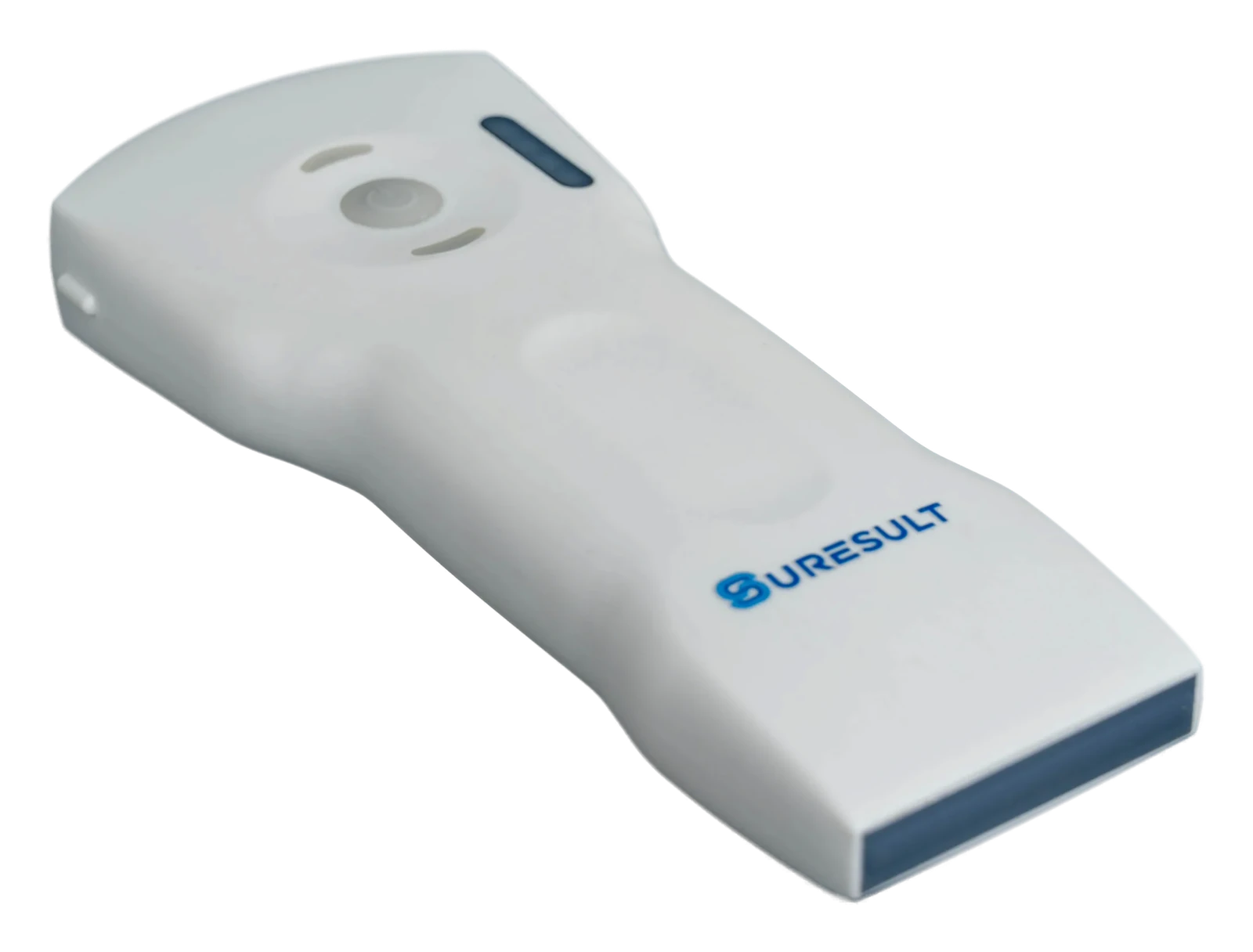
L’atlante dei blocchi
Dodici blocchi nervosi, visualizzati con un solo ecografo palmare
“È un eccellente ecografo palmare per eseguire l’anestesia locoregionale… Pratico l’anestesia locoregionale in chirurgia ambulatoriale, in chirurgia maggiore ospedaliera, in terapia intensiva e nella medicina d'urgenza preospedaliera.”
— David Heimpel, che ha acquisito le immagini di tutti i dodici blocchi qui sotto con il proprio D3UltraAcquisizioni cliniche originali · valori della guida dell’ago su ogni fotogramma · selezioni un’immagine per ingrandirla
Immagini acquisite da un anestesista tedesco con il proprio dispositivo. Le etichette sullo schermo sono in tedesco: Winkel = angolo dell’ago, Posizione = punto d’ingresso dell’ago rispetto alla sonda, in mm.
Spalla & braccio1 blocco
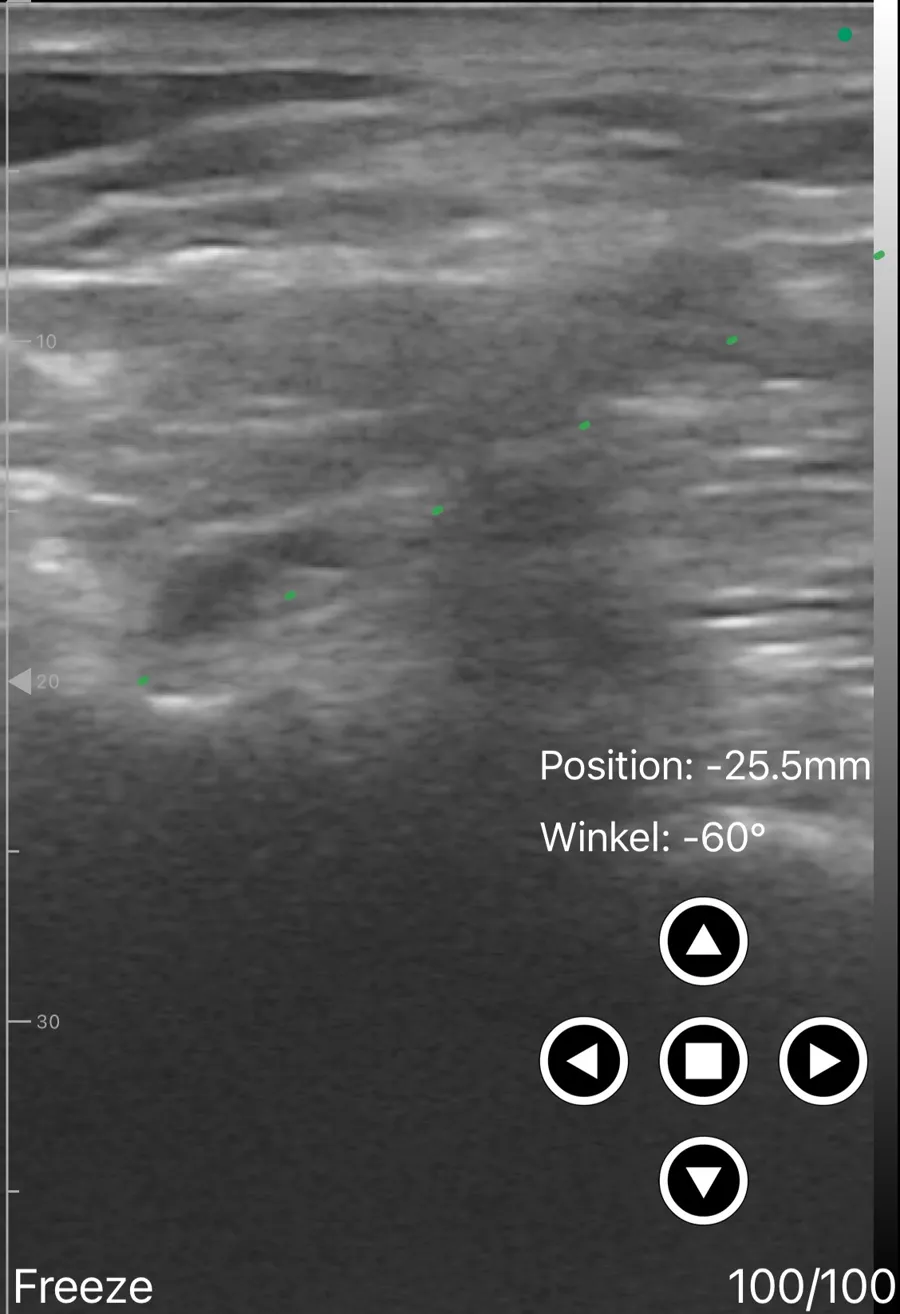
Blocco interscalenico del plesso brachiale
Le radici tra i muscoli scaleni: chirurgia della spalla e del braccio. Superficiali a 1–3 cm, visualizzate con sonda lineare ad alta frequenza.
Torace & tronco4 blocchi
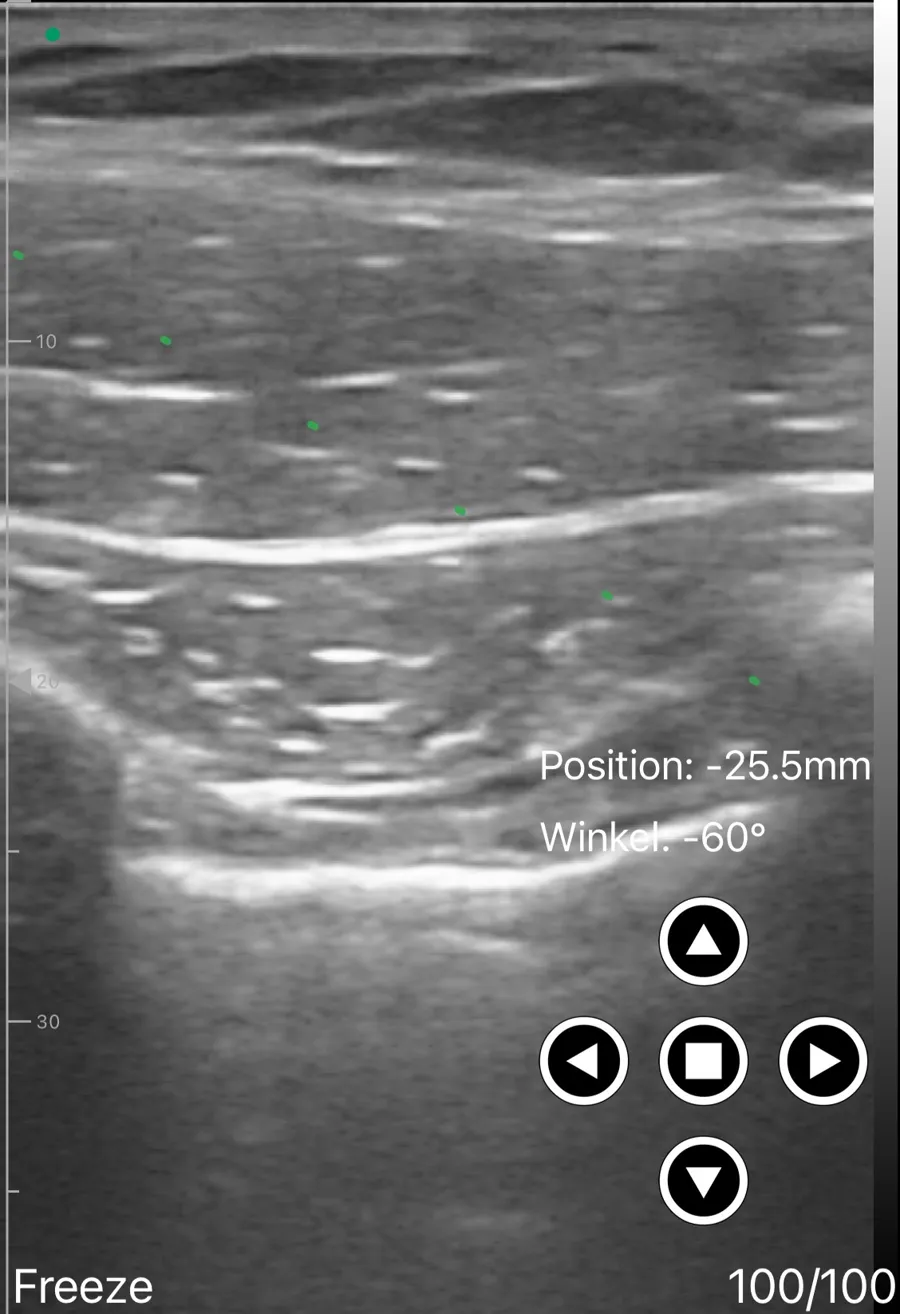
Blocco PECS
Nervi pettorali per la chirurgia mammaria e della parete toracica anteriore. Piani fasciali tra grande pettorale, piccolo pettorale e dentato anteriore, visualizzati con la testina lineare.
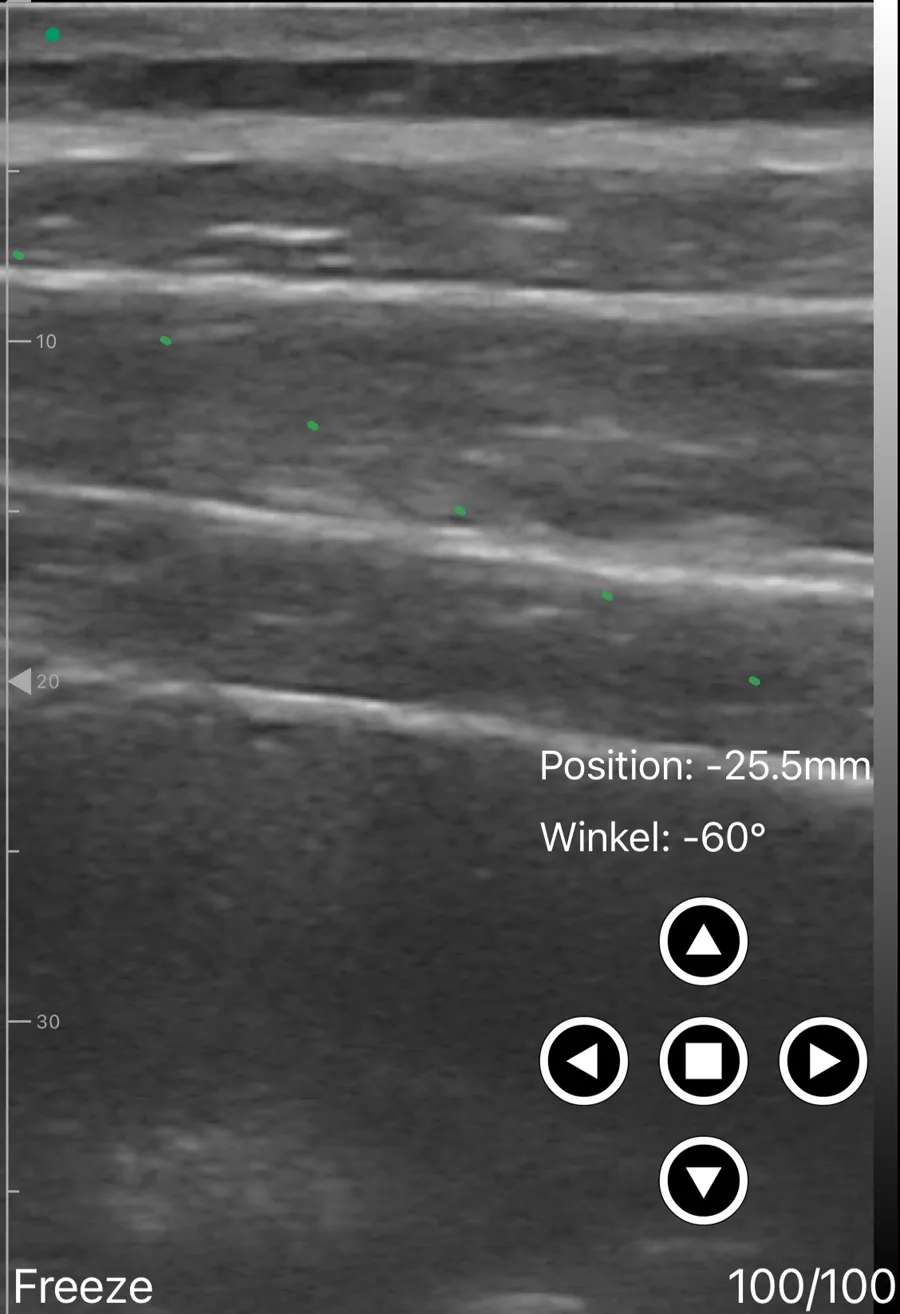
Blocco TAP
Analgesia della parete addominale. Il piano tra obliquo interno e trasverso dell’addome, visualizzato con la testina lineare sulla parete laterale dell’addome.
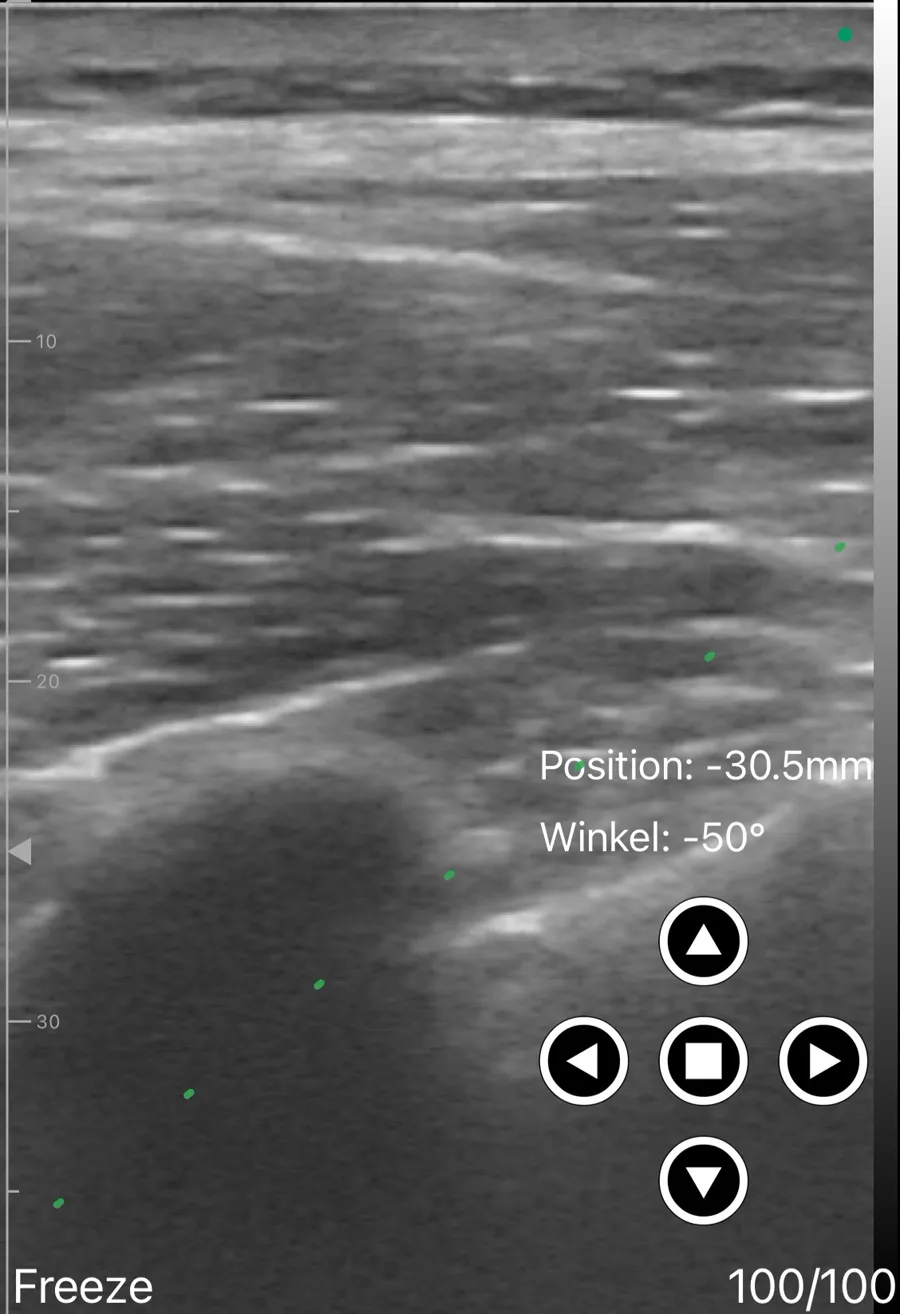
Blocco paravertebrale
Analgesia toracica segmentaria accanto alla colonna vertebrale. Lo spazio si trova in profondità rispetto al processo trasverso e lateralmente al corpo vertebrale, a una profondità raggiungibile dalla sonda lineare nella maggior parte degli adulti.
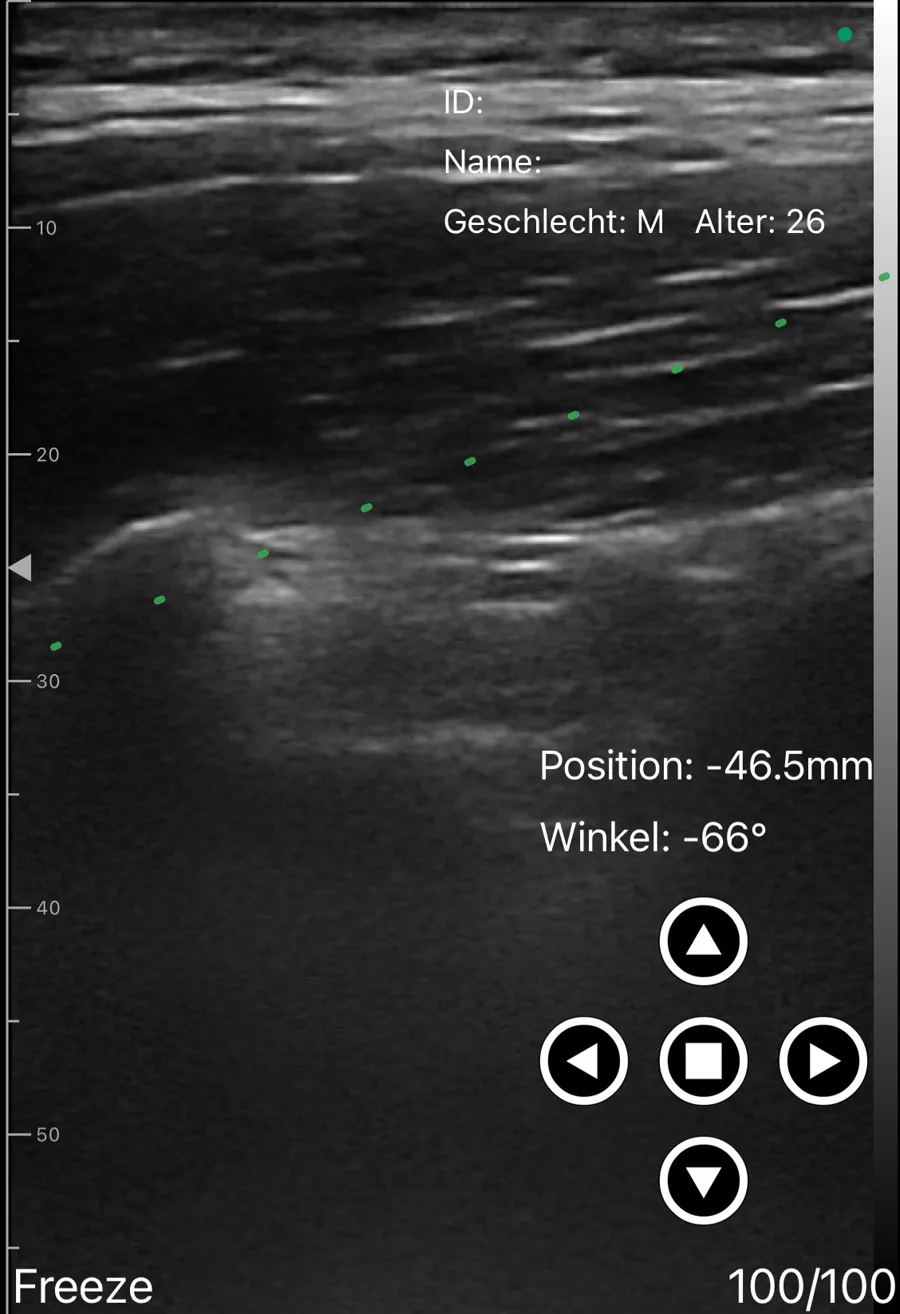
Blocco del piano del muscolo erettore della colonna
Il piano fasciale ESP: un solo livello, ampia diffusione toracica. In profondità rispetto al muscolo erettore della colonna, a livello del processo trasverso. Sonda lineare o convex in base alla corporatura.
Anca & bacino3 blocchi
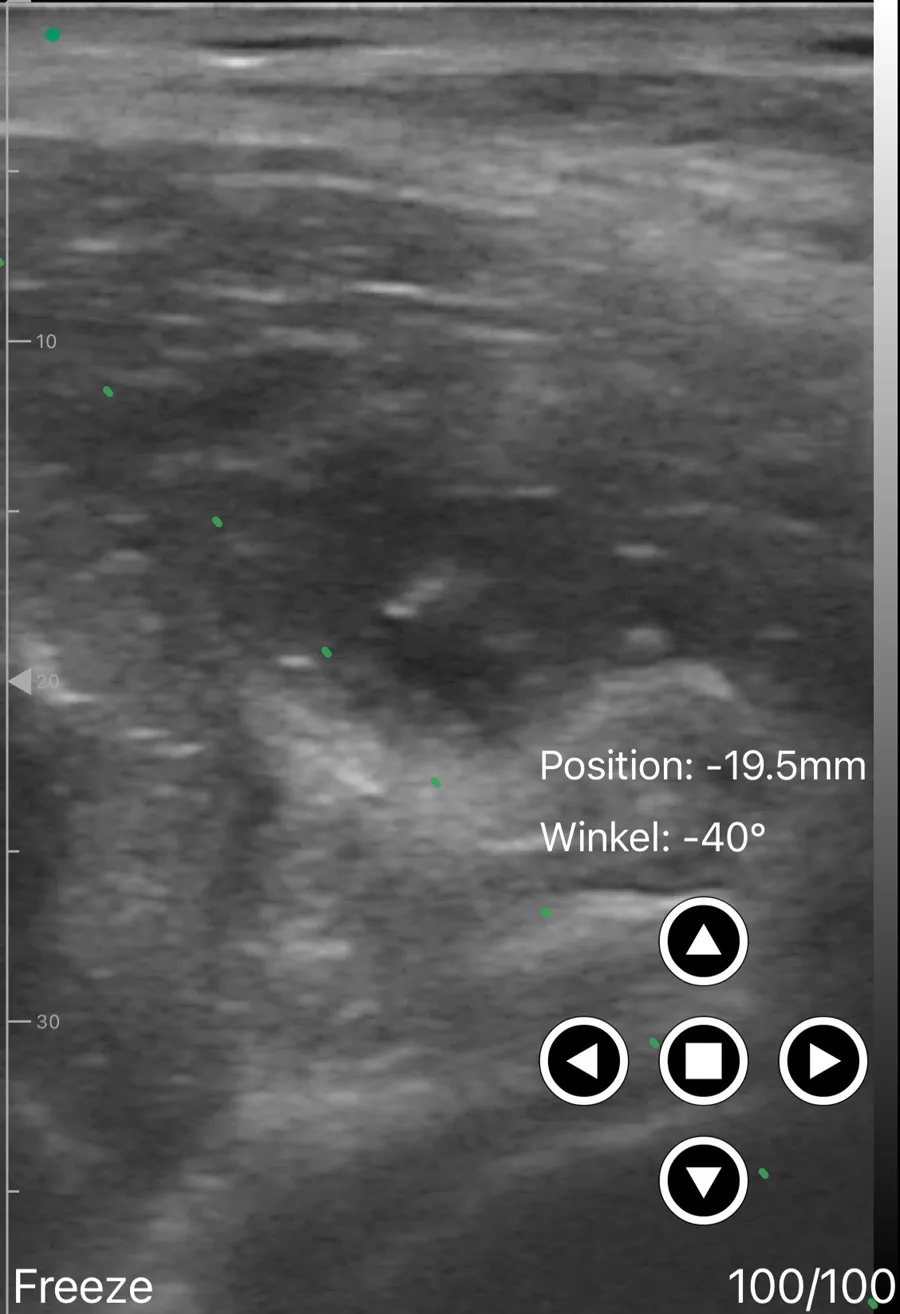
Blocco PENG
Gruppo nervoso pericapsulare per le fratture dell’anca e la chirurgia dell’anca. Tra la spina iliaca antero-inferiore (AIIS) e l’eminenza ileopubica, una finestra più profonda che favorisce l’uso della testina convex nei pazienti di corporatura robusta.
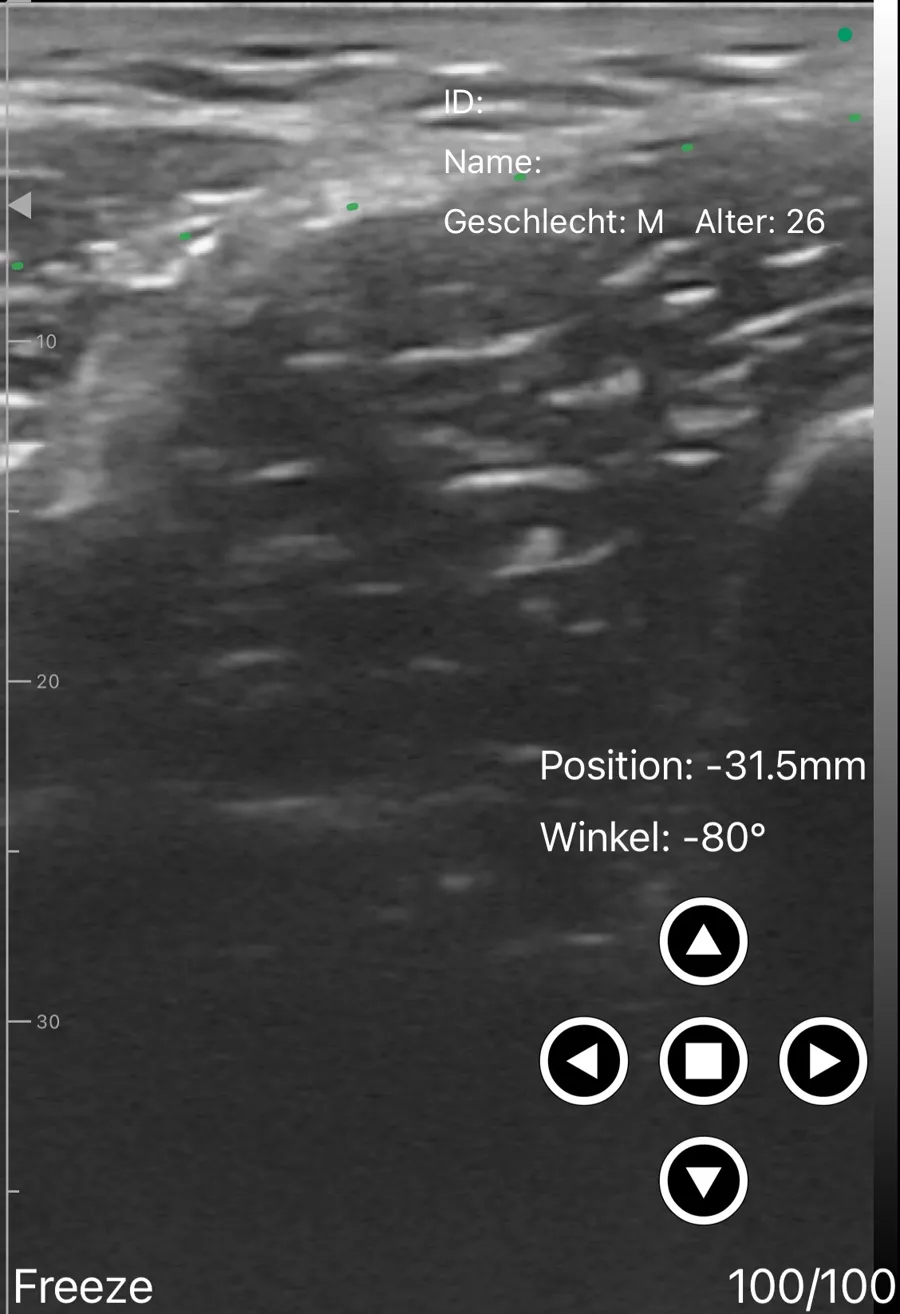
Blocco sovrainguinale della fascia iliaca
L’approccio alto alla fascia iliaca per la frattura dell’anca e la chirurgia dell’anca. Sopra il legamento inguinale, sotto la fascia iliaca nella fossa iliaca; testina lineare nella maggior parte delle corporature.
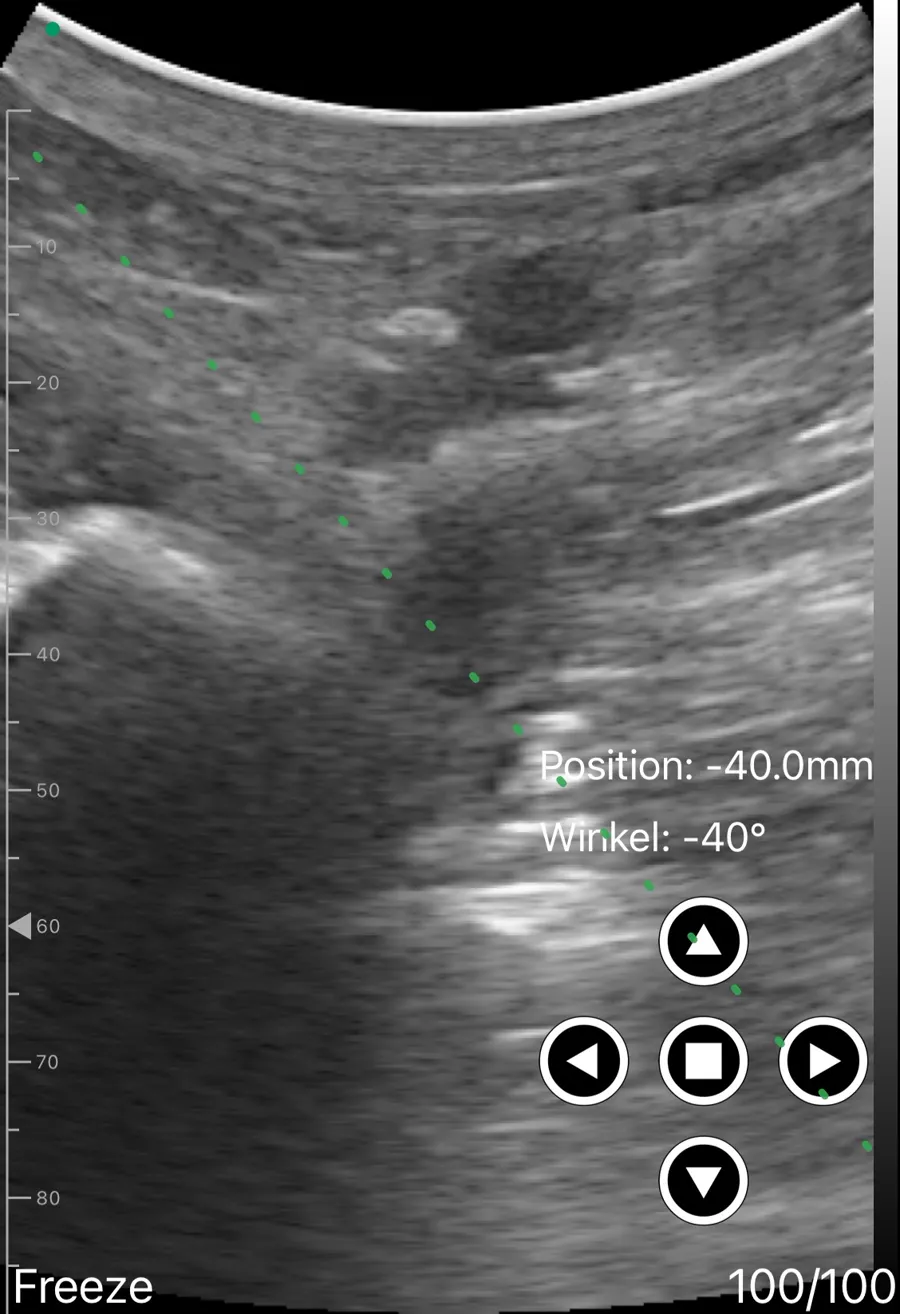
Blocco prossimale del nervo sciatico (approccio anteriore)
La finestra anteriore profonda sul nervo sciatico prossimale. A 6–10 cm, è la finestra più profonda di questa pagina: il campo d’impiego della testina convex.
Ginocchio & gamba4 blocchi
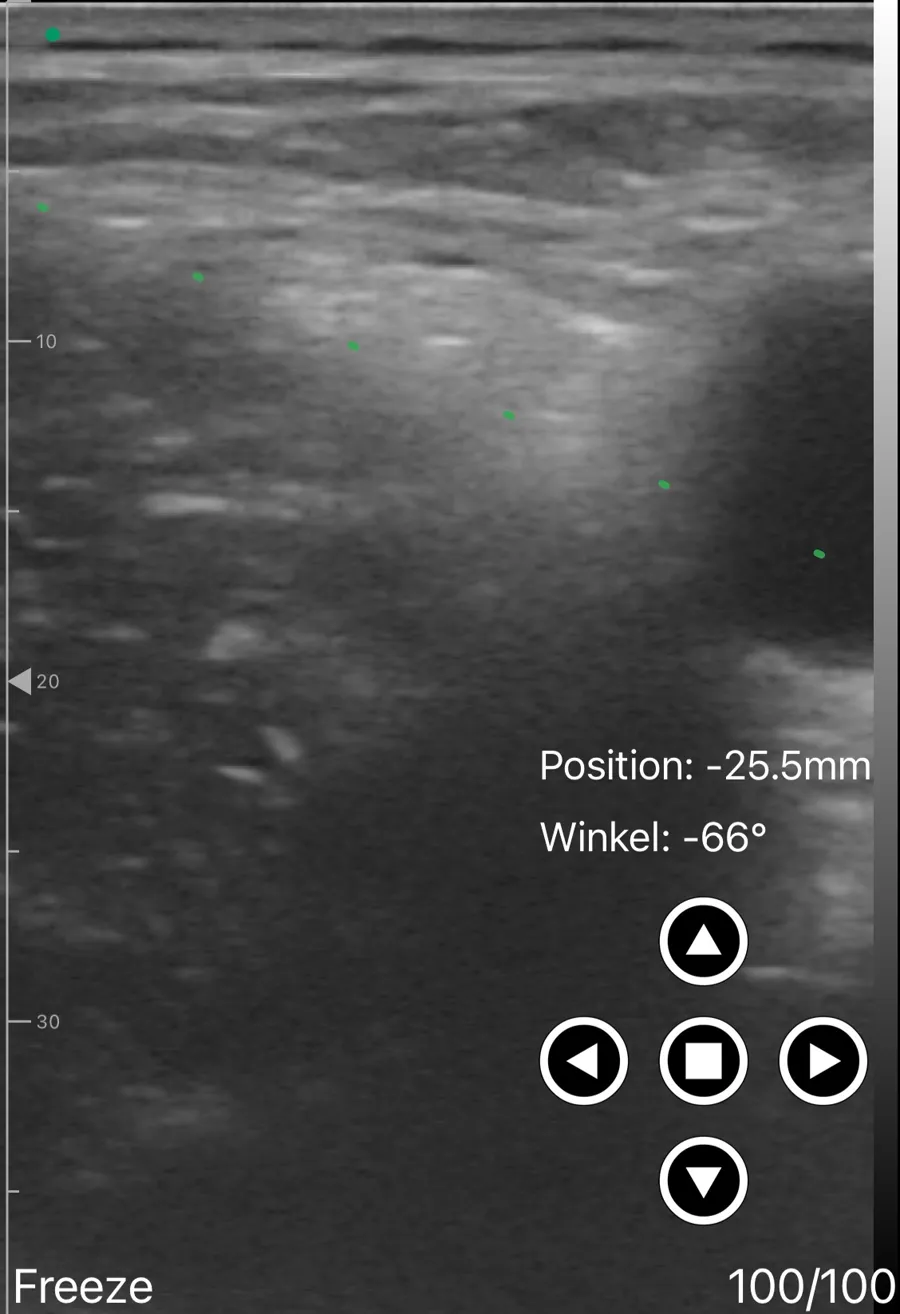
Blocco del nervo femorale
Chirurgia del ginocchio e della coscia; il nervo si trova lateralmente all’arteria femorale, appena sotto il legamento inguinale. Superficiale, con la testina lineare.
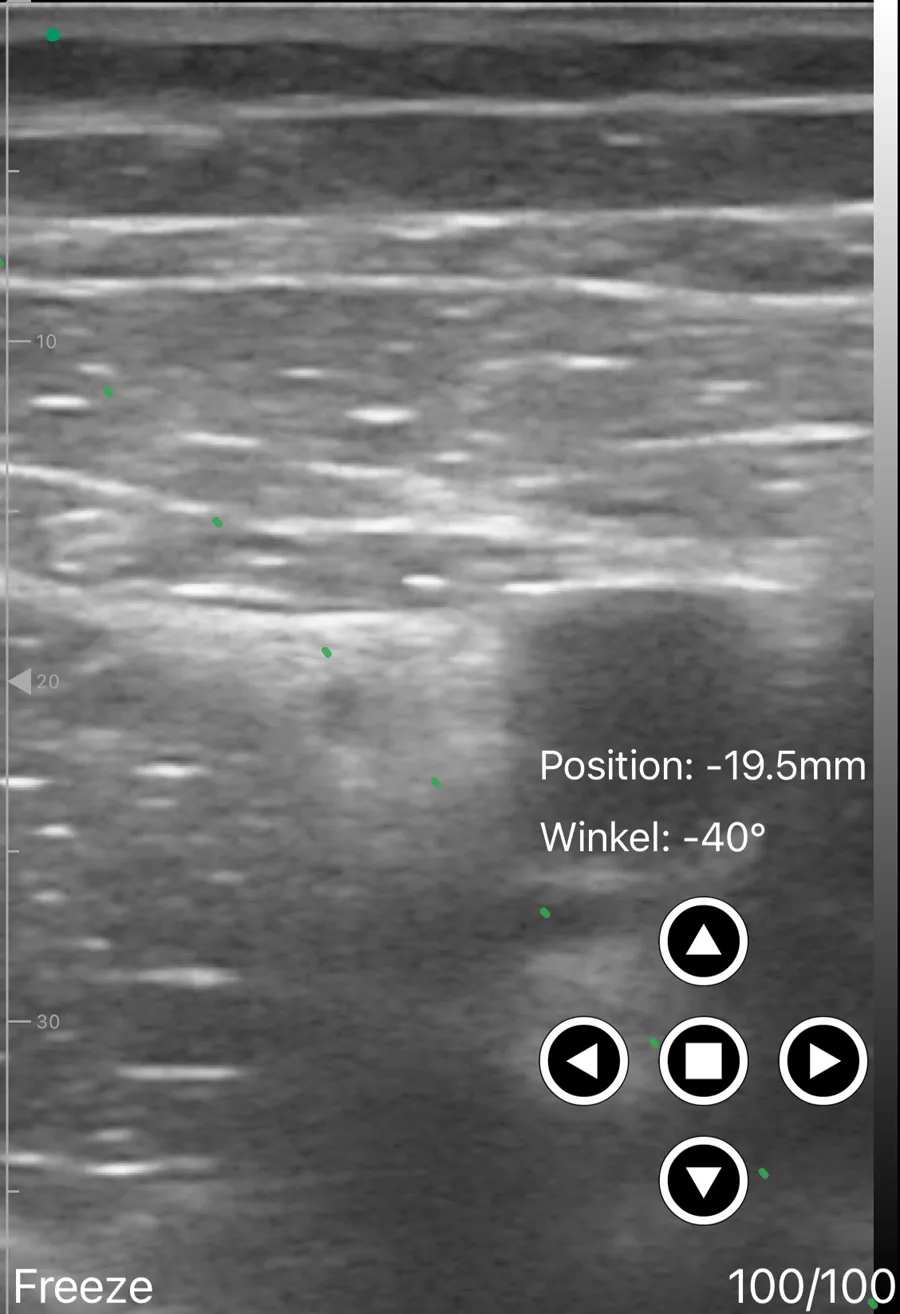
Blocco del canale degli adduttori / del nervo safeno
Il nervo safeno nel canale degli adduttori: analgesia con risparmio motorio per la chirurgia del ginocchio. A metà coscia, sotto il sartorio, accanto ai vasi femorali, con la testina lineare.
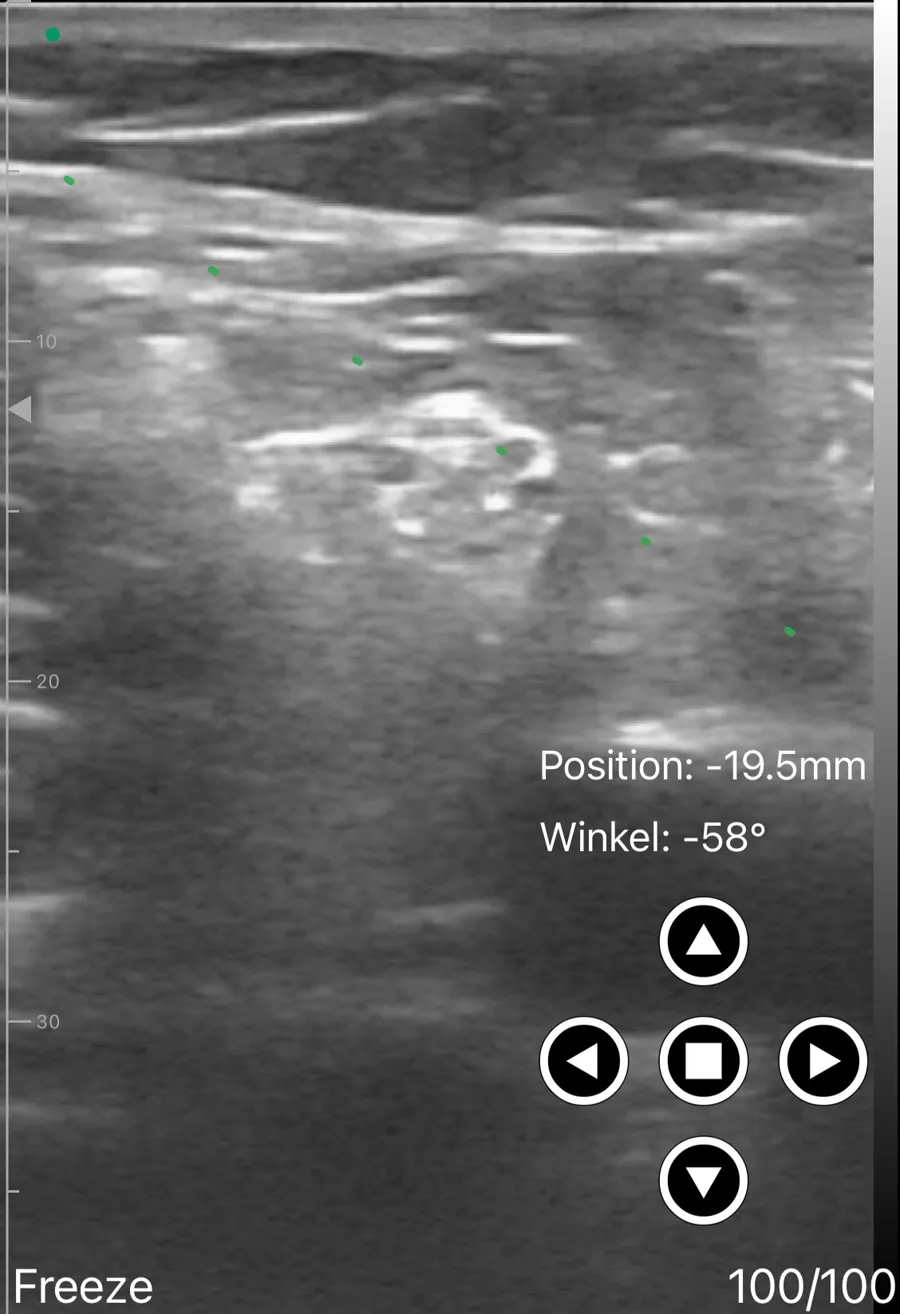
Blocco distale del nervo sciatico
Il nervo sciatico appena prima della biforcazione nei nervi tibiale e peroneo comune, sopra la piega poplitea. Testina lineare a profondità moderata.
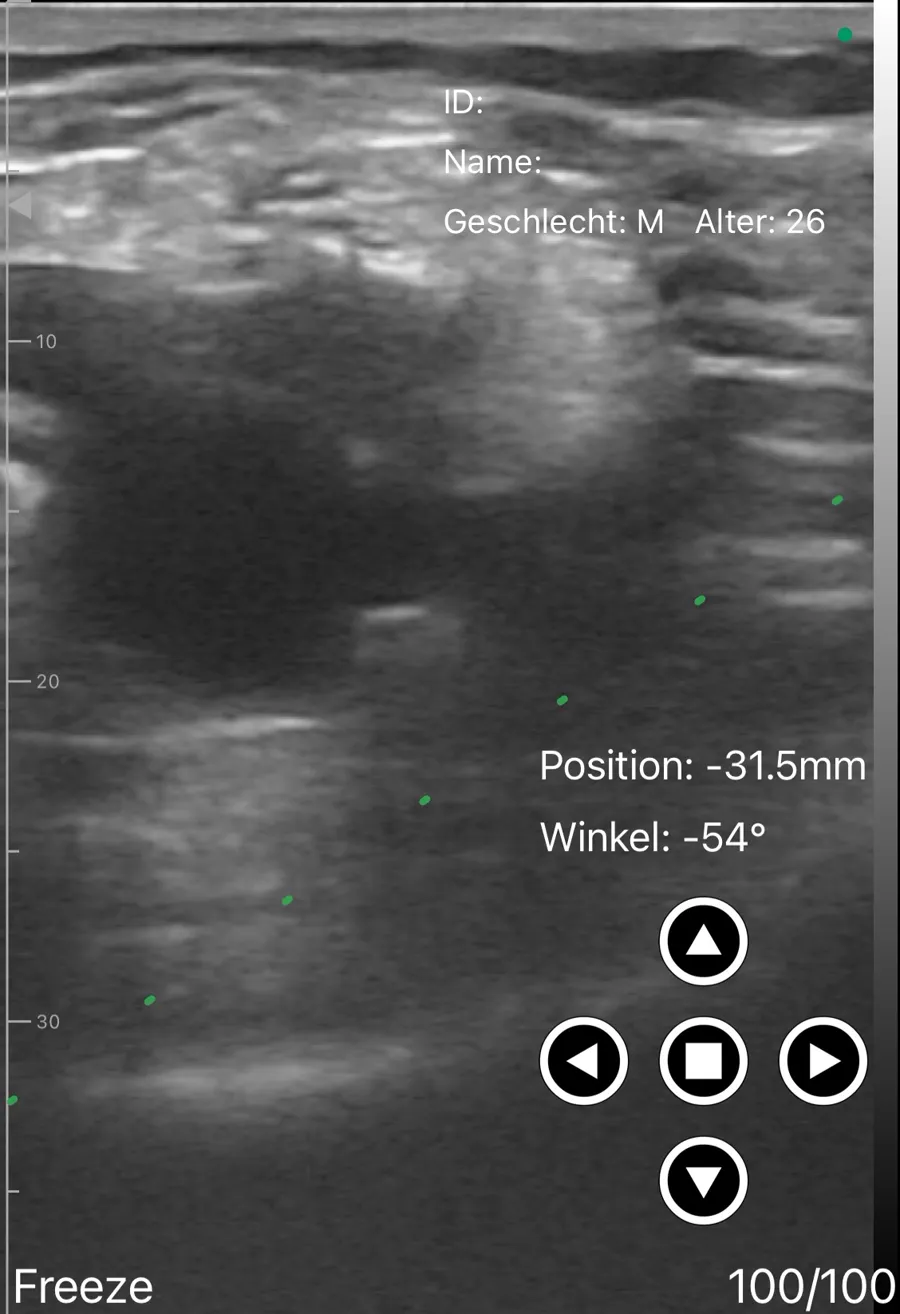
Blocco IPACK
Analgesia della regione posteriore del ginocchio dopo artroprotesi di ginocchio. L’anestetico locale viene depositato tra l’arteria poplitea e la capsula posteriore, a livello dei condili femorali.
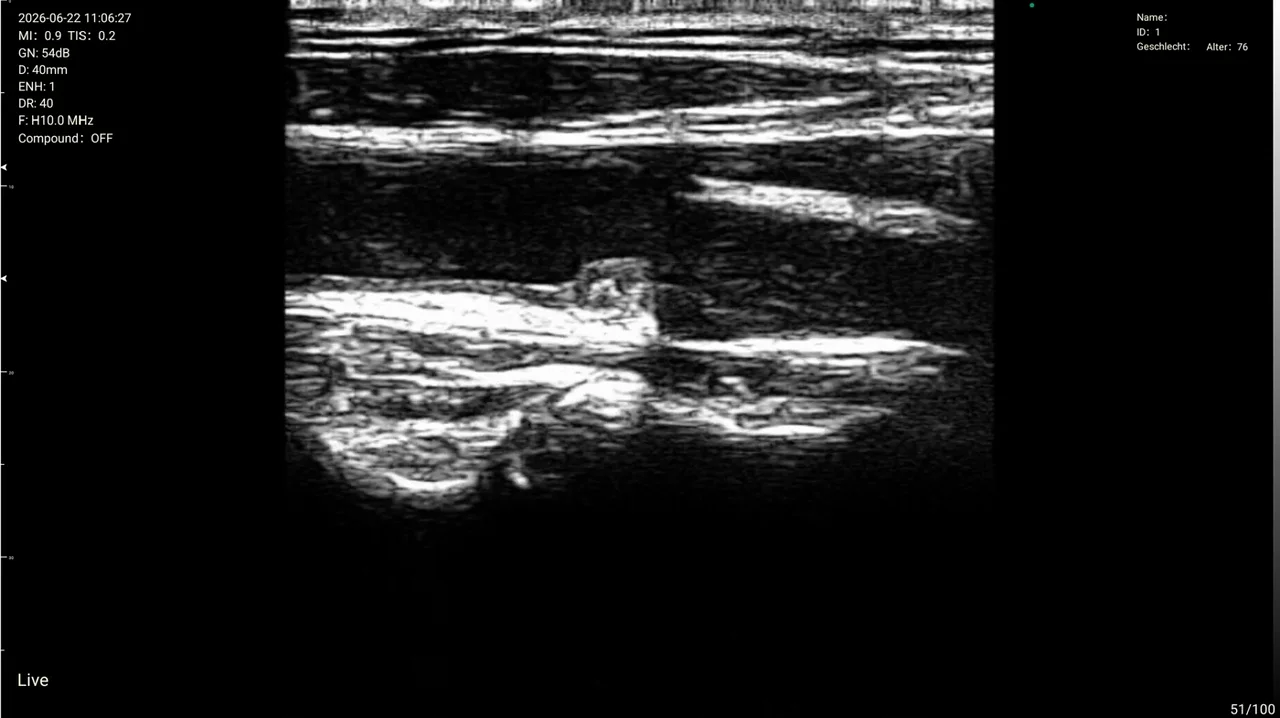
Selezioni una scheda per cambiare acquisizione
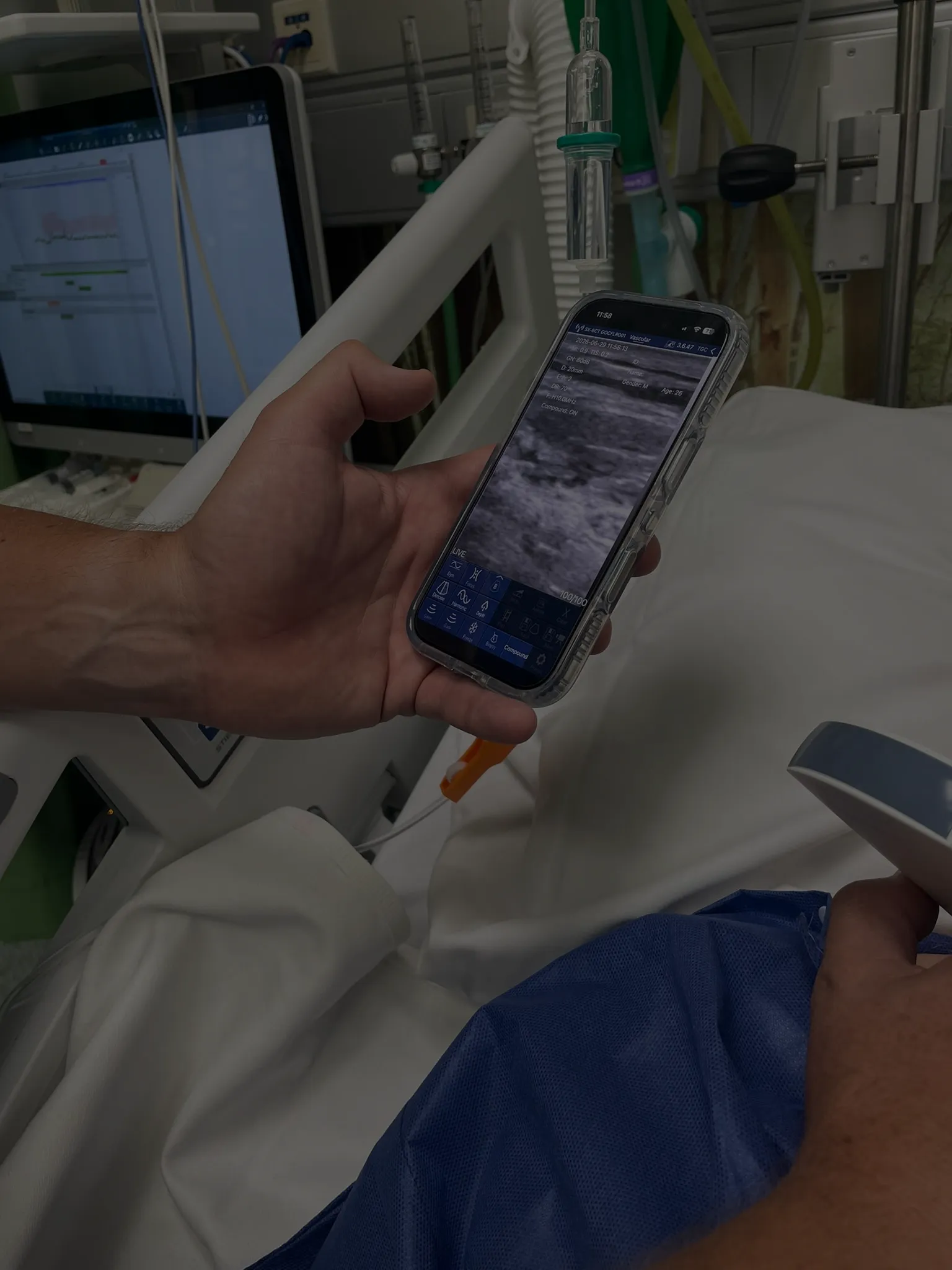
Riprese cliniche reali: immagini dei plessi e passaggi dell’ago durante un’intera giornata di anestesia regionale.
Fondamenti della tecnica
Come si eseguono i blocchi nervosi ecoguidati con un ecografo palmare
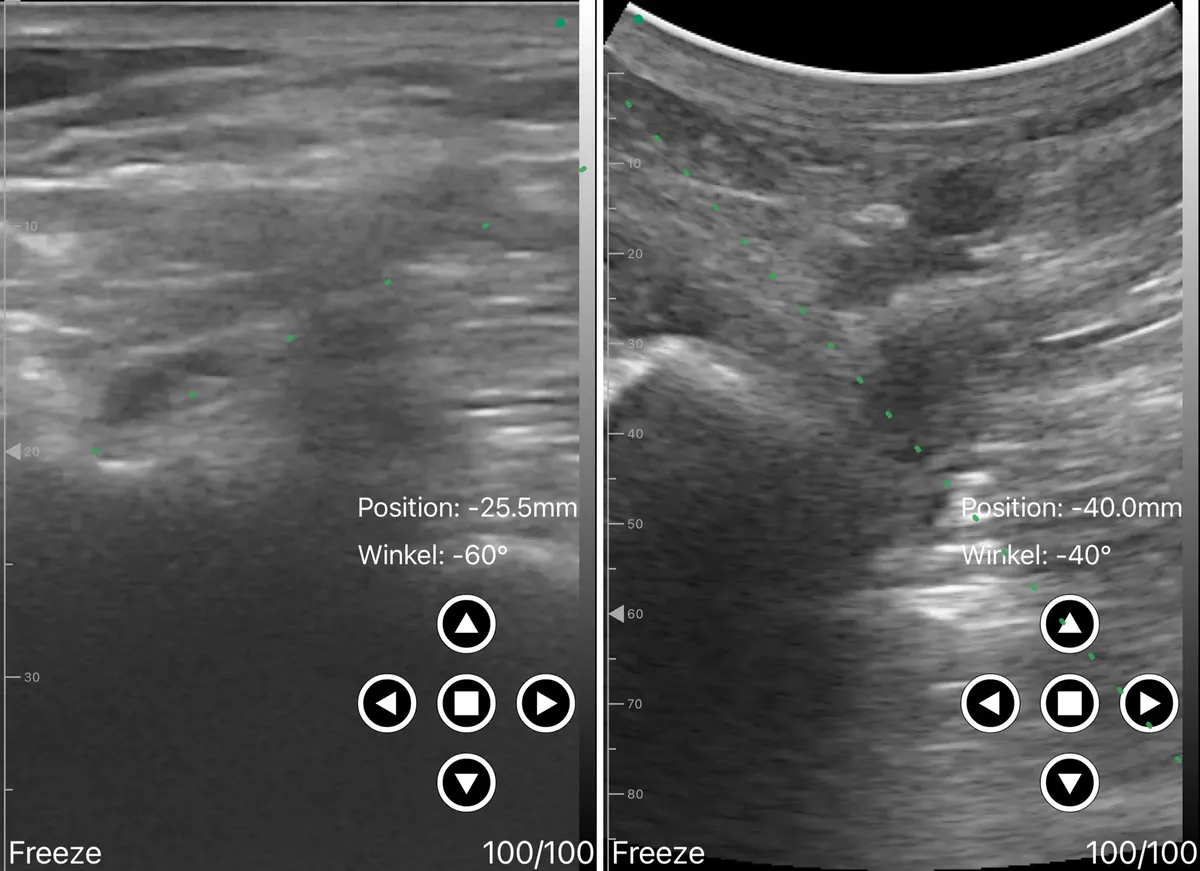 Scelga la testina in base alla profondità.
Per i blocchi superficiali dei plessi si usa la testina lineare; per le finestre profonde sul nervo sciatico si usa la testina convex.
Lineare e convex, un solo D3Ultra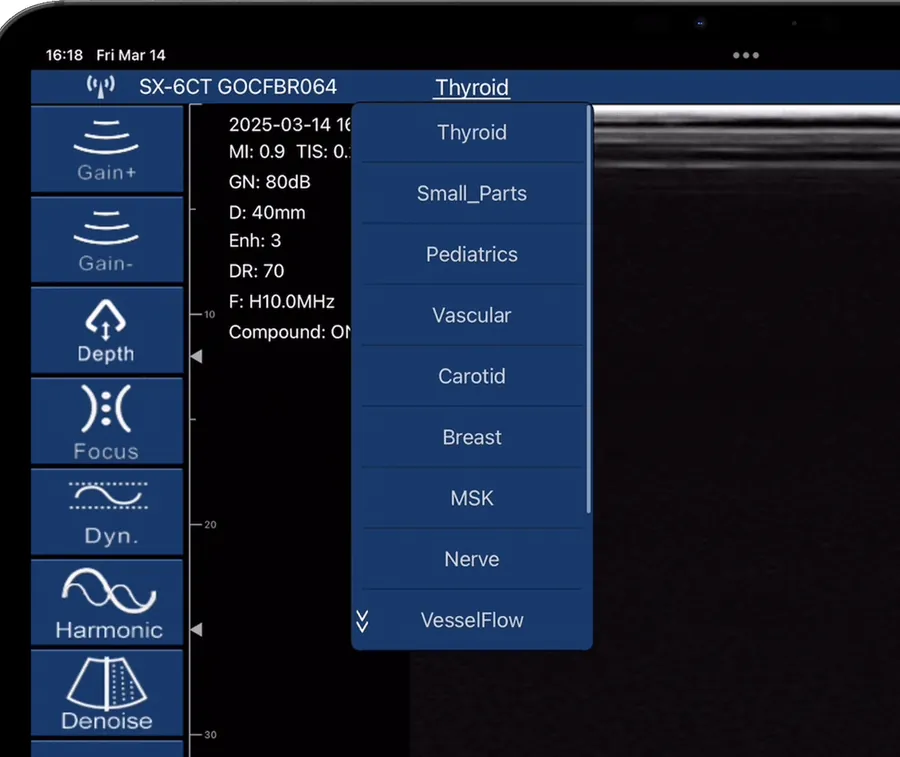 Imposti prima profondità e preset.
Parta dal preset Nervi e imposti la profondità appena oltre il piano bersaglio prima di introdurre l’ago.
Elenco dei preset nell’app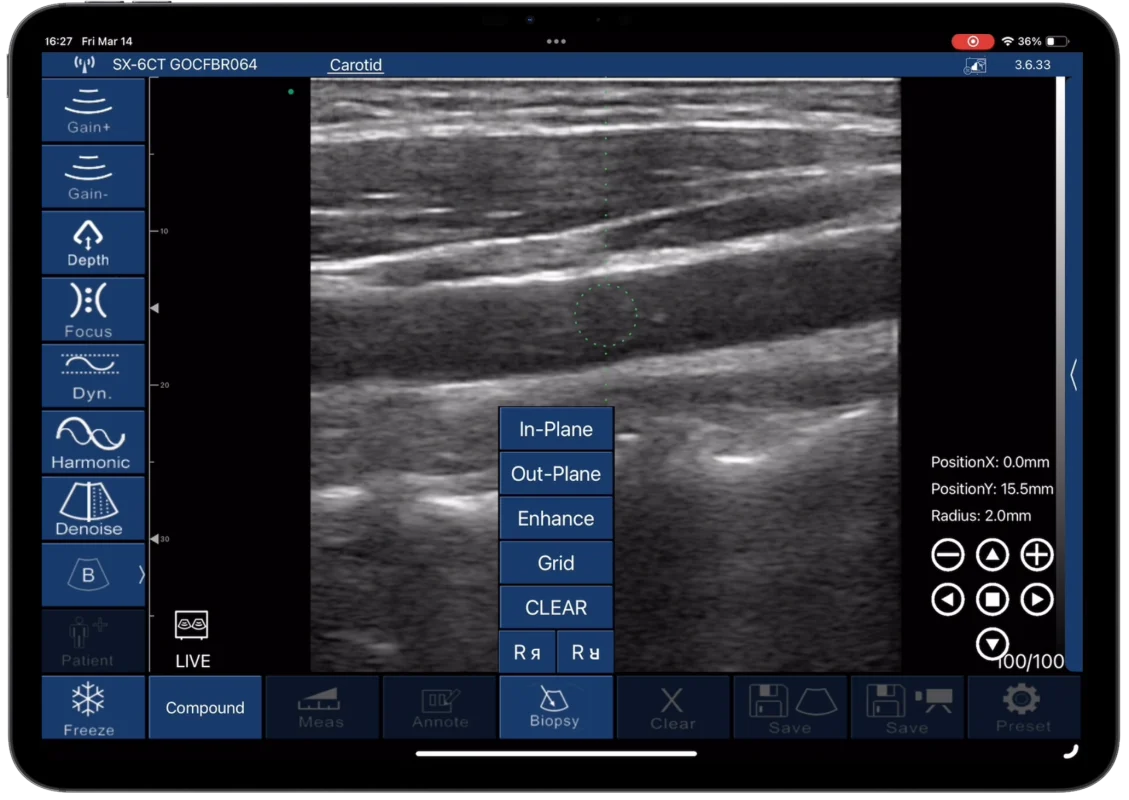 Mantenga l’ago nel piano di scansione.
Avanzi lungo l’asse longitudinale della sonda, mantenendo visibile la punta; la guida sullo schermo e l’indicazione dell’angolo mostrano la traiettoria pianificata.
Indicazioni della guida dell’ago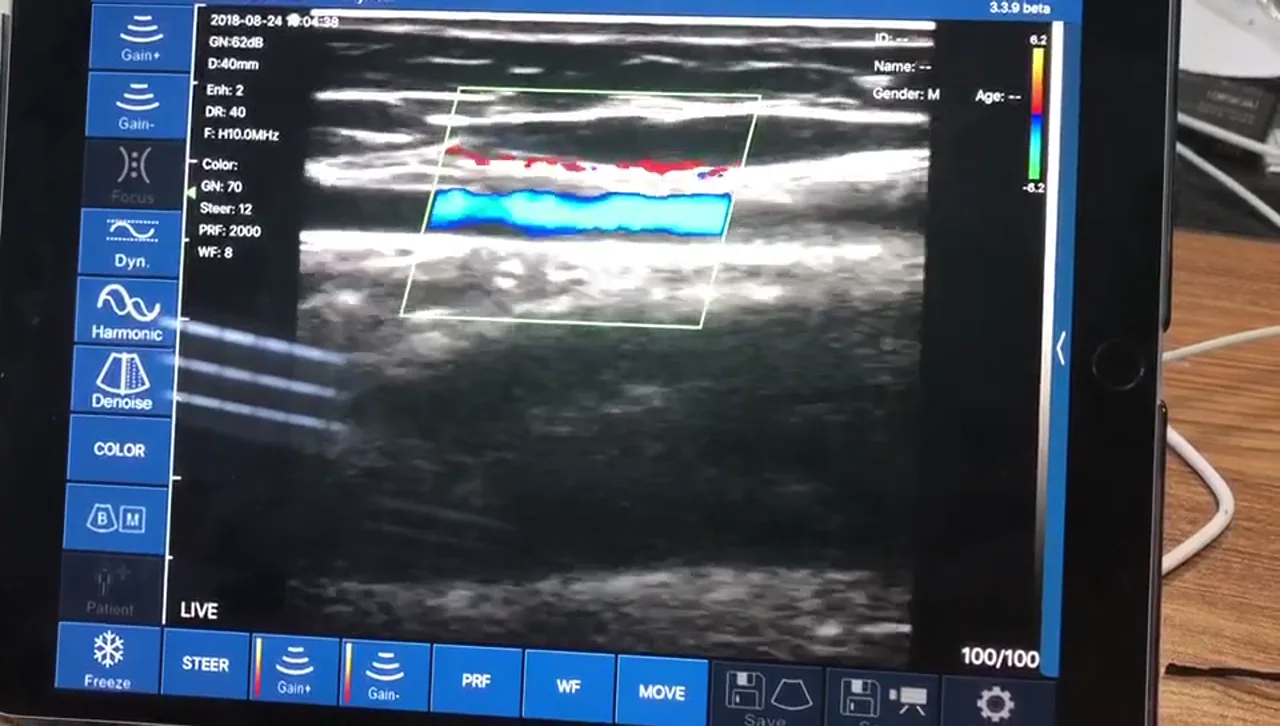 Confermi la diffusione.
Il color Doppler prima del passaggio dell’ago mostra gli eventuali vasi lungo la traiettoria; la diffusione dell’anestetico locale intorno al nervo deve essere visibile.
Flusso a colori, libreria di riferimento Suresult
Cosa dice la ricerca
Le evidenze per blocchi nervosi ecoguidati
- Maggiore successo, insorgenza più rapida.
Una metanalisi del 2009 pubblicata sul British Journal of Anaesthesia ha rilevato che la guida ecografica riduceva di oltre la metà i fallimenti dei blocchi rispetto alla neurostimolazione (rischio relativo 0,41). L’insorgenza era più rapida del 29% e la durata dei blocchi maggiore del 25%.
Abrahams et al., Br J Anaesth 2009 - Meno punture vascolari.
Una revisione Cochrane del 2015 sui blocchi degli arti ha rilevato meno punture vascolari accidentali e meno parestesie con la guida ecografica.
Lewis et al., Cochrane 2015 - Minore rischio di tossicità.
Uno studio del 2013 basato su un registro di 25.336 blocchi nervosi in Australia e Nuova Zelanda ha associato la guida ecografica a un tasso inferiore di tossicità sistemica da anestetici locali (LAST).
Barrington & Kluger, RAPM 2013
Scelga il Suo modello
Il miglior ecografo per anestesisti dipende dai blocchi che esegue più spesso
Il più sceltoL’anestesia regionale è la Sua attività quotidianaD3Ultra
L’anestesia regionale è la Sua attività quotidianaD3UltraL’ecografo per i dodici blocchi illustrati sopra: la combinazione di lineare e convex copre tutti i dodici bersagli dell’atlante, dall’interscalenico allo sciatico profondo.
$2,976 D3Ultra · doppia testinaAcquista oraScopri D3Ultra →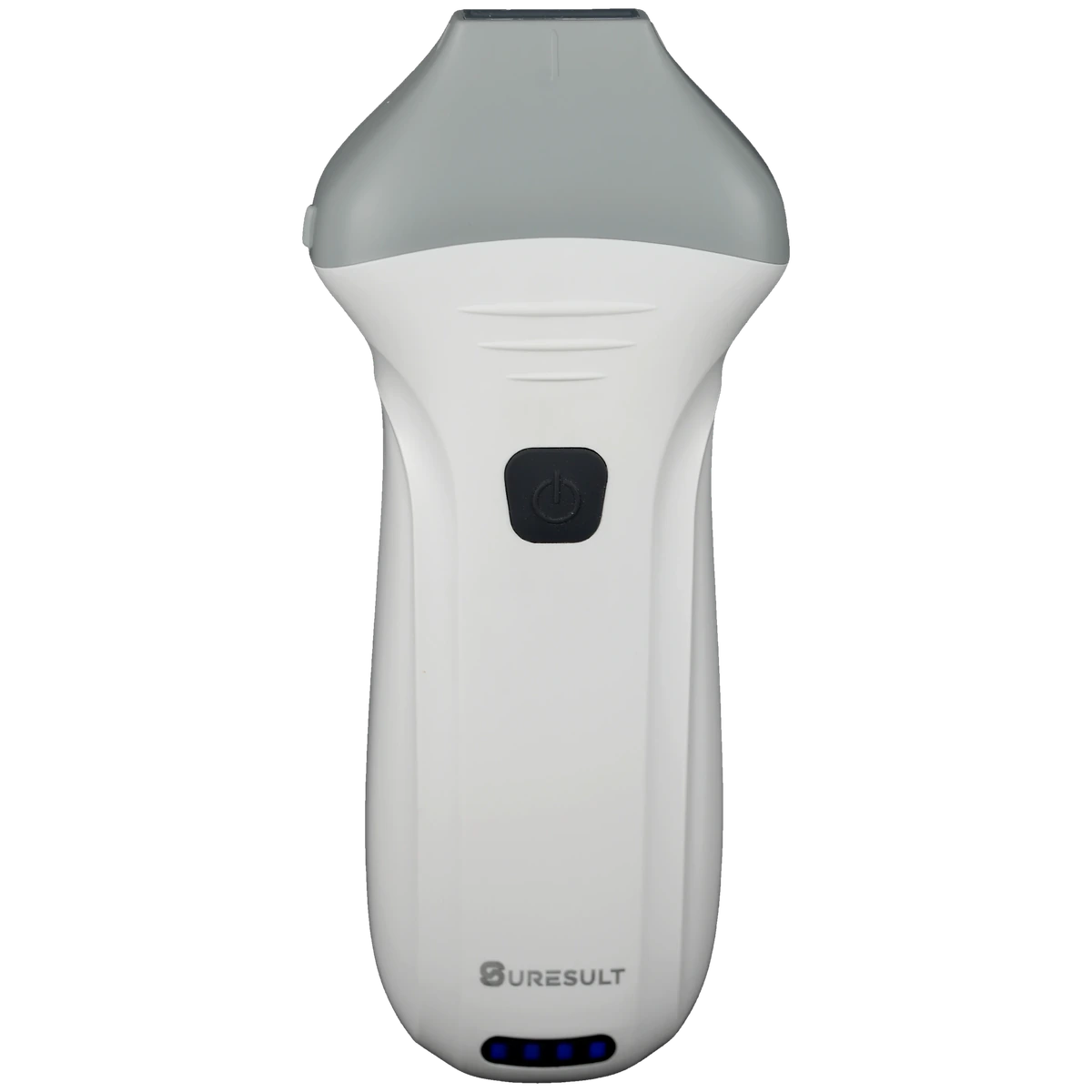 Blocchi superficiali & pediatriciL20Pro
A 16/20 MHz si distinguono i sottili nervi superficiali e le piccole strutture anatomiche, dove il dettaglio è decisivo per il blocco.
$3,720 L20Pro · 256 elementiAcquista oraScopri L20Pro →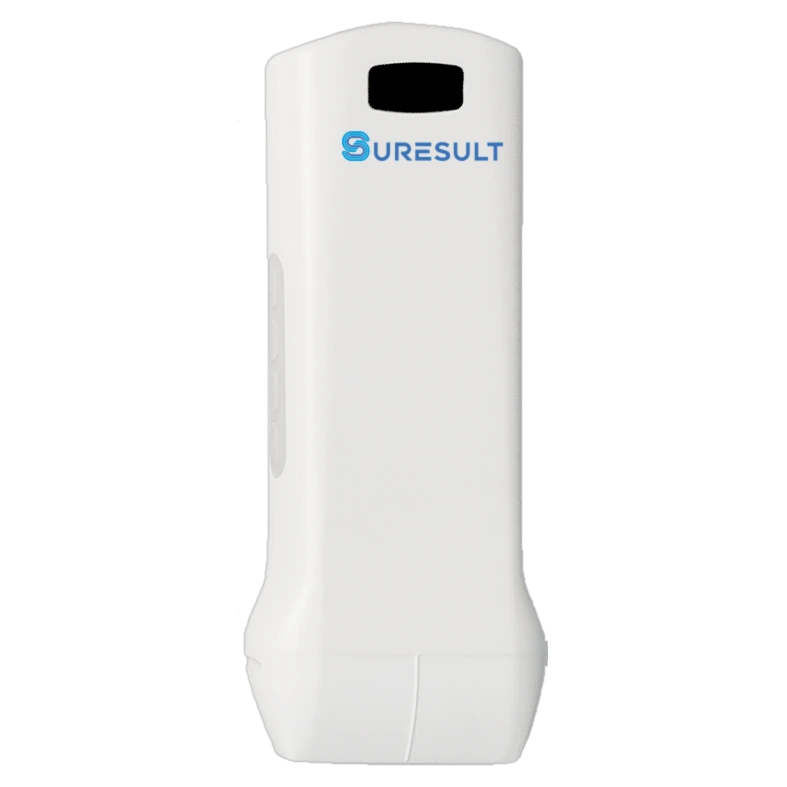 Per iniziare, il budget prima di tuttoL10H
Il modello lineare da 7.5/10 MHz copre la maggior parte dei blocchi dei plessi e dei piani fasciali a un prezzo di fascia base.
$2,325 L10H · lineare di fascia baseAcquista oraScopri L10H →Confronto tra ecografi
Sei Suresult per blocchi nervosi: Suresult a confronto
Scorra per vedere tutte le colonne →
| Modello | Prezzo | Frequenza | Profondità | Ideale per |
|---|---|---|---|---|
 D3Ultra D3Ultra | $2,976 | 7.5/10 + 3.2/5 MHz | 20–100 mm lineare | L’ecografo per i dodici blocchi dell’atlante: dai superficiali allo sciatico profondo |
 D3Pro D3Pro | $2,697 | 7.5/10 + 3.2/5 MHz | 20–80 mm lineare | Tre formati con batteria da 3 ore per lunghe giornate di blocchi |
 L20Pro L20Pro | $3,720 | 16/20 MHz | 10/20/30/40 mm | Il massimo dettaglio nei blocchi superficiali e pediatrici |
 L14Pro L14Pro | $3,441 | 10/14 MHz | 20/40/60/80 mm | Blocchi, esami MSK e vascolari in un’unica sonda |
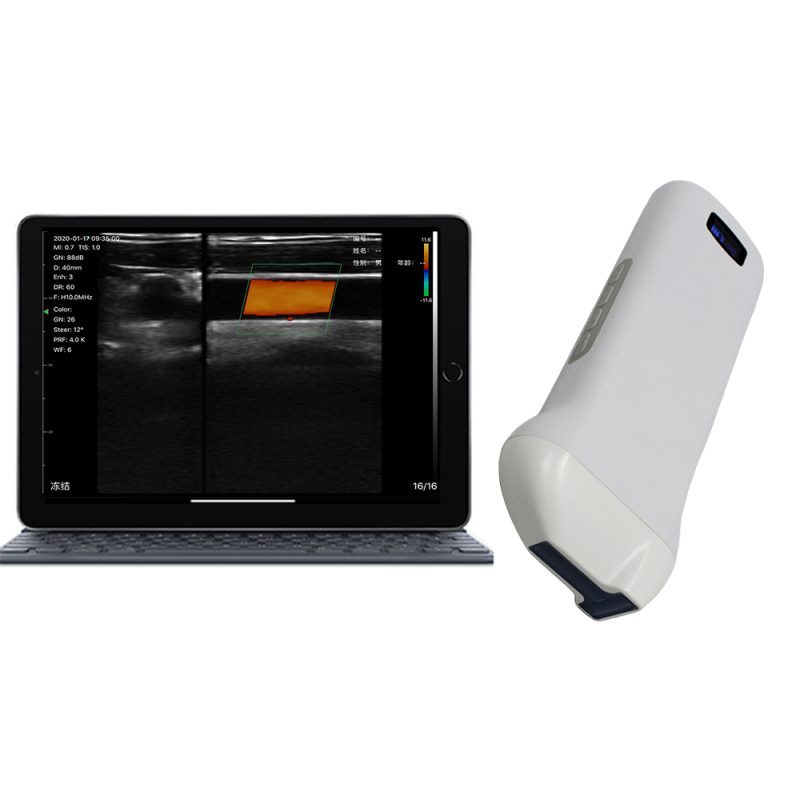 L10T L10T | $2,418 | 7.5/10 MHz | 20/40/60/100 mm | Vista biplanare: ago e bersaglio su un unico schermo |
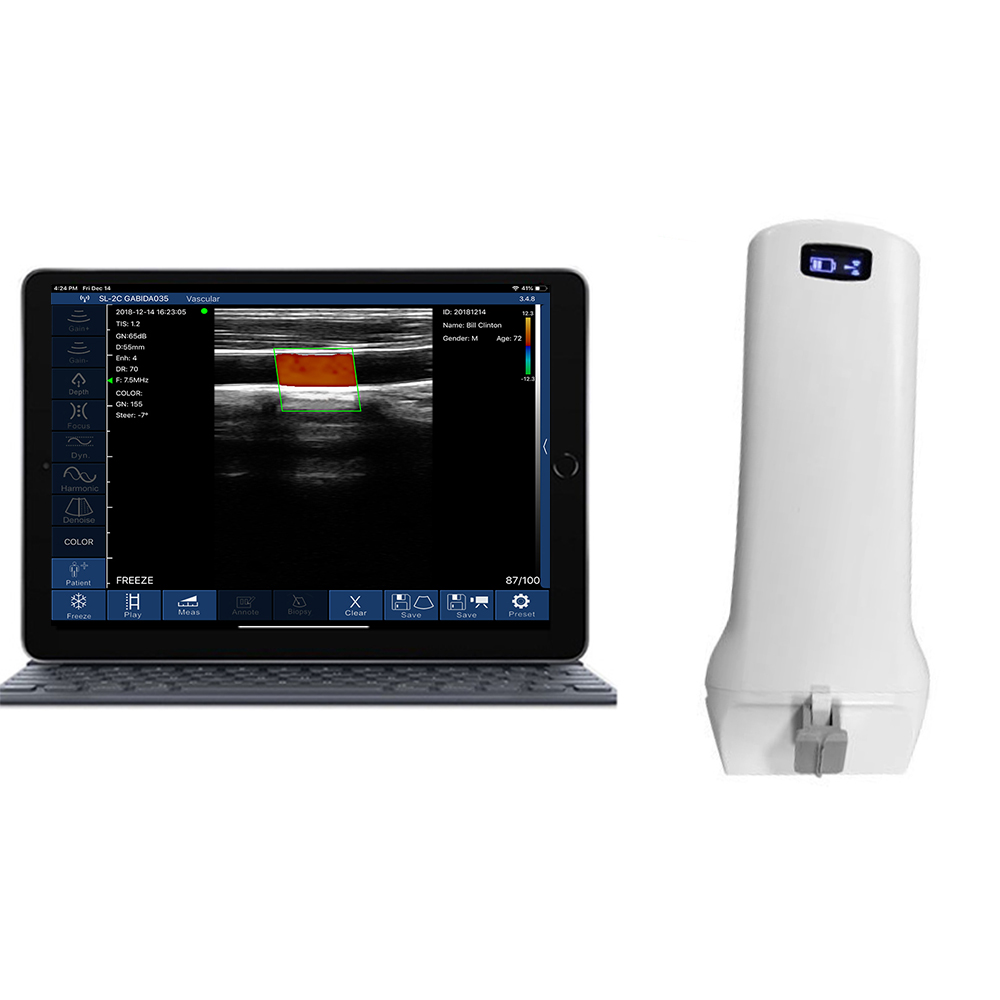 L10H L10H | $2,325 | 7.5/10 MHz | 20/40/60/100 mm | Lineare di fascia base per plessi e piani fasciali |
A confronto con i marchi noti
Suresult a confronto con Clarius, Butterfly e GE Vscan per blocchi nervosi
Scorra per vedere tutte le colonne →
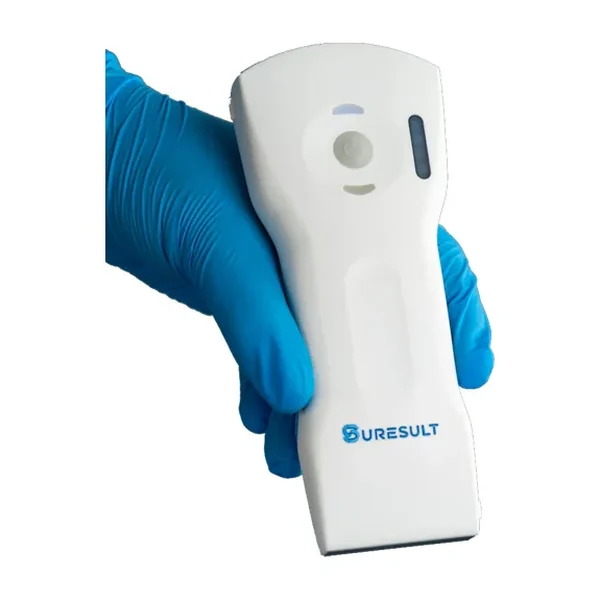 Suresult Suresult | 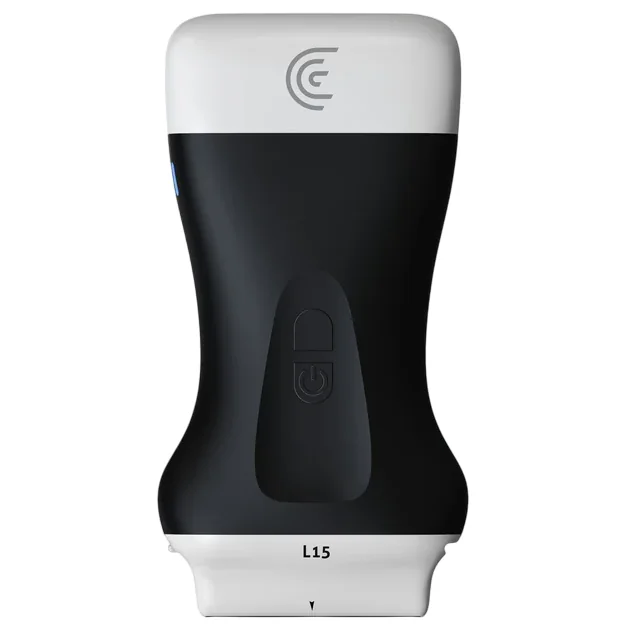 Clarius L15 HD3 Clarius L15 HD3 | 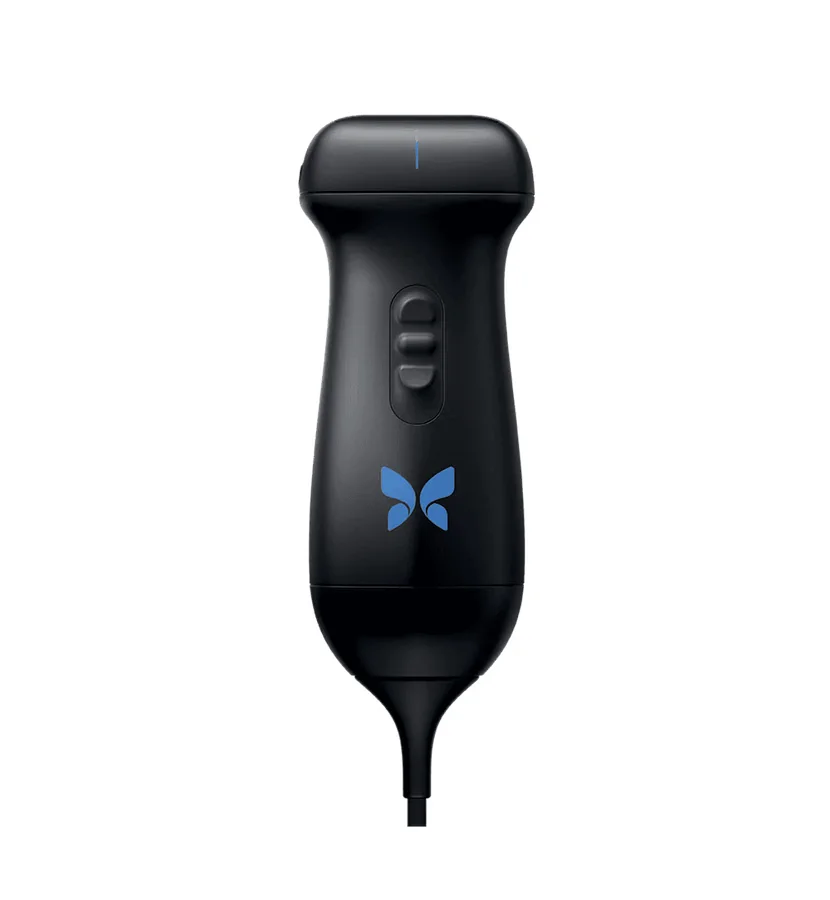 Butterfly iQ3 Butterfly iQ3 | 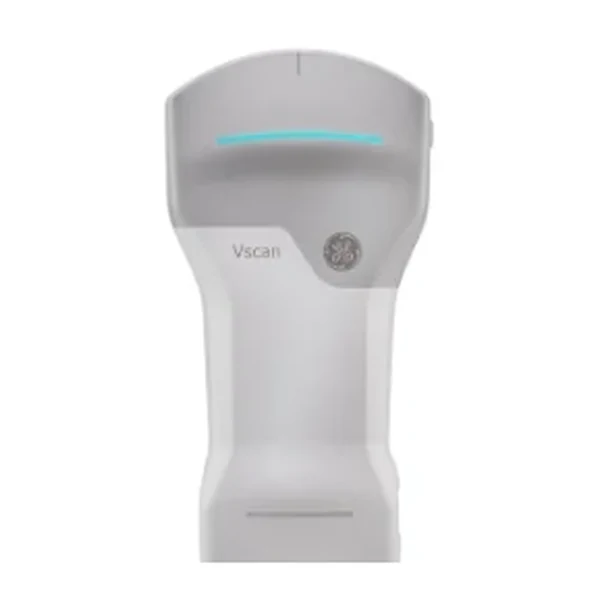 GE Vscan Air CL GE Vscan Air CL | |
|---|---|---|---|---|
| Imaging per i blocchi | Doppia testina: lineare + convex sul D3Ultra | 5–15 MHz lineare | Chip singolo da 1–12 MHz | 3–12 MHz lato lineare |
| Prezzo del dispositivo | $2,325–$3,720, prezzo pubblicato | $3,795 prezzo pubblicato | $3,899 prezzo pubblicato | Prezzo pubblicato: $4,999 |
| Abbonamento | Nessuno: software incluso | Abbonamento a $695/anno, $1,785 per tre anni oppure $2,500 con pagamento unico | Richiesto: $299–$420/anno | Le funzionalità Digital Tools richiedono un abbonamento |
| Costo totale alla consegna | Dazi + spedizione inclusi, 1–7 giorni | Prezzo di listino USA; dazi e spedizione aggiuntivi fuori dagli USA | Prezzo di listino USA; dazi e spedizione aggiuntivi fuori dagli USA | Prezzo di listino USA; dazi e spedizione aggiuntivi fuori dagli USA |
| Registrazioni regolatorie | FDA 510(k) · ISO 13485 · EU MDR (CE) · TGA · ANVISA · Health Canada | FDA 510(k) | FDA 510(k) | FDA 510(k) |
Dove Suresult eccelle
- Dodici blocchi documentati.Ogni acquisizione nell’atlante qui sopra è una scansione non modificata eseguita da un acquirente, presentata per regione anatomica, con le indicazioni della guida dell’ago sullo schermo.
- Nessun abbonamento, nessun costo per il software.Color Doppler, guide per aghi, misurazioni ed esportazione DICOM sono inclusi in ogni ecografo.
- Il prezzo al checkout è il prezzo finale alla consegna.Dazi e spedizione inclusi, consegna in 1–7 giorni.
- Registrato nel Paese in cui esercita.FDA 510(k) · ISO 13485 · EU MDR (CE) · TGA · ANVISA · Health Canada.
Il calcolo su cinque anni
L’abbonamento Clarius da $695/anno ammonta a $3,475 in cinque anni, a cui si aggiunge il costo dell'ecografo stesso. L’abbonamento obbligatorio di Butterfly aggiunge $1,495–$2,100.
D3Ultra, pagamento una tantumClarius L15 HD3: ecografo + abbonamento= $3,475 di soli canoni entro il quinto anno
Tre modelli, una decisione
Ha dubbi su quale modello sia adatto ai Suoi casi?
Basta una conversazione per ricevere un consiglio diretto: la sonda Suresult adatta, oppure un chiaro “nessuna delle due.”

D3Ultra
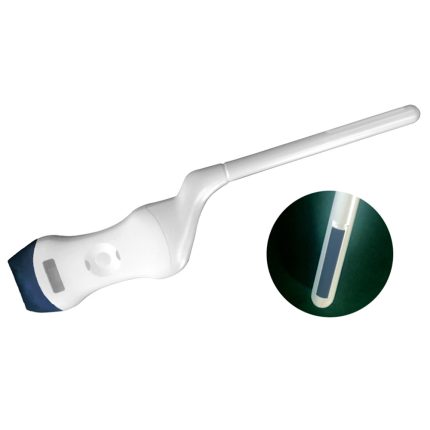
D3Ultra ecografo palmare multiuso convex, lineare e phased array
Frequenza: Sonda convex / phased array 3.2/5.0MHz Sonda lineare 7.5/10MHz
Profondità di scansione: Lineare: 20-100 mm, convex e settoriale: 90-300 mm
Anestesiologia
buy scanner

L14Pro
Sonda lineare wireless Suresult L14Pro per ecografia muscoloscheletrica – 10/14 MHz, 256 elementi
Frequenza: 10/14 MHz
Profondità di scansione: 20/40/60/80 mm
Anestesiologia
buy scanner

D3Pro
Ecografo portatile palmare wireless Suresult D3Pro – 3 in 1 convex, lineare e settoriale, 192 elementi
Frequenza: Sonda convex / settoriale 3.2/5.0MHz, sonda lineare 7.5/10MHz
Profondità di scansione: Sonda convex / settoriale: 90-305 mm, sonda lineare: 20-80 mm
Anestesiologia
buy scanner




Consulenza specialistica
Parli con uno specialista di ecografi
Descriva a Suresult il Suo flusso di lavoro quotidiano e riceva un consiglio personalizzato sull’ecografo più adatto, con un preventivo tutto incluso.
- Consulenza gratuita per la scelta dell’ecografo — sonde, frequenza e profondità adatte alle Sue procedure
- Preventivo tutto incluso — spedizione, sdoganamento e imposte applicabili inclusi
- Consegna rapida — spedizione entro 24 ore, consegna a domicilio in 1–7 giorni
- Software utilizzabile senza abbonamento — app per iOS, Android e Windows incluse
- Resi entro 30 gg e assistenza 24/7
La chat dal vivo si apre proprio qui — accesso diretto e immediato.
