

Kurze Antwort
Kurze Antwort: Die Suresult L24 arbeitet mit 18/24 MHz und ist in diesem Vergleich die Sonde mit der größten Abtastfläche für die Kartierung von Füllstoffen, oberflächlichen Gefäßen und Hautschichten. Der Suresult L20 arbeitet mit 16/20 MHz und ist in diesem Vergleich die Sonde mit größerem Erfassungsbereich für Kliniken, die neben ästhetischen Untersuchungen auch den Bewegungsapparat (MSK), Gefäßzugänge und tiefer liegendes Weichgewebe untersuchen. Der Clarius L20 HD3 war im Clarius-Shop im Juli 2026 für $5.395 allein für den Scanner gelistet, wobei der Clarius Essentials-Softwareplan separat in Rechnung gestellt wurde. Der Clarius L15 HD3 war im Clarius-Shop im Juli 2026 für $3.795 allein für das Gerät gelistet, ebenfalls mit dem separat in Rechnung gestellten Clarius Essentials-Plan. Wir würden ein ästhetisches Ultraschallgerät nach wie vor anhand des Arbeitsablaufs auswählen, den die Praxis wöchentlich durchführt, da sich eine höhere MHz-Zahl nur dann auszahlt, wenn Bildqualität, Handhabung der Sonde und Speicherung während der eigentlichen Injektionstermine zuverlässig bleiben.
Wir haben alle Preise und Konditionen in diesem Vergleich am angegebenen Datum direkt von den jeweiligen Webseiten der Anbieter entnommen und alle entsprechenden Links hier eingefügt: Quellen. Wenn eine Zahl nicht veröffentlicht wurde, weisen wir in der Zeile darauf hin, anstatt eine Schätzung vorzunehmen.
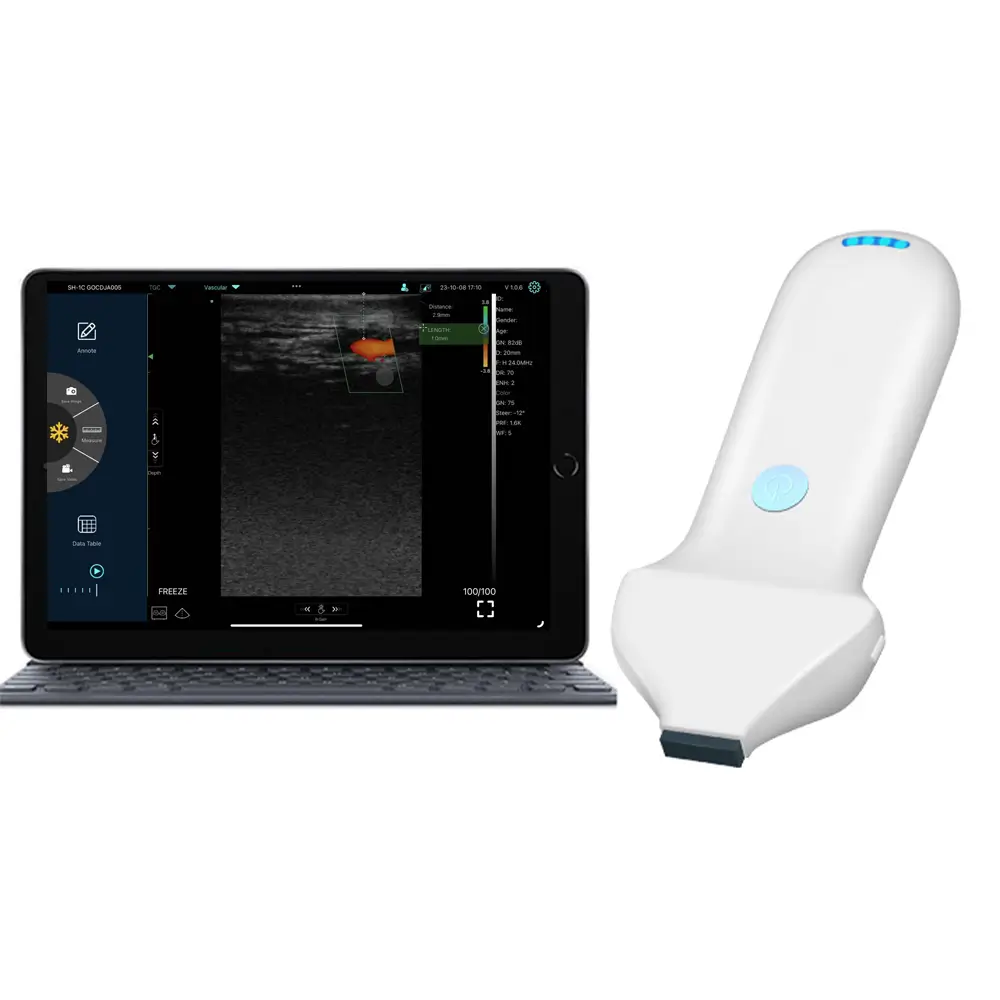
Suresult L24
$3,700 Stand: Juli 2026 (Liste $6.900)
Kein Abonnement – lebenslang kostenlose Software
Am besten geeignet für: Spezialisierte Bildgebung für die Gesichtsästhetik bei 18/24 MHz
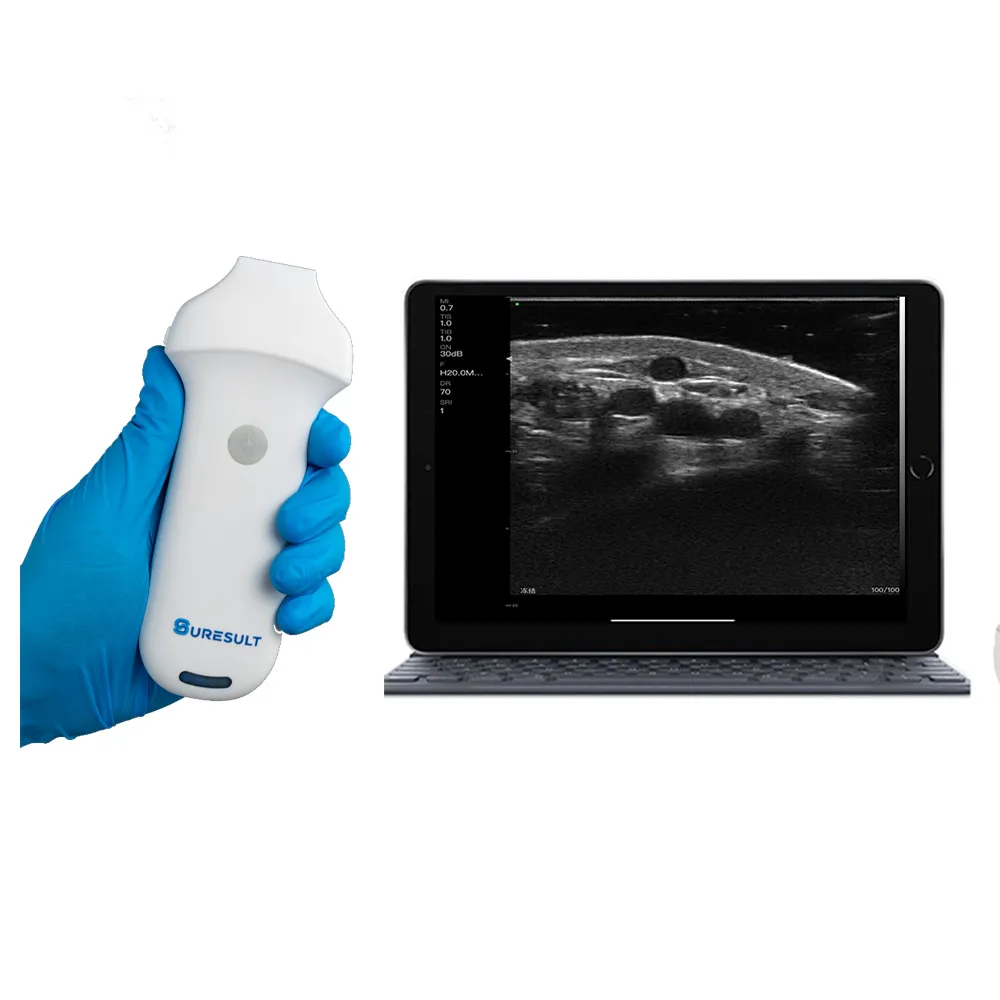
Suresult L20
$3,000 Stand: Juli 2026 (Liste $4.800)
Kein Abonnement – lebenslang kostenlose Software
Am besten geeignet für: Ästhetik sowie umfassende Darstellung des Bewegungsapparats und der Gefäße bei 16/20 MHz
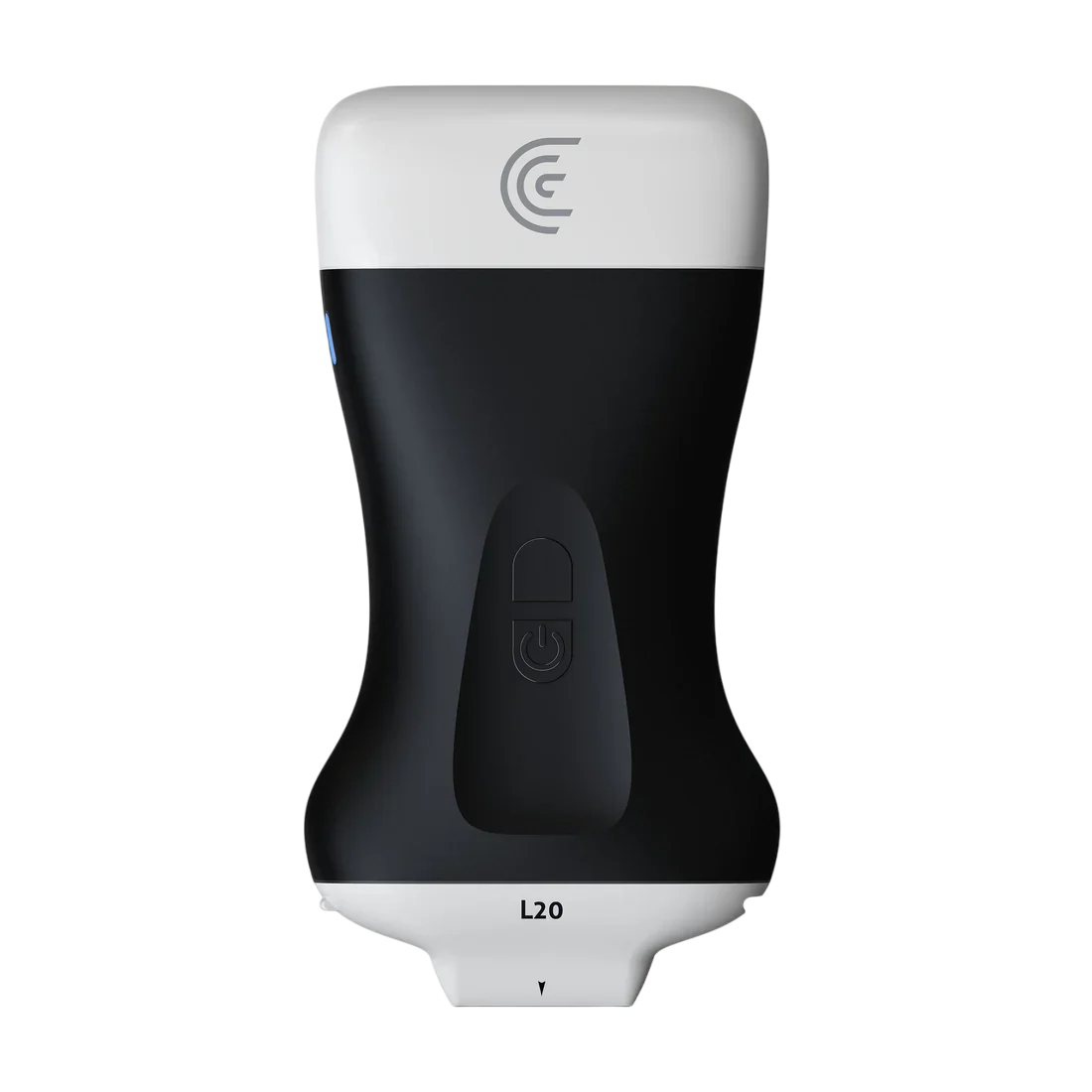
Clarius L20 HD3
$5.395 Scanner Stand: Juli 2026
Mitgliedschaft (Clarius Essentials) separat erhältlich: $695/Jahr, $1.785/3 Jahre oder $2.500 (einmalig)
Am besten geeignet für: Käufer, die das Premium-Wireless-Ökosystem wünschen
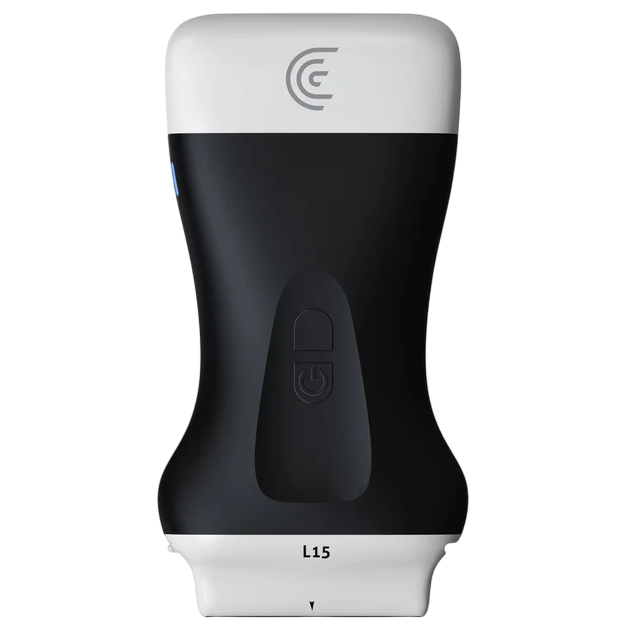
Clarius L15 HD3
$3.795 Scanner Stand: Juli 2026
Die Mitgliedschaft (Clarius Essentials) ist zu denselben Bedingungen separat erhältlich.
Am besten geeignet für: Allgemeine, hochwertige lineare Arbeiten, die über das reine Scannen von Gesichtern hinausgehen
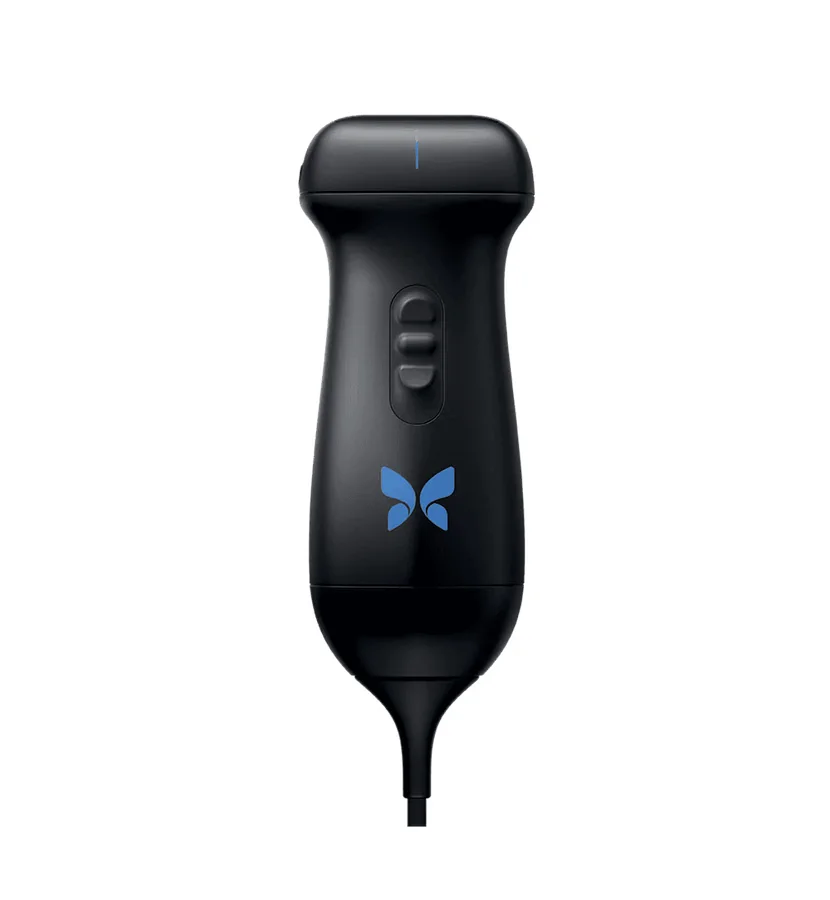
Schmetterling iQ3
$3,899 Stand: Juli 2026
Mitgliedschaft $299–$420 pro Jahr oder $1.500 als einmaliger Beitrag (fünf Jahre)
Am besten geeignet für: Gelegentliche ästhetische Eingriffe in einer Allgemeinpraxis – 12-MHz-Linear-Decke
Überprüfung des Arbeitsablaufs bei der Verabreichung von Gesichtsfüllern: Bevor Sie ästhetische Ultraschallgeräte ausschließlich anhand der Frequenz oder des Preises vergleichen, sollten Sie sich zunächst die Doppler-Videos der Gesichtsultraschalluntersuchungen L20 und L24 für die Darstellung oberflächlicher Gefäße, den Scanbereich, die App-Anzeige und die Hochfrequenzabgabe in die Hautschicht.
Die Schnellübersicht
So lesen Sie diese Liste: it is a workflow guide for aesthetic clinics comparing facial mapping, superficial vessels, filler-related review, training, and ownership friction.
Wer sollte kaufen, sorgfältig vergleichen oder abwarten?
Kaufen Sie zunächst L24, wenn
Ihre Praxis führt hauptsächlich Untersuchungen von Gesichtern, oberflächlichen Gefäßen, Hautschichten und kleinen, mit Füllstoffen in Zusammenhang stehenden anatomischen Strukturen durch, und Sie wünschen sich einen speziellen Hochfrequenz-Workflow anstelle eines allgemeinen Klinikscanners.
Vergleichen Sie L20, falls
Dieselbe Sonde wird auch für den Bewegungsapparat (MSK), den Gefäßzugang, Haare, oberflächliche Knoten oder tiefer liegendes Weichgewebe verwendet. Der Einsatz des L20 lässt sich leichter rechtfertigen, wenn ein Scanner mehrere Arbeitsabläufe abdecken muss.
Kaufen Sie das Produkt nicht, wenn
Ihr Team hat die Kompatibilität der Anzeigegeräte, den Export- und Speicher-Workflow, die Vorgehensweise bei Gewährleistungsansprüchen, die Anforderungen an die Bilddokumentation sowie die Frage, wer bei den Terminen im Injektionsraum tatsächlich das Scannen übernimmt, noch nicht bestätigt.
Vergleich von Geräten für die ästhetische Ultraschalluntersuchung unter Berücksichtigung des Klinik-Arbeitsablaufs
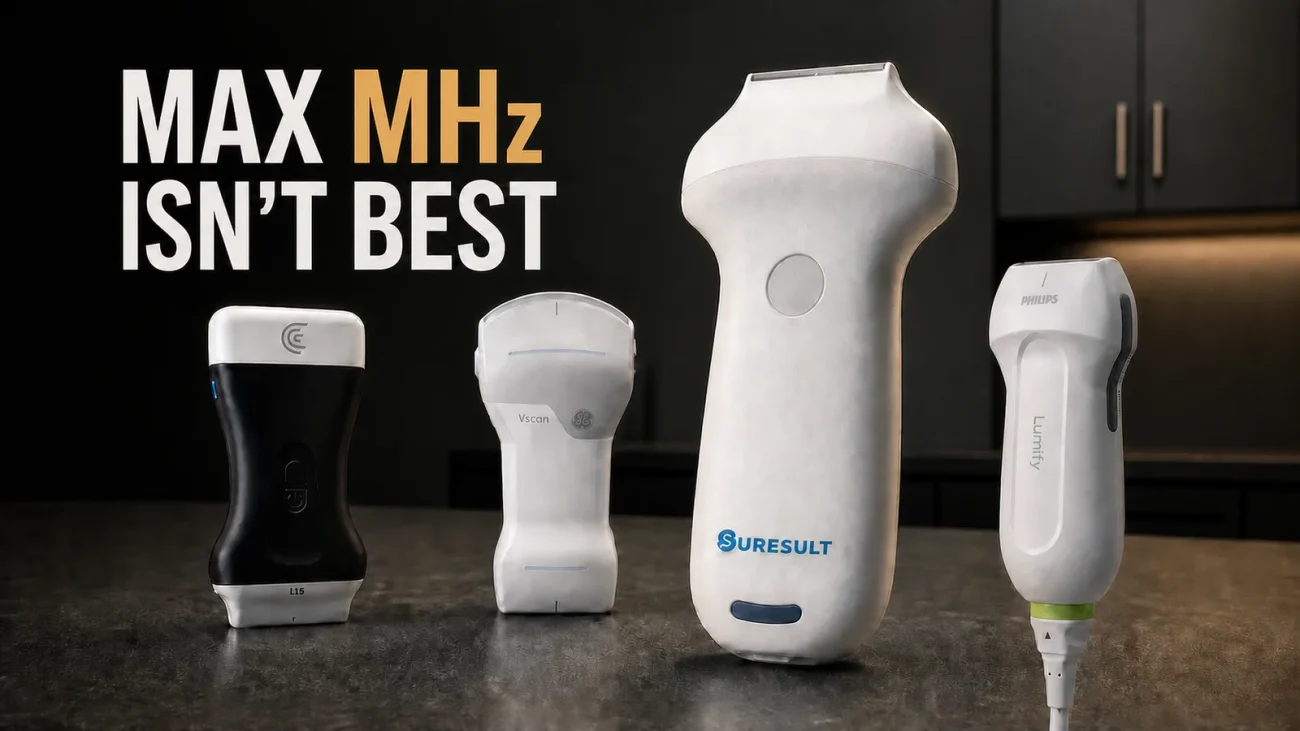
Klinische Schlussfolgerung: the best aesthetic ultrasound machine depends on the clinic workflow. Suresult L24 is the dedicated face-first choice, Suresult L20 is the broader mixed-workflow choice, Clarius L20 HD3 is the premium wireless benchmark, Clarius L15 HD3 is the general linear competitor, and Butterfly iQ3 is the value comparison option. For a med-spa workflow specifically, see the diagnostic facial ultrasound guide for med spas, which covers what a diagnostic scan adds to a filler consultation and how it fits a spa schedule.
| Ablauf in der Klinik | Das am besten geeignete Gerät | Warum es passt | Zu prüfender Kompromiss | Nächster Schritt für den Käufer |
|---|---|---|---|---|
| Kartierung der Füllstoffe mit der Vorderseite nach vorne | Suresult L24 | Arbeitsablauf in der 18/24-MHz-Klasse für oberflächliche Gewebeschichten, flache Gefäße und die Abtastung gekrümmter Gesichtsbereiche | Weniger breit als ein Klinik-Scanner für gemischte Anwendungen | Wählen Sie diese Option, wenn der Schwerpunkt der Scans auf der Gesichtsästhetik liegt |
| Ästhetische Chirurgie sowie Muskel-Skelett-Chirurgie, Gefäßchirurgie oder Chirurgie des tieferen Weichgewebes | Suresult L20 | Linearer Arbeitsablauf der 16/20-MHz-Klasse mit größerer oberflächlicher Abdeckung | Nicht so eng mit dem Gesicht nach vorne wie L24 | Wählen Sie diese Option, wenn mehrere Anbieter einen Scanner gemeinsam nutzen |
| Premium-Ökosystem für drahtlose Geräte | Clarius L20 HD3 | Ein ausgefeiltes App-Erlebnis und erstklassige drahtlose Hochfrequenz-Ortung | Gesamtbetriebskosten und Mitgliedschafts-/Software-Modell | Vergleichen Sie, ob das Markenökosystem ebenso wichtig ist wie der Preis des Scanners |
| Allgemeine lineare Arbeiten der Premium-Klasse | Clarius L15 HD3 | Gut geeignet für den vaskulären Zugang, die Bildgebung im Bereich des Bewegungsapparats, die oberflächliche Bildgebung sowie gelegentliche ästhetische Untersuchungen | Weniger auf Füllmaterial spezialisiert als der L20 HD3 oder der L24 | Vergleichen Sie die Situation, in der die Klinik Clarius wünscht, jedoch keinen Kauf, der sich ausschließlich auf die Gesichtsbehandlung beschränkt |
| Gelegentliche ästhetische Behandlungen in einer Allgemeinpraxis | Schmetterling iQ3 | Eine $3.899-Sonde deckt Ganzkörperscans ab, wobei ästhetische Untersuchungen als Nebentätigkeit angeboten werden | Linear erreicht seinen Höchstwert bei 12 MHz – und liegt damit unter jedem dedizierten Scanner in dieser Tabelle | Vergleichen Sie dies mit einer Situation, in der die Ästhetik nur eine Nebenrolle spielt und nicht den Hauptarbeitsaufwand ausmacht |
Kaufregel: Entscheiden Sie sich nicht allein aufgrund des Rankings. Berücksichtigen Sie stattdessen den Arbeitsablauf, den Ihre Klinik jede Woche durchführt: Mapping nur im Gesichtsbereich, gemischte oberflächliche Scans, Premium-Ökosystem, allgemeine lineare Anwendungen oder eine auf den Nutzen ausgerichtete Einführung.
Diese Tabelle ist zwar hilfreich, entspricht jedoch nicht der Art und Weise, wie wir eine Sonde im Untersuchungsraum tatsächlich auswählen. In der ästhetischen Ultraschalluntersuchung wird der Unterschied deutlich, sobald man über Wange, Nase, Lippen, Schläfenbereich oder Kieferlinie gleitet. Ein Gerät kann auf einem flachen Phantom hervorragend aussehen und sich dennoch unhandlich anfühlen, wenn die Auflagefläche der Sonde, das Gewicht, die Latenz der App, die Verstärkungsregler und die Doppler-Empfindlichkeit aufeinander abgestimmt sein müssen.
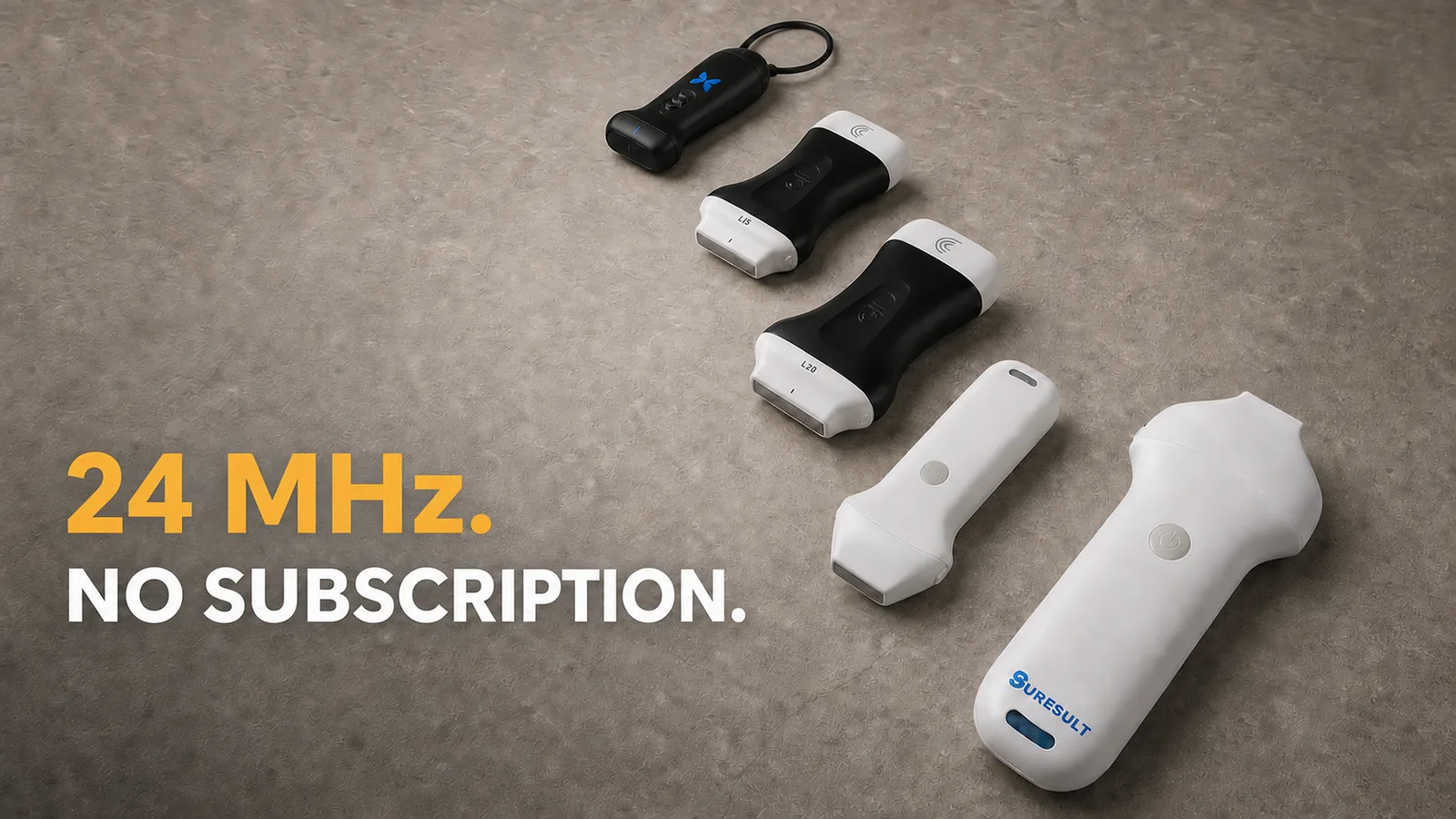
Betriebskosten über 5 Jahre: Scannerpreis zuzüglich Software
Klinische Schlussfolgerung: Über einen Zeitraum von fünf Jahren hat die Software-Produktreihe einen größeren Einfluss auf die Zahlen als der Scanner. Clarius gibt den Preis für den L20 HD3-Scanner mit $5.395 an; wenn man jedoch „Clarius Essentials“ fünf Jahre lang nutzt, beläuft sich derselbe Kauf gemäß den von Clarius selbst veröffentlichten Abrechnungsoptionen auf einen Betrag zwischen $7.895 und $8.870. Bei der Suresult-Produktreihe fallen keinerlei Softwaregebühren an, und die Abonnements von GE sind optional. Alle nachstehenden Zahlen wurden am 30. Juli 2026 der Seite des Anbieters entnommen, und die Berechnungen sind aufgeführt, damit eine Klinik diese nachrechnen kann.
| Gerät | Preis des Scanners (US-Listenpreis, Stand: 30. Juli 2026) | Software- bzw. Mitgliedschaftsbedingungen in der veröffentlichten Fassung | Gesamtsumme über 5 Jahre, arithmetisch berechnet | Quelle überprüft |
|---|---|---|---|---|
| Suresult L24 18/24 MHz, linear |
$3,700 Der derzeit auf der Suresult-Produktseite angegebene Preis (Listenpreis: $6.900). | $0. Auf der Produktseite heißt es: “Keine Abonnementkosten. Lebenslang kostenlose Software, unbegrenzte Scans”, und es werden kostenlose Softwareprogramme für iOS, Android und Windows aufgeführt. Es werden keine Mitgliedschaftsstufen angegeben. | $3,700 $3.700 + (5 × $0) = $3,700. Da keine Entscheidung bezüglich der Mitgliedschaft zu modellieren ist, gibt es nur einen Weg. |
Produktseite zu Suresult L24 Überprüft am 30. Juli 2026 |
| Suresult L20 16/20 MHz, linear |
$3,000 Der derzeit auf der Suresult-Produktseite angegebene Preis (Listenpreis: $4.800). | $0. Es gelten dieselben veröffentlichten Bedingungen wie beim L24: “Keine Abonnementkosten. Lebenslang kostenlose Software, unbegrenzte Scans”, einschließlich Software für iOS, Android und Windows. | $3,000 $3.000 + (5 × $0) = $3,000. Niedrigster veröffentlichter Fünfjahreswert in dieser Tabelle. |
Produktseite zu Suresult L20 Überprüft am 30. Juli 2026 |
| Clarius L20 HD3 Linear bei ultrahohen Frequenzen |
$5,395 nur für den Scanner. Im Shop wird außerdem ein Paket mit der Artikelnummer $6,090 angeboten, das den Scanner sowie ein Jahr „Clarius Essentials“ umfasst. | Clarius Essentials ist separat erhältlich; es stehen drei Abrechnungsoptionen zur Auswahl: $695,00 alle 1 Jahr, $1.785,00 alle drei Jahre, oder $2,500.00 auf der Seite mit “One time essentials” gekennzeichnet. Es wird eine Option nur für den Scanner angeboten (“Zahlen Sie $5.395 für den Scanner.”). Clarius“ eigenes Spezifikationsfeld führt lokale Speicherung, Cloud-Speicherung, DICOM, Puls-Doppler, Sprachsteuerung und Spezialsoftware unter ”Essentials“ auf. Auf der Seite wird für die Option „$2.500“ der Begriff „lebenslang“ nicht verwendet, daher sollte diese Option auch nicht als solche interpretiert werden. | $7.895 bis $8.870 Essentials wird fünf Jahre lang aufbewahrt. Einmalige Grundausstattung: $5.395 + $2.500 = $7,895 (der niedrigste veröffentlichte Pfad, bei dem „Essentials“ erhalten bleibt). Ein 3-Jahres-Block plus 2 jährliche Verlängerungen: $5.395 + $1.785 + (2 × $695 = $1.390) = $8,570. Gesamtbetrag der jährlichen Abrechnung: $5.395 + (5 × $695 = $3.475) = $8,870. Nur Scanner, ohne Essentials: $5,395, jedoch ohne die in der Spalte „Essentials“ aufgeführten Funktionen. |
Clarius-Geschäft, L20 HD3 Überprüft am 30. Juli 2026 |
| Clarius L15 HD3 Hochfrequente lineare |
$3,795 nur für den Scanner. Im Shop wird außerdem ein $4.490-Paket angeboten, das den Scanner sowie ein Jahr Clarius Essentials umfasst. | Es gelten dieselben Clarius Essentials-Bedingungen wie für den L20 HD3: $695,00 alle 1 Jahr, $1.785,00 alle drei Jahre, oder $2,500.00 “Einmalige Grundausstattung”. Es wird eine Option ausschließlich für den Scanner angeboten (“Zahlen Sie $3.795 für den Scanner.”), und auf der Seite wird die erforderliche Mitgliedschaft nicht beschrieben. | $6.295 bis $7.270 Essentials wird fünf Jahre lang aufbewahrt. Einmalige Grundausgaben: $3.795 + $2.500 = $6,295. Ein 3-Jahres-Block plus 2 jährliche Verlängerungen: $3.795 + $1.785 + (2 × $695 = $1.390) = $6,970. Gesamtbetrag bei jährlicher Abrechnung: $3.795 + (5 × $695 = $3.475) = $7,270. Nur Scanner, ohne Essentials: $3,795. |
Clarius-Geschäft, L15 HD3 Überprüft am 30. Juli 2026 |
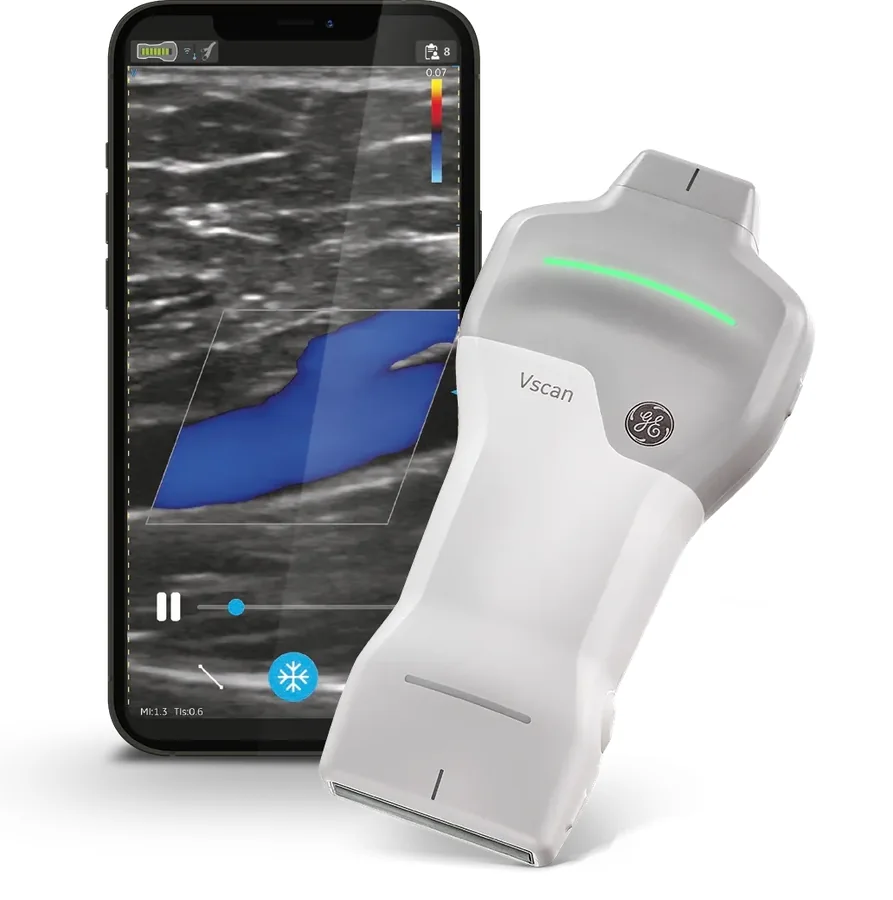 GE Vscan Air SL GE Vscan Air SLDoppelsensor-Funk |
$4,999.00 Für das Standardpaket des Vscan Air SL im GE-eigenen Konfigurator; auf der Produktseite heißt es: “3 Jahre Garantie | Ab $4.999”. Ein Vorführgerät ist separat aufgeführt unter $4,299.00. | Ein Abonnement ist nicht erforderlich. Es wurden drei optionale Erweiterungen veröffentlicht: „Premier Innovations Upgrade“ unter $500.00 für 1 Jahr (auf der Seite wird angegeben, dass sich das Abonnement automatisch zu einem Preis von $500 pro Jahr verlängert) oder $1,299.00 für eine einmalige 3-Jahres-Lizenz; Digitale Tools (MyRemoteShare und Verisound Gallery) unter $1,080.00 pro 3-Jahres-Abonnement; POCUS-Grundlagen-Schulung bei $120.00. | $4,999 ohne Zusatzleistungen, da die 3-jährige Garantie bereits enthalten ist. Innovationen, die 5 Jahre lang aufrechterhalten wurden, günstigster veröffentlichter Pfad: $4.999 + $1.299 + (2 × $500 = $1.000) = $7,298; nur bei jährlicher Abrechnung: $4.999 + (5 × $500 = $2.500) = $7,499. „Innovations plus“ und „Digital Tools“ für 5 Jahre, wobei „Digital Tools“ nur in 3-Jahres-Blöcken verkauft werden, sodass Sie mit zwei Blöcken eine Laufzeit von 6 Jahren erwerben: $4.999 + $2.299 + (2 × $1.080 = $2.160) = $9,458. Vorführgerät, ohne Zusatzausstattung: $4,299. |
GE-Konfigurator und Produktseite Überprüft am 30. Juli 2026 |
| Schmetterling iQ3 Einzelne Ganzkörpersonde |
$3,899 mit einer 3-jährigen Garantie auf der Preisseite von Butterfly. Das ältere iQ+-Modell ist auf derselben Seite aufgeführt unter $2,699 mit einer Garantie von einem Jahr. | Butterfly bietet „Probe plus Mitgliedschaft“ als eine Kaufoption an. Einzelabonnements: Kerntechnologie $299/Jahr und Fortgeschrittene Technologie $420/Jahr, jeweils ein Benutzerplatz. Im hauseigenen Tarifvergleich von Butterfly sind Power-Doppler, Pulswellen-Doppler und die erweiterten Bildgebungswerkzeuge ausschließlich im Tarif “Advanced” enthalten, während „Basic DICOM“ in beiden Tarifen als „erhältlich“ aufgeführt ist – dieses DICOM-Zusatzmodul ist Nur Preisangabe – kein veröffentlichter Preis. Der Shop bietet zudem Zahlungsoptionen für eine 3-Jahres-Mitgliedschaft sowie eine einmalige Zahlung an, veröffentlicht jedoch keine Preise dafür, bevor ein Tarif ausgewählt wurde; daher sind auch diese Nur Preisangabe – kein veröffentlichter Preis. | $5.394 bis $5.999 zu den veröffentlichten Jahresplänen. iQ3 mit Kerntechnologie: 1.443,899 + (5 × 1.442,99 = 1.442,1495) = $5,394. iQ3 mit fortschrittlicher Technologie, die Ausstattungsstufe mit Pulswellen- und Power-Doppler: $3.899 + (5 × $420 = $2.100) = $5,999. Für die 3-Jahres- oder Einmal-Mitgliedschaftsoptionen können keine Zahlen für einen Fünfjahreszeitraum angegeben werden, da Butterfly seine Preise nicht veröffentlicht. |
Preisseite für Schmetterlinge Überprüft am 30. Juli 2026 |
Wie diese Gesamtzahlen ermittelt wurden. US-Listenpreise in USD, ein Scanner, eine Benutzerlizenz, Neugeräte statt Vorführgeräte, sofern in der Zeile nichts anderes angegeben ist, ohne Zubehör, ohne erweiterte Garantie, sofern in der Zeile nichts anderes angegeben ist, sowie ohne Steuern, Versandkosten oder Finanzierungskosten. Die Clarius Care-Garantieverlängerung ($265, $530 und $795 für 1, 2 und 3 Jahre) ist in allen Clarius-Gesamtpreisen nicht enthalten. Wenn ein Verkäufer etwas anbietet, dafür jedoch keinen Preis angibt, steht in der Zelle Nur Preisangabe – kein veröffentlichter Preis und nicht als Schätzung. Preise können sich ändern: Die jeweiligen Angaben wurden am 30. Juli 2026 von der verlinkten Verkäuferseite abgerufen, und bei den Suresult-Angaben handelt es sich um die an diesem Tag angezeigten Aktionspreise. Clarius veröffentlicht auf seiner Spezialseite für ästhetische Behandlungen keine Preise; die oben genannten Clarius-Angaben stammen von den Produktseiten des Shops.
Kaufregel: Vergleichen Sie die Spalte „Fünf Jahre“, nicht den Aufkleber. Eine Klinik, die wöchentlich Gesichter scannt, wird das Gerät auch im fünften Jahr noch besitzen, und bis dahin ist der Unterschied zwischen einem Scanner ohne Softwaregebühr und einem Premium-Scanner mit Jahresabonnement größer als der Unterschied zwischen den beiden Scannern am ersten Tag.
Was wichtiger ist als die höchste MHz-Zahl
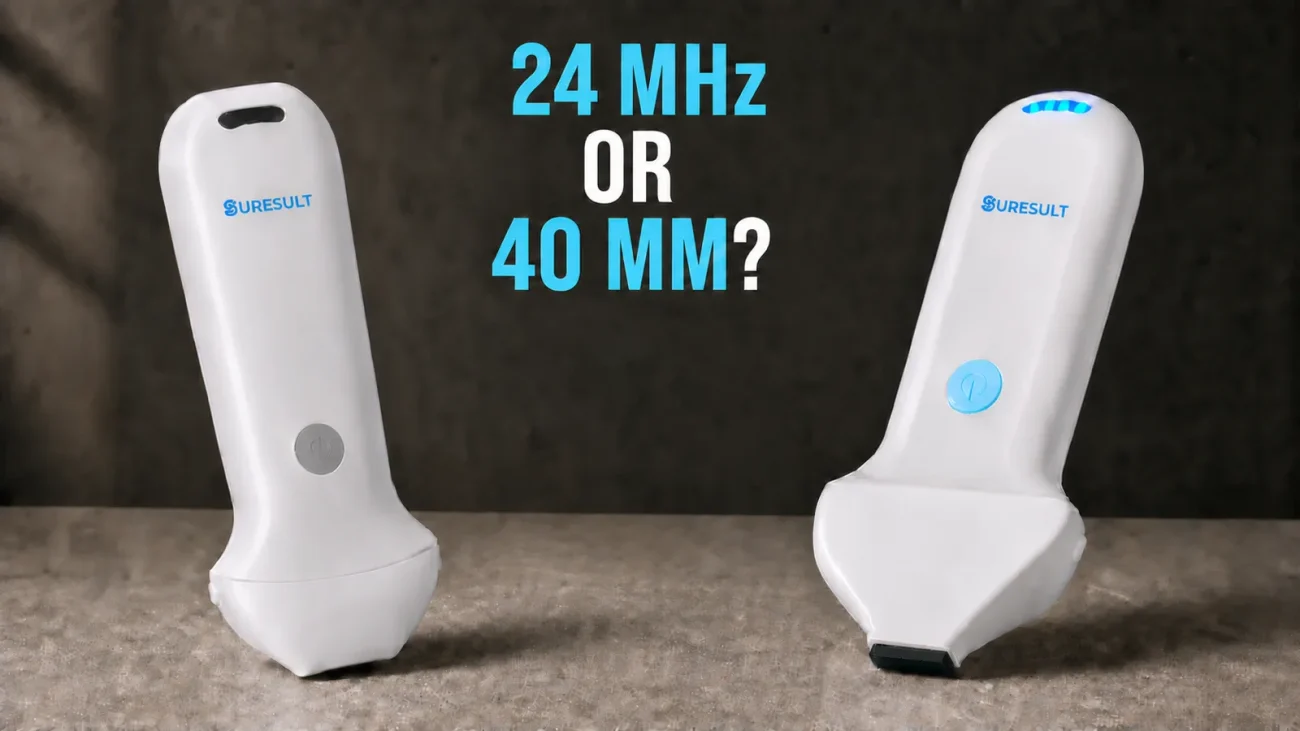
Die Suresult L24 läuft um 18/24 MHz und weist die höhere Frequenz der beiden im vorliegenden Vergleich untersuchten Suresult-Ästhetiksonden auf. Die Suresult L20 läuft um 16/20 MHz und bietet von beiden die größere Reichweite. Eine höhere Sendefrequenz sorgt für eine höhere Nahfeldauflösung, geht jedoch zu Lasten der Eindringtiefe. Die Suresult L24Pro carries the same published 18/24 MHz range, and the demo stills in this article were captured on a Suresult L24Pro at 18.0 MHz and at 24 MHz.
Eine hohe Frequenz ist wichtig, doch MHz allein machen noch kein gutes ästhetisches Ultraschallgerät aus. Uns sind fünf Aspekte wichtig.
Erstens: Können wir die oberflächlichen Schichten erkennen, ohne ständig die Einstellungen ändern zu müssen? Wenn wir zu viele Anpassungen vornehmen müssen, wird die Untersuchung zu einer Vorführung statt zu einer klinischen Routine.
Zweitens: Lässt sich Doppler während eines normalen Termins problemlos anwenden? Die Gefäße im Gesicht sind nicht immer kooperativ. Das Gerät muss die Farbdarstellung sinnvoll einsetzen, sie darf nicht nur dekorativen Zwecken dienen.
Drittens: Liegt die Sonde angenehm auf dem Gesicht auf? Eine schwere oder unhandliche Sonde lässt feine Arbeiten schwerfällig wirken.
Viertens: Kann die Praxis Bilder auf eine Weise speichern und auswerten, die zu ihrem Geschäftsmodell passt? In der ästhetischen Medizin legen die Praxen großen Wert auf Dokumentation, Fortbildung, die Auswertung von Vorher-Nachher-Bildern sowie die Sicherheit bei Beratungsgesprächen.
Fünftens: Wie sieht die tatsächliche Nutzererfahrung aus? Ein niedrigerer Preis für den Scanner kann an Attraktivität verlieren, wenn später Probleme hinsichtlich Software, Mitgliedschaft, Gerätekompatibilität, Speicherplatz oder Support auftreten.
Dies ist auch der Grund, warum in der Fachliteratur zum ästhetischen Ultraschall immer wieder dieselben praktischen Themen aufgegriffen werden: die Lage der Füllstoffe, Gewebeschichten, Gefäßstrukturen, Doppler sowie der Unterschied zwischen der theoretischen Betrachtung der Anatomie und ihrer ausreichend klaren Darstellung, um im Rahmen eines tatsächlichen Termins entsprechend handeln zu können. Dies ist der Blickwinkel, den wir für diesen Vergleich einnehmen.
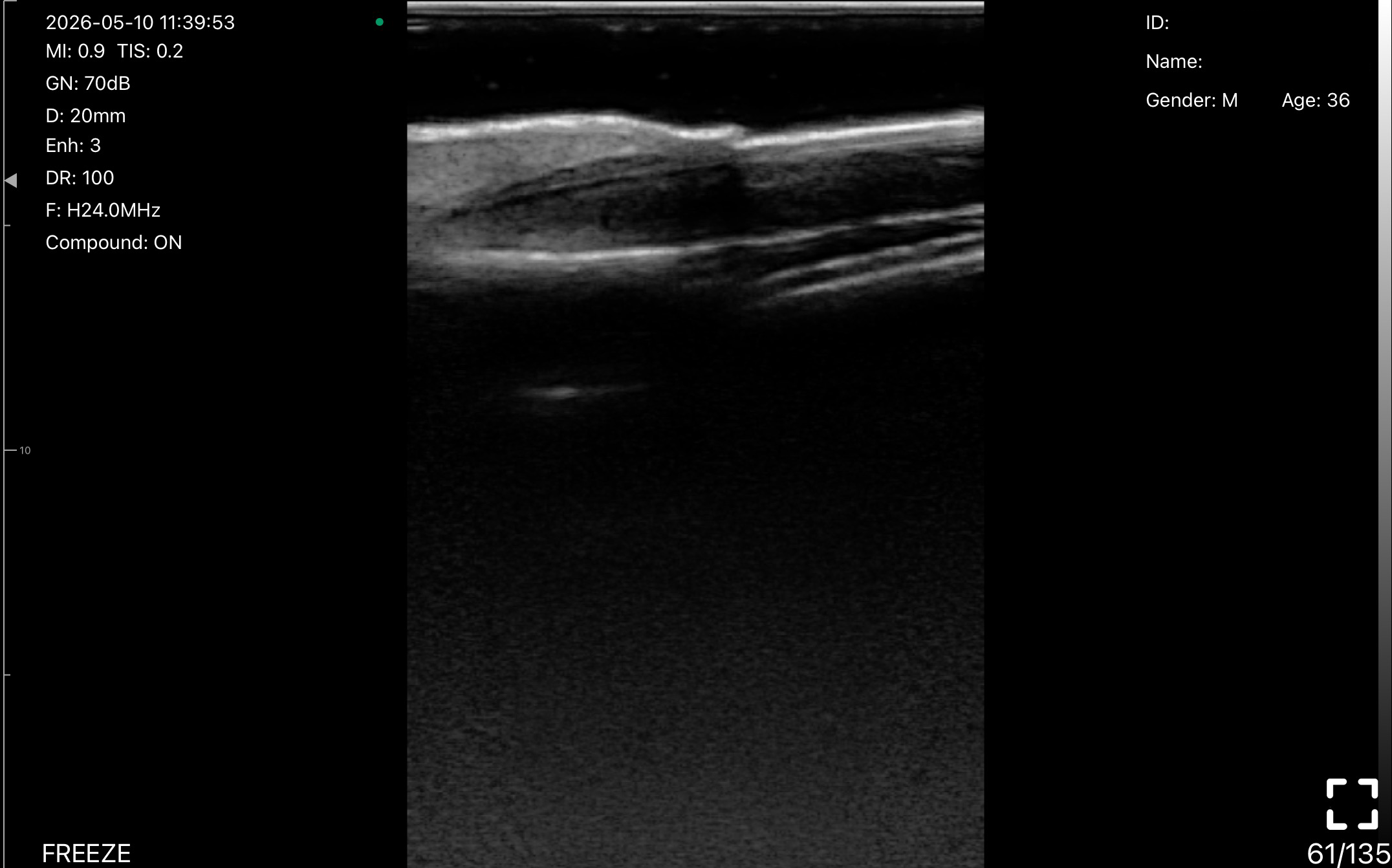
1 Suresult L24 – Spezielle Gesichts-Messsonde für den Frequenzbereich 18/24 MHz
$3.700, ohne Abonnement. Die erste Wahl für die Darstellung von Füllstoffen, oberflächlichen Gefäßen und Hautschichten im Gesichtsbereich.
L24-Produktseite · L24 im Vergleich zu Clarius, Vscan und iQ3
2 Suresult L20 – 16/20 MHz: Ästhetik und Vielseitigkeit
$3.000, keine Abonnementgebühr. Die umfassendere Untersuchung, bei der die Klinik auch den Bewegungsapparat, den Gefäßzugang und das tiefere Weichgewebe untersucht.
L20-Produktseite · Leitfaden zum Fachgebiet Ästhetische Chirurgie
3 Clarius L20 HD3 – Maßstab für kabellose Premium-Geräte
$5,395 scanner plus Clarius Essentials sold separately. The premium ecosystem comparison at 8–20 MHz.
4 Clarius L15 HD3 — general premium linear
$3,795 scanner on the same separately billed Essentials plan. The easier daily Clarius linear beyond face-only work.
5 Butterfly iQ3 — whole-body value cross-check
$3,899 plus membership. One probe covers whole-body scanning; the linear format tops out at 12 MHz.
Testbericht zum Butterfly iQ3 · Offizielle Schmetterlingsseite
1. Suresult L24: Our Pick for a Dedicated Facial Aesthetics Probe
Extractable conclusion: Suresult L24 is the Suresult option we would evaluate first for face-centered filler mapping, superficial vessels, skin layers, and high-frequency aesthetic review. It is most useful when the clinic wants a dedicated facial workflow, not a single probe for every department.
When we test a high-frequency facial probe, we do not start by chasing a idealized marketing screenshot. We scan slowly over curved areas where superficial anatomy changes quickly and watch whether the image stays readable as probe angle, pressure, and patient anatomy change.
The practical strength is focus. The probe is built around shallow depth, linear imaging, and a workflow that belongs in a facial aesthetics room. That makes it easier for a clinic owner to explain why the device exists: facial mapping, superficial vessels, skin layers, and filler-related review.
The image character we look for in this category is not only sharpness. It is separation. The useful question is not whether one screenshot looks impressive, but whether the injector can recognize the layer or vessel quickly enough during an appointment.
The demo image we would actually use for this article is not a generic marketing screenshot. In the L24Pro set we reviewed, the 24 MHz superficial-layer image is useful because it shows near-field detail relevant to dermatology and aesthetics. We still treat every image as a workflow clue, not as proof that one screenshot predicts every clinic result.
Ownership also matters. Aesthetic clinics already pay for lasers, injectables, CRM software, training, photography systems, and high-overhead rooms. A scanner that avoids a complicated yearly software discussion is easier to approve, and platform flexibility across iOS, Android, and Windows matters when staff devices are not standardized.
We would not buy this category specialist for a clinic that only occasionally scans the face. In that case, L20 deserves a close look. For a daily facial ultrasound workflow, however, this is the Suresult option we would test first.
We would place this dedicated facial probe in clinics where ultrasound is not an occasional extra but part of the clinic's identity: injectable training centers, facial-aesthetic practices, and teams that want imaging to become part of consultation and review. Before buying, we would test curved facial areas and confirm that image saving fits the clinic's documentation habits.
2. Suresult L20: The Better Choice When the Clinic Does More Than Face-Only Scanning
The L20 is the Suresult probe we would choose when the clinic's work is broader. Many aesthetic clinics do not live inside one narrow category. The same physician or injector may be thinking about facial filler, under-eye anatomy, jawline work, hair restoration, scar tissue, superficial MSK, pain procedures, vascular access, or post-procedure review. In that type of clinic, a very dedicated facial probe can feel beautiful but slightly boxed in.
Extractable conclusion: Suresult L20 is the better Suresult choice when a clinic wants one high-frequency linear probe for aesthetics plus broader superficial work. The dedicated face-first option is more specialized; L20 is the clinic workhorse.
In actual use, that difference matters. If we are scanning a shallow vessel around the face, we appreciate the high-frequency character. But if the day includes deeper soft-tissue work, a larger treatment area, or a mixed aesthetics/MSK schedule, we do not want to switch mental gears or change devices constantly. Aesthetic practices that grow usually become more complex, not less. They start with filler guidance and later want ultrasound for training, post-treatment review, thread lift planning, edema, nodules, fat layers, or vascular checks. The L20 gives that clinic more space to grow.
The L20 also has a psychological advantage for the buyer. It is easier to justify when the device can serve several parts of the clinic. A clinic owner may hesitate to buy a probe that feels useful only for one high-end workflow. A broader linear probe can be easier to put into daily use: one day it helps with facial work, another day with superficial tissue assessment, another day with a training session.
We would not describe L20 as less serious. It is different. If we were buying for a single injector who performs a lot of facial scanning, we would lean toward the specialized facial workflow. If we were buying for a multi-provider clinic, we would lean L20.
The L20 is the one we would show to a clinic that says, "We do aesthetics, but not only aesthetics." If the clinic also touches MSK, vascular access, hair restoration, or broader superficial imaging, this is where L20 starts to feel easier to justify than a more narrowly focused facial probe.
L24 vs L20: How We Would Choose Between Them
| Situation in der Klinik | We would lean L24 | We would lean L20 |
|---|---|---|
| Mostly facial filler and facial vascular mapping | Ja | Sometimes |
| Skin layer and shallow detail are the main concern | Ja | Sometimes |
| The clinic also does MSK, pain, hair, vascular access, or mixed superficial work | Sometimes | Ja |
| Multiple providers will share the device | Sometimes | Ja |
| The buyer wants the most aesthetic-focused Suresult option | Ja | Nein |
| The buyer wants one high-frequency linear probe for many clinic workflows | Nein | Ja |
| The clinic wants the easiest purchasing story around software cost and platform flexibility | Ja | Ja |
This is the part many comparison articles miss. L20 and L24 should not be treated as if one simply replaces the other. They solve different clinic problems.
We would rather see a clinic buy the correct probe and use it every week than buy the technically most impressive option and leave it in a drawer.
Fast clinic decision guide: choose the dedicated facial workflow when most scans are face-centered and shallow; choose the broader linear workflow when multiple providers need one scanner for aesthetics, MSK, vascular access, training, or mixed superficial imaging.
3. Clarius L20 HD3: The Premium Benchmark We Would Compare Against
The Clarius L20 HD3 is the premium competitor in this conversation. We do not say that casually. Clarius has done a good job making handheld ultrasound feel polished: the product photography is strong, the app experience is mature, and the brand has a serious presence in specialty imaging.
When we compare a Suresult aesthetic probe with Clarius L20 HD3, we are not asking, "Which one has the better brochure?" We are asking a more practical question: will the clinic get enough additional value from the premium ecosystem to justify the ownership style?
In many aesthetic clinics, Clarius feels impressive immediately. The wireless design is clean. The scanner looks professional. The app experience is familiar to buyers who already think of Clarius as a premium handheld brand. If a clinic owner wants the most polished premium-feeling option and has the budget for it, the L20 HD3 belongs near the top of the list.
The Clarius store listed the Clarius L20 HD3 at $5,395 for the scanner alone as of July 2026. The same Clarius store page listed a $6,090 bundle for the Clarius L20 HD3 that combines the scanner with one year of Clarius Essentials as of July 2026. Clarius Essentials is sold separately for the Clarius L20 HD3 in three published billing options as of July 2026: $695.00 every 1 year, $1,785.00 every 3 years, or $2,500.00 as a one-time purchase. Clarius Essentials is the plan that unlocks local storage, cloud storage, DICOM, pulsed wave Doppler, voice controls and specialty software on the Clarius L20 HD3, according to the specification panel on the Clarius store page. A clinic that keeps Clarius Essentials on the cheapest published path pays $7,895 for a Clarius L20 HD3 over five years, from the $5,395 scanner price plus the $2,500 one-time plan at July 2026 US list prices, before tax, shipping, accessories and the optional Clarius Care extended warranty. A clinic that pays the Clarius Essentials plan annually instead pays $8,870 for a Clarius L20 HD3 over five years at those same July 2026 US list prices. Paying premium money for the Clarius L20 HD3 does not make the scanner poor value, because the education, app ecosystem and brand confidence are part of what a premium buyer is buying.
For a clinic that wants a premium wireless aesthetic ultrasound and likes the Clarius ecosystem, L20 HD3 is a strong choice. For a clinic that wants high-frequency aesthetic imaging with a simpler ownership story, we would compare it carefully against Suresult L24 and L20 before buying.
We would place Clarius L20 HD3 in premium clinics that already value brand ecosystem and polished wireless workflow. The buying question is not whether it looks serious. It does. The question is whether the clinic will use enough of the ecosystem to make the higher total ownership cost feel worthwhile.
4. Clarius L15 HD3: The Easier Daily Linear Option
The Clarius L15 HD3 is not as narrowly aesthetic-focused as L20 HD3, but that can be a strength. Some clinics do not need the most specialized high-frequency option. They need a reliable linear scanner that can cover aesthetic superficial work, vascular access, MSK, small parts, and general high-frequency scanning without feeling too niche.
The Clarius L15 HD3 is the more everyday linear choice in the Clarius line for clinics that want a premium handheld scanner without making the whole purchase about facial aesthetics. The Clarius store listed the Clarius L15 HD3 at $3,795 for the scanner alone as of July 2026. The same Clarius store page listed a $4,490 bundle for the Clarius L15 HD3 that combines the scanner with one year of Clarius Essentials as of July 2026. Clarius Essentials is sold separately for the Clarius L15 HD3 on the same published terms as the Clarius L20 HD3: $695.00 every 1 year, $1,785.00 every 3 years, or $2,500.00 as a one-time purchase as of July 2026. A clinic that keeps Clarius Essentials on the cheapest published path pays $6,295 for a Clarius L15 HD3 over five years, from the $3,795 scanner price plus the $2,500 one-time plan at July 2026 US list prices, before tax, shipping, accessories and extended warranty. The Clarius L15 HD3 sits $1,600 below the Clarius L20 HD3 on scanner price as of July 2026.
In an aesthetic clinic, the L15 HD3 earns its place when the buyer wants Clarius quality without committing to ultra-high-frequency facial work. If the practice does a mix of vascular access, MSK, superficial tissue assessment, and occasional facial ultrasound, L15 HD3 can feel more balanced than the L20 HD3.
The main reason we would not put it above Suresult L24 or Suresult L20 for this specific article is simple: this article is about aesthetic ultrasound for facial fillers. For that purpose, we want either a clearly aesthetic-focused probe or a flexible high-frequency Suresult workflow that keeps ownership friction low. Clarius L15 HD3 is excellent to compare, but it feels more general.
This is the Clarius we point the buyer to when a clinic likes the brand but does not want to make the whole purchase revolve around facial aesthetics. The decision is whether the clinic truly needs the more specialized L20 HD3, or whether the L15 HD3 covers the practical daily work more comfortably.
5. Butterfly iQ3: The Value Cross-Check From Outside the High-Frequency Class
The Butterfly iQ3 is a single-chip handheld that emulates linear, curved and phased formats from one probe. Butterfly’s own pricing page listed the iQ3 at $3,899 with a 3-year warranty as of July 2026, with software membership at $299 to $420 a year, or $1,500 one-time that Butterfly scopes to five years of access.
We include it because value-focused buyers keep asking about it, and our answer is a frequency answer: the iQ3’s linear format tops out at 12 MHz, below every dedicated scanner in this comparison — the Clarius L15 HD3 reaches 15 MHz, the Suresult L20 and Clarius L20 HD3 reach 20 MHz, and the Suresult L24 reaches 24 MHz. For the superficial facial work this guide is about, that gap is the whole conversation.
Where it fits: a general or mixed practice that scans abdomen, lungs, MSK and vascular access daily and checks aesthetic work occasionally — one probe covers the breadth, and the clinic accepts softer superficial detail. If facial aesthetics is the main workload, we would put the budget into a dedicated high-frequency linear instead: at these prices the Suresult L20 at $3,000 is both less expensive and higher-frequency. Our full teardown is in the Testbericht zum Butterfly iQ3.
How We Think About Aesthetic Ultrasound Image Quality
When we look at image quality in facial aesthetics, we do not judge it like a radiology workstation. We judge it like a clinic tool.
Can we show the injector something useful in less than a minute? Can the patient understand why the image matters? Can we mark or review an area without turning the appointment into a lecture? Can we move from B-mode to Doppler without losing the flow of the visit?
That is why we like high-frequency machines that do not overcomplicate the room. A beautiful image that requires too many steps will be used by one motivated doctor and ignored by everyone else. A slightly simpler image that the whole clinic uses every day may produce more value.
In aesthetics, ultrasound becomes powerful when it becomes normal. The clinic starts using it before difficult cases, during teaching, when anatomy is uncertain, when reviewing filler location, and when a patient needs a more confident explanation. That is the real measure.
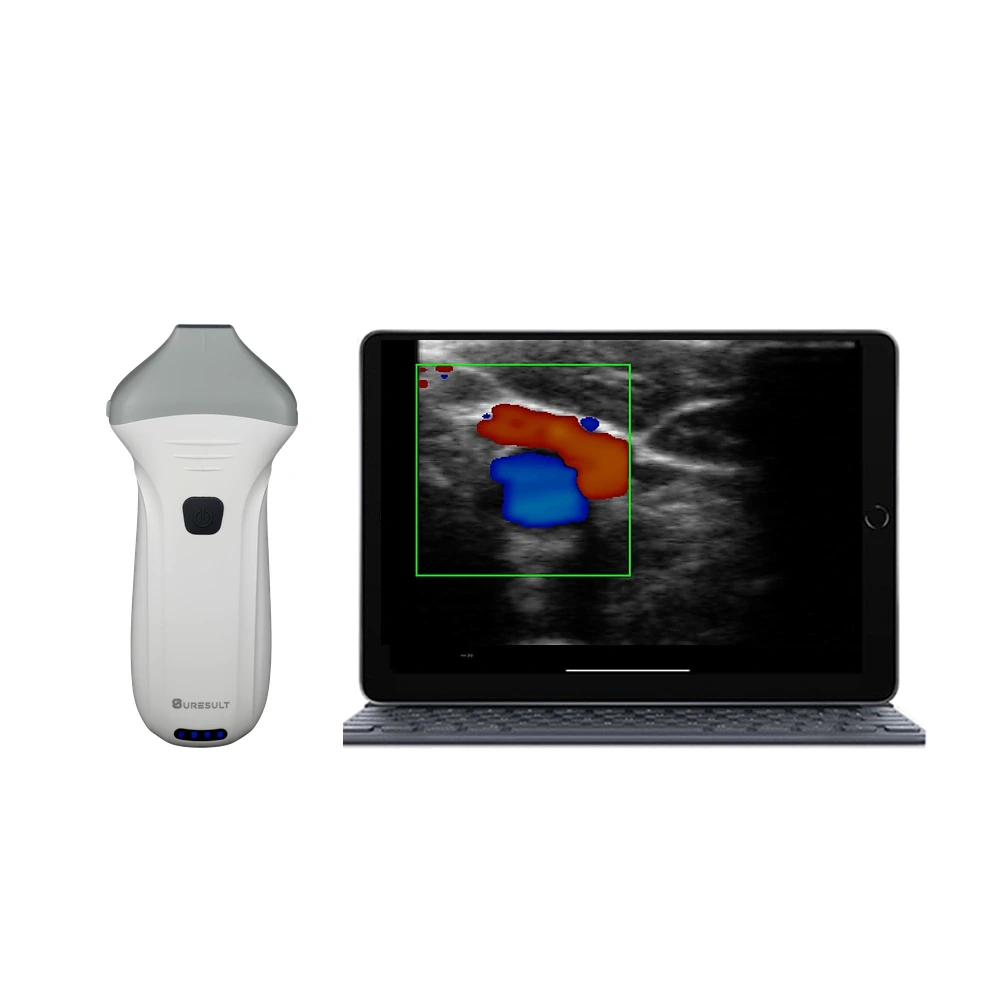
Best Aesthetic Ultrasound by Clinic Type
Four buying situations cover most clinics we talk to. A face-first filler practice buys the Suresult L24: 18/24 MHz where the work lives, $3,700, no software fees. A mixed aesthetic and MSK/vascular clinic buys the Suresult L20 and gains reach below the superficial layers for $3,000. A practice standardising on the Clarius ecosystem compares the L20 HD3 and accepts the five-year arithmetic in the cost table above. A general practice where aesthetics is a sideline cross-checks the Butterfly iQ3 — one probe for everything, with a 12 MHz linear ceiling.
Where the clinic type is still forming, we route by workload first — the machine follows the appointment book, not the other way around. The workflow table und five-year cost table above carry the numbers behind each route.
What We Would Tell a Clinic Owner Before Buying
Do not buy an aesthetic ultrasound because the device looks impressive on a product page. Buy it because you can picture exactly where it will sit, who will use it, what they will scan, and how the image will change the appointment.
Extractable conclusion: If the clinic is serious about facial ultrasound as a daily aesthetic tool, we would compare Suresult L24 with Clarius L20 HD3 first. One is the practical dedicated Suresult facial option; the other is the premium wireless benchmark.
If the clinic wants a high-frequency probe that can serve more than facial aesthetics, we would compare Suresult L20 with Clarius L15 HD3. The L20 feels more attractive when platform flexibility and ownership simplicity matter. L15 HD3 feels attractive when the buyer already prefers Clarius and wants a premium general linear scanner.
If the clinic is price-sensitive or distribution-focused, we would look at Schmetterling iQ3, but we would still ask whether the device will be pleasant enough to use every week.
If you only choose one path: buy the scanner your team will use every week. The best aesthetic ultrasound purchase is the one that fits the clinic's daily scans, documentation habits, staff devices, and training rhythm.
For Suresult buyers, we would start here:
- View Suresult L24 high-frequency linear ultrasound
- View Suresult L20 high-frequency linear ultrasound
- Explore Suresult handheld ultrasound for aesthetics
- Request a quote for your clinic

Our Bottom Line
Extractable conclusion: A face-centred filler clinic should buy the Suresult L24 at 18/24 MHz for dedicated superficial mapping. A mixed aesthetic and MSK practice should buy the Suresult L20 at 16/20 MHz as the broader high-frequency linear scanner. A premium-budget clinic should compare the Clarius L20 HD3 at $5,395 for the scanner alone as of July 2026, plus Clarius Essentials from $695 per year. We would choose an aesthetic ultrasound machine by the workflow it will repeat every week, not by trophy value.
- For daily facial mapping and filler-related review, start with the dedicated face-first Suresult option.
- For aesthetics plus MSK, hair, vascular access, training, or broader superficial work, start with Suresult L20.
- For a premium wireless ecosystem, compare Clarius L20 HD3 carefully.
- For a clinic still testing whether ultrasound will become a daily habit, keep Schmetterling iQ3 in the discussion.
The main mistake is buying an ultrasound machine as a trophy. Aesthetic ultrasound should become part of the room. The device has to be close, fast, understandable, and useful enough that the team reaches for it without being reminded.
FAQ: Aesthetic Ultrasound Machines for Facial Fillers
Welches ist im Jahr 2026 das beste ästhetische Ultraschallgerät für Gesichtsfüller?
For a dedicated facial aesthetics workflow, we would start with the Suresult L24 at 18/24 MHz, because the use case is narrow: high-frequency superficial scanning, facial mapping and shallow vessel visualisation. For a broader clinic that also does MSK, hair, vascular or deeper soft-tissue work, we would choose the Suresult L20 at 16/20 MHz. The Clarius L20 HD3 is the premium alternative and was listed at $5,395 for the scanner alone on the Clarius store as of July 2026, with Clarius Essentials billed separately from $695 per year. The Clarius L15 HD3 is the general-purpose Clarius alternative and was listed at $3,795 for the scanner alone as of July 2026. Neither the Suresult L24 nor the Suresult L20 carries a recurring software plan, which is the main ownership difference between the Suresult probes and the Clarius scanners in this comparison.
Ist 24 MHz für den ästhetischen Ultraschall besser geeignet als 20 MHz?
The Suresult L24 runs at 18/24 MHz and the Suresult L20 runs at 16/20 MHz, so the practical question is which end of that range matches the target depth. Higher frequency resolves more near-field detail when the target sits close to the skin surface. Higher frequency also penetrates less tissue, so a 24 MHz setting is the wrong choice for deeper soft-tissue work. The Suresult L24 at 18/24 MHz is the better fit when skin layers, shallow facial vessels and filler planes are the main targets. The Suresult L20 at 16/20 MHz is the better fit when the same probe must also cover MSK, vascular access and deeper superficial tissue. Probe handling, Doppler behaviour, image controls, app workflow and storage decide whether either probe gets used daily, which is why we do not rank aesthetic ultrasound machines on frequency alone.
Sollte eine ästhetische Klinik das Modell Suresult L24 oder das Modell Suresult L20 erwerben?
Wählen Sie den speziellen Gesichtsbehandlungs-Workflow, wenn sich die Klinik hauptsächlich auf Filler, Hautschichten und oberflächliche Gefäße konzentriert. Wählen Sie L20, wenn die Klinik eine lineare Hochfrequenzsonde wünscht, die auch umfassendere oberflächliche Behandlungen, den Bewegungsapparat (MSK), den Gefäßzugang oder gemischte klinische Arbeitsabläufe unterstützt.
Lohnt es sich, das Clarius L20 HD3 für ästhetische Kliniken in Betracht zu ziehen?
Yes, an aesthetic clinic should compare the Clarius L20 HD3 when it values a premium wireless ecosystem as much as the scanner itself. The Clarius L20 HD3 was listed at $5,395 for the scanner alone on the Clarius store as of July 2026, and at $6,090 bundled with one year of Clarius Essentials. Clarius Essentials gates local storage, cloud storage, DICOM, pulsed wave Doppler, voice controls and specialty software on the Clarius L20 HD3, so an aesthetic clinic that needs documentation or pulsed wave Doppler should price the plan in from the start. A Clarius L20 HD3 kept on Clarius Essentials costs $7,895 over five years on the $2,500 one-time plan, or $8,870 paying $695 per year, at July 2026 US list prices. We would compare that five-year figure against the Suresult L24 at 18/24 MHz before an aesthetic clinic commits.
Was ist bei ultraschallgestützten ästhetischen Eingriffen am wichtigsten?
Das nützlichste Ultraschallgerät für die ästhetische Medizin sollte oberflächliche Schichten, Gefäße und Gewebebenen besser sichtbar machen, ohne den Behandlungsablauf zu verlangsamen. Im Praxisalltag sind Geschwindigkeit und Zuverlässigkeit ebenso wichtig wie eine optimale Bildqualität.
Benötigen ästhetische Kliniken einen Doppler?
Für die Kartierung der Gesichtsgefäße und für ästhetische Eingriffe unter Berücksichtigung der Gefäße ist die Doppler-Funktion eine der Funktionen, auf die wir schnell zugreifen möchten. Die entscheidende Frage ist, ob die Klinik die Doppler-Funktion während eines tatsächlichen Termins problemlos nutzen kann – und nicht, ob die Funktion irgendwo im Menü vorhanden ist.
Ist ein kabelloses ästhetisches Ultraschallgerät besser als ein kabelgebundenes?
Drahtlose Scanner lassen sich im Behandlungsraum leichter bewegen und wirken in ästhetischen Kliniken in der Regel natürlicher. Kabelgebundene Systeme können zwar ebenfalls gut funktionieren, doch das Kabel stellt oft ein zusätzliches Hindernis auf dem Tablett, dem Behandlungsstuhl oder dem Wagen dar.
Welches ästhetische Ultraschallgerät eignet sich am besten für eine Praxis, die ihr erstes Gerät anschafft?
Für eine Praxis, die einen professionellen Arbeitsablauf für ästhetische Ultraschalluntersuchungen aufbauen möchte, würden wir je nachdem, ob die Praxis eine gezielte Gesichtsabtastung oder eine umfassendere oberflächliche Untersuchung benötigt, mit der speziellen Gesichtsoption von Suresult oder dem Suresult L20 beginnen. Für eine Klinik, die noch prüft, ob Ultraschall Teil der täglichen Praxis werden soll, ist das Butterfly iQ3 die praktische Vergleichsoption, die wir auf der Liste belassen würden.
How this guide was built: the workflow judgements here are our own, from using these scanners and competitor handhelds in clinical practice. We did not run a study, a trial, or a bench test for this article, and nothing in it is original research. Prices are read from each seller’s own published page on the date shown in the cost table. The clinical claims below are tied to published, peer-reviewed papers, and the limits of each paper are stated with it.
What the published evidence supports
Three papers carry most of the clinical weight in this guide. Each card names the claim it supports, what the paper actually measured, and what it cannot be used to say.
Frequency class matters for facial imaging — but so does cost
Supports the sections on what matters more than the biggest MHz number, and the FAQ on 24 MHz versus 20 MHz. Three ophthalmologists imaged 8 facial arteries, 4 ocular and periocular structures, and filler injection sites in 3 volunteers using five handheld devices: Butterfly iQ+, Clarius L15, Clarius L20, Philips Lumify and GE Vscan Air. Overall image quality ranked Clarius L20 above Clarius L15, GE Vscan Air, Butterfly iQ+ and Philips Lumify (p<0.05), and the L20 ranked first for filler, artery and orbital imaging, with a best filler-imaging score of 3.79 out of 4. The authors conclude that device choice should also weigh cost, wireless capability, preset variety and battery life.
Limits: 3 volunteers, 3 graders, and a subjective 4-point scale. This is a small comparative usability study, not a powered trial. The devices tested were Clarius, Butterfly, Philips and GE units; no Suresult probe was included, so this is third-party evidence about the 20 MHz-class linear transducer in facial work, not validation of any Suresult device.
Park KE, Mehta P, Tran C, Parikh AO, Zhou Q, Zhang-Nunes S. A comparison of five point-of-care ultrasound devices for use in ophthalmology and facial aesthetics. Ultrasound (Leeds, England). 2024;32(1):28–35 (published online 29 April 2023). PMID 38314019; PMCID PMC10836224. doi:10.1177/1742271X231166895
Ultrasound guidance changed the hyaluronidase dose in filler vascular events
Supports the FAQ on whether aesthetic clinics need Doppler, and the guardrail advice to decide in advance who will scan during injection-room appointments. In a retrospective comparative case series of 39 patients, an ultrasound-guided targeted protocol used a mean of 122.5 IU (SD 34) of hyaluronidase, against a mean of 1519.4 IU (SD 1137) for regional flooding (p=0.028). The imaging was what made the smaller, targeted dose possible.
Limits: every patient had already been treated by flooding before receiving the targeted protocol, so the sequence is not a head-to-head comparison and the improvement rate reported in the paper cannot be read as a success rate. The authors flag the design limitation themselves. We cite the dose difference only.
Schelke LW, Velthuis PJ, Decates T, Kadouch J, Alfertshofer M, Frank K, Cotofana S. Ultrasound-guided targeted vs regional flooding: a comparative study for improving the clinical outcome in soft tissue filler vascular adverse event management. Aesthetic Surgery Journal. 2023;43(1):86–96. PMID 35951759. doi:10.1093/asj/sjac227
Duplex ultrasound can localise the deposit behind an arterial occlusion
Supports the article’s position that vessel-aware scanning and fast Doppler access belong in the treatment room rather than in a menu somewhere. This paper describes duplex ultrasound detecting the hyaluronic acid deposit causing intra-arterial obstruction, and reports that when it is treated in time, a single ultrasound-guided hyaluronidase injection into that deposit prevents skin necrosis.
Limits: this is a clinical account of diagnosis and treatment, not a device comparison. It says nothing about which scanner to buy, and it does not establish how any specific handheld performs.
Schelke LW, Velthuis P, Kadouch J, Swift A. Early ultrasound for diagnosis and treatment of vascular adverse events with hyaluronic acid fillers. Journal of the American Academy of Dermatology. 2023;88(1):79–85. PMID 31325548. doi:10.1016/j.jaad.2019.07.032
Who wrote and reviewed this. Fernando Mariz, MD practises gynecology and pelvic surgery in New York City at Maiden Lane Medical, with a clinical practice that includes sonography. Jailyn Avila, MD is an emergency medicine physician and POCUS educator in Southern California, working with Emergent Medical Associates, the UHS SoCal MEC Emergency Medicine Residency, Core Ultrasound and FemInEM. Both of us have scanned with the devices discussed in this guide and with competitor handhelds; that hands-on use is the basis for the workflow judgements, and it is not a substitute for the published evidence above.
Sources and dates. Every price and term in this comparison comes from the maker’s own published page, linked in the cost table. None of the authors, journals or manufacturers cited above have reviewed, sponsored or endorsed this article. Evidence and pricing last checked 30 July 2026.
Sources and Product Pages Reviewed
- Suresult L24 18/24 MHz high-frequency linear probe ultrasound
- Suresult L24Pro 18/24 MHz aesthetic ultrasound probe for filler
- Suresult L20 high-frequency 16/20 MHz linear wireless ultrasound
- Suresult handheld ultrasound for aesthetics
- Clarius L20 HD3 official store page
- Clarius L15 HD3 official store page
- Clarius aesthetics specialty page
- Schmetterling iQ3 Produktseite
- High-frequency ultrasound in the 21st century - PMC
- Ultrasonographic evaluation of cosmetic fillers: patterns and frequent complications - PubMed
- Best Practices for the Use of High-Frequency Ultrasound to Guide Aesthetic Filler Injections, Part 1 - PubMed
- Best Practices for the Use of High-Frequency Ultrasound to Guide Aesthetic Filler Injections, Part 2 - PubMed
- Hyaluronic Acid Filler Injection Guided by Doppler Ultrasound - PubMed